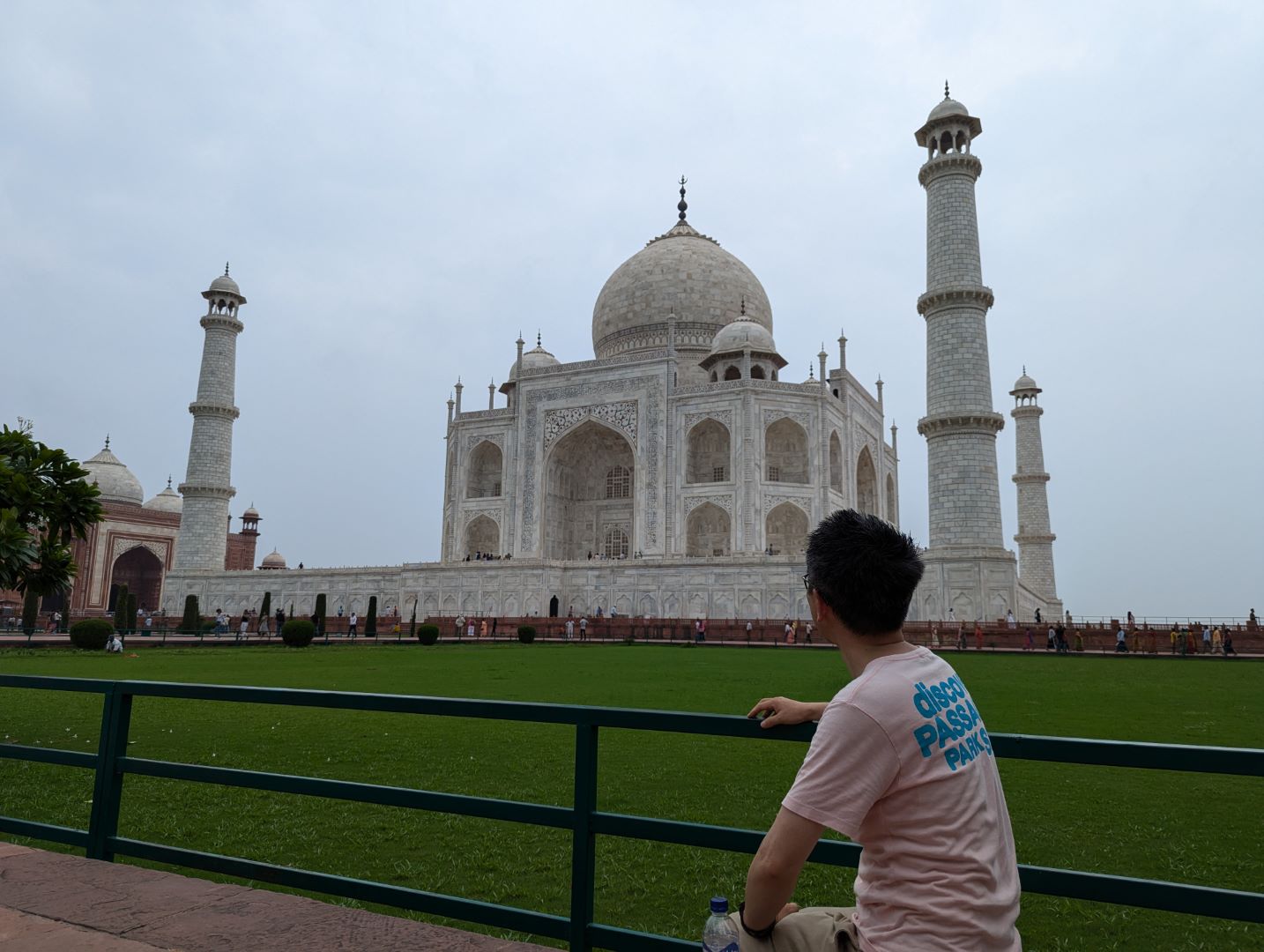
Along with the Taj Mahal…
My business trip to India spanned a weekend, and since I had Sunday off, arrangements were made for me to visit the Taj Mahal. I was so thrilled because it’s a place I’ve always wanted to see but never thought I’d get the chance. So, I pulled out my old “Chikyu no Arukikata” guidebook and checked out the Taj Mahal page. To my surprise, I discovered that Agra, where the Taj Mahal is located, also has Agra Fort, which is often visited together with the Taj Mahal, and Fatehpur Sikri, another World Heritage Site, just outside the city.
Since it would be tough to visit in the scorching heat, we decided on an early morning departure. When I asked about the other two World Heritage Sites besides the Taj Mahal, they said we could definitely visit the Taj Mahal and one other place if we could manage the intense heat. We decided to choose which one to visit after seeing the Taj Mahal.
The Taj Mahal
Where’s the Taj Mahal?
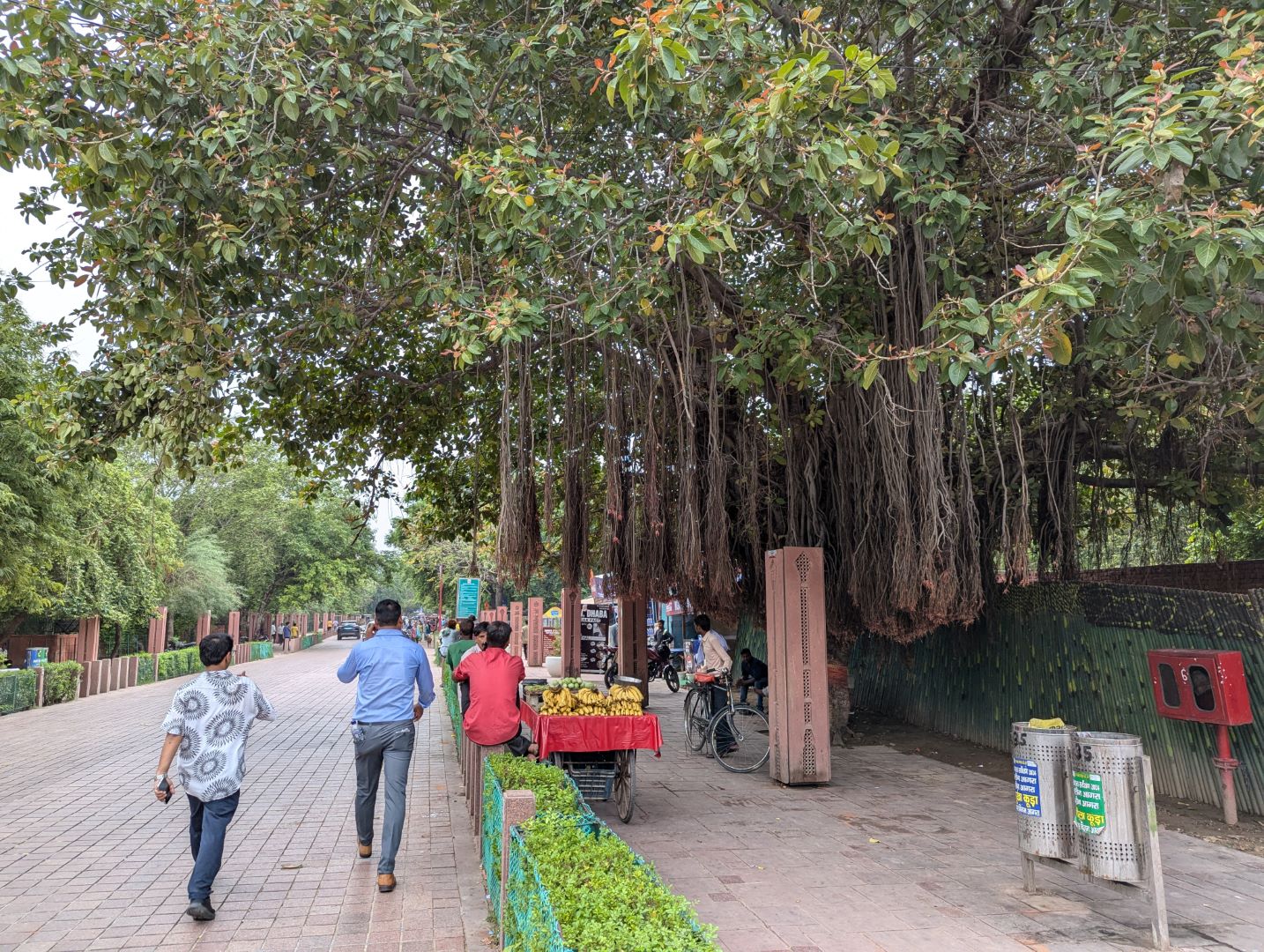
After parking the car and stepping out, guides who spotted me (a foreigner, or rather, a Japanese person) swarmed around like flies, lol. Luckily, my Indian colleague was with me and managed to find a licensed, relatively calm guide, and we struck a deal (yes, you even need to negotiate with guides…). We took an electric cart to the entrance. The body check was incredibly strict; you basically can’t bring any bags inside. I was told a whistle on my keychain wasn’t allowed, and there was a bit of a fuss trying to get it off the keychain…
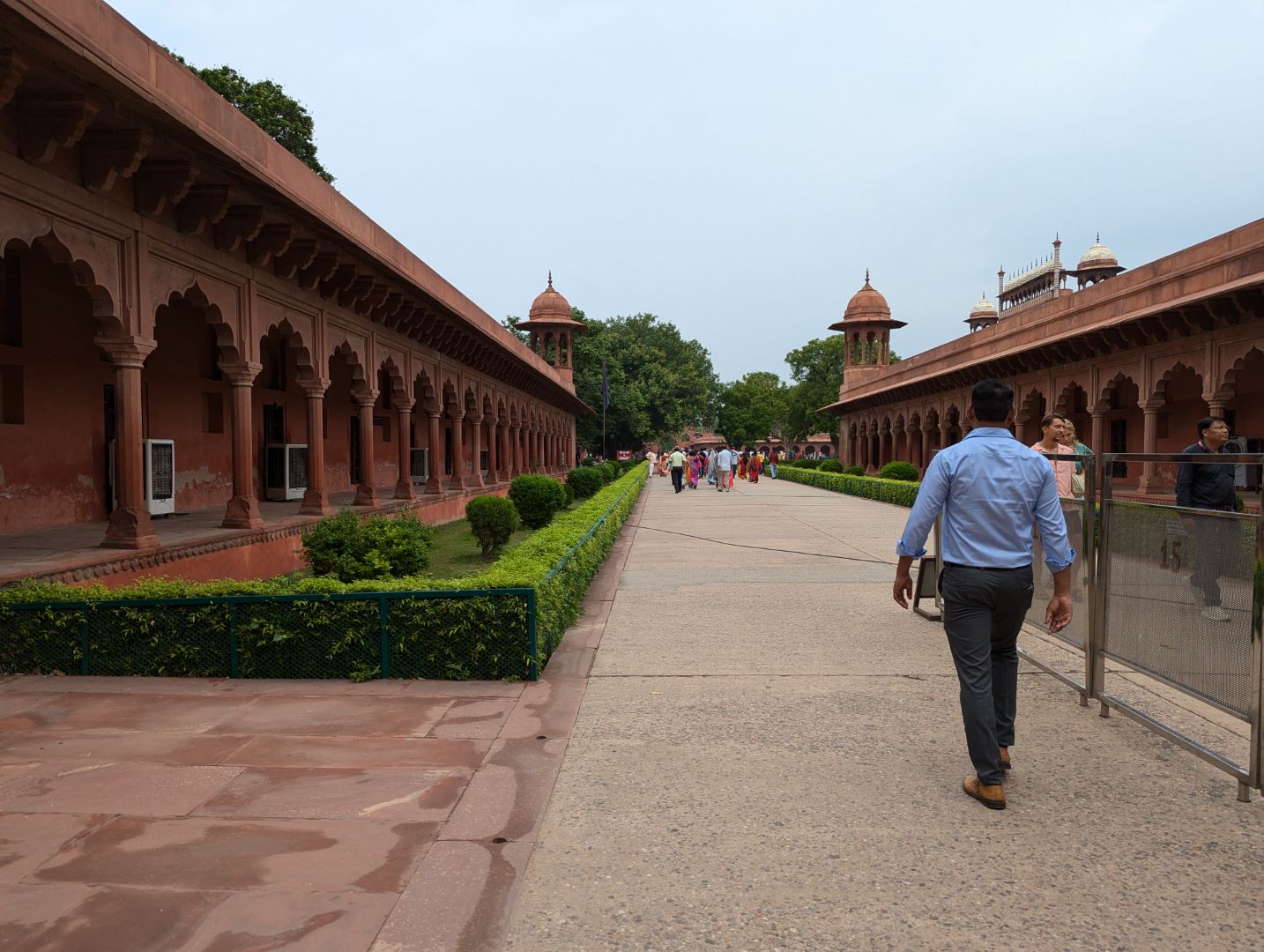
The Taj Mahal I knew from pictures seemed enormous, yet it was strange how even after entering the grounds, I couldn’t catch a glimpse of that white marble building. The beautiful arches of the buildings on either side in the photos inherit the architectural style of the Timurid dynasty from Central Asia, clearly showing how India has been influenced by various cultures.
The Grand Main Gate of Red Sandstone
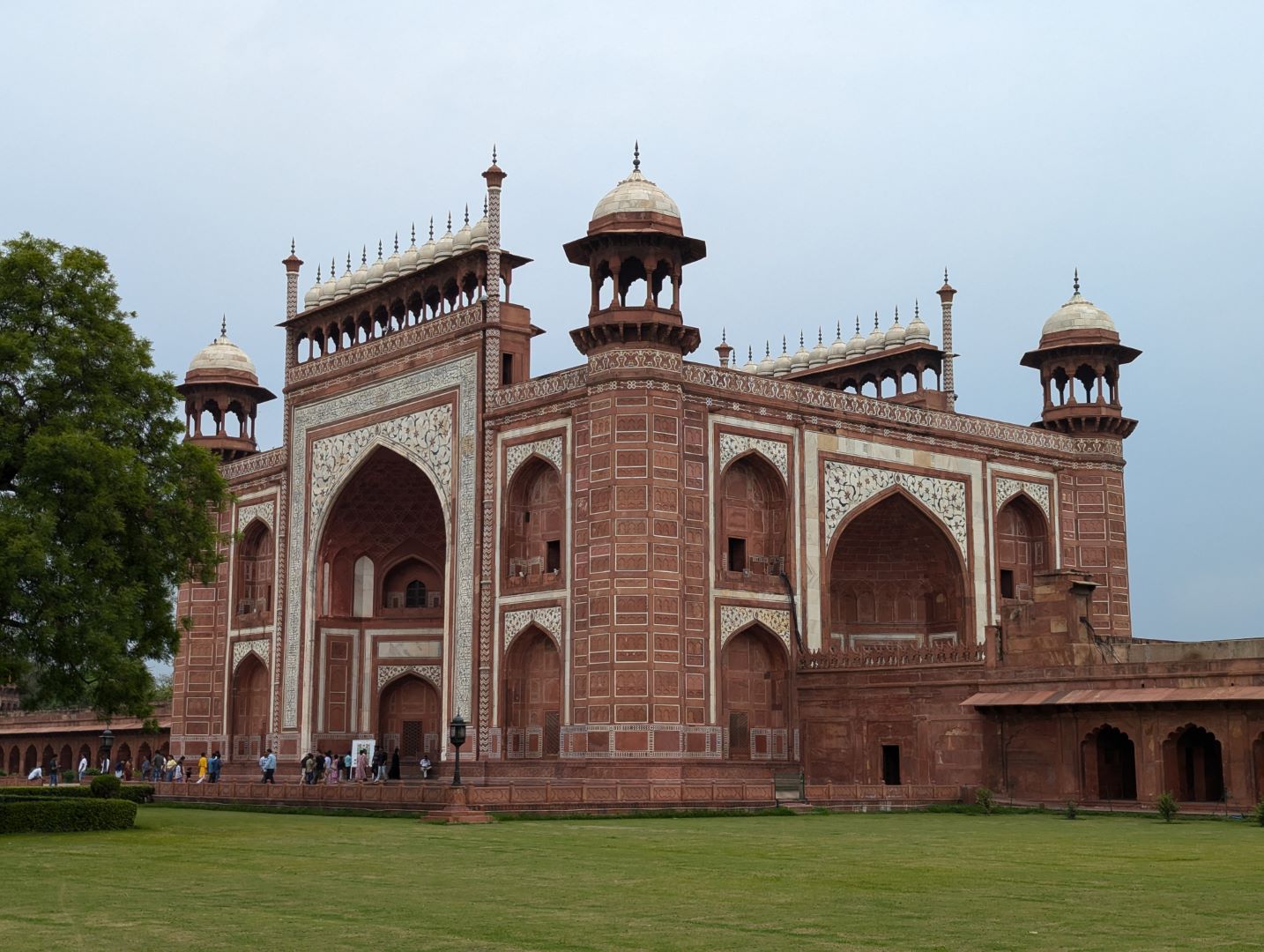
There are three entrances to the Taj Mahal grounds: East, West, and South. Walking from there, this grand main gate appears before you. On top of the main gate, there are 11 small onion-shaped domes on the front and 11 on the back, which, according to our guide, represent the 22 years it took to build the Taj Mahal.
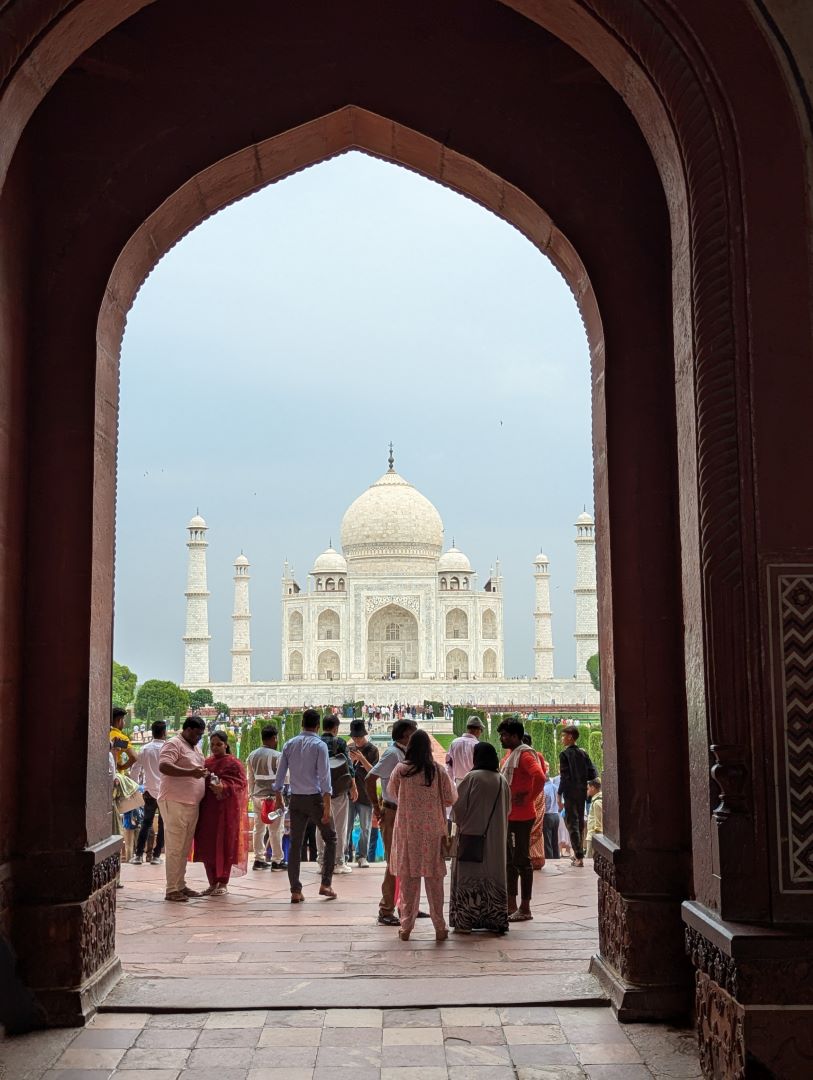
As you pass through this main gate, the pure white, majestic Taj Mahal finally comes into view for the first time. That moment truly gave me goosebumps. It was a very strange feeling, completely distorting my sense of distance.
I never thought I’d actually get to see it…
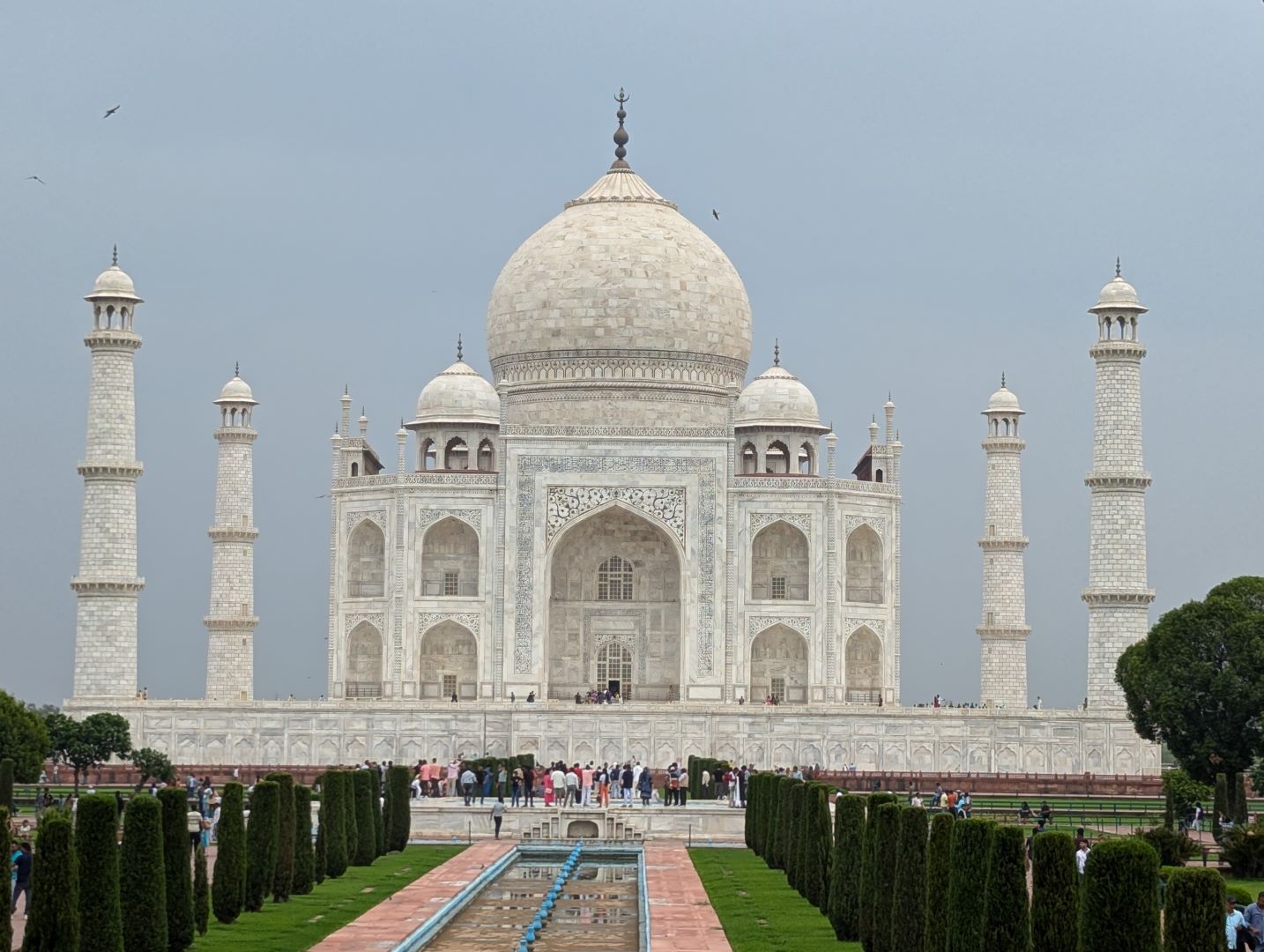
It was truly a wondrous and moving experience to have the Taj Mahal, one of those World Heritage Sites I always wanted to see but never thought I’d get the chance, right before my eyes.
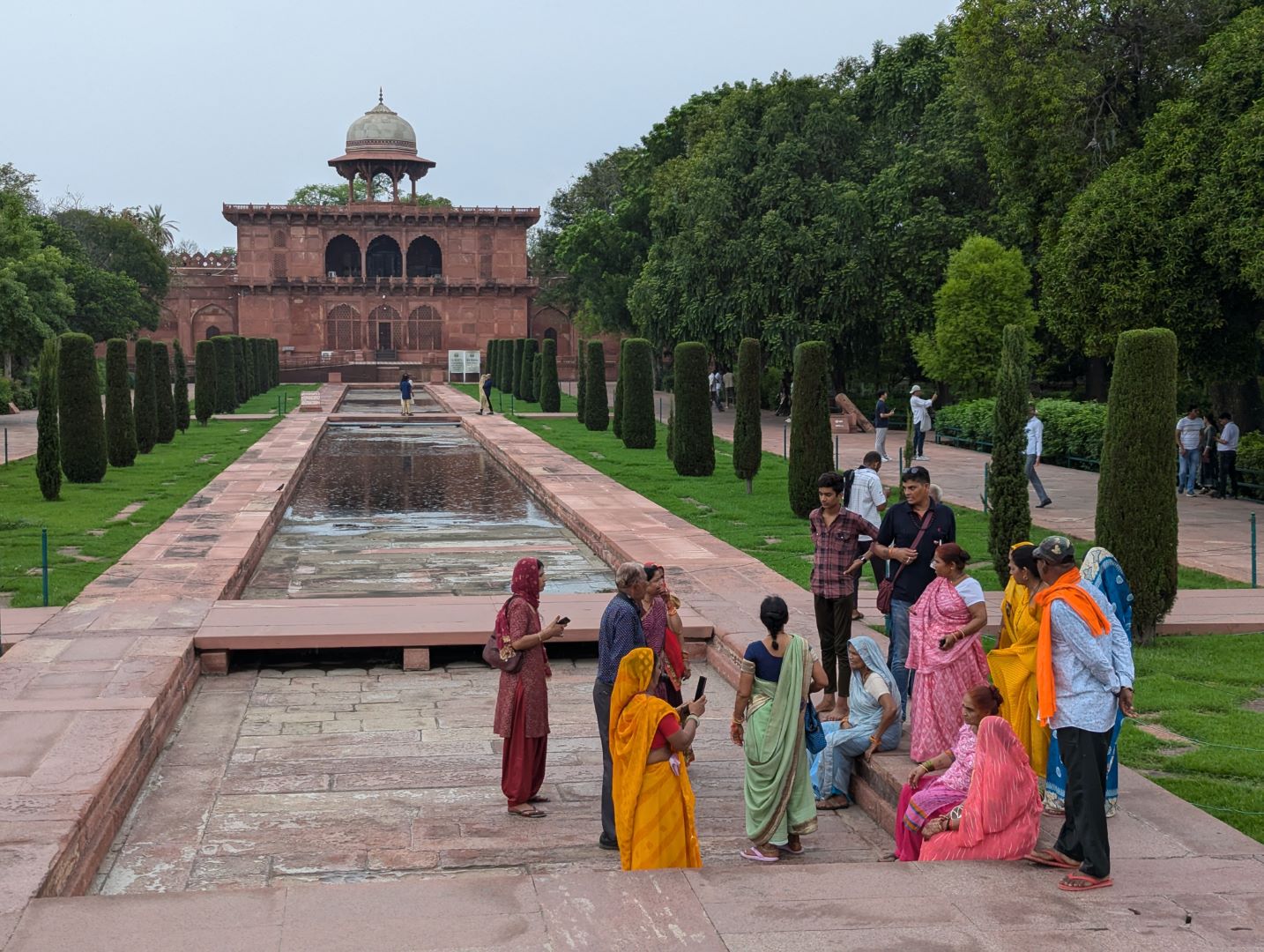
The Taj Mahal is situated within a beautiful 300-meter square garden, where the red sandstone buildings and dark green trees create a stunning contrast, further enhanced by the vibrant saris worn by the Indian people. It’s an incredibly beautiful and atmospheric place.
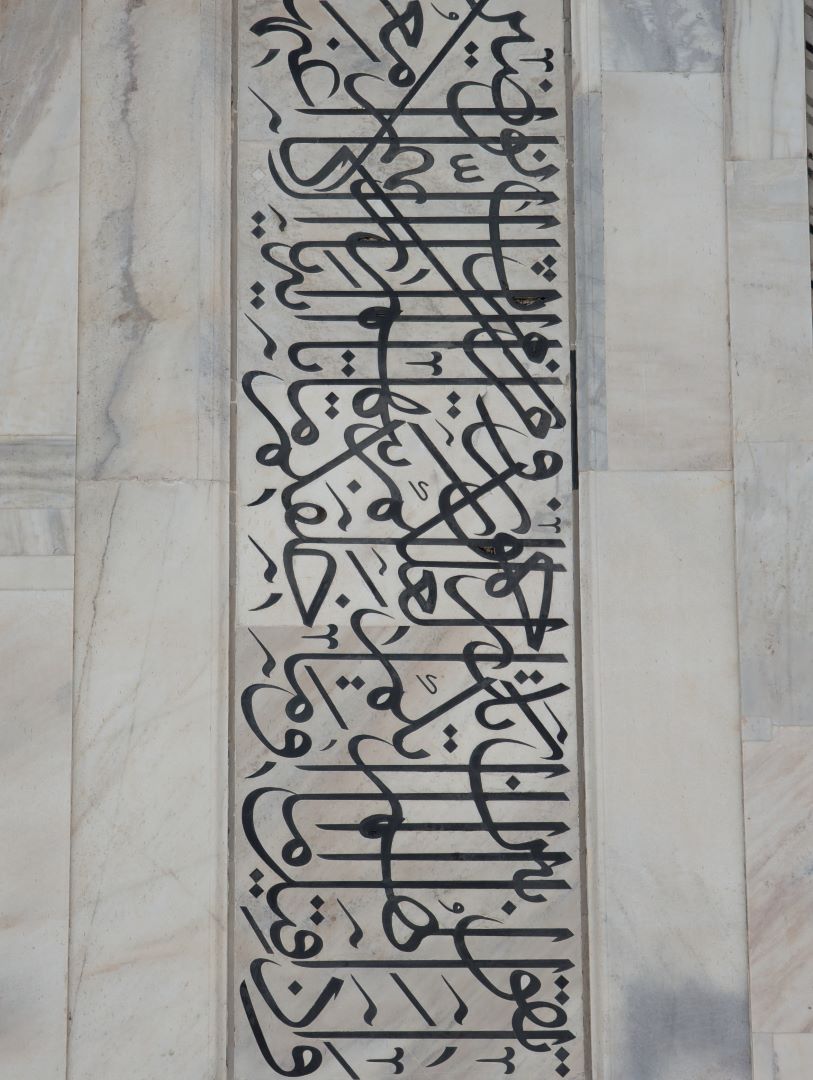
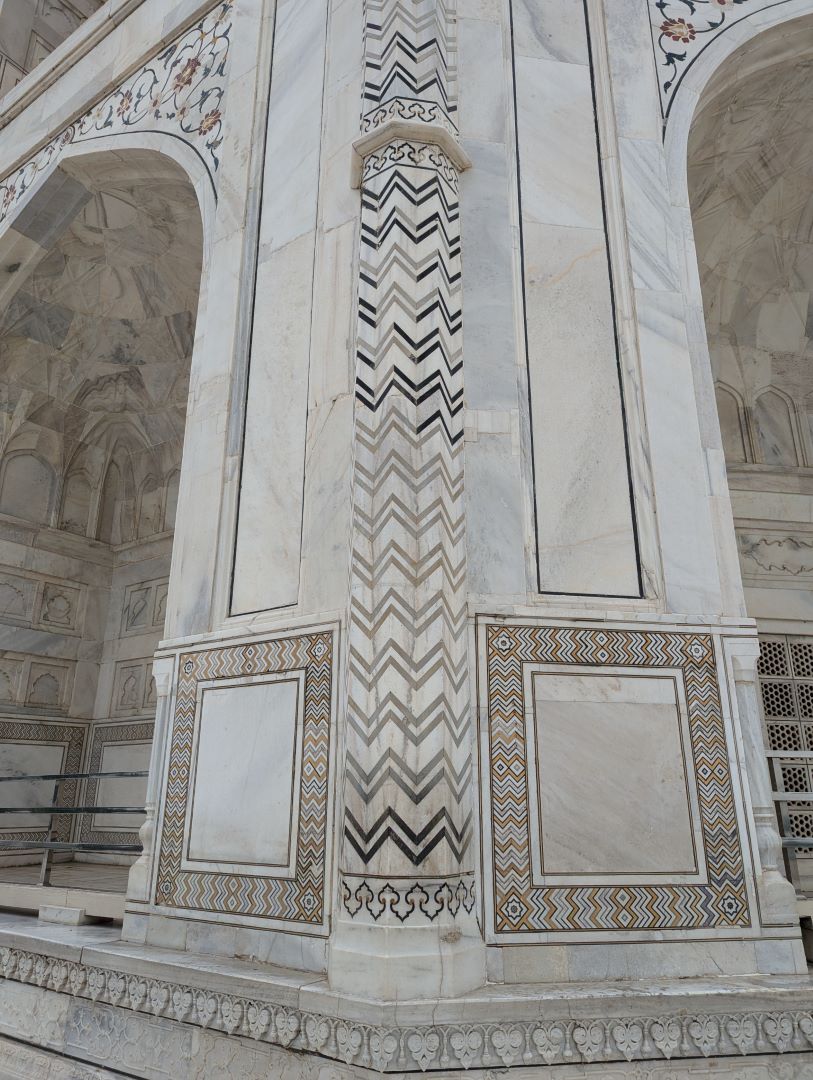
What’s astonishing about the Taj Mahal is this calligraphy. If you look closely, it’s made by inlaying black marble into white marble… both the curves and straight lines are drawn with incredible precision.

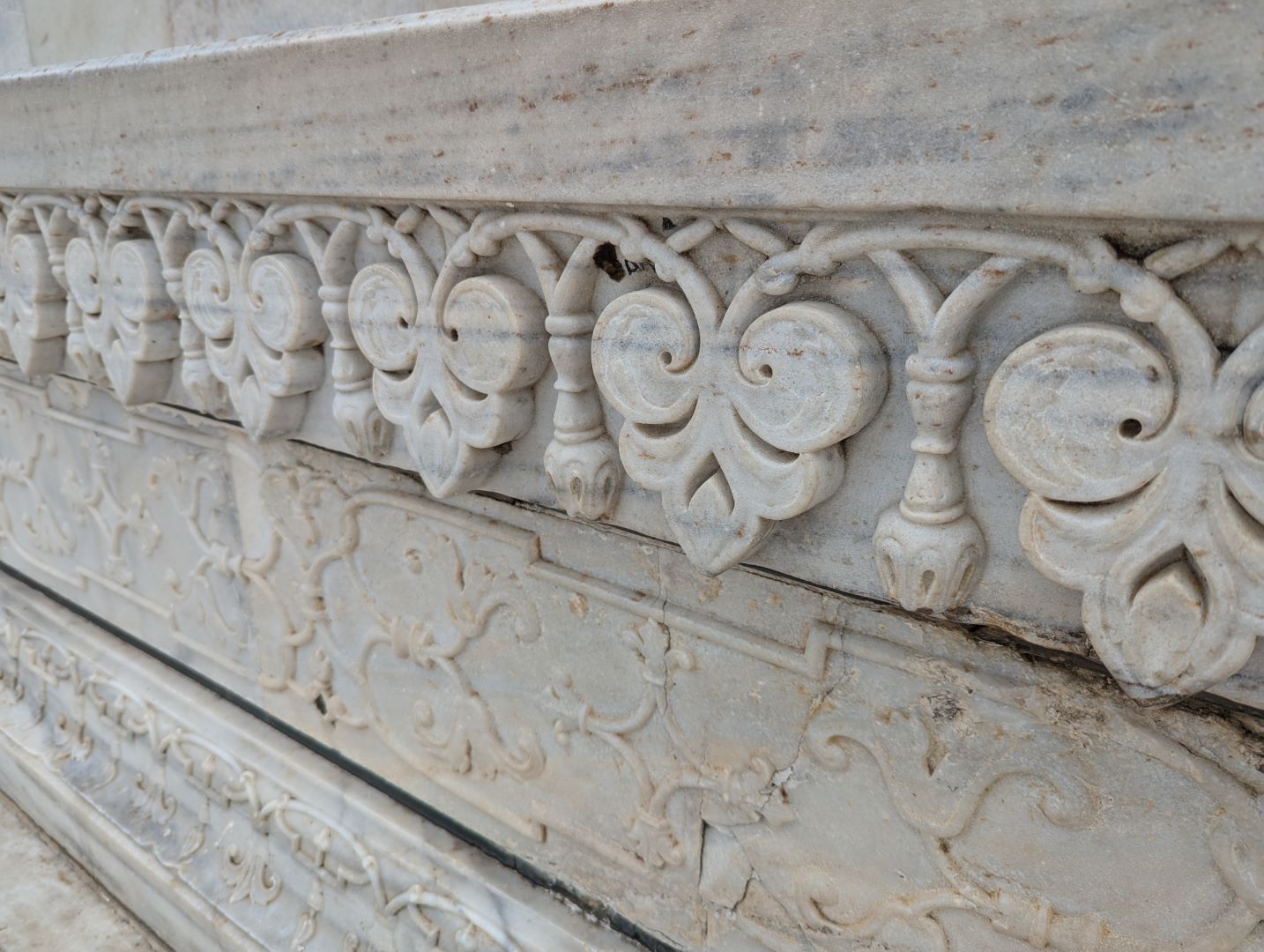
The building is adorned with various decorations, each one meticulously crafted and beautiful. It almost feels like you can sense the deep affection of Shah Jahan, the fifth Mughal emperor who built it for his wife.
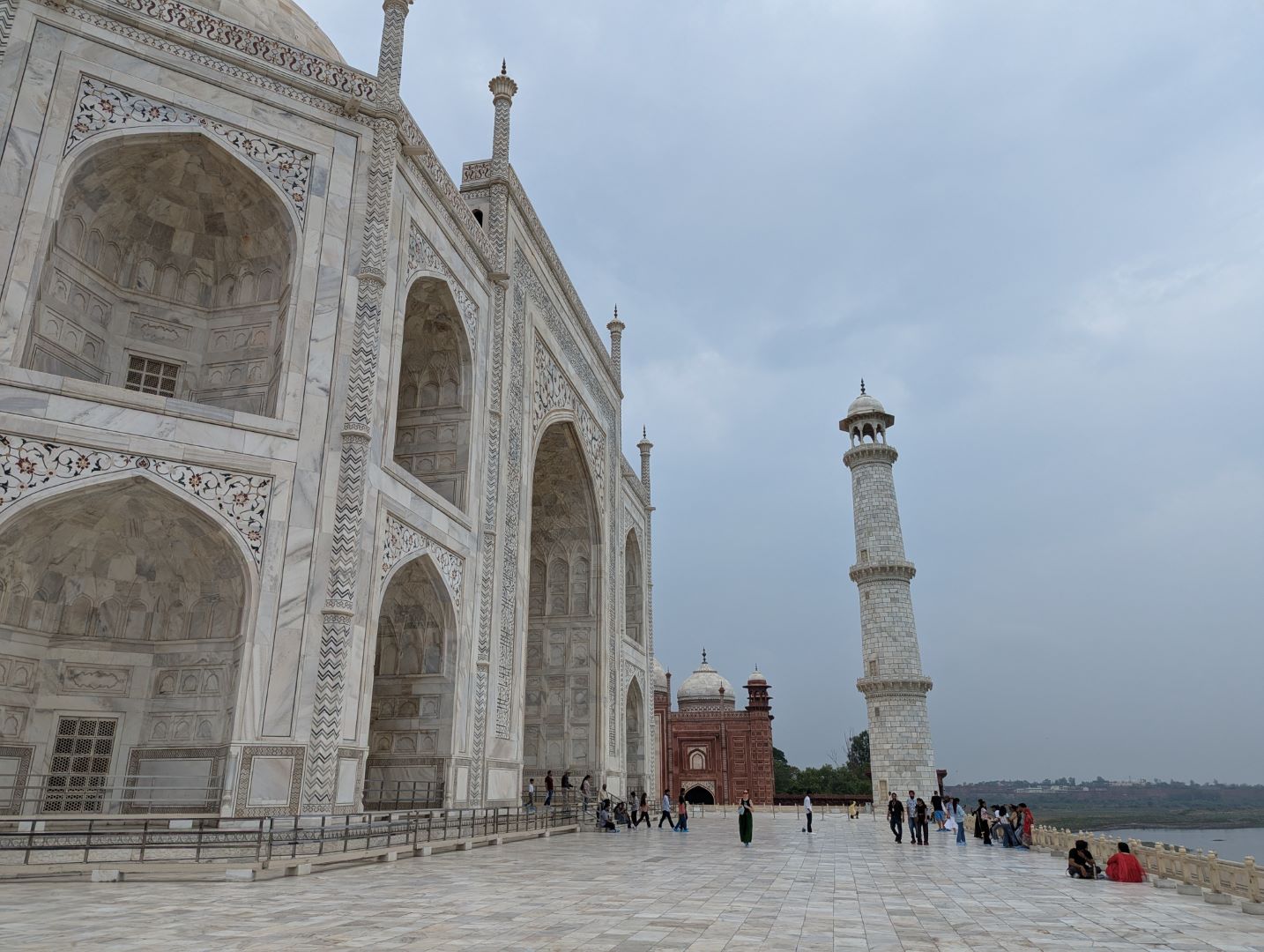
When you enter through the main gate, the Taj Mahal presents a strong impression of perfect symmetry. However, in reality, it’s not just symmetrical; it looks fundamentally the same from all four cardinal directions (east, west, north, and south), with perhaps minor differences, making it even larger than it appears. The plinth on which the Taj Mahal stands is actually 95 meters square, the main building is 67 meters high, and the corner minarets are 43 meters tall – it’s an overwhelmingly massive structure.
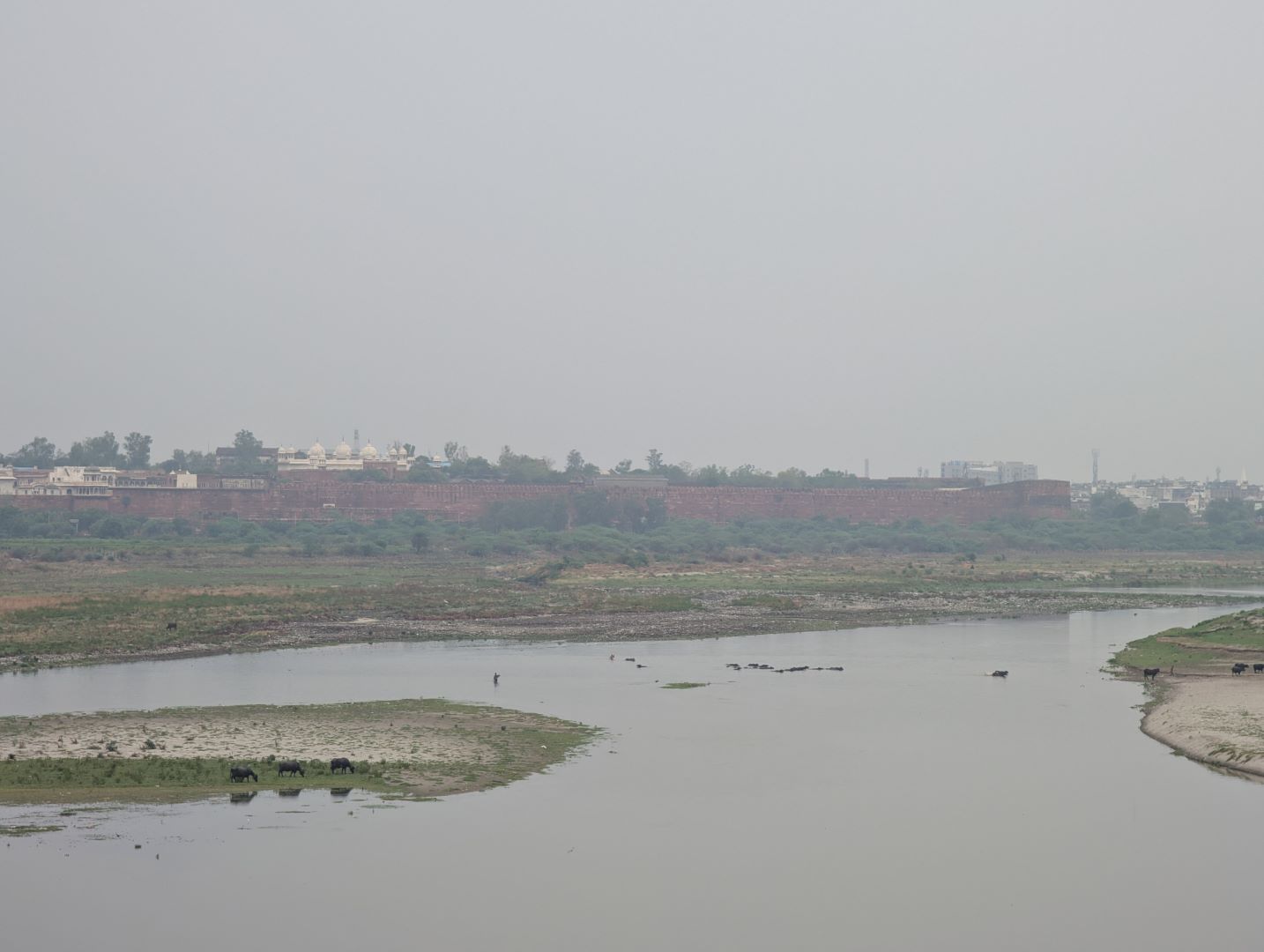
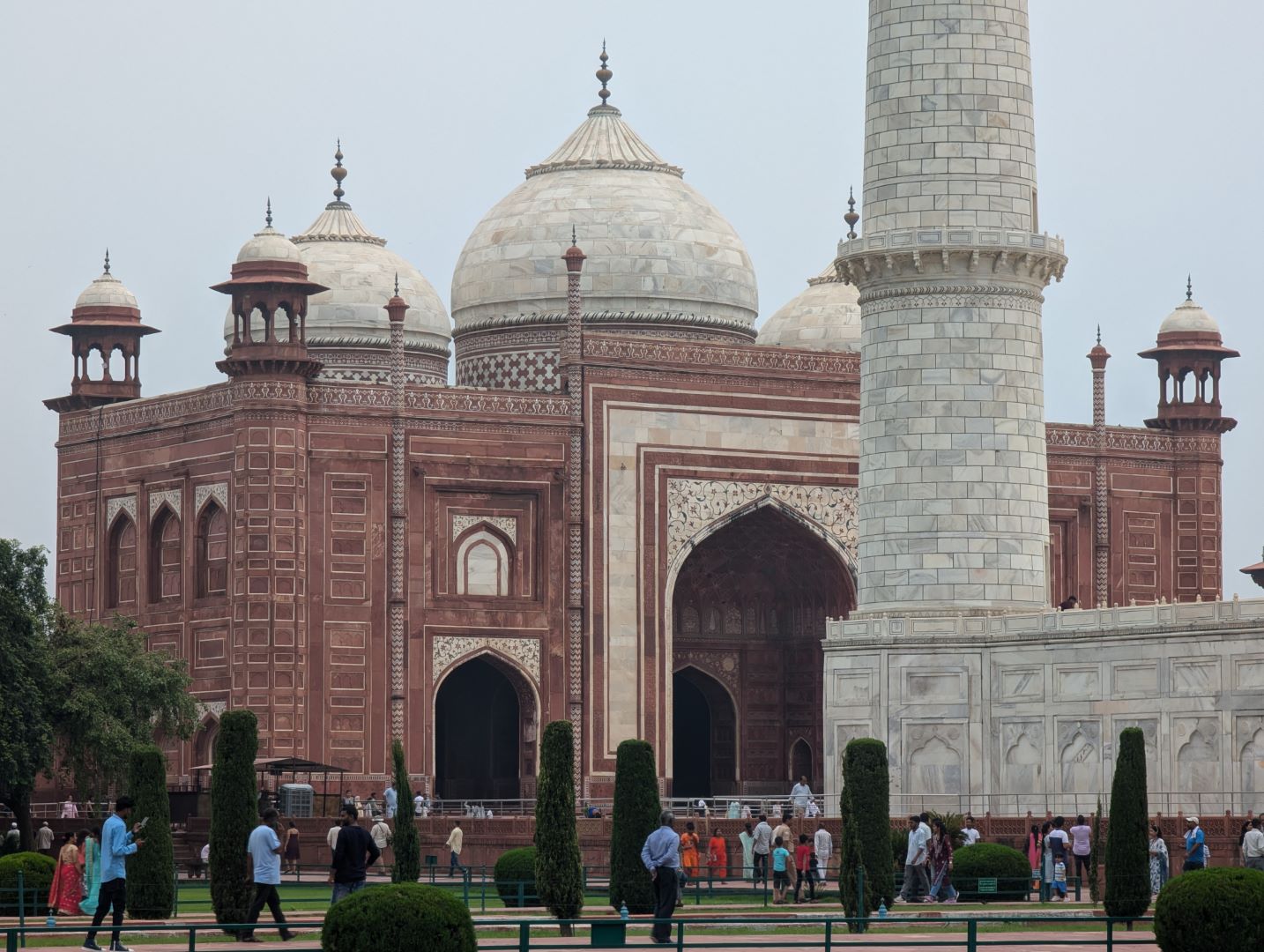
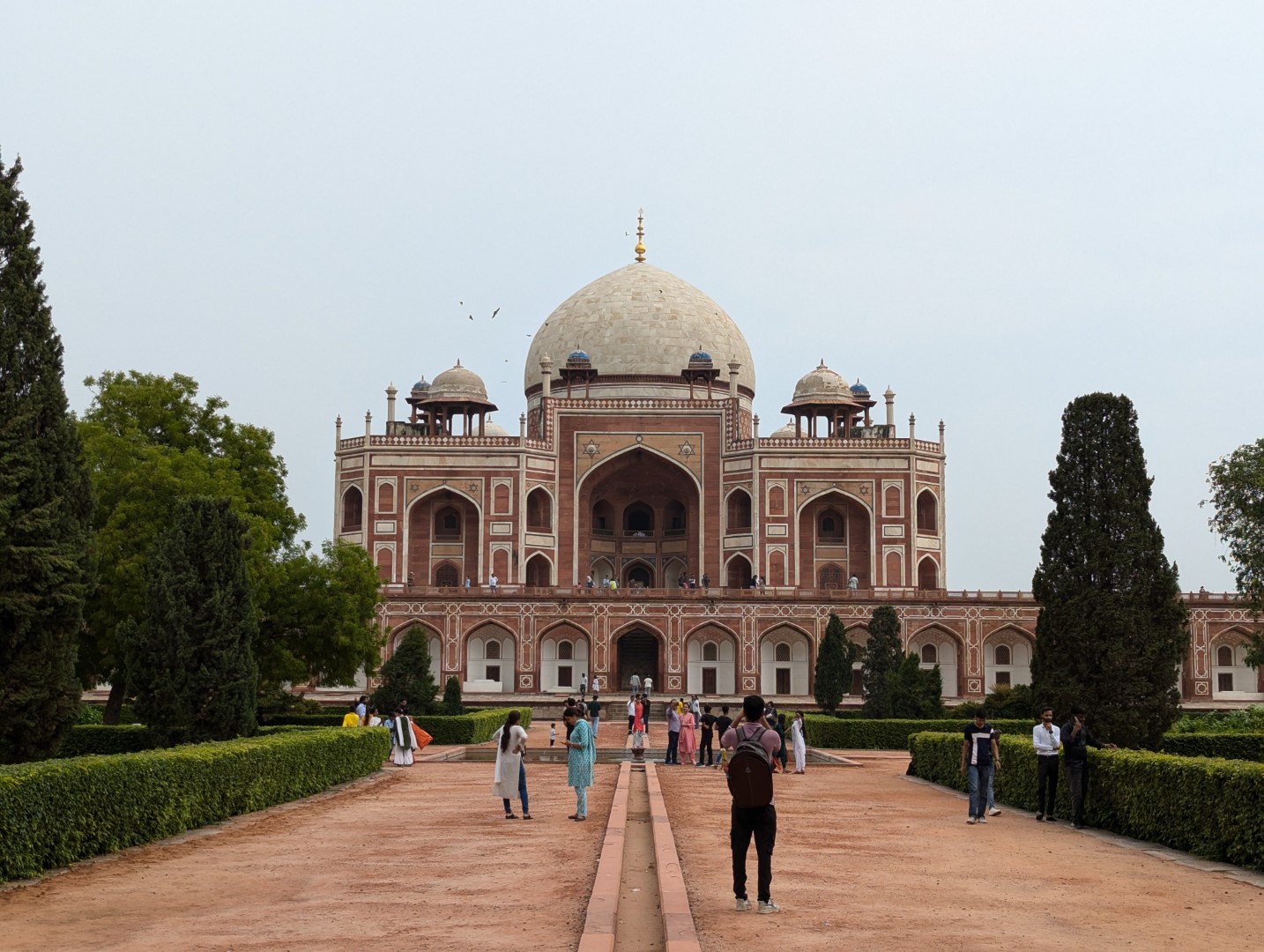
The mosque within the grounds is also very grand, looking just like Humayun’s Tomb which I saw yesterday. After seeing everything, my Indian colleague said, “You’re really lucky today!” As the photos show, it was subtly cloudy and drizzling occasionally, but thanks to that, the temperature (humidity notwithstanding) was bearable enough for us to walk around leisurely. Apparently, during the intense heat before the rainy season, you wouldn’t be able to stroll around so comfortably…
Agra Fort
To the Bright Red Agra Fort
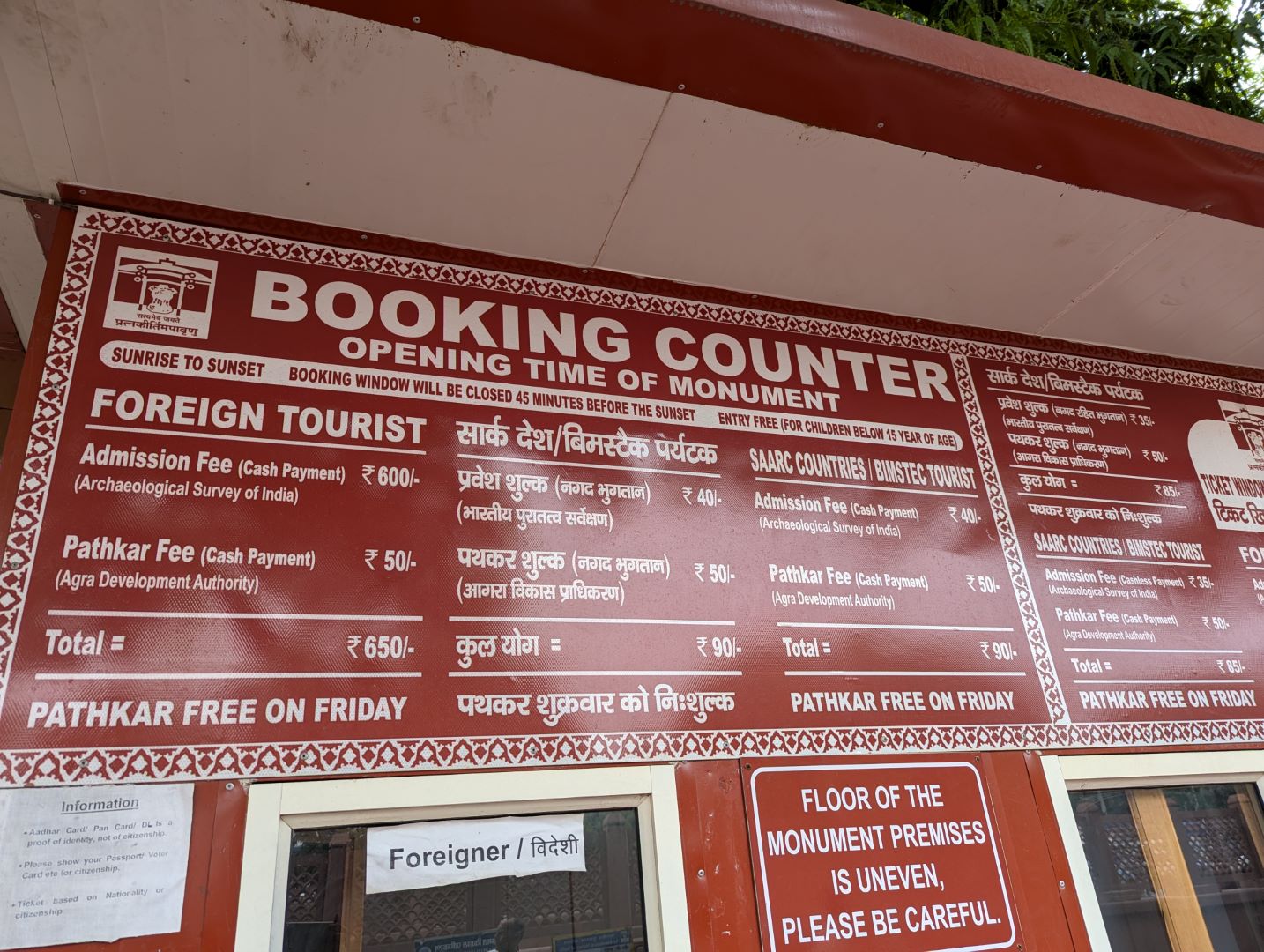
The topic of differentiating admission fees for foreign and local tourists is even being discussed in Japan, with its weak yen. In India, at least for all the places I visited this time, there was nearly a tenfold difference. Given the huge wealth disparity within India, it might be somewhat expected.
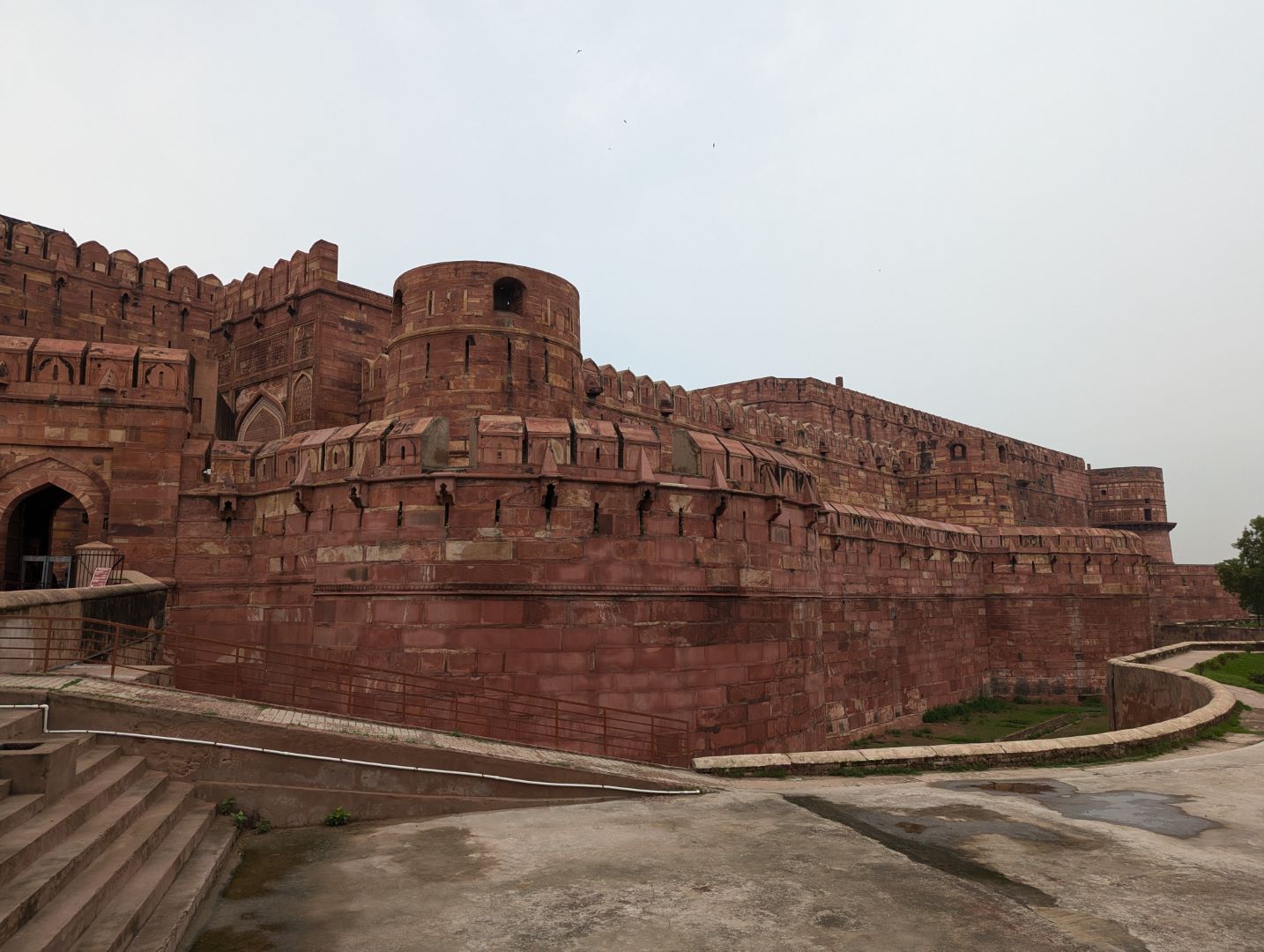
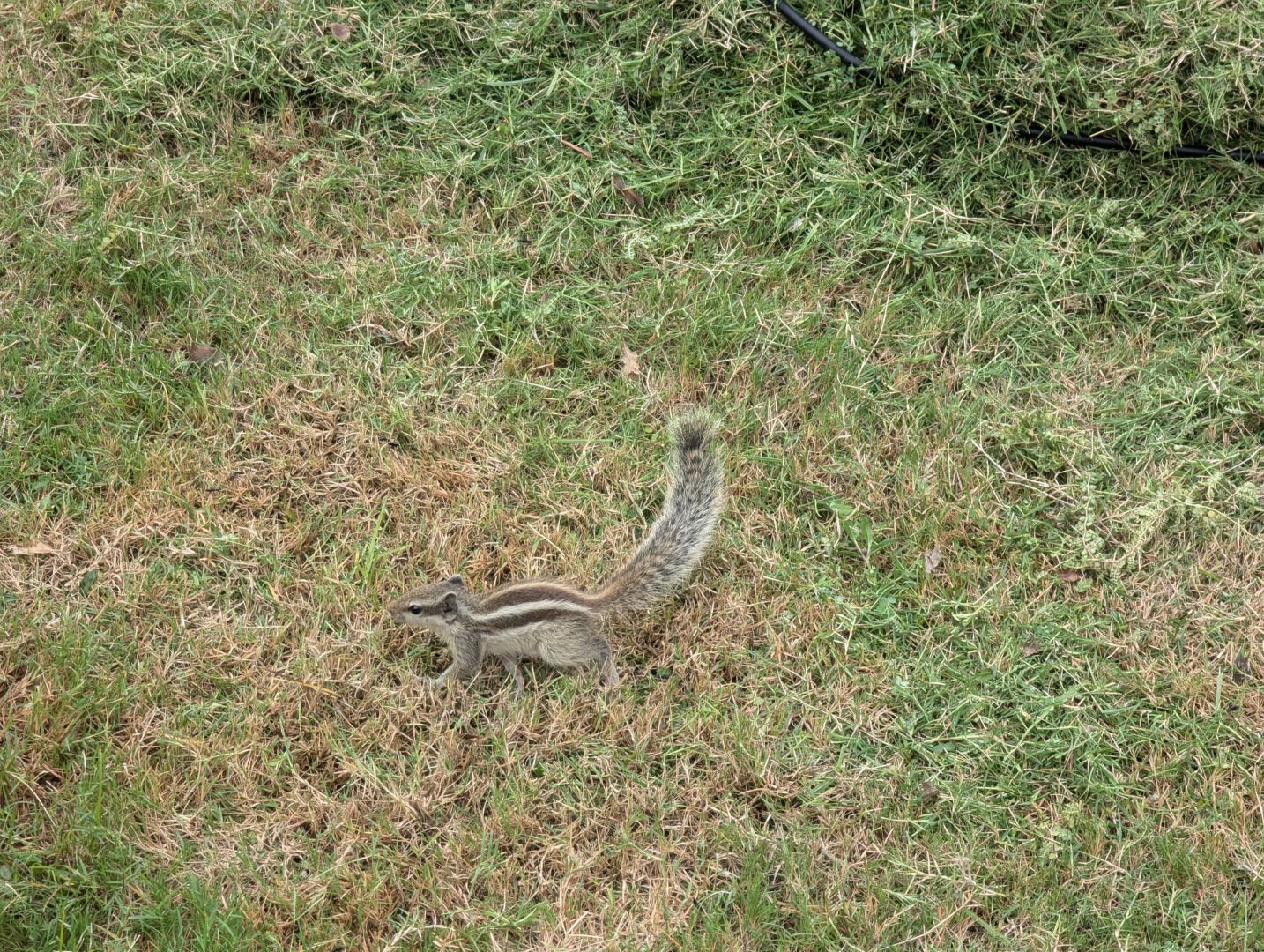
Agra Fort was built in 1565 by Emperor Akbar, Shah Jahan’s grandfather. Within its majestic red sandstone walls, there’s a palace situated on a green lawn, with squirrels and lizards scurrying around. The contrast is quite surprising.
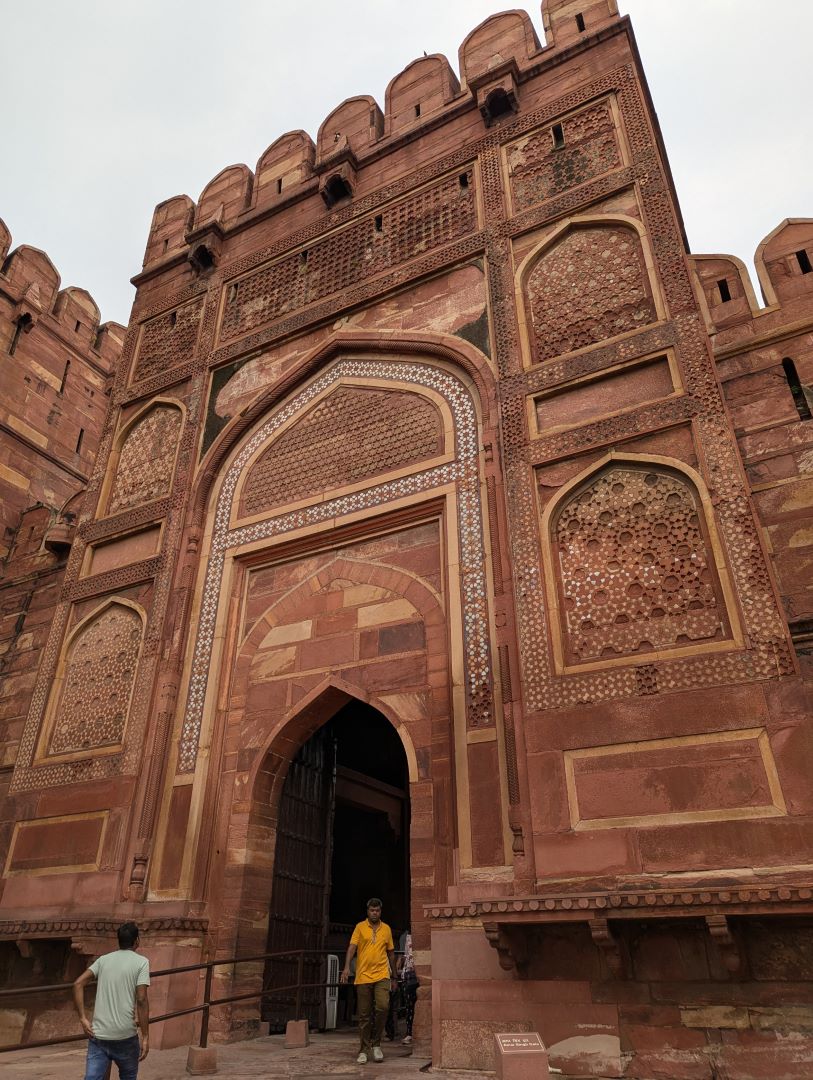
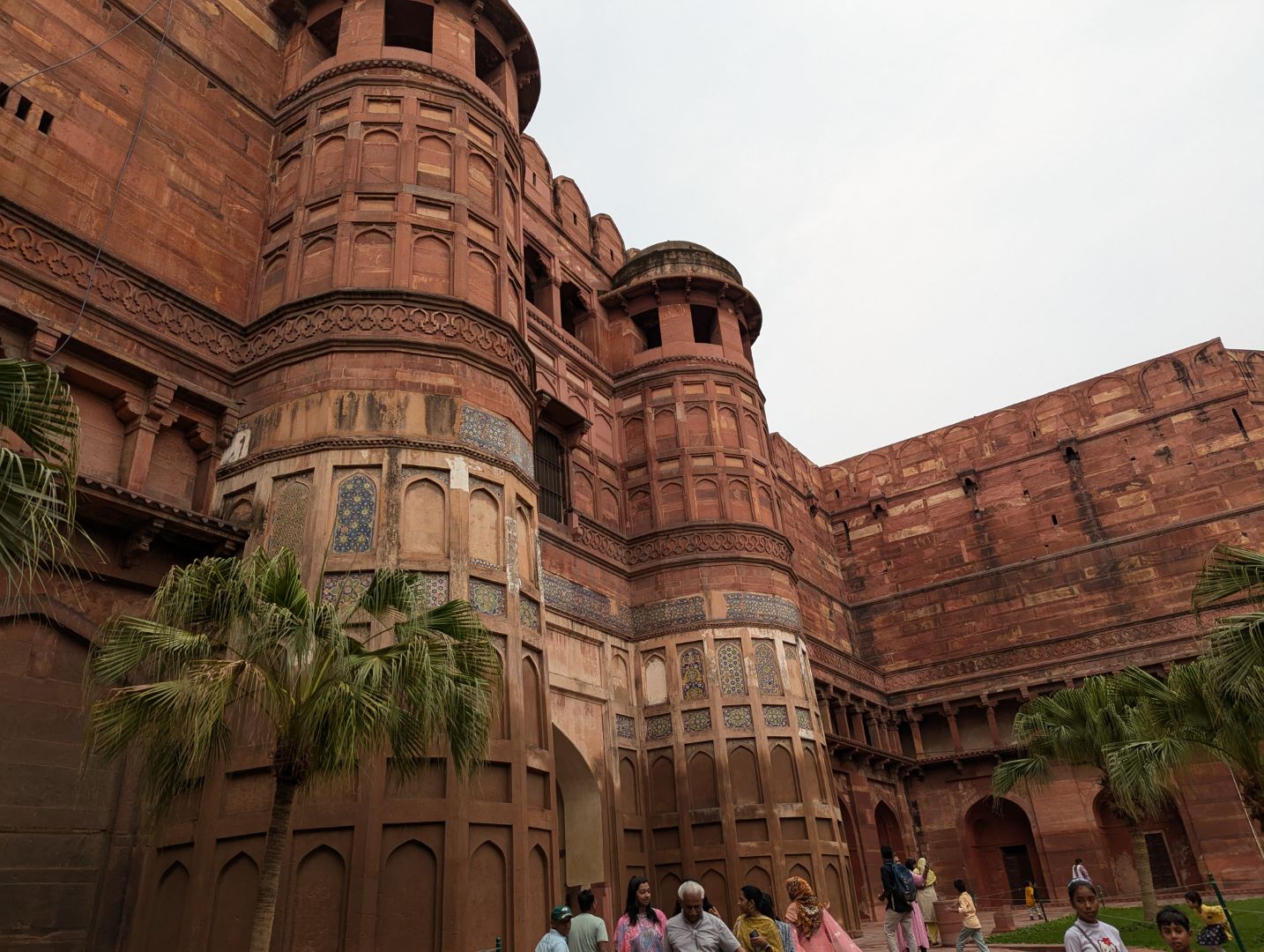
Immediately after passing through the Amar Singh Gate, where the ticket office is located, you’ll see the beautiful Jahangir Mahal. The contrast between the green lawn and the red sandstone is stunning; I bet it would be even more striking and beautiful with a clear, blue sky.
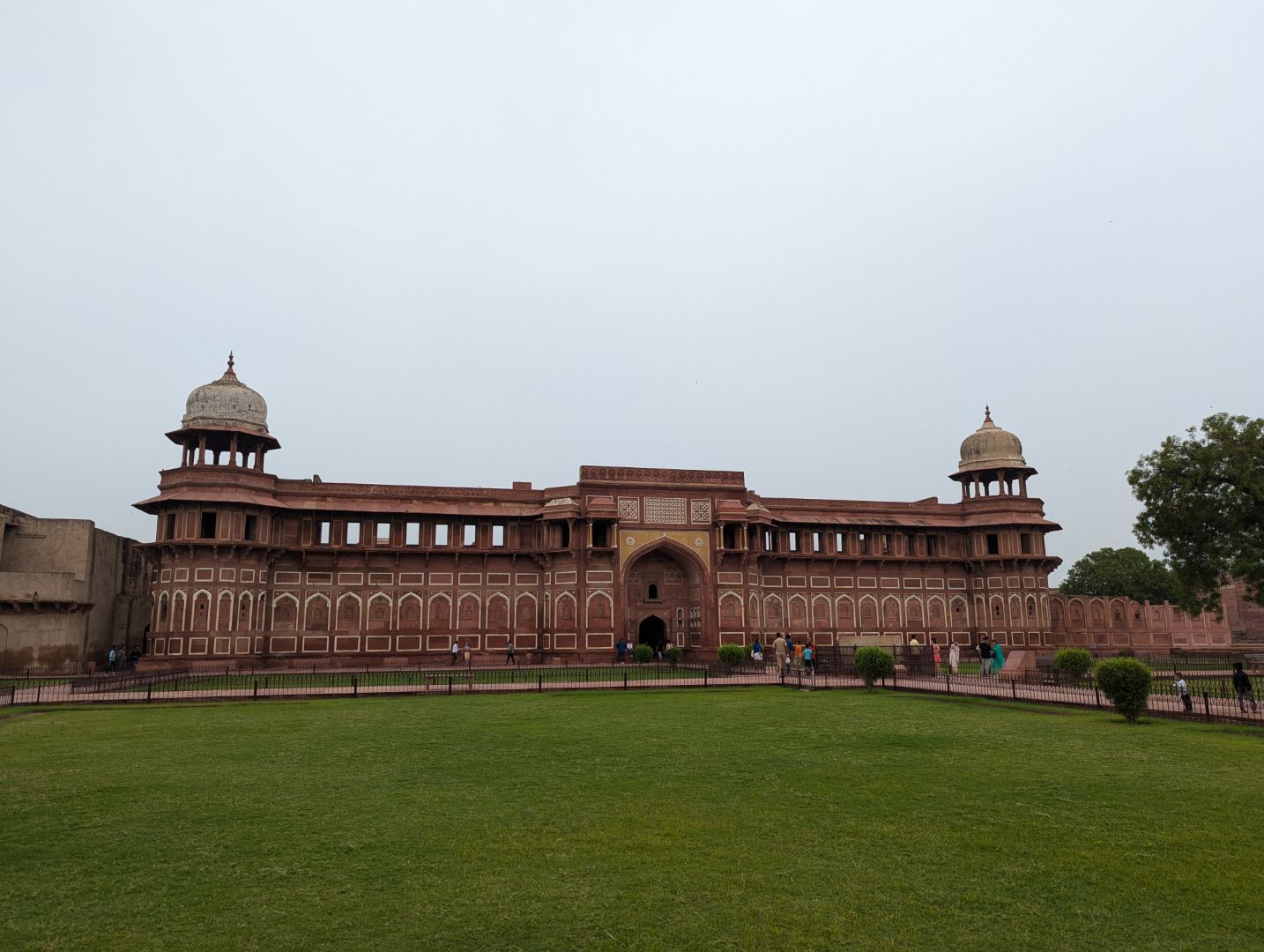
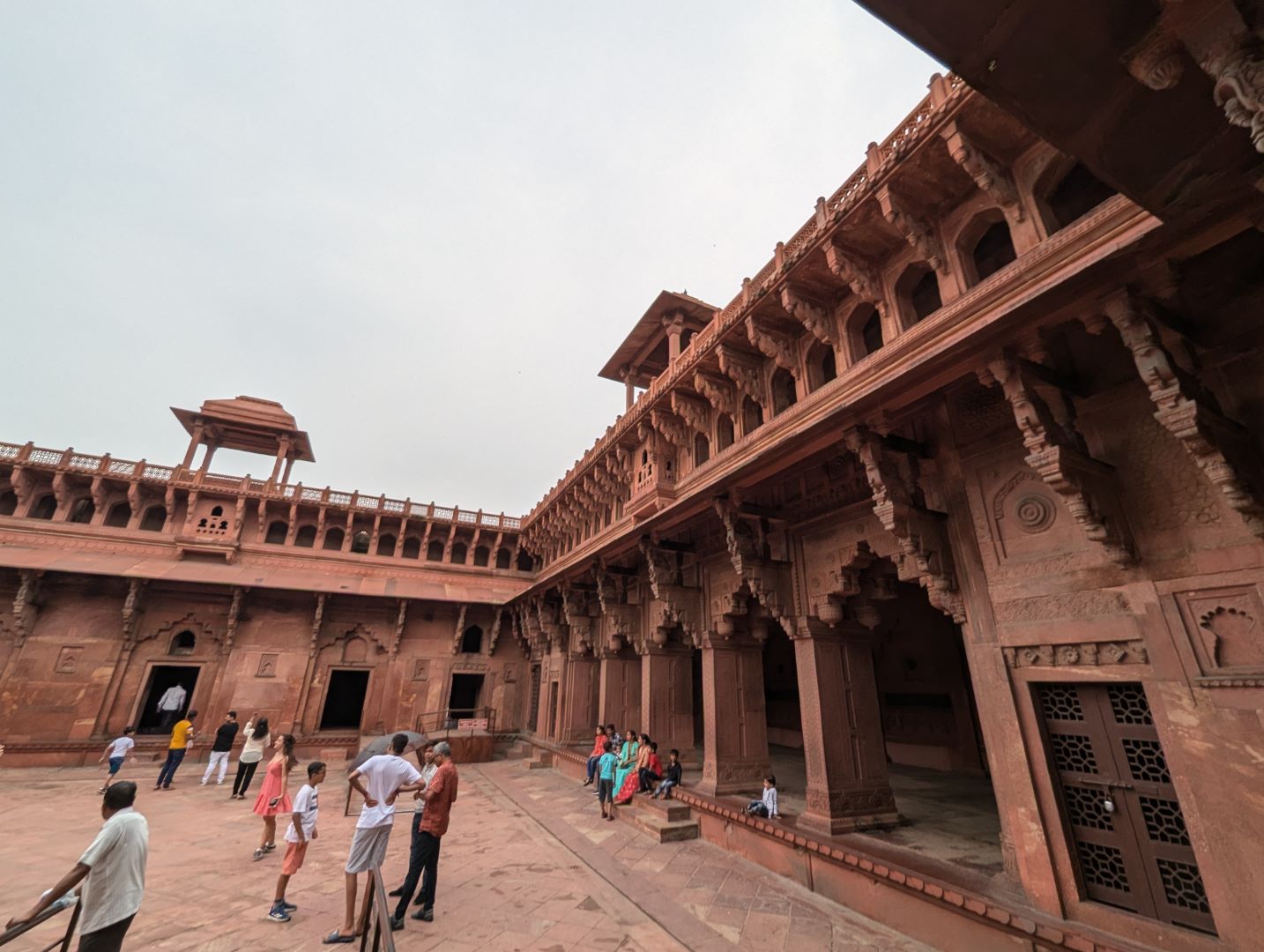

Inside the Jahangir Mahal, there are not only very intricate carved decorations but also fascinating tassel-shaped ornaments and lotus flower motifs, which are quite interesting. The palace gates also feature the Star of David, clearly showing a strong influence from Arab and Persian cultures.
Hall of Private Audience, Diwan-i-Khas
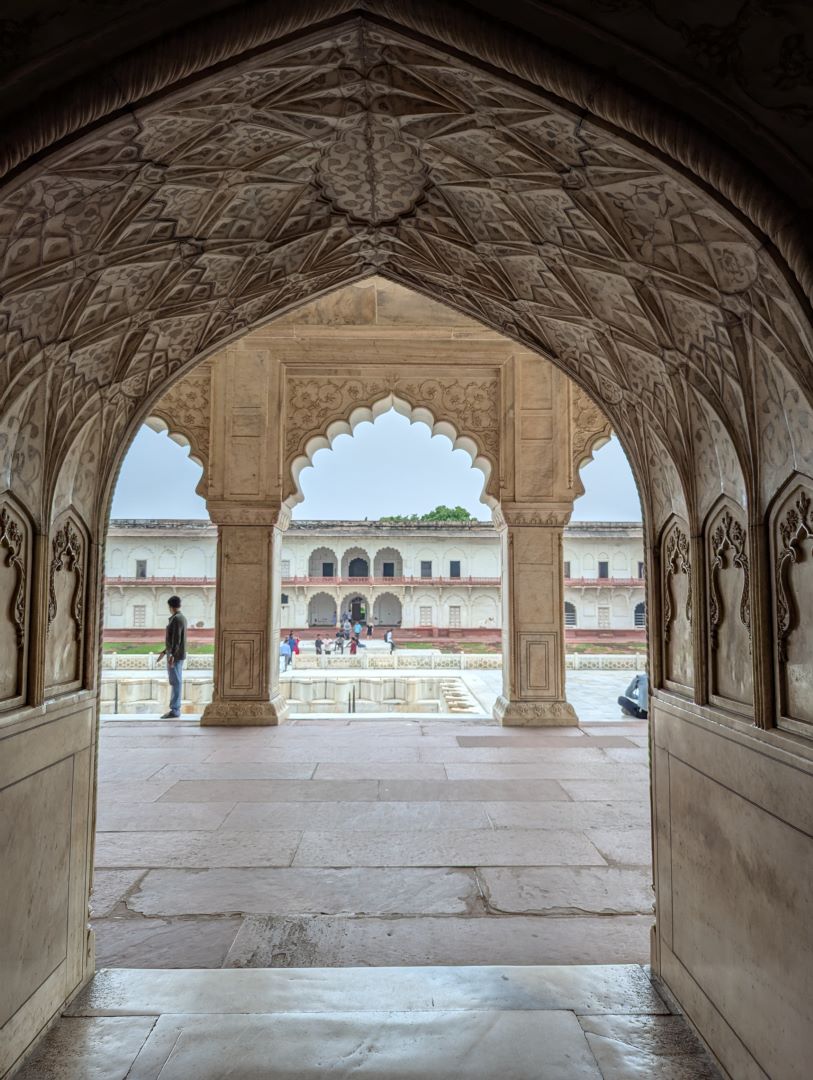
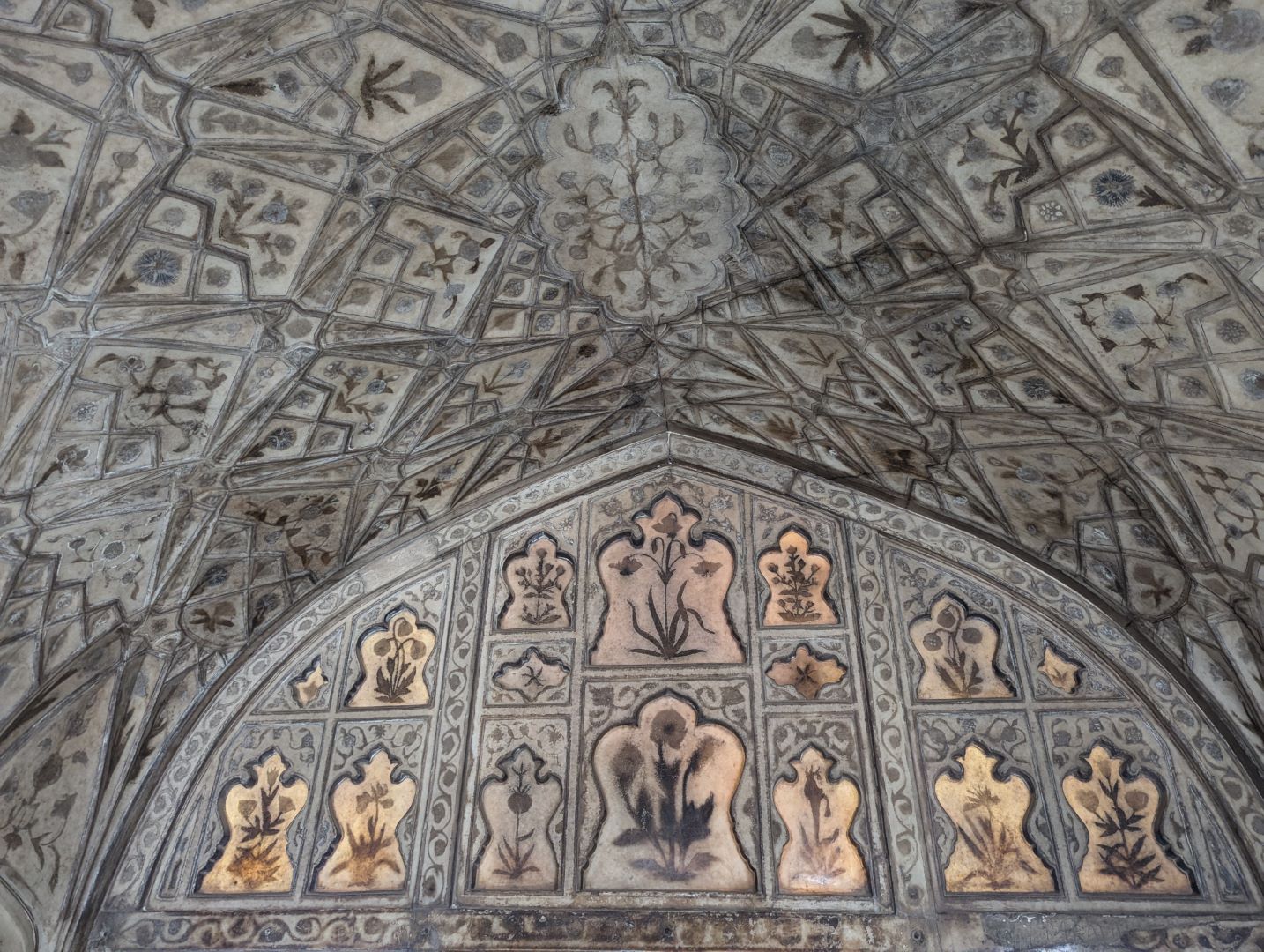
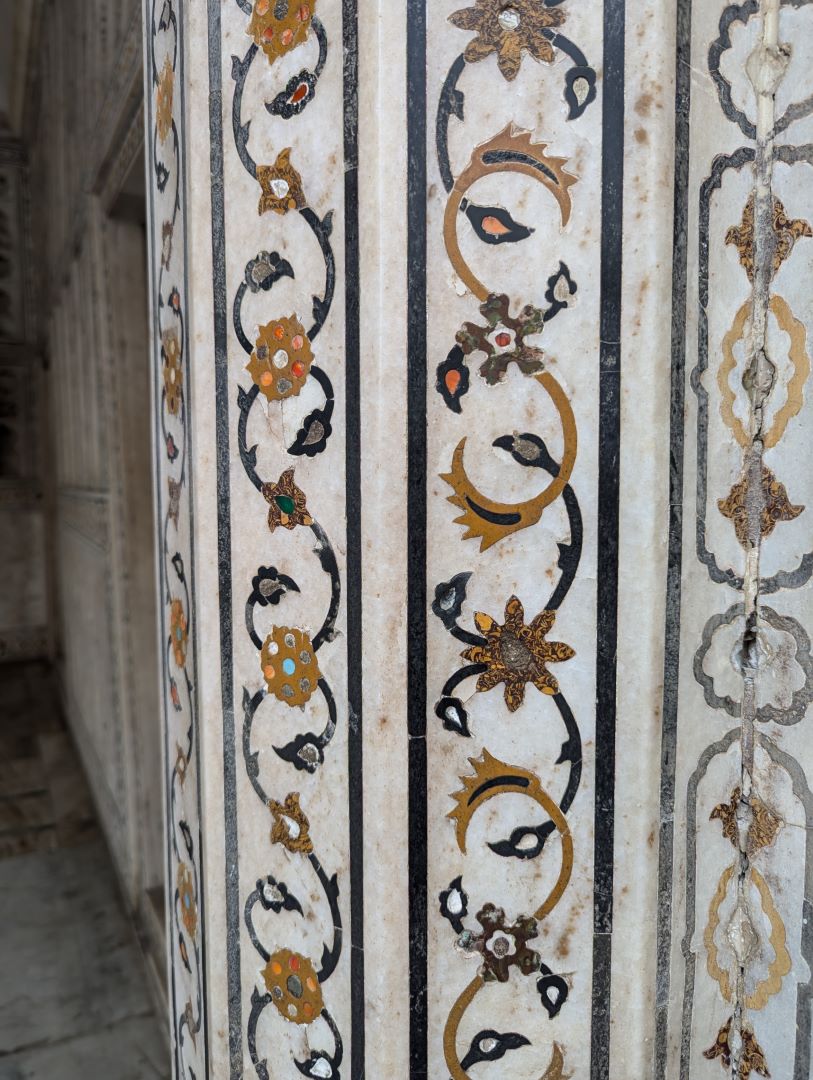
It feels a bit mysterious to find such a beautiful chamber within the heavy red fort. The colorful stones you see in the third photo are jewels, and you can see them glow translucently when illuminated with a phone light. Unfortunately, many of the gems in the foreground have been removed…
Our guide also tapped a part of the wall and told us to listen to the sound. Apparently, the wall was hollow inside, and they had devised a way to circulate water through it to keep the place cool.
The Prisoner’s Tower where Shah Jahan was Imprisoned
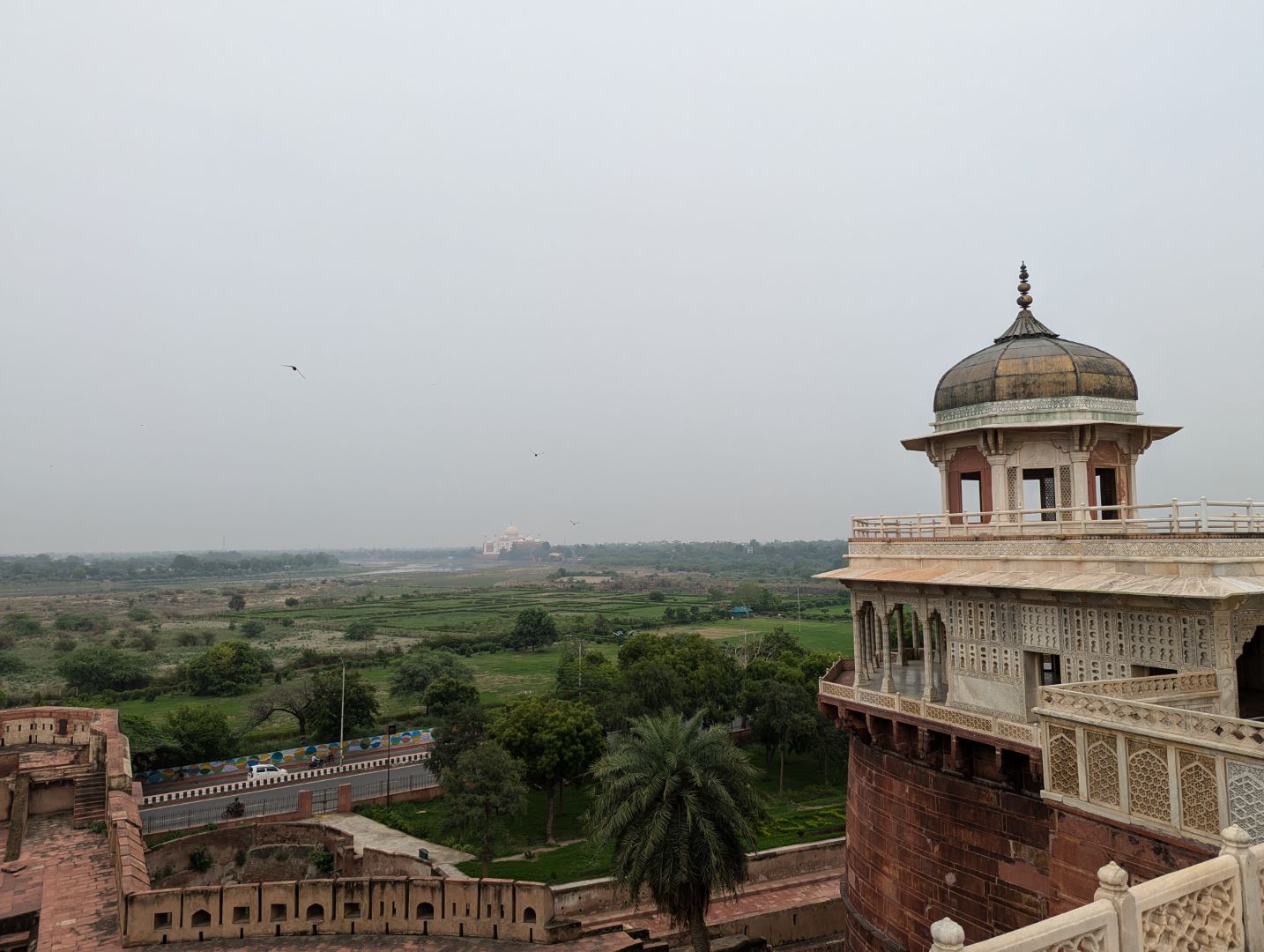
This is where Shah Jahan was imprisoned by his third son, who feared that power would be passed to his other brothers, so he killed them and confined his father. Shah Jahan reportedly spent 8 years imprisoned here, gazing at the distant Taj Mahal, where his beloved wife rested, and passed away at the age of 74.
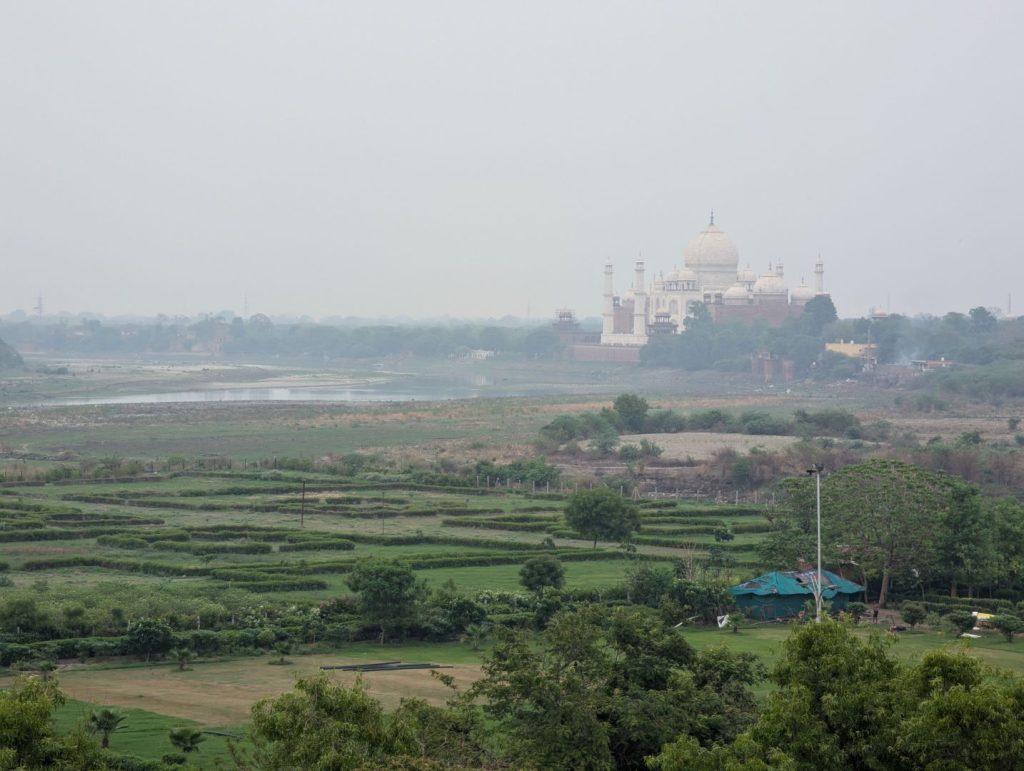
Shah Jahan, it’s said, planned to build his own black marble tomb facing the Yamuna River (to the left in the picture) and even a bridge connecting the two tombs across the river. That’s just wild… It’s easy to see why the empire’s finances took a nosedive.
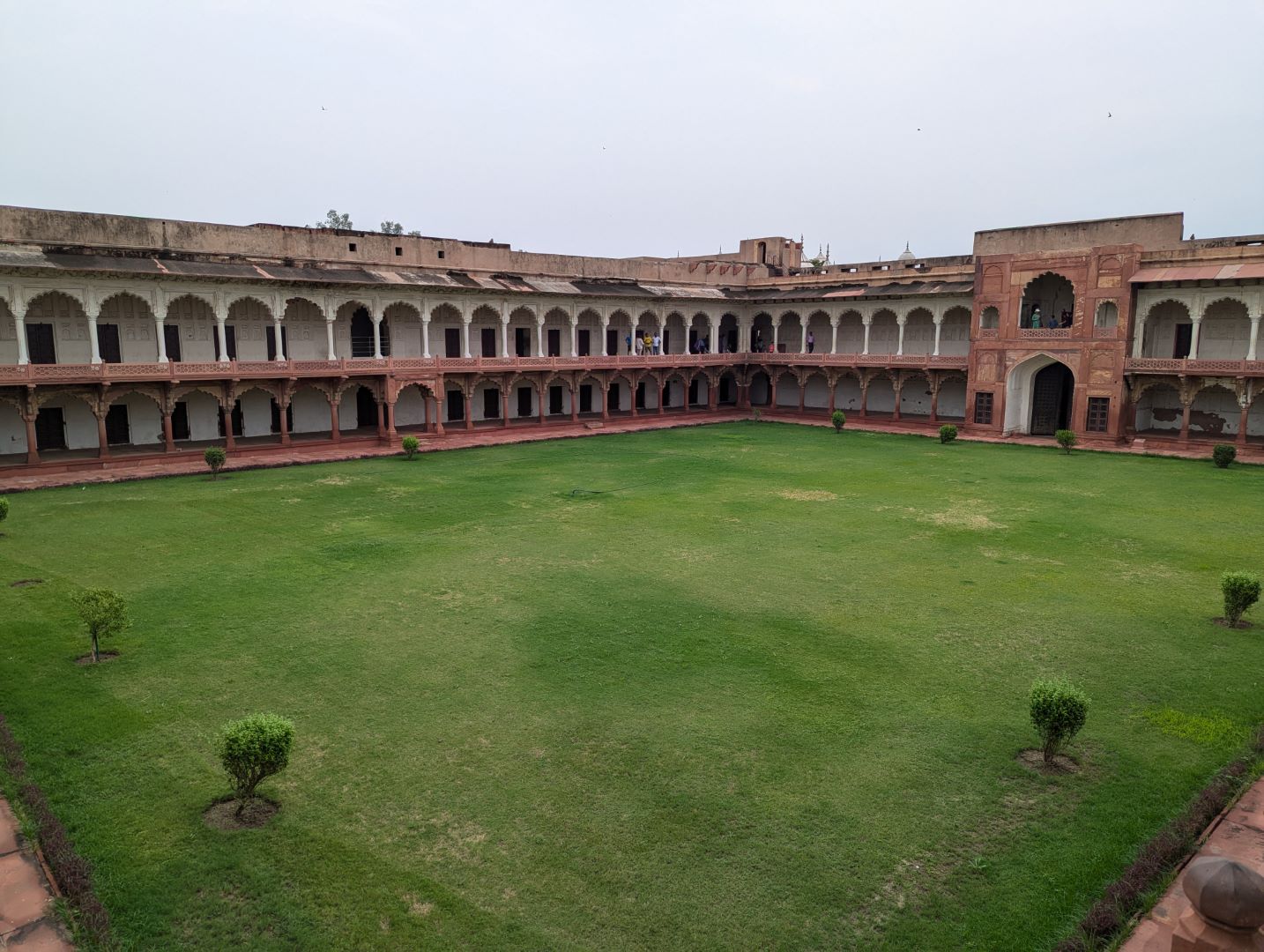
This fort housed many empresses, and this beautiful courtyard was apparently part of the harem.
Pearl Mosque
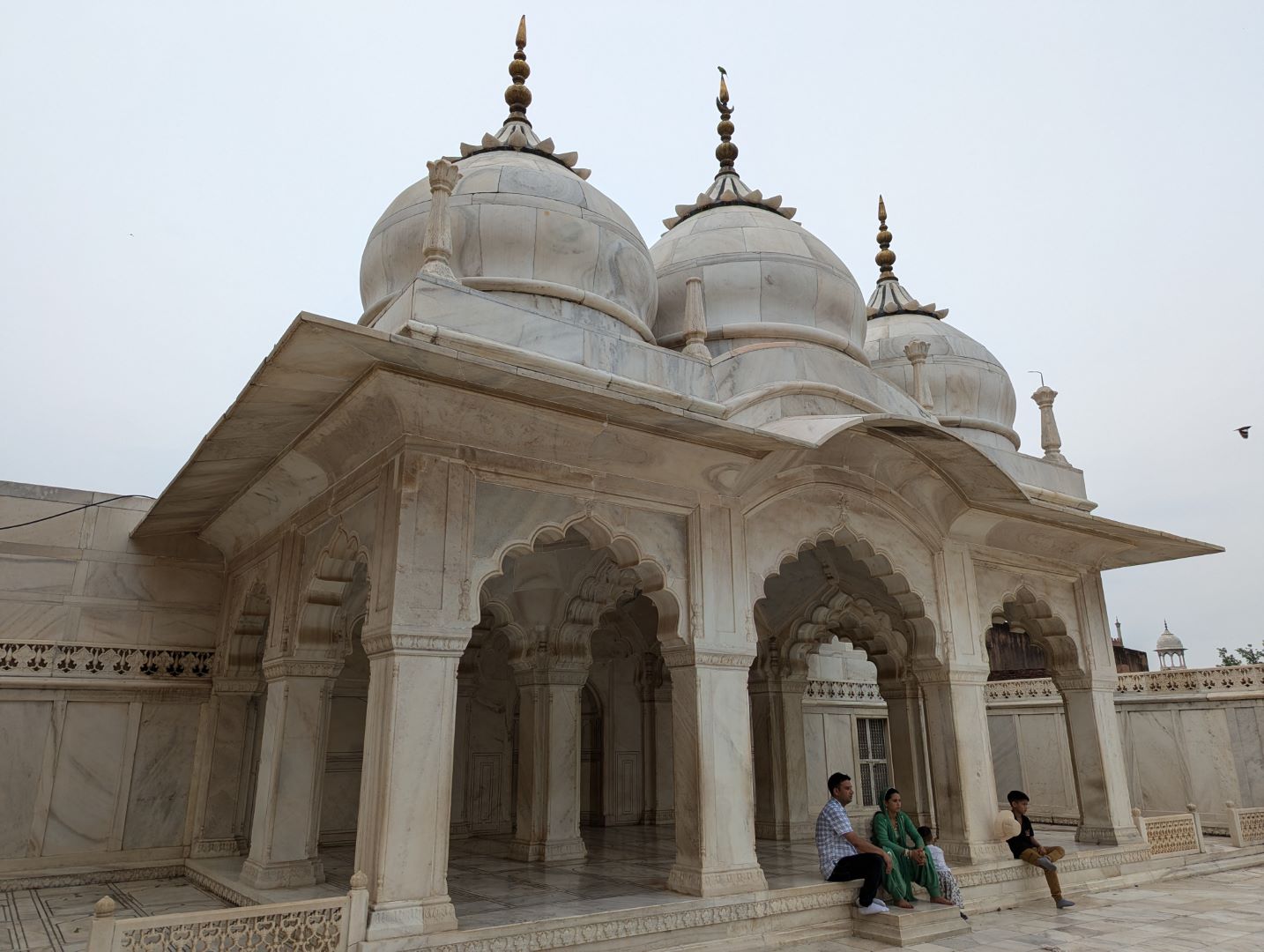
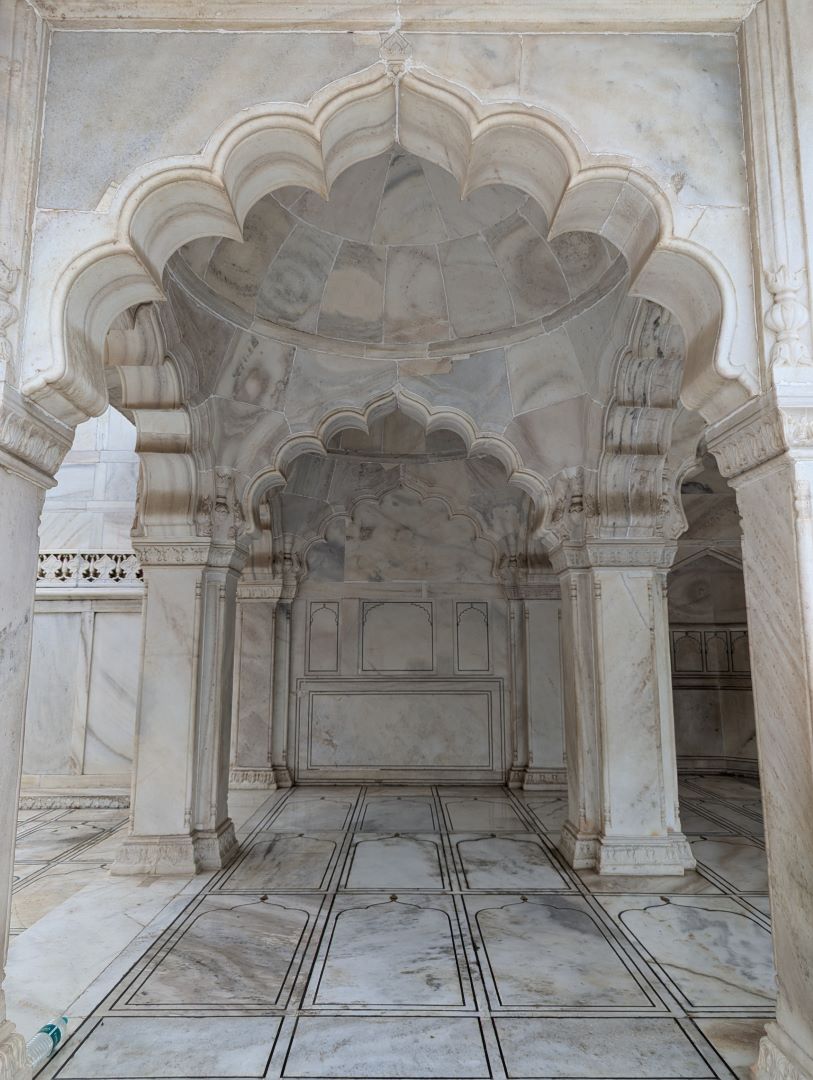
This pure white Pearl Mosque was built for the many empresses. It’s a small, very beautiful mosque with cute little domes perched on top, and tourists are required to take off their shoes before entering.
Hall of Public Audience, Diwan-i-Am
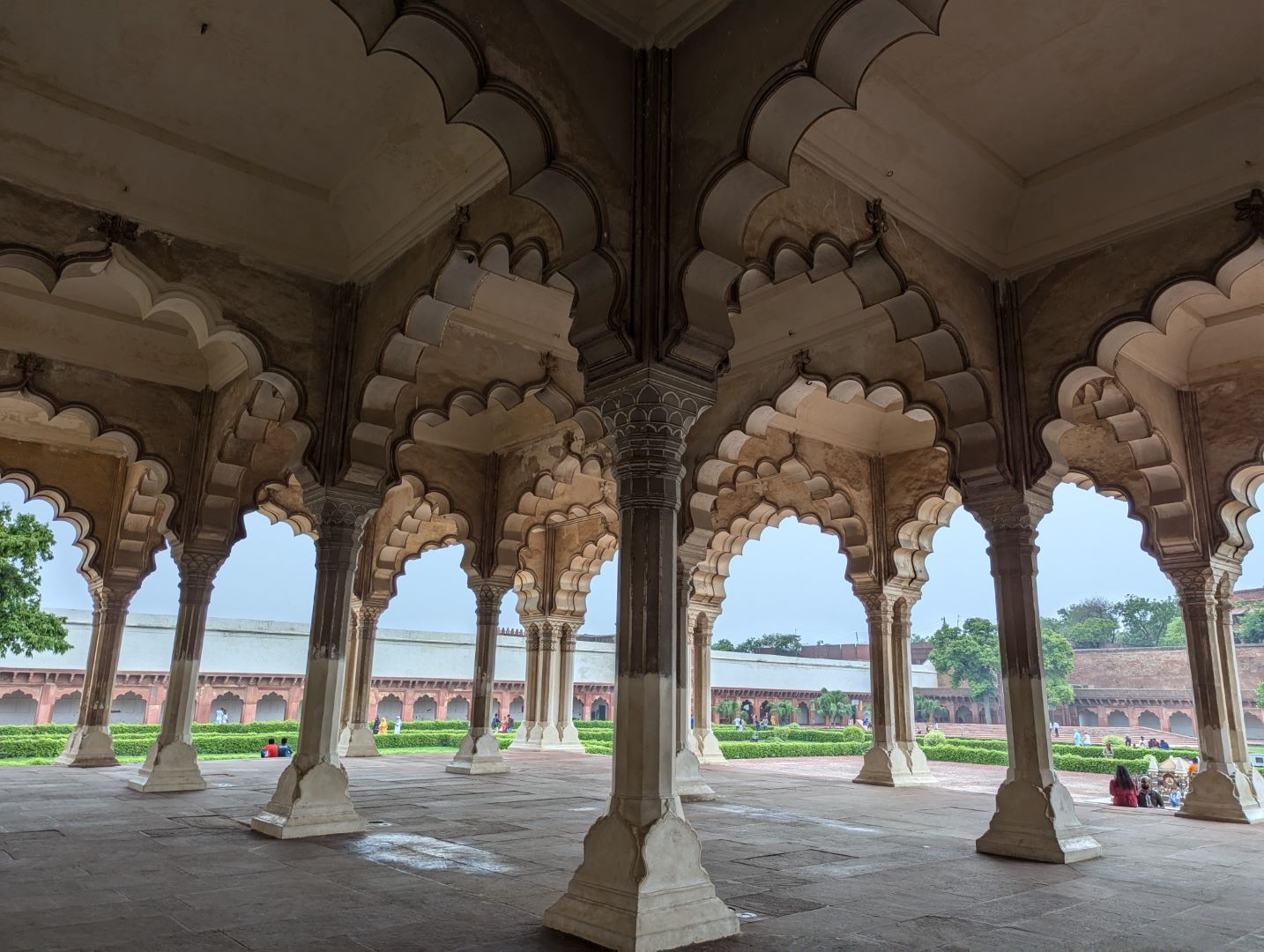
The Hall of Public Audience, formed by beautiful arches, was not built by Emperor Akbar but by Shah Jahan. It’s a chamber composed of regularly arranged pillars and arches. Standing as king in the central back of this space, it feels like he was also aiming for a visual effect.
Fatehpur Sikri
Hall of Public Audience (Diwan-i-Am) and Hall of Private Audience (Diwan-i-Khas)
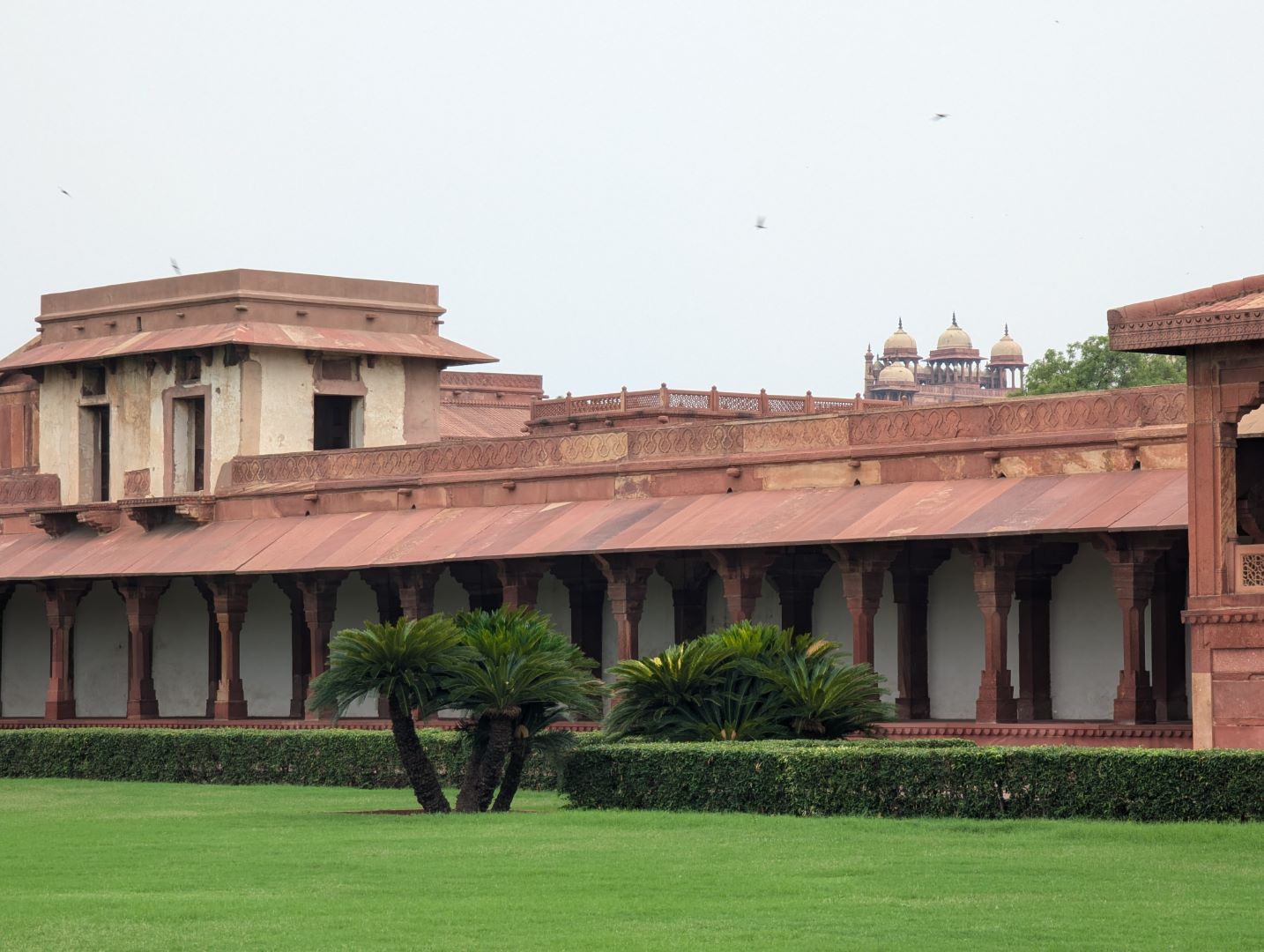
Fatehpur Sikri is a ruined city built by Emperor Akbar, located about 40 kilometers from the center of Agra. Despite being a magnificent architectural complex, its role ended after just 14 years, which is why many of the buildings here remain beautifully preserved, having seen little use.
Just like the Taj Mahal and Agra Fort, Fatehpur Sikri also has a Hall of Public Audience located in a corridor-enclosed area with a beautiful green courtyard. It is said that ordinary people of that era would meet the emperor here.
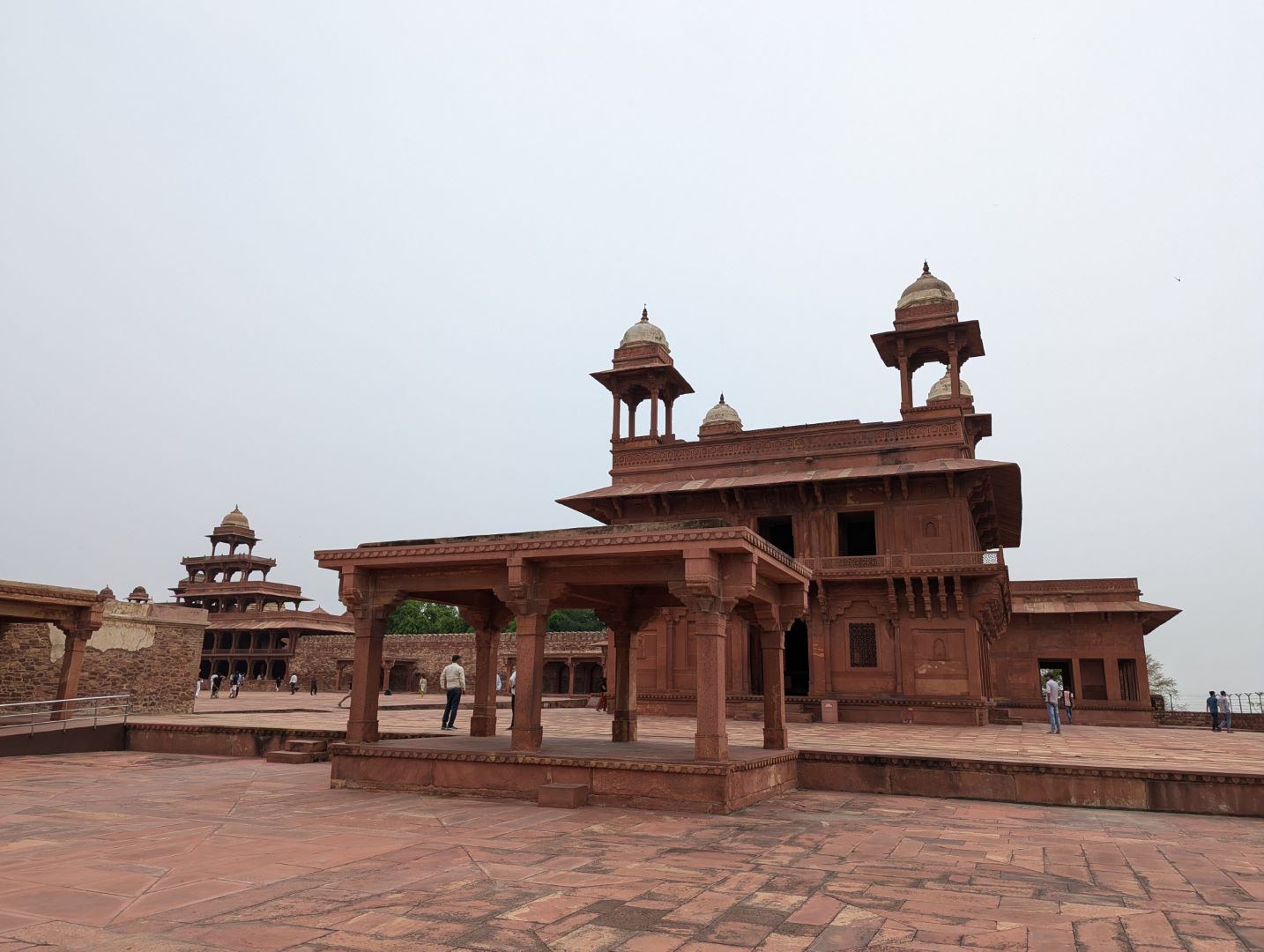
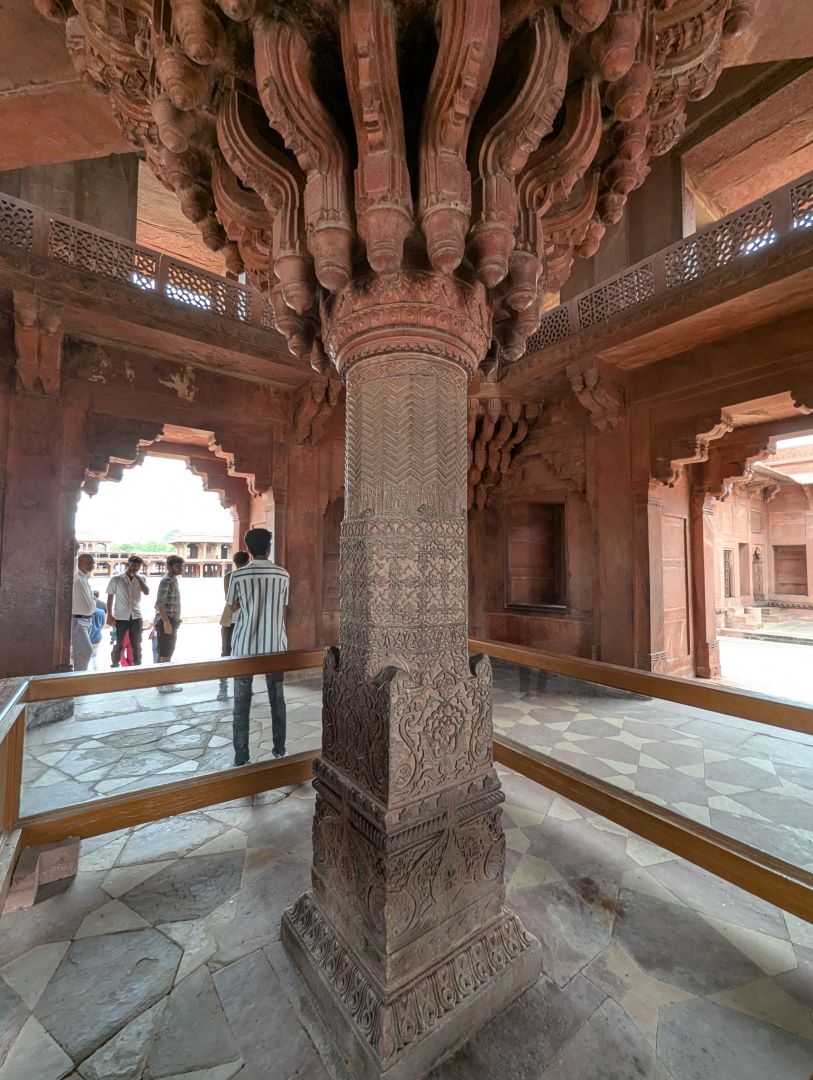
The Hall of Private Audience has an open ceiling, with a centrally placed pillar adorned with tassel-shaped decorations. Bridges extend in four directions from this pillar, suggesting a structure that allows access to the top of the pillar. Additionally, the pillar features beautiful carvings with different patterns, arranged from the bottom upwards.
Panch Mahal, the Five-Storey Pavilion
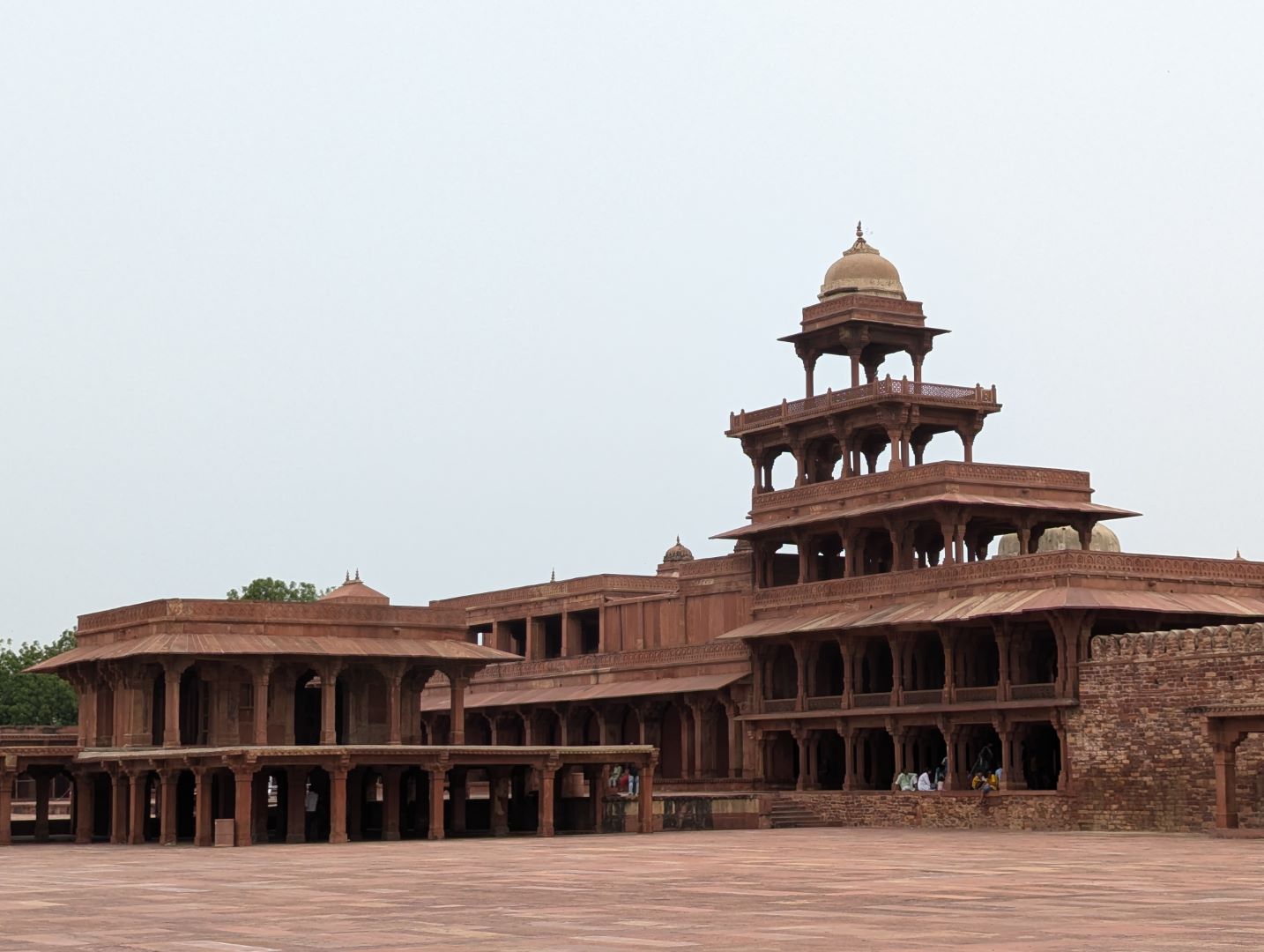
Entering the grounds with various buildings from the Hall of Public Audience, the first thing that catches your eye is the Panch Mahal, a five-story building supported by rows of pillars. It’s an impressive structure, making you wonder how such a building has remained so well-preserved. Each pillar on the lower levels has a different design, giving the impression of a very elaborate building.
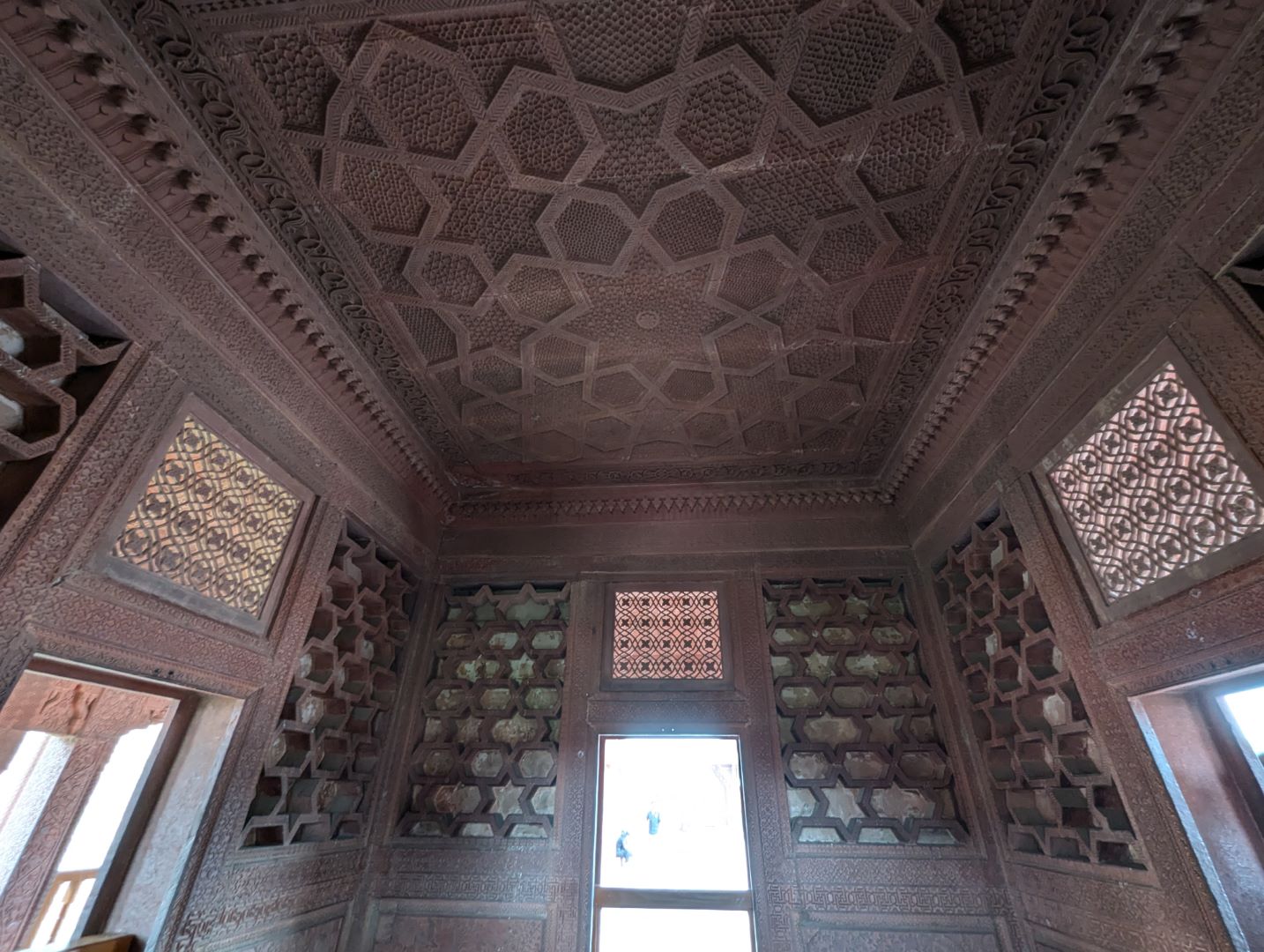
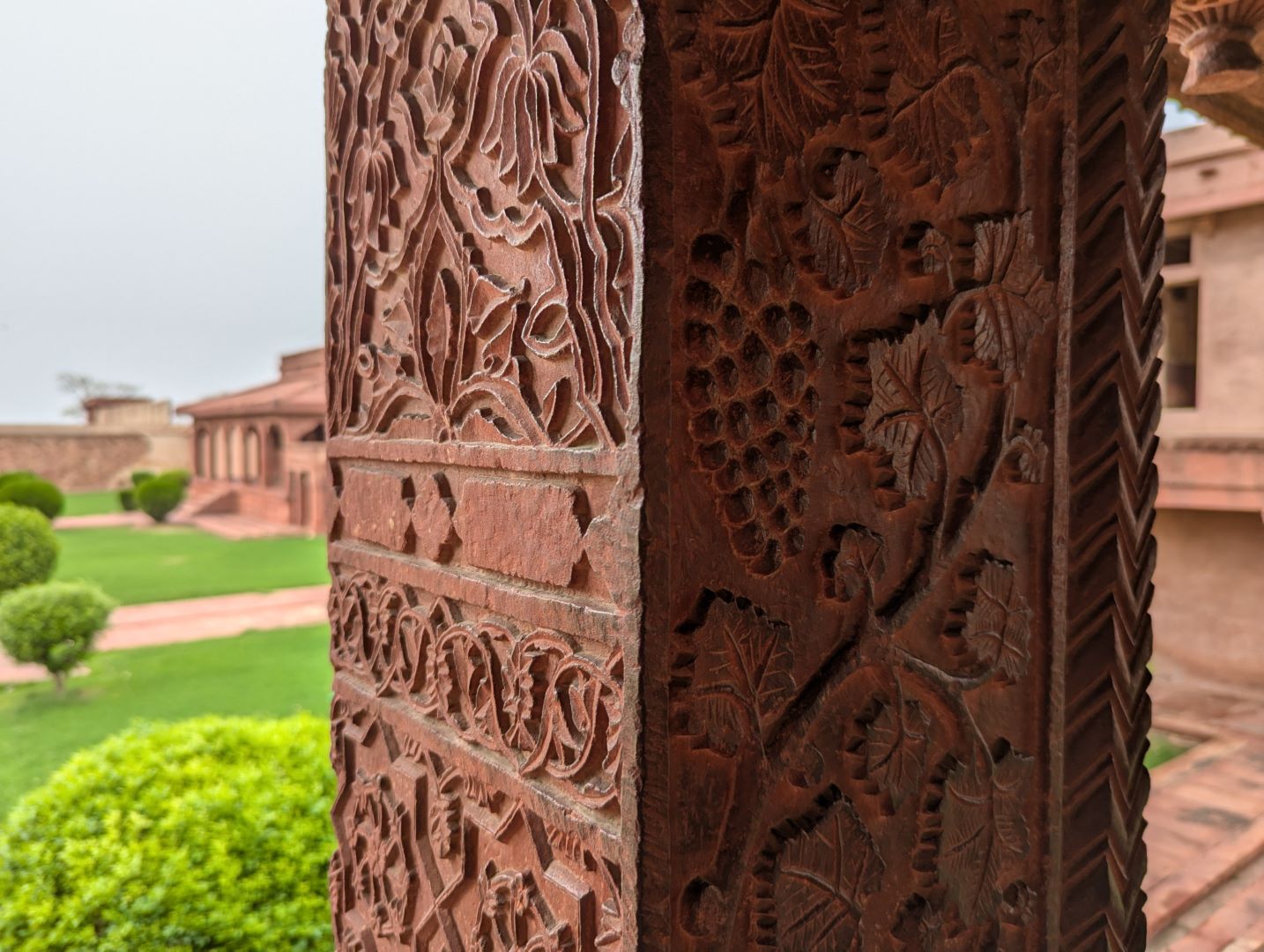
I’ve forgotten which building it was on the grounds, but I was very impressed by a room with extremely intricate carvings and fretwork. The pillars surrounding this building were also adorned with carvings of grapes and various other fruits, which left a strong impression on me.
Jodha Bai’s Palace
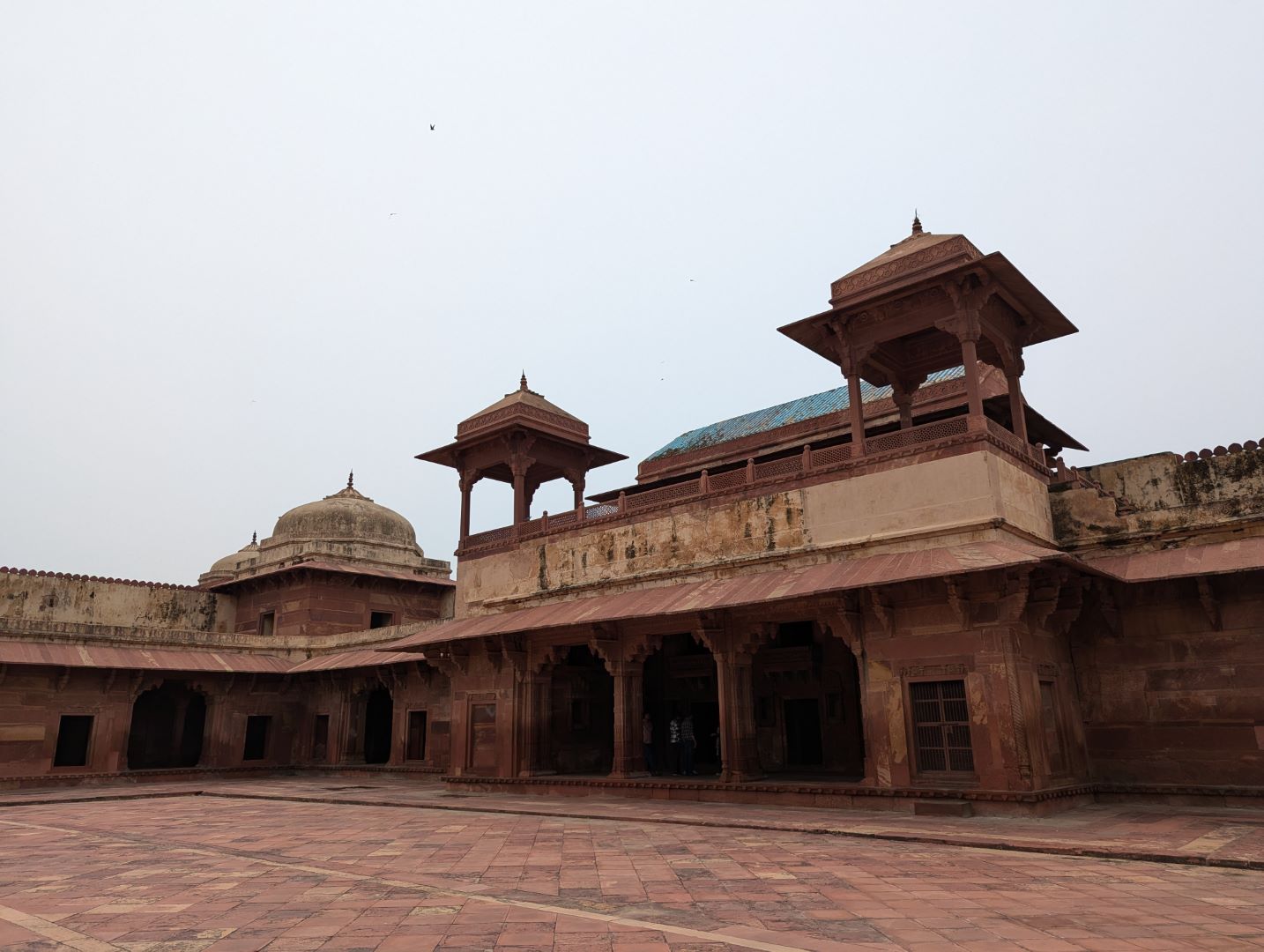
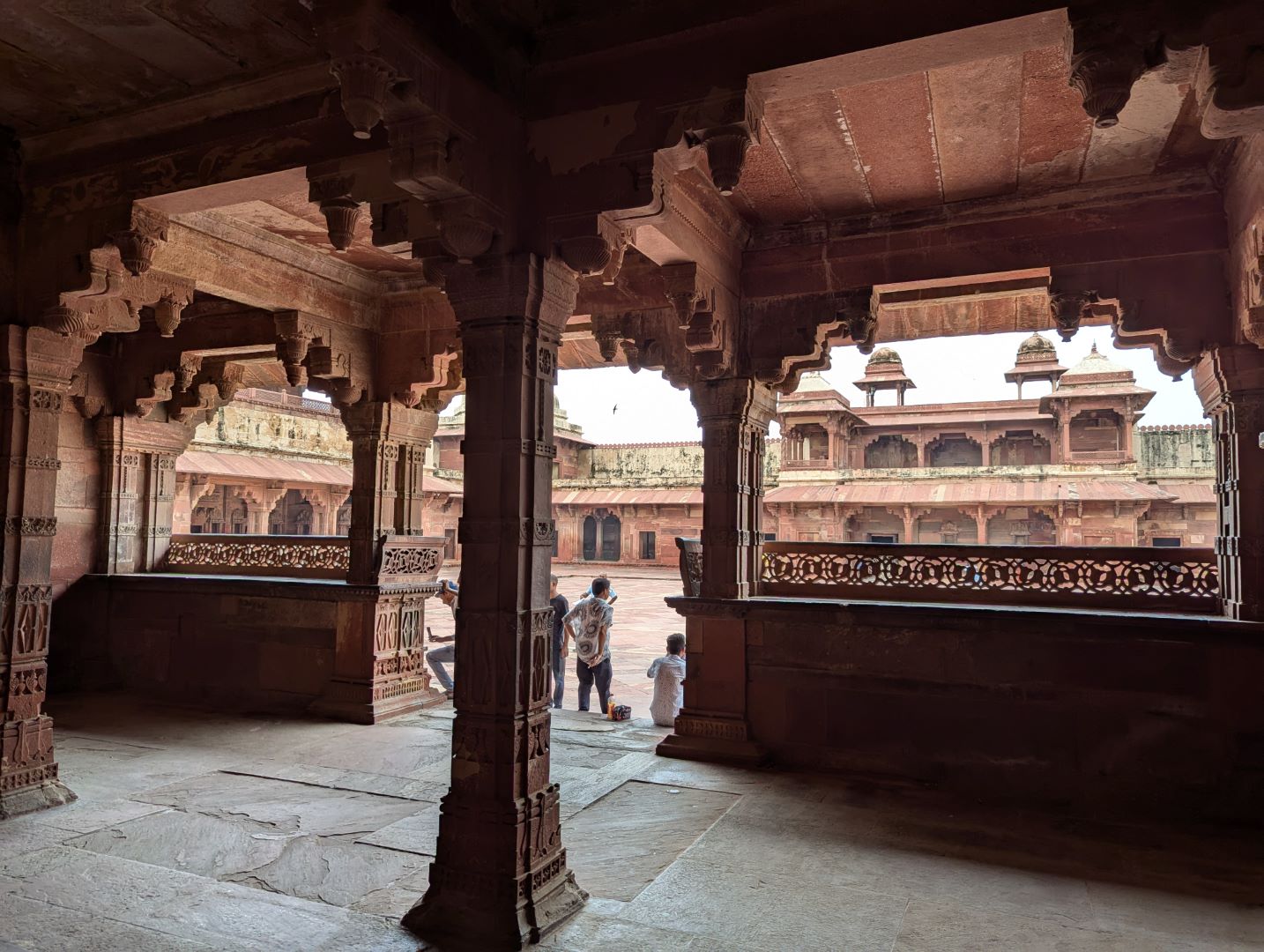
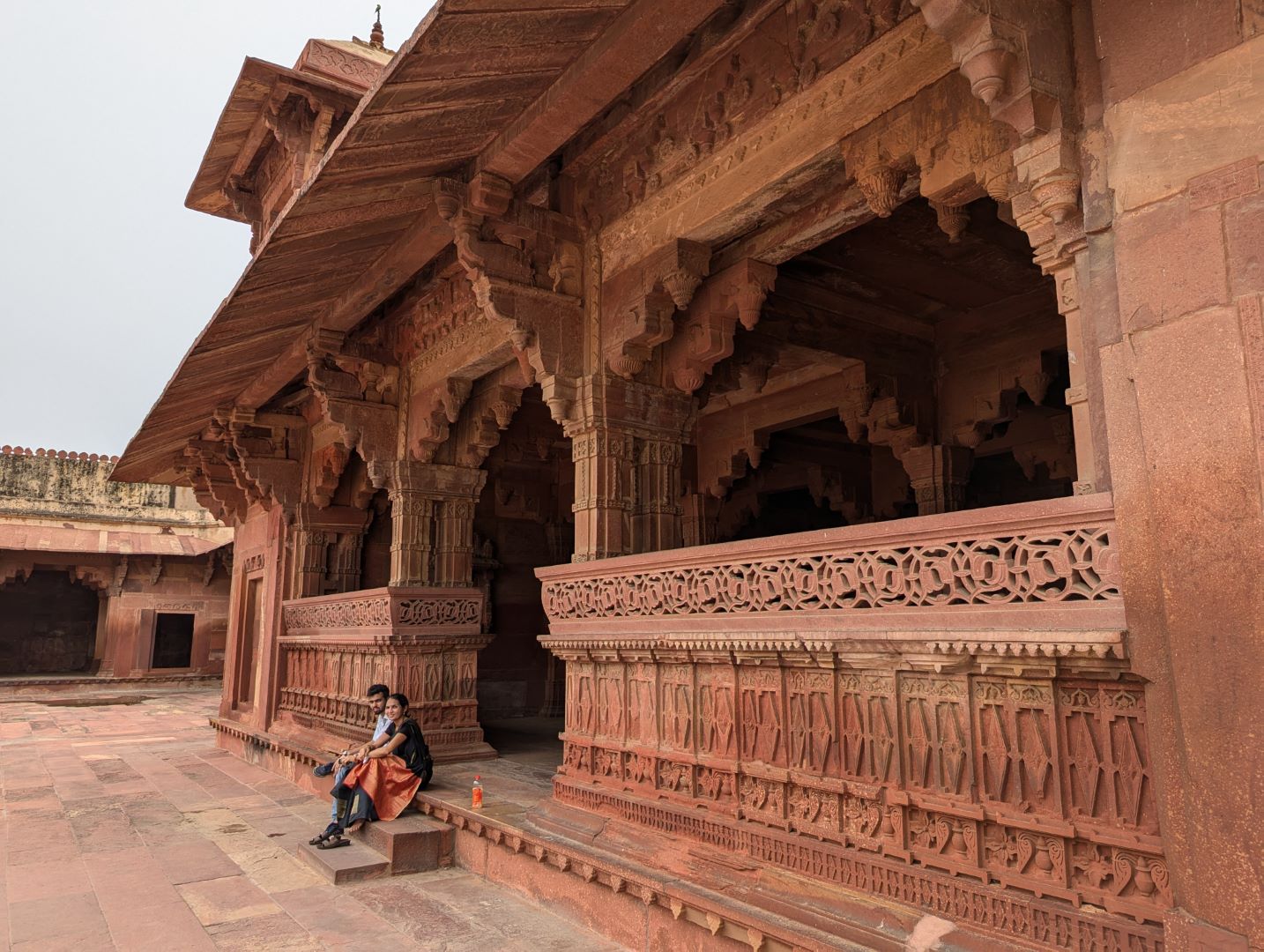
Jodha Bai’s Palace, which also served as a residential area for the court. It’s said to have been the residence of Emperor Akbar and his empress, and here too, you’ll find tassel-shaped decorations and intricate carvings.
Buland Darwaza, the Entrance to the Mosque Area
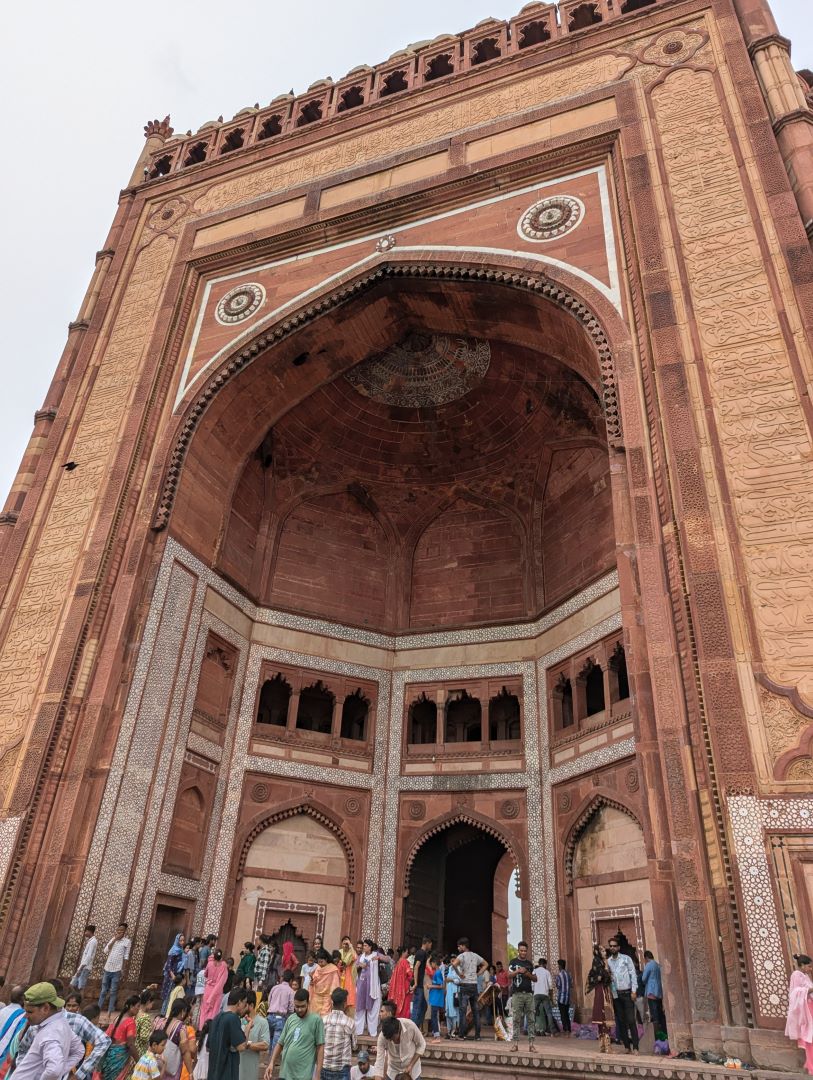
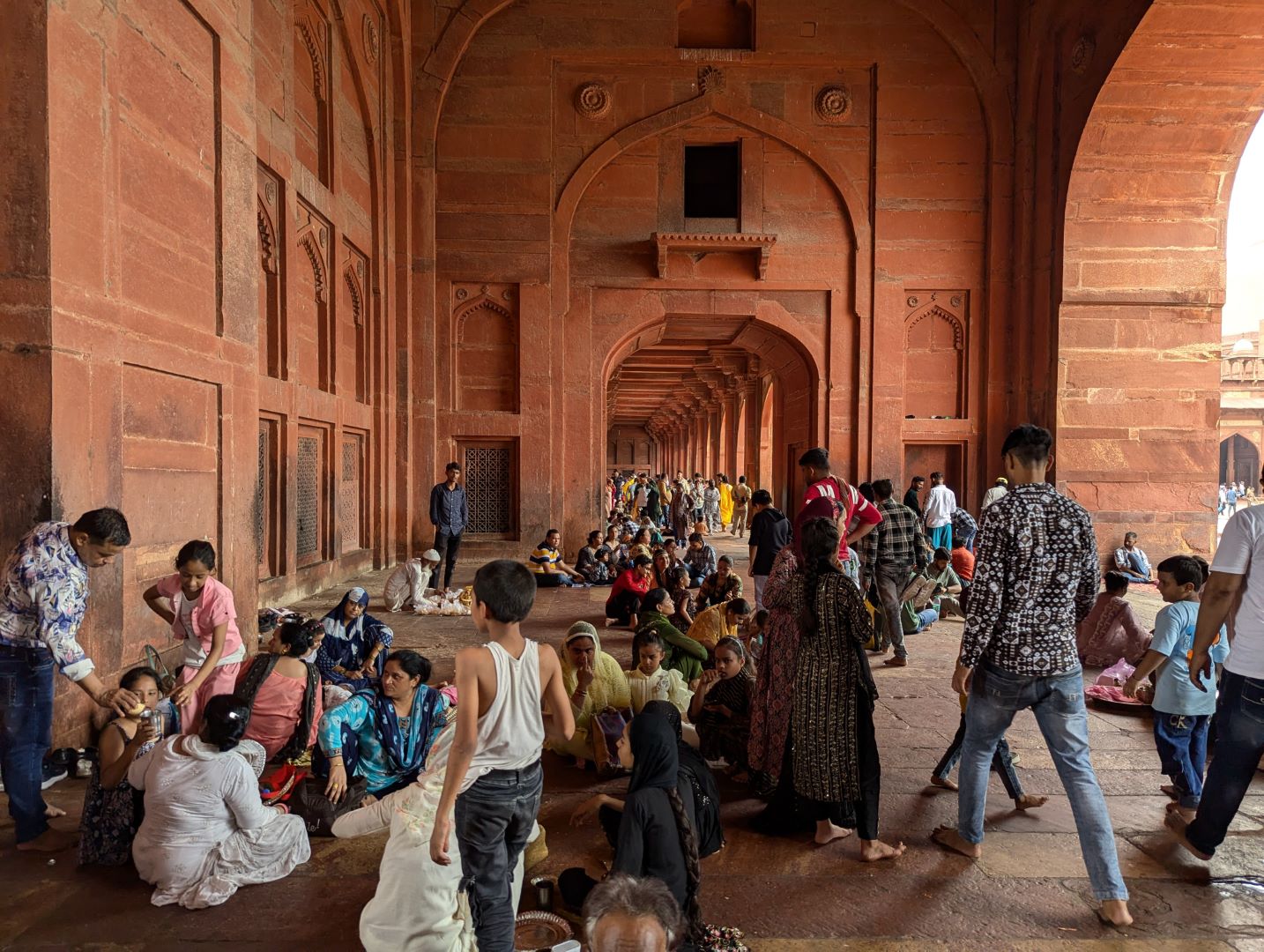
While not a direct entrance from the palace complex, the Buland Darwaza serves as the entrance to the vast mosque area. It’s a grand and incredibly beautiful gate, 54 meters high, constructed with white marble inlaid into red sandstone. As it’s a mosque area, everyone, including tourists, goes barefoot.
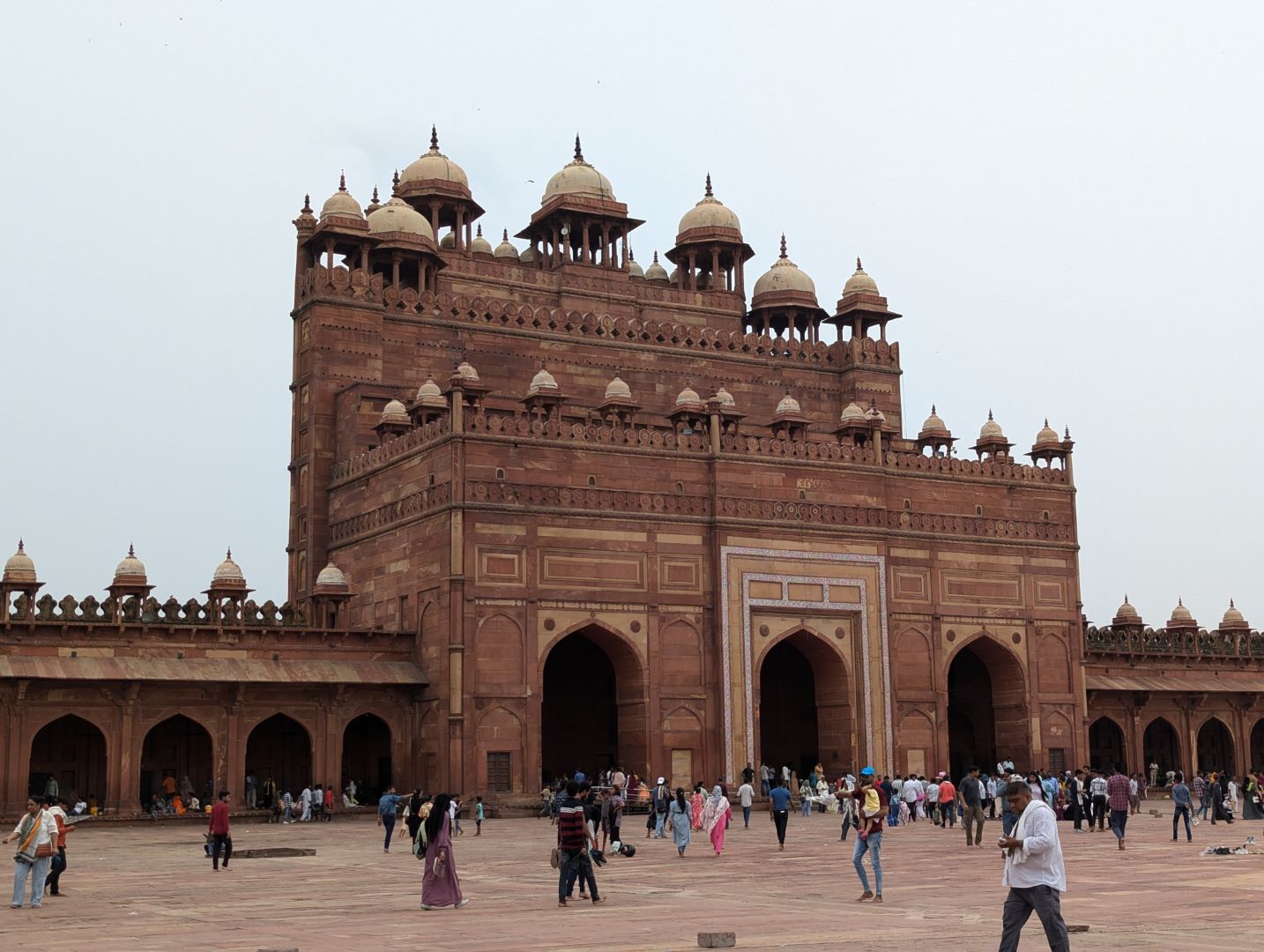
Viewed from inside the mosque area, the Buland Darwaza looks less like a gate and more like a fortress itself – colossal and majestic.
The Shrine of Salim Chishti, a Place of Prayer
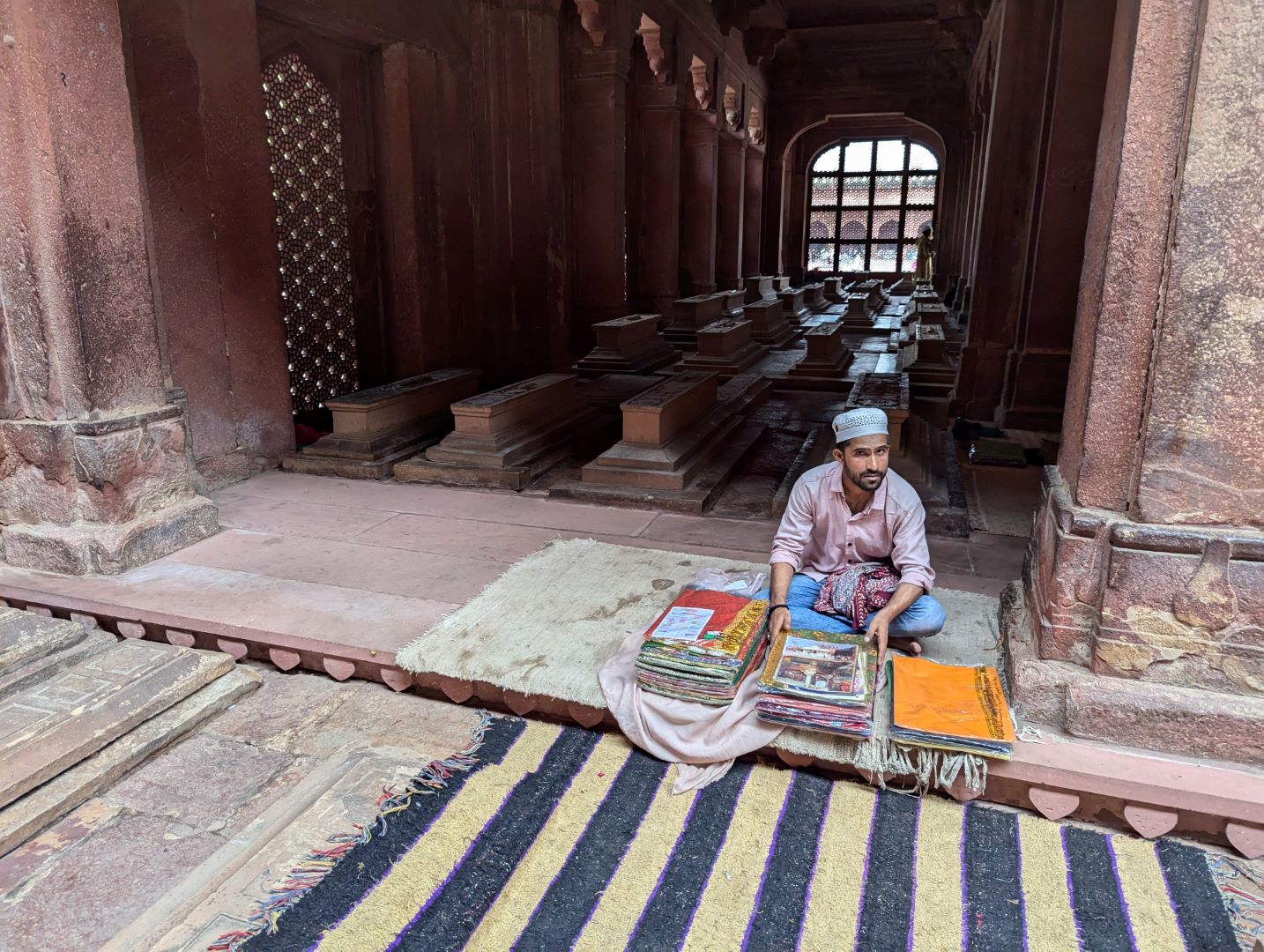
Our guide kept talking about tying a single thread to make three wishes come true, and then led us here. Apparently, you’re supposed to buy these decorative cloths, fresh flowers, and a thread here, and then pray at the white marble mosque or tomb. They pressured us with prices like 5000 rupees for a cloth for family, 3000 rupees for friends, and 2000 rupees for yourself. When I tried to refuse, they came at me with intense expressions, so I reluctantly bought something…
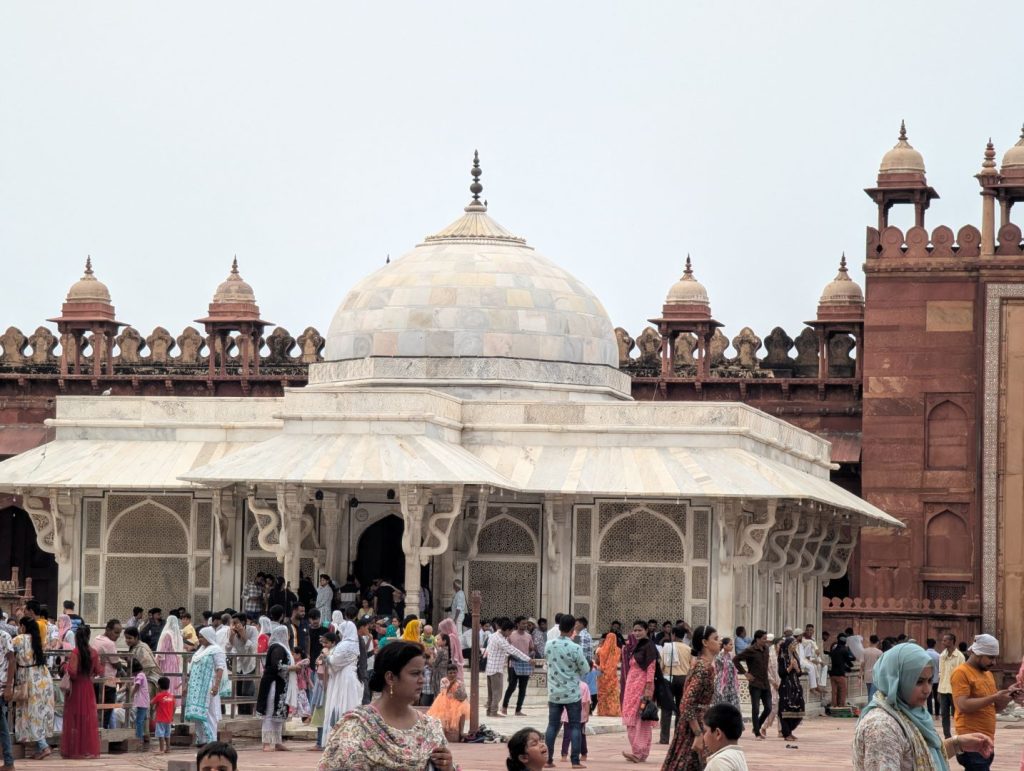
This is where we were taken next. If you look closely, the walls are adorned with incredibly intricate and beautiful lattice work. Inside, we were first handed white plastic, hat-like coverings to put on our heads. Since it was a place of prayer, I refrained from taking photos, but inside there was a spot covered with multiple layers of the cloths we had just bought. I also placed my cloth there, decorated it with fresh flowers, and then tied a thread to the lattice work, making three wishes. Beyond the lattice walls, you could see the scenery through them, making it a truly beautiful spot. Even though it was a bit forceful, I’m glad I got to experience it.
Tomb of Islam Khan
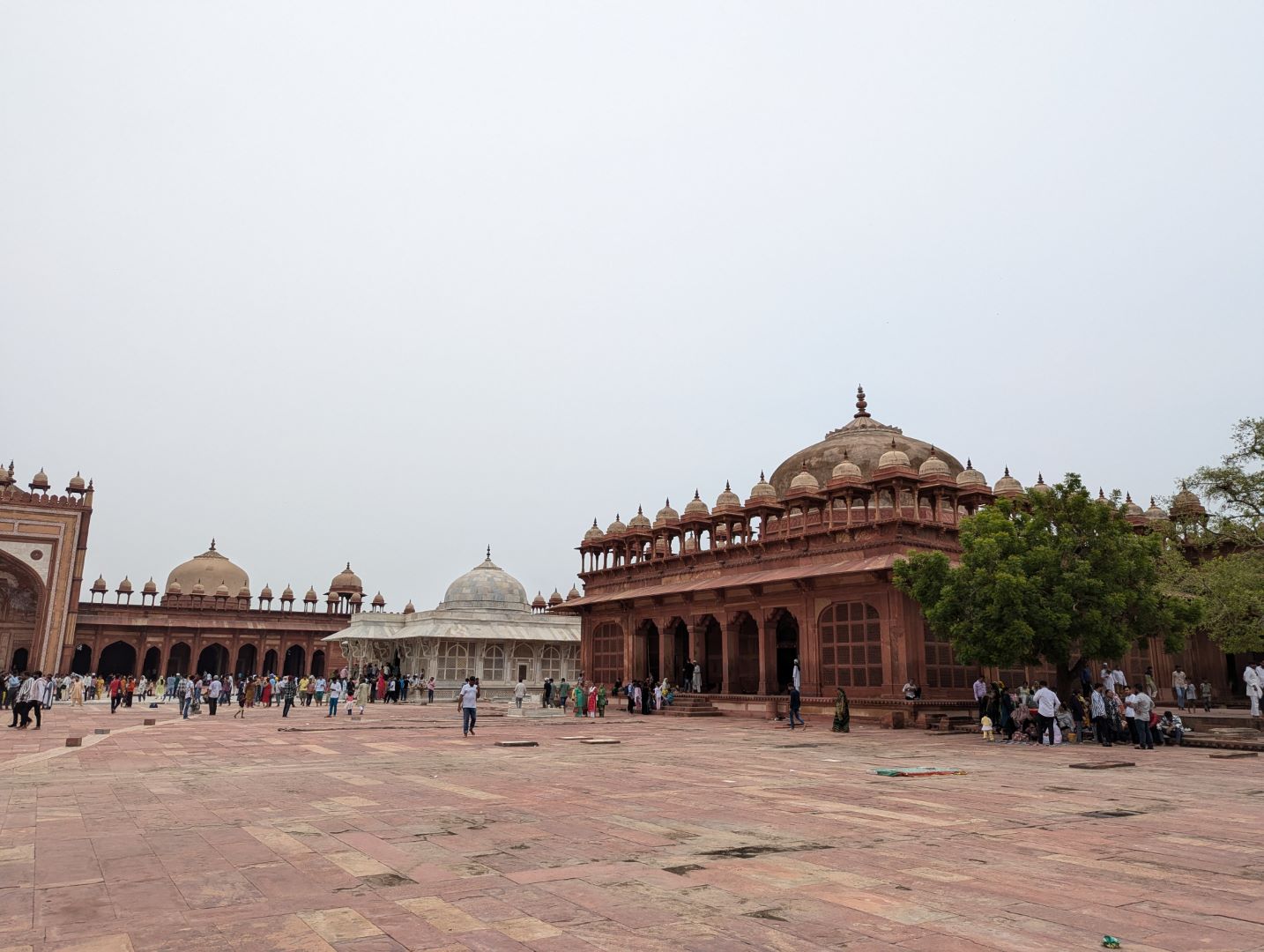
In the mosque area, besides the Shrine of Salim Chishti, there’s another large tomb, the Tomb of Islam Khan. These two are built side-by-side, and their contrasting colors and designs are quite interesting.
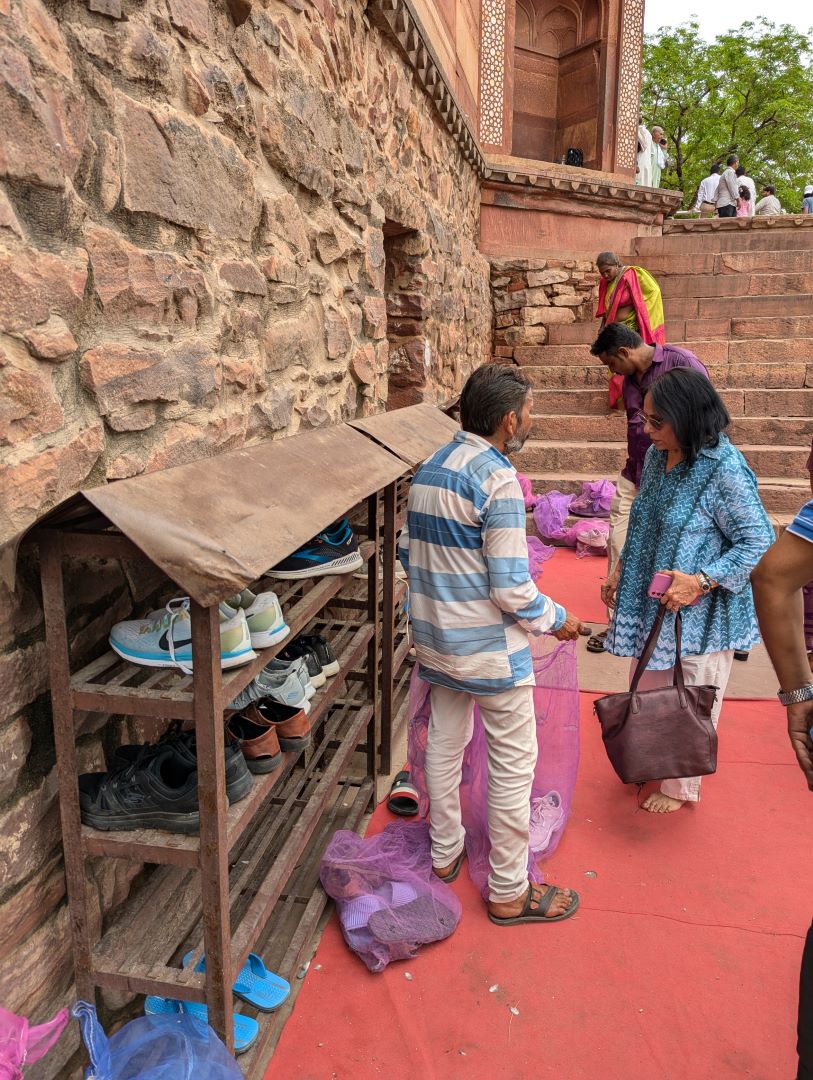
Even in India, where digital technology is rapidly spreading, there are also many people doing jobs where you wonder why they’re even needed, and constantly needing to tip them can be quite a hassle. Guides are like this too; everyone is incredibly pushy for money. But if you can dismiss it as ‘just how things are’ or even enjoy it, then traveling in India would likely be a lot more fun.

コメント