I wanted to visit Toyokawa Inari and the Nagashino Dam Spillway
I love just aimlessly looking at Google Maps to see what kind of places are within cycling distance on my eBike. I’d been wanting to visit Toyokawa Inari for a while and realized it was definitely within round-trip distance. But then I noticed a place to the northwest called the Nagashino Dam Spillway, which looked like an impressive waterfall-like dam. I debated cycling there, but honestly, I chickened out and decided to just rent a car for the trip.
Toyokawa Inari: One of Japan’s Three Great Inari Temples

Having done the Shikoku Pilgrimage and living near a large Fudo-sama temple, I’ve always been interested in shrines and temples. I was really looking forward to seeing Toyokawa Inari, which is famous for the fox deity and success in business. I entered through the very grand Somon main gate.
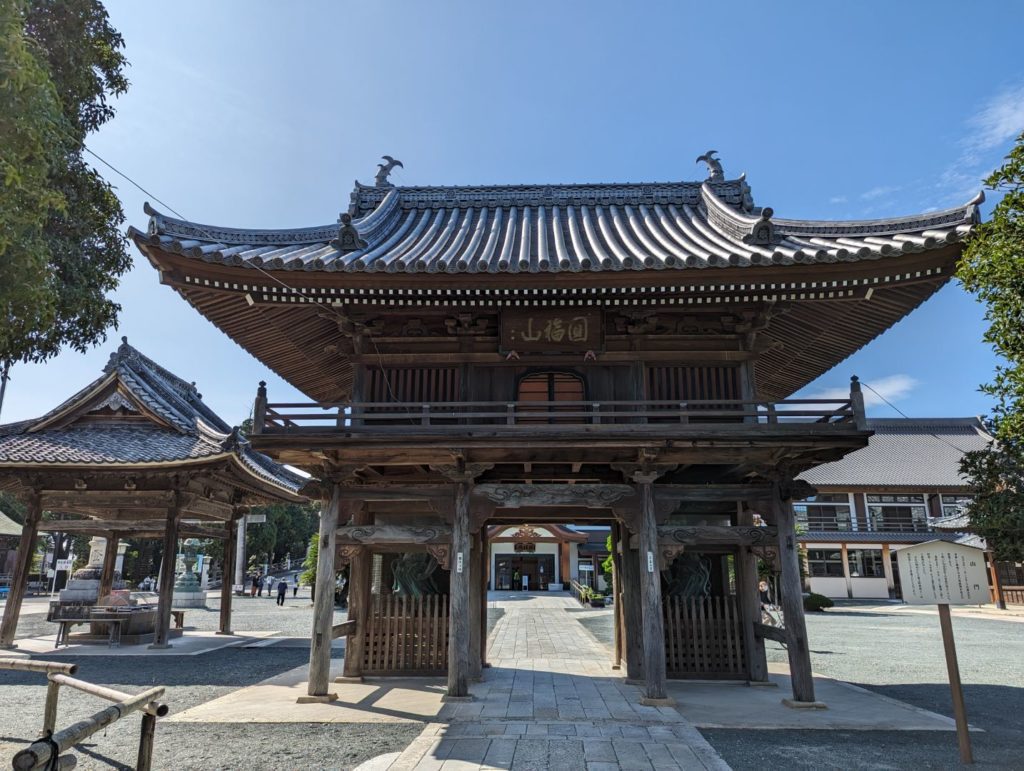
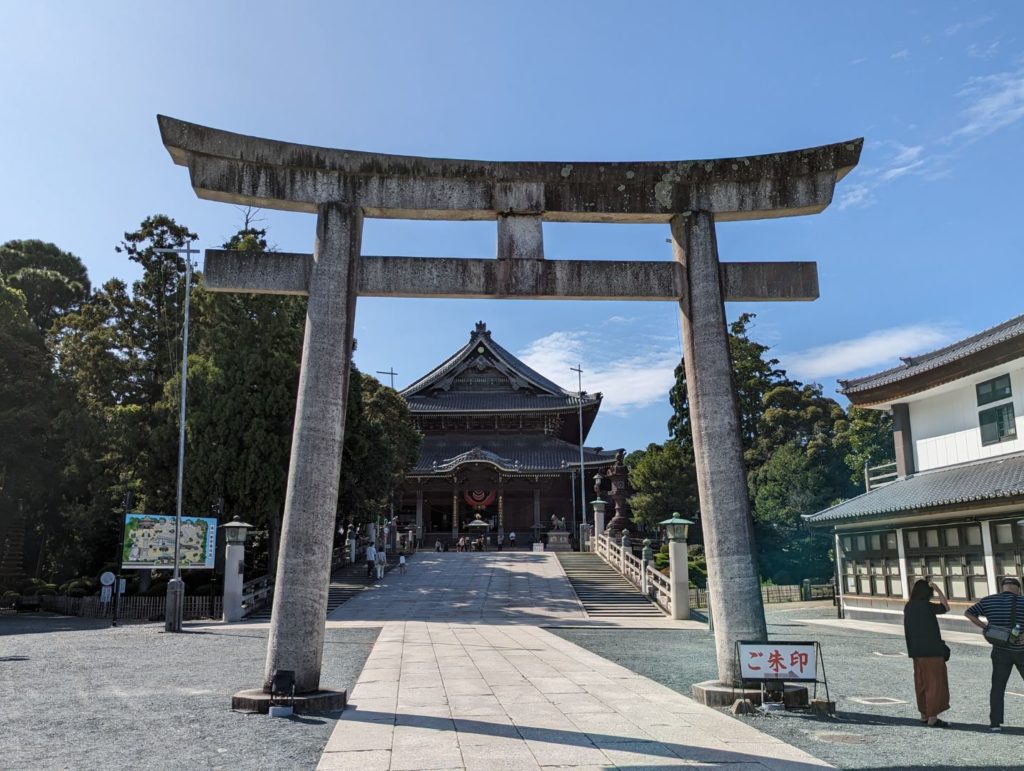
As soon as you pass through the Somon, the magnificent Sanmon gate catches your eye. What’s interesting is that there’s a torii gate right next to it. I remember seeing this a few times during my pilgrimage—it’s based on the concept of ‘Shinbutsu-shugo’ (the syncretism of Shinto and Buddhism). Even so, seeing it in person still feels a little unusual and mysterious.
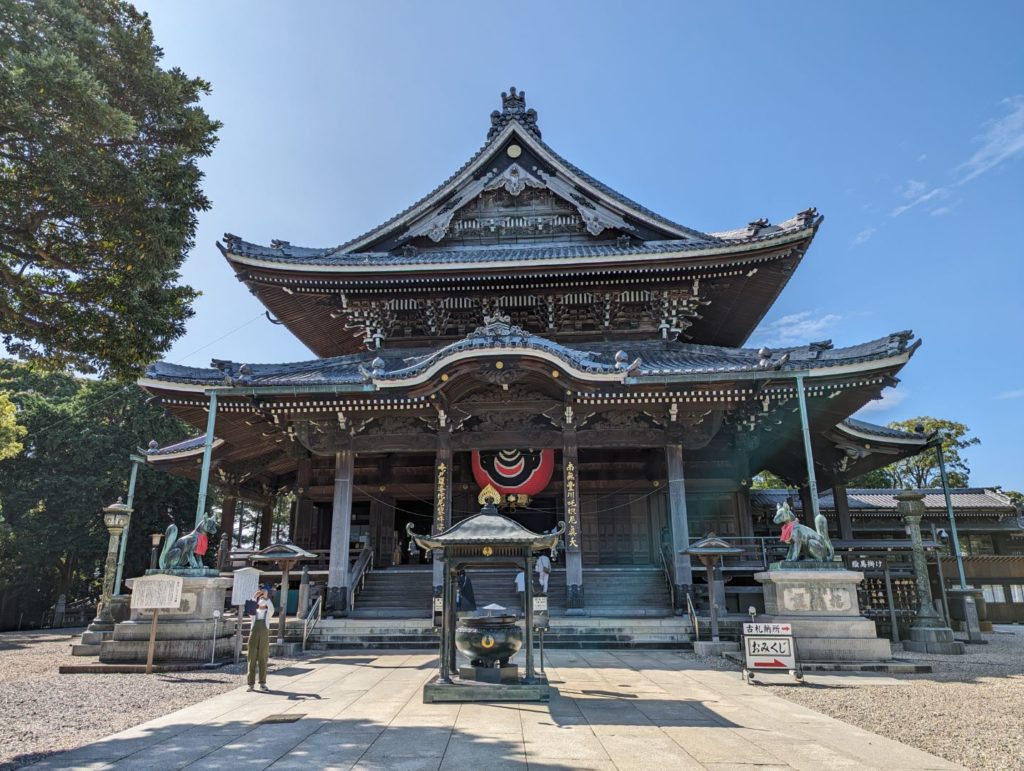
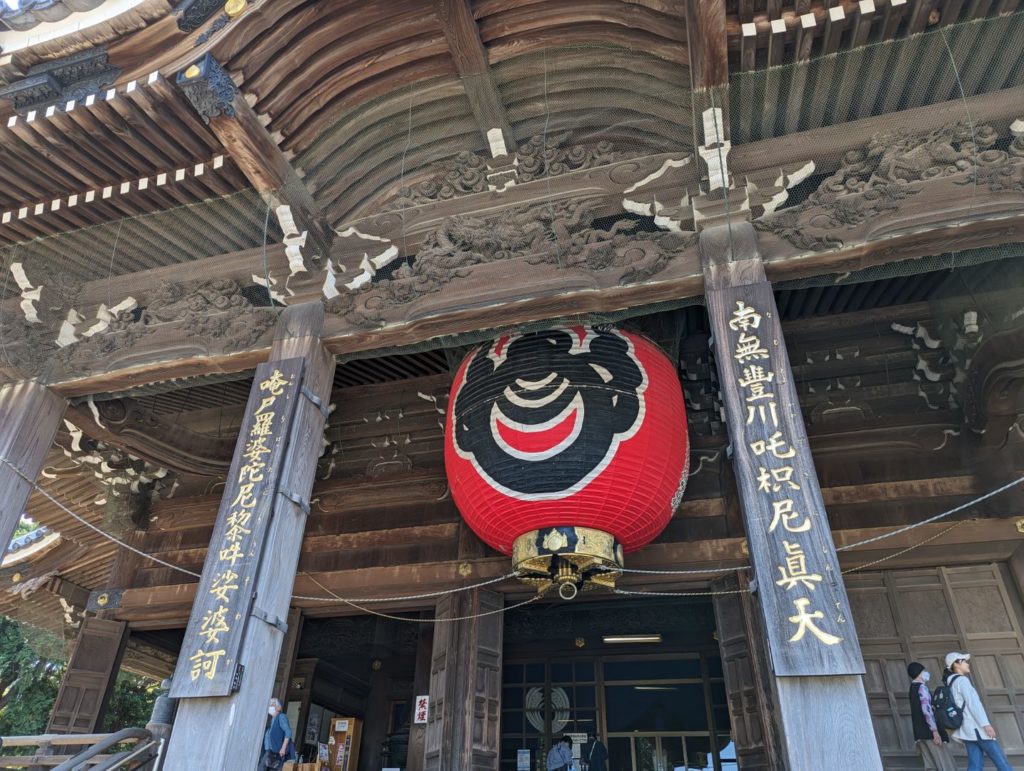
The main hall is tall and very impressive, flanked by foxes. The inscription on the right pillar says “Toyokawa Dakini-Shinten,” the guardian deity enshrined here. Apparently, it’s called Toyokawa Inari because this deity was depicted carrying stalks of rice while riding a white fox. Also, the mantra on the left pillar, “On Shirabatta Niriun Sowaka,” was something I wasn’t familiar with, which was quite interesting to me.
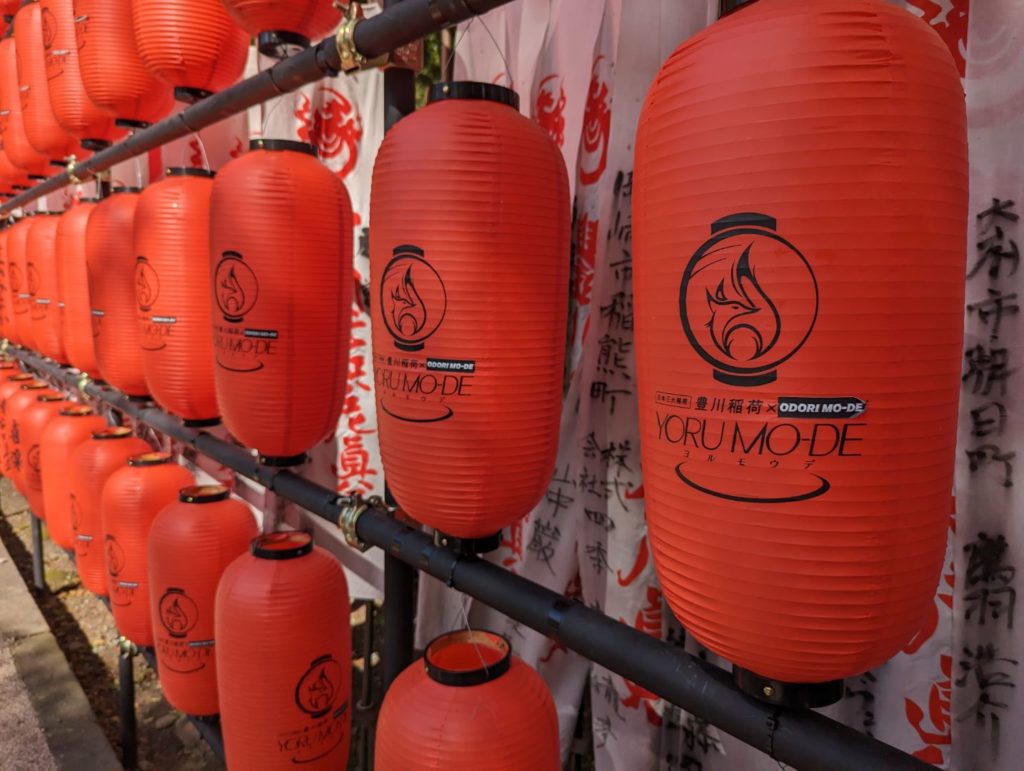
They also hold an event called “Yoru-moude” (night visit) during the summer festivals, where the grounds are lit up. That looks like it would be really cool to see too.

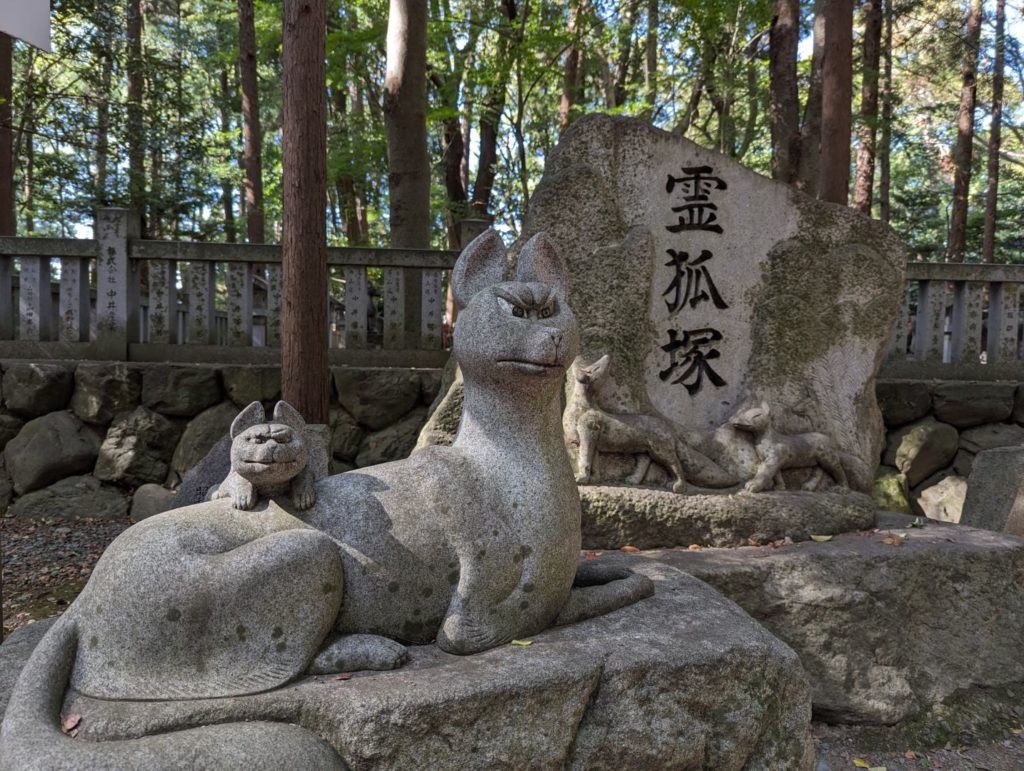
Since I came here without much prior knowledge, I was blown away by the Reiko-zuka (Fox Mound). After being greeted by foxes with unique expressions, I found a massive number of fox statues beyond them.

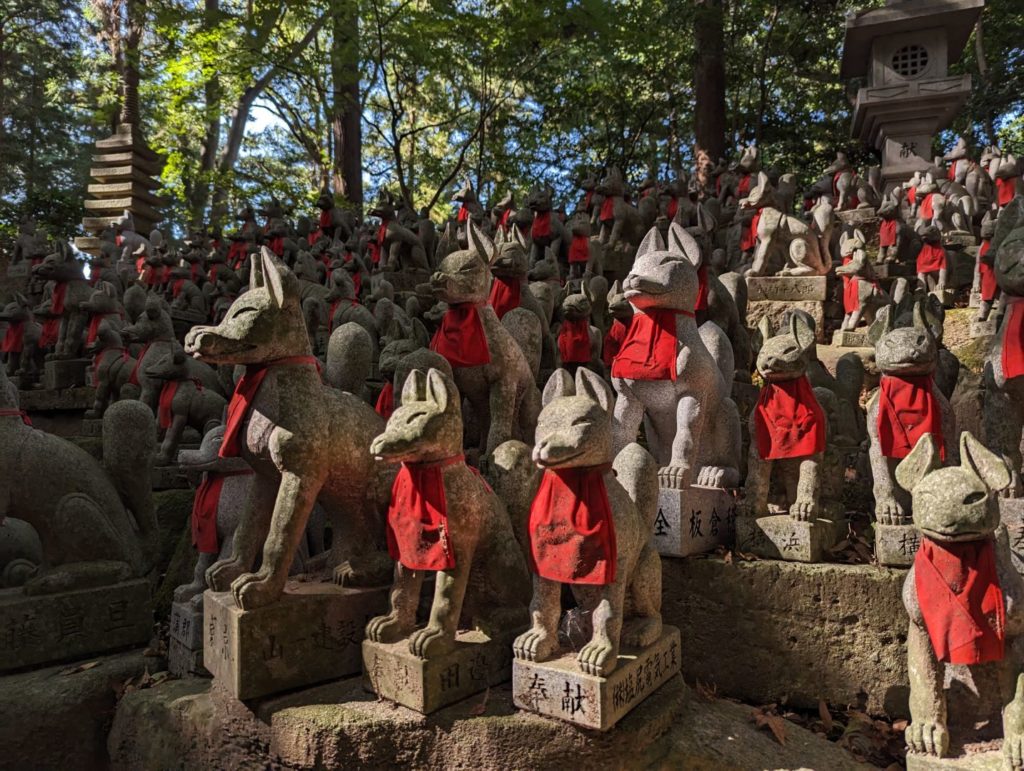
Apparently, there are nearly a thousand foxes of all different sizes and expressions, all offered as a sign of gratitude when a prayer is answered. I see, so you donate a fox statue when your wish comes true…
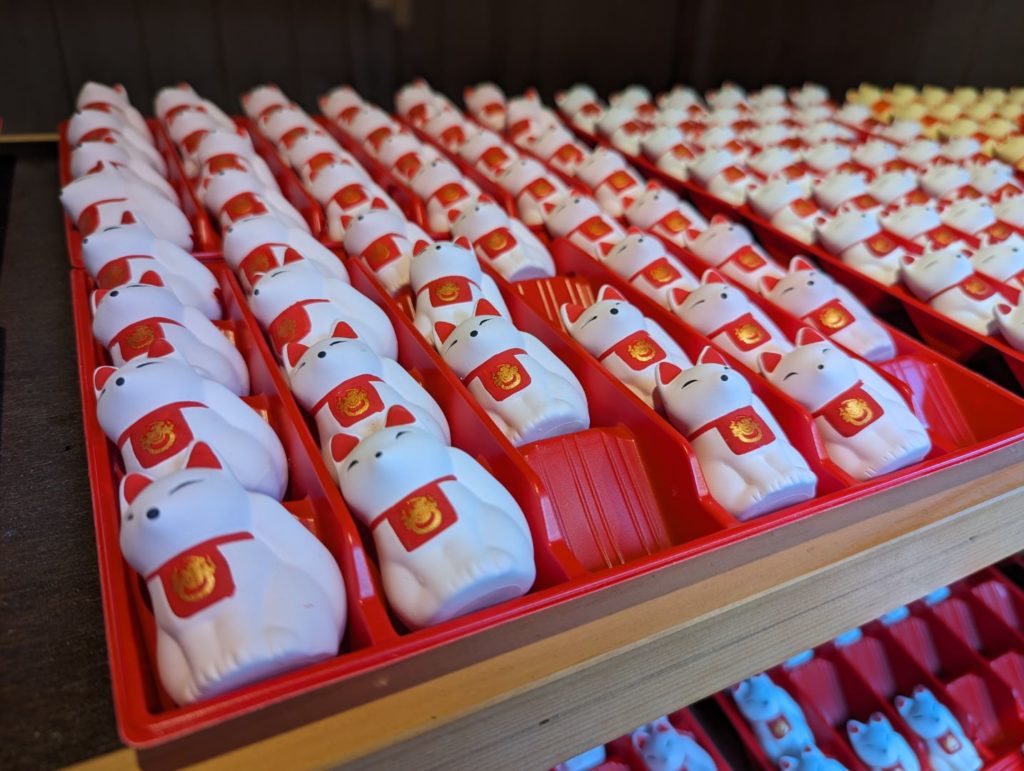
They also had these adorable fox-shaped fortune slips (omikuji).
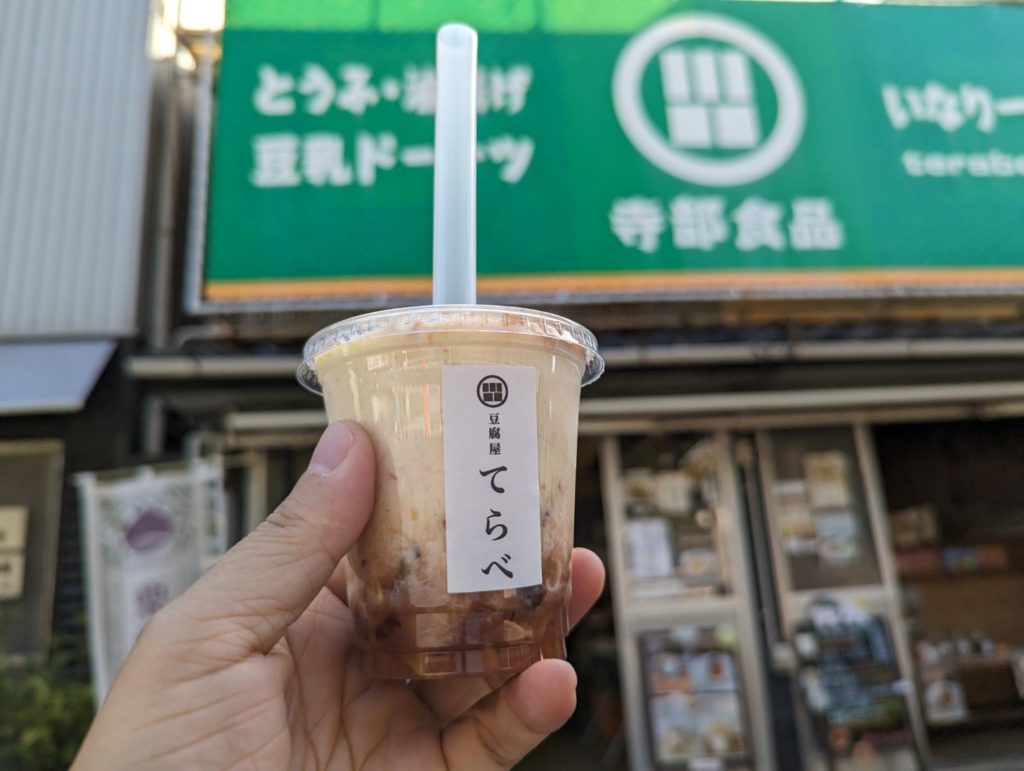
At the temple town, I normally would have gone for the ‘Inari-zushi,’ but I wasn’t that hungry. Instead, I tried some soy milk from a tofu shop that caught my eye. It had crushed sweetened chestnuts in it, and it paired perfectly with the rich soy milk. I might try making this at home.
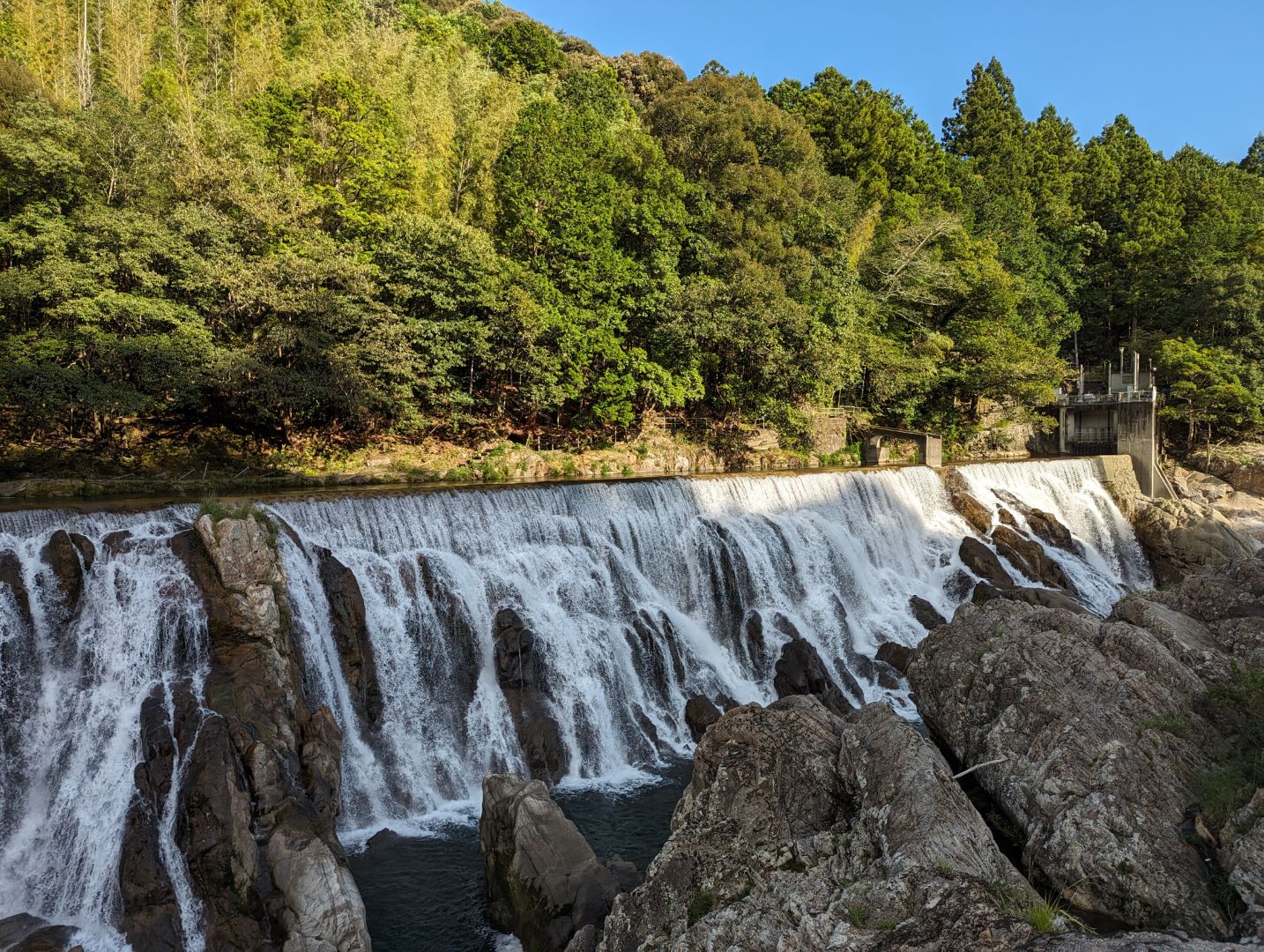
The Nagashino Dam Spillway
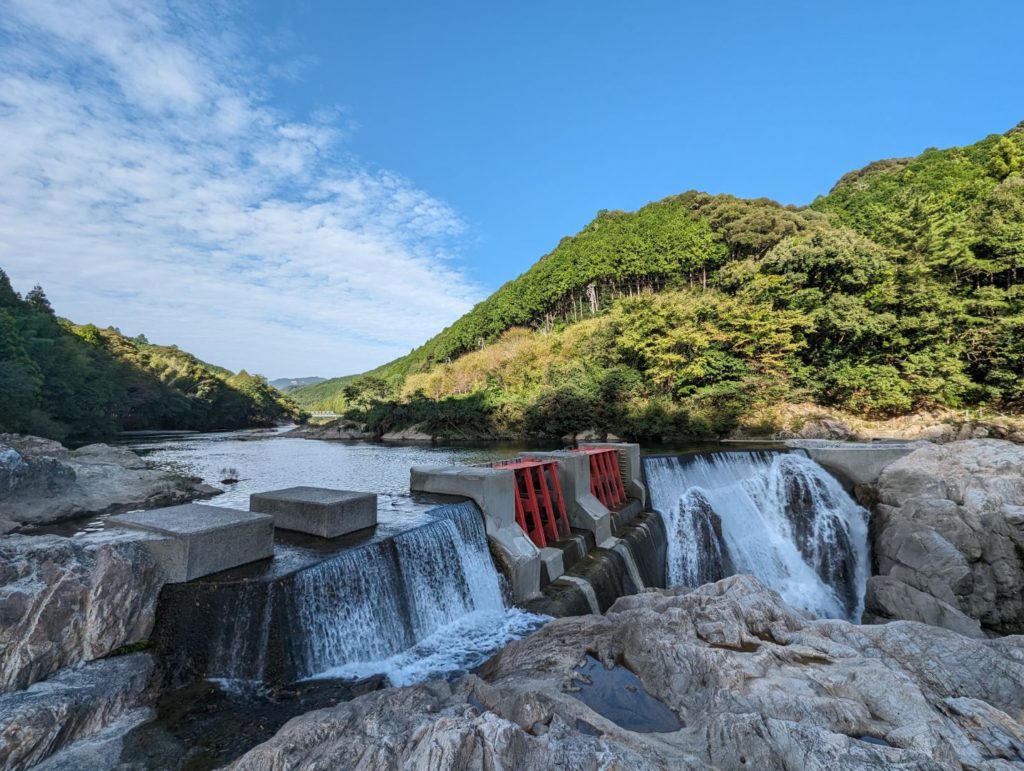
After walking over some rugged rocks from the parking lot, this dam appears right before your eyes. This photo is wide-angle to capture everything, so it might not look like much, but a huge volume of water flows right in front of you, and it’s quite powerful. The cool part is how the water at the back of the dam (behind the waterfall on the right) doesn’t flow over the main section but goes around the back, creating a structure where the “excess water” flows down like Niagara Falls.

The left corner of this photo is the dam, and from there, it stretches for nearly 100 meters as a rushing waterfall. It’s really impressive. Fukiware Falls in Numata, Gunma, is often called the “Niagara of the East,” but in terms of pure power, I think this one has it beat (though Fukiware is a natural waterfall and a National Treasure, so it’s wonderful in its own way). However, it seems to be a minor spot with almost no tourists. In fact, I only found it by chance while playing around on Google Maps; it doesn’t really show up when you search for sightseeing spots in this area. It’s a great place and I highly recommend it, but it’s dangerous if you aren’t dressed to walk over jagged rocks.
Nagashino Castle Ruins
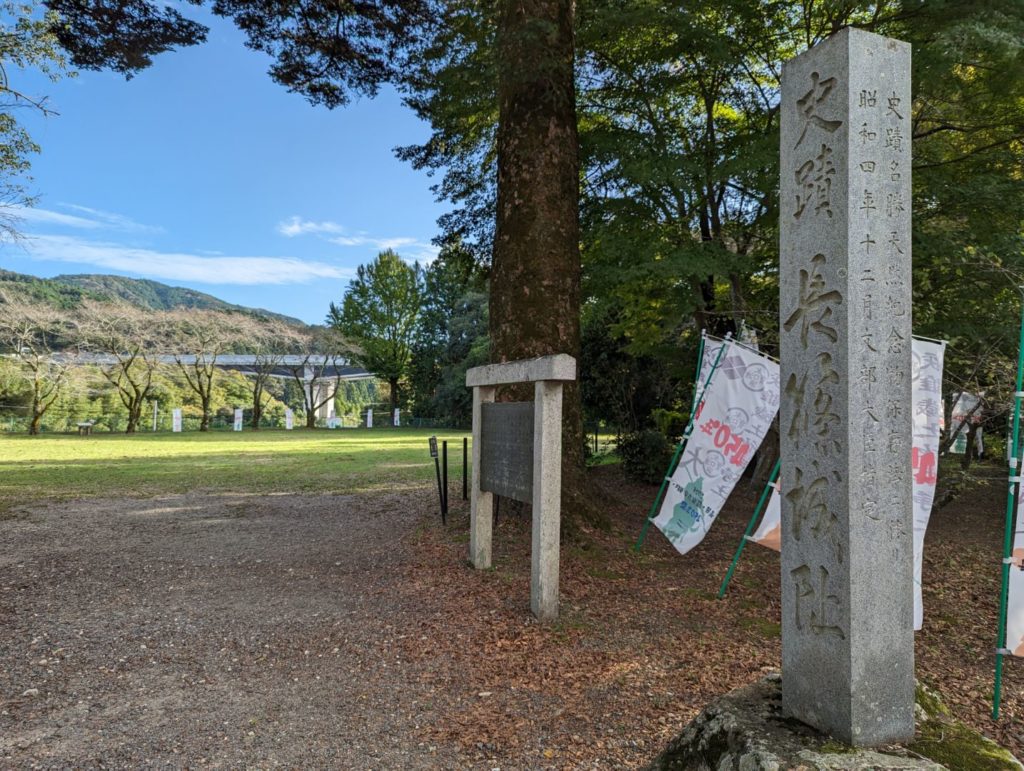

Since the spillway was in “Nagashino,” I figured the castle ruins must be close by, so I decided to stop by. I saw the site where Torii Suneemon was executed, and since I’m currently watching the drama “What Will You Do, Ieyasu?”, it was a very interesting visit.
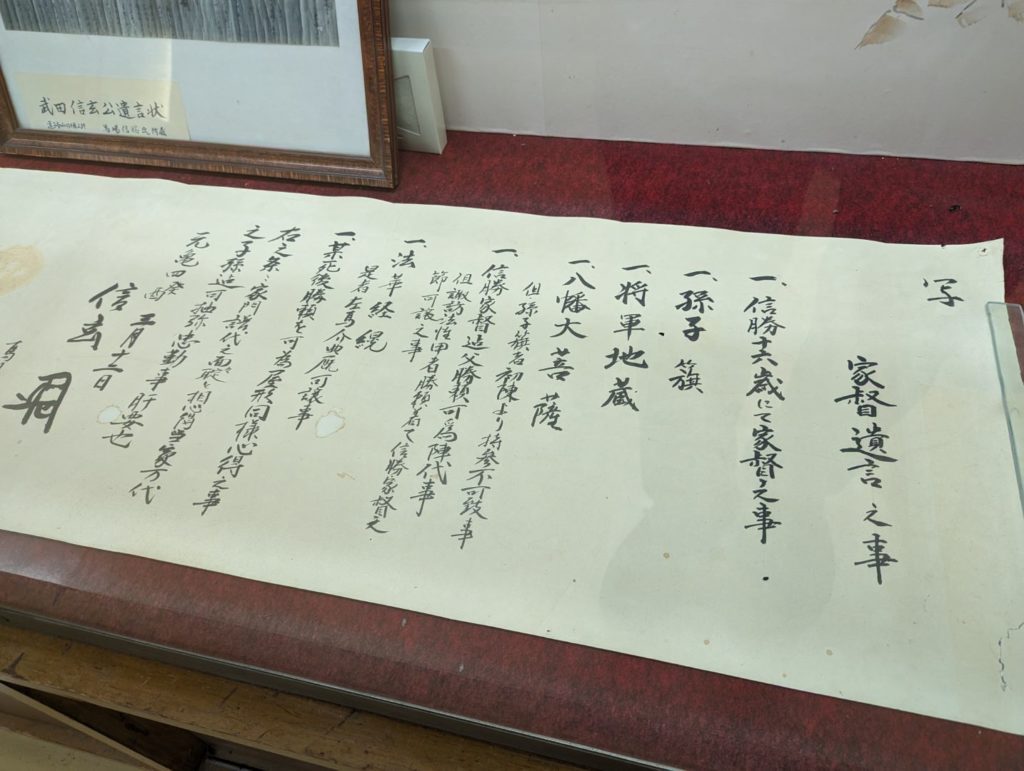
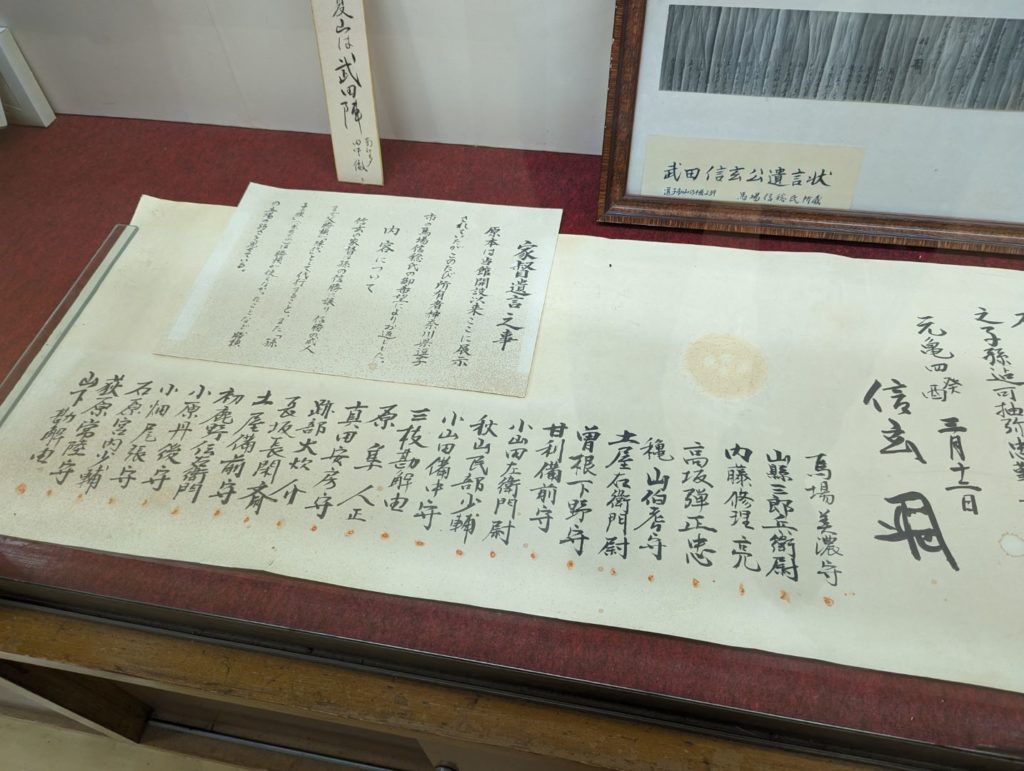
In the Nagashino Castle museum, they had a copy of Takeda Shingen’s will regarding the family succession. Apparently, they used to have the original, but it’s been returned to the owner, so this is a duplicate. Still, seeing a document with the names of Takeda’s famous vassals lined up was captivating. It’s a small museum, but the exhibits were quite interesting and educational.

コメント