I was planning to go cheer for Ene-1 at Suzuka Circuit early the next morning, so arriving the day before was a must. Since I was already going to be in the area, I thought about doing some sightseeing near Suzuka, and had planned to hike Mt. Gozaisho, which I’d been curious about for its unique rock formations. However, the weather forecast for the weekend was rain nationwide. I was almost ready to give up, but then it looked like it would be spotty sunshine only around Osaka. Osaka felt a bit too far, but Nara wasn’t bad distance-wise, and even if it rained, there are plenty of cultural assets to enjoy indoors, so I decided to head there.
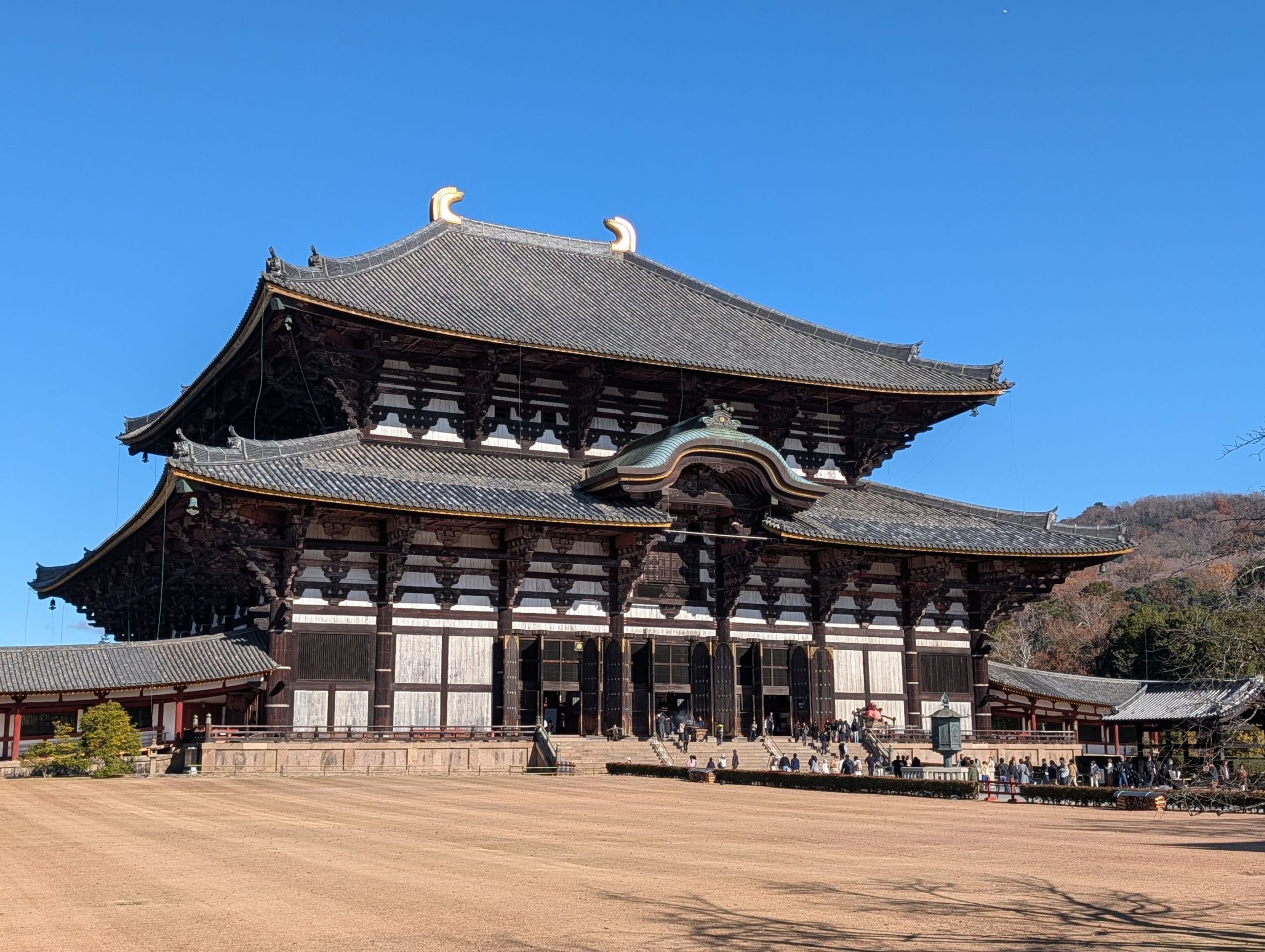
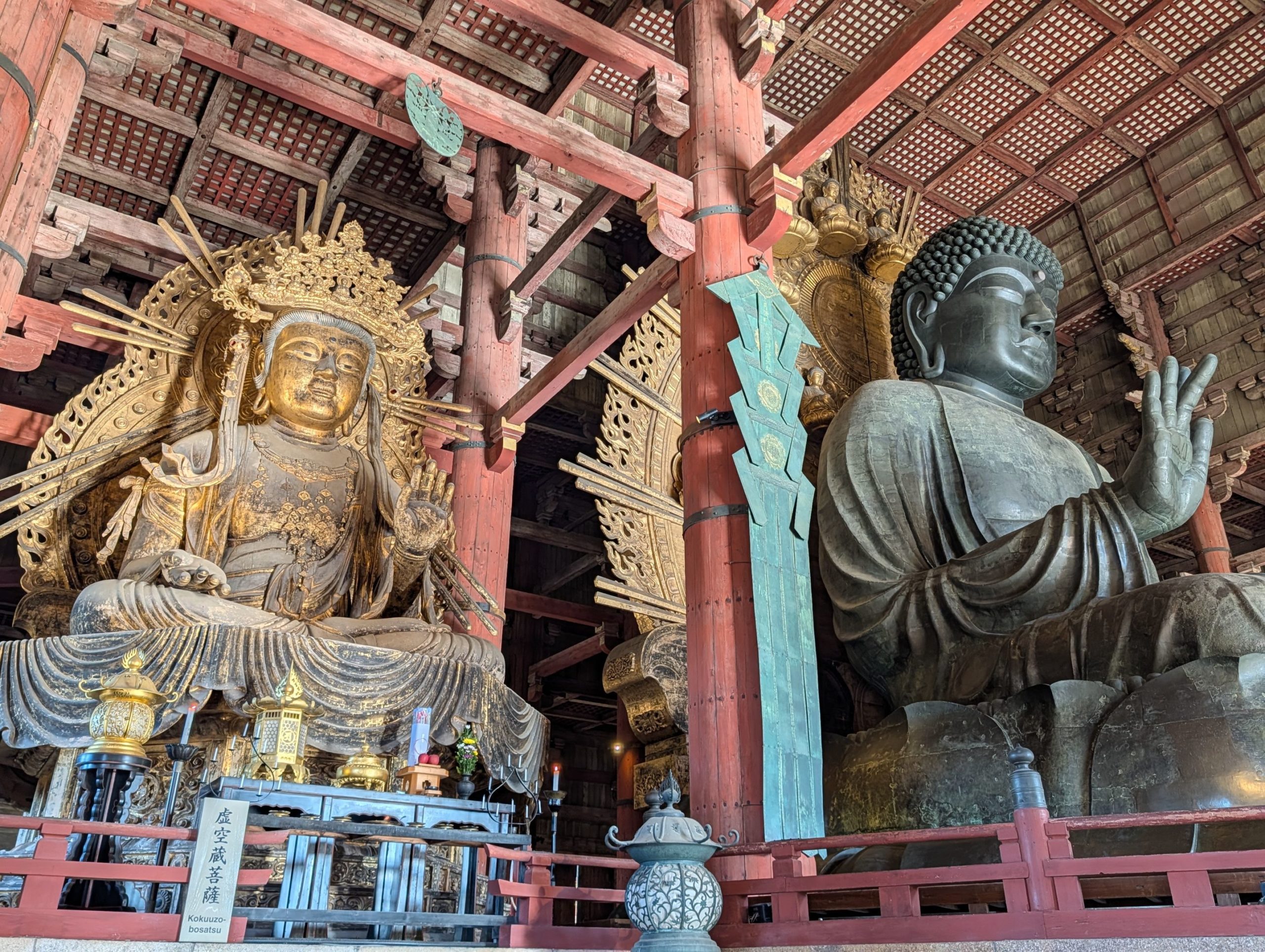
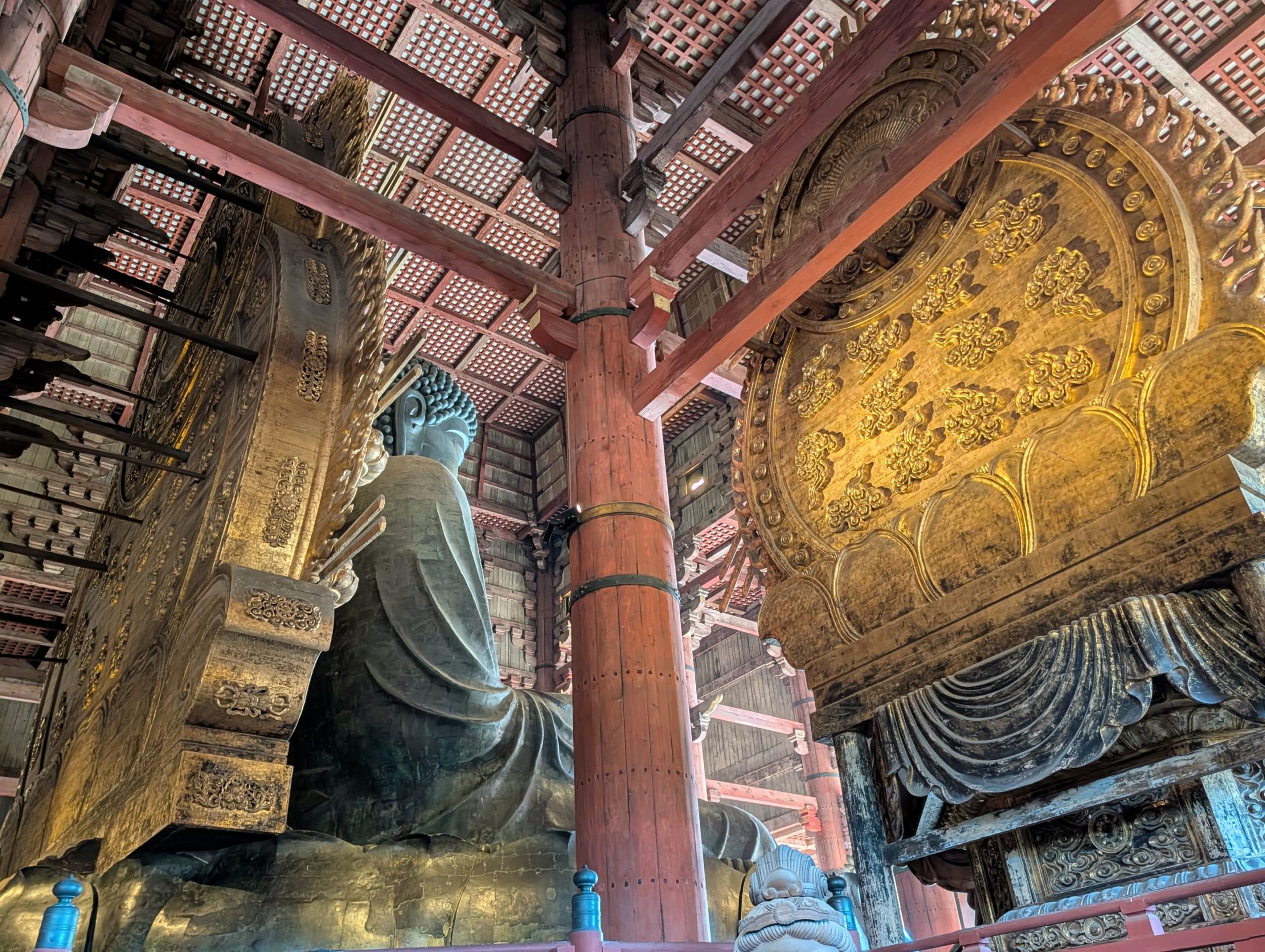

Our first stop was Todai-ji Temple in Nara. The drive from Hamamatsu to Suzuka was rainy the whole way, with some torrential downpours, but as soon as we crossed the Suzuka Mountains, it was suddenly clear skies! Looks like coming here was the right decision.
I thought I had visited Nara when I was little, but seeing the sheer scale of Todai-ji Temple’s buildings and the Great Buddha, I couldn’t recall anything like it, so I think this must be my first time. Honestly, the size is truly astounding and quite surprising.
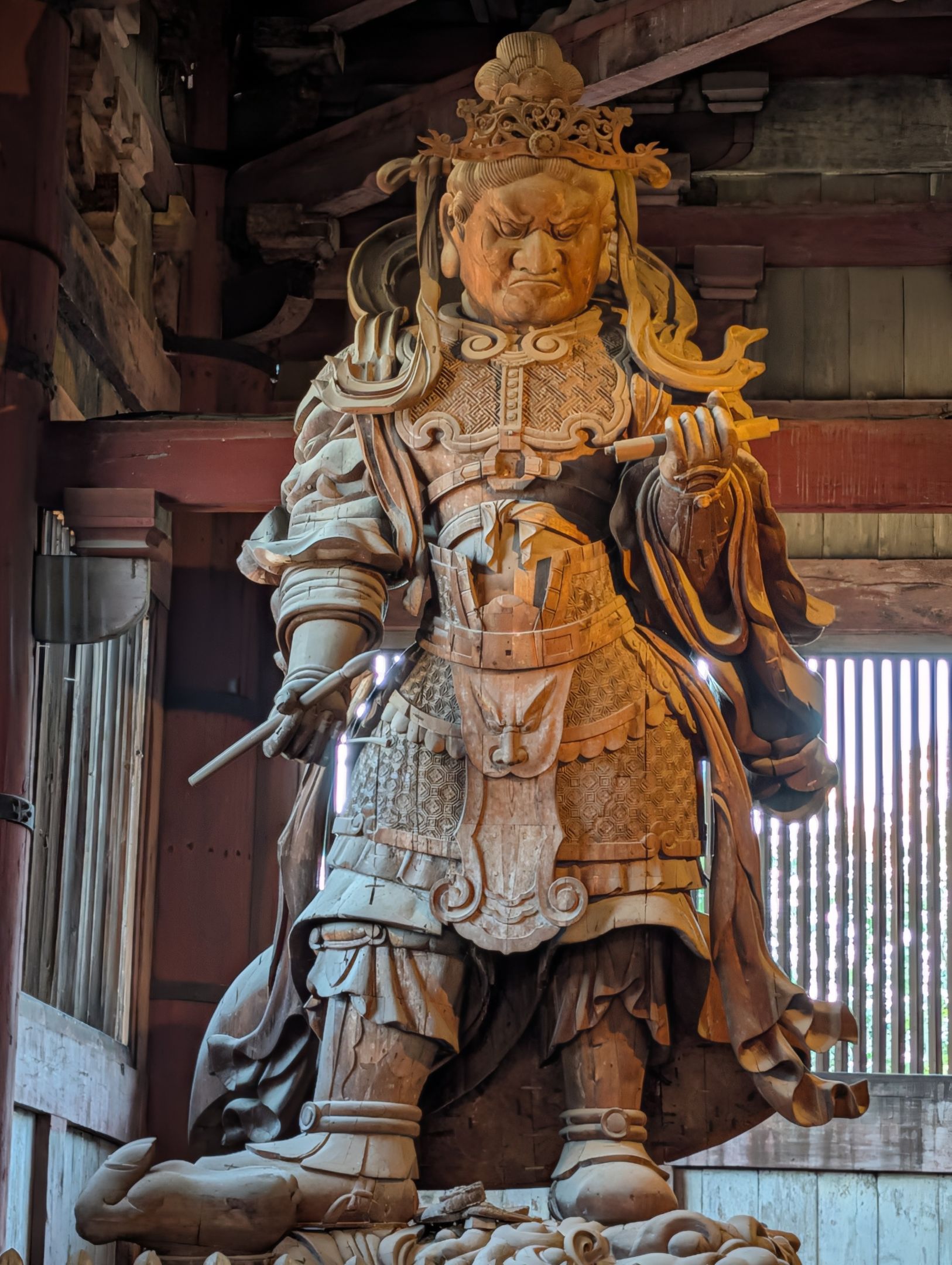
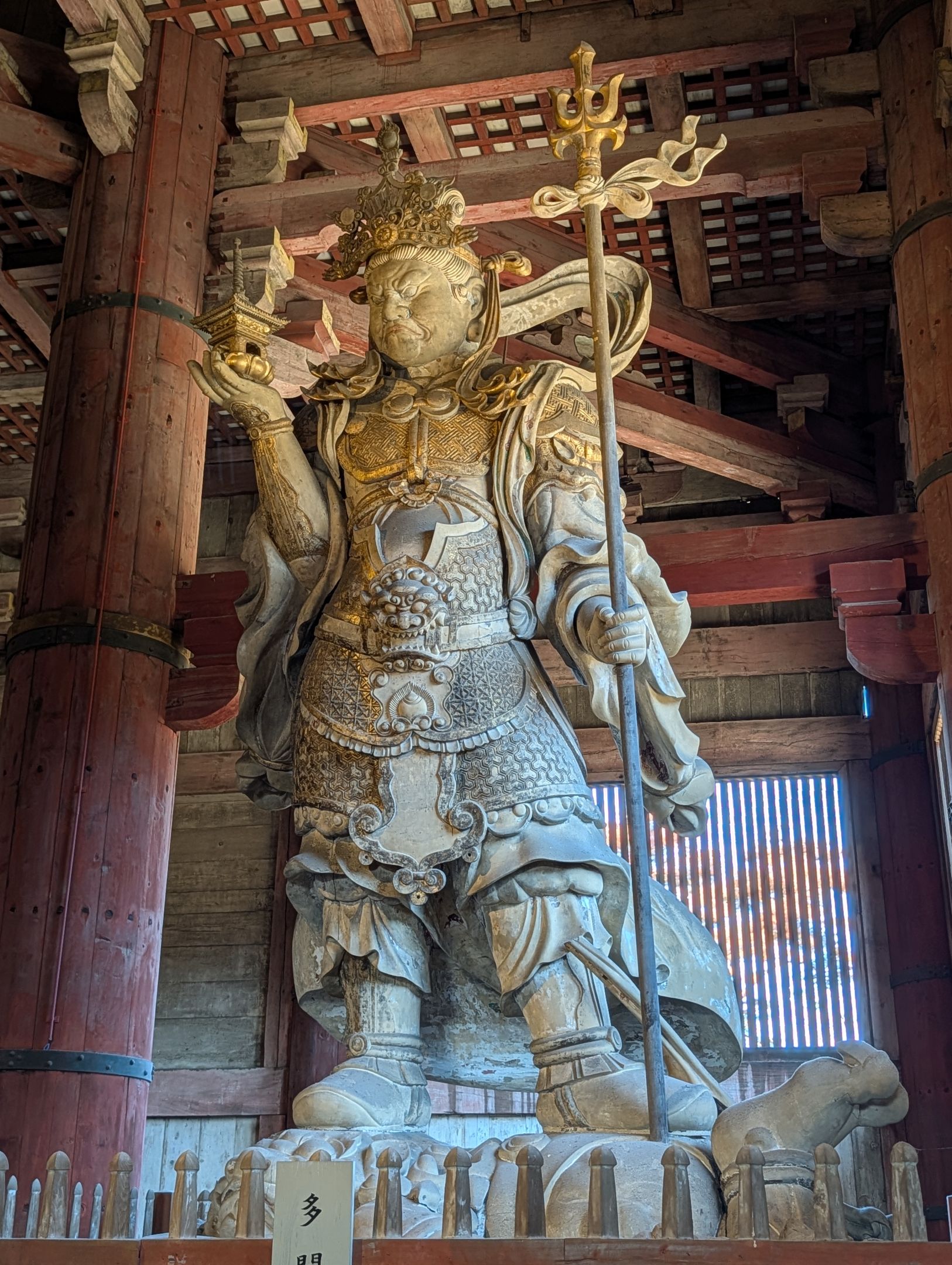
Behind the Great Buddha were statues of Kōmokuten and Tamonten. The size of these two statues was overwhelmingly different from others I’ve seen many times, and their presence was simply astonishing. For some reason, only the headpieces of the other two Devas (Zōchōten and Jikokuten) of the Four Heavenly Kings were enshrined.
Next to Todai-ji Temple is the Todai-ji Museum, where I got to see several National Treasures. The standing statue of Baby Buddha (Tanjō Shaka Butsu Ritsuzō) was particularly impressive. It depicts Buddha right after birth, raising his right hand and smiling. I had never seen a Buddha statue with such a humorous expression before!
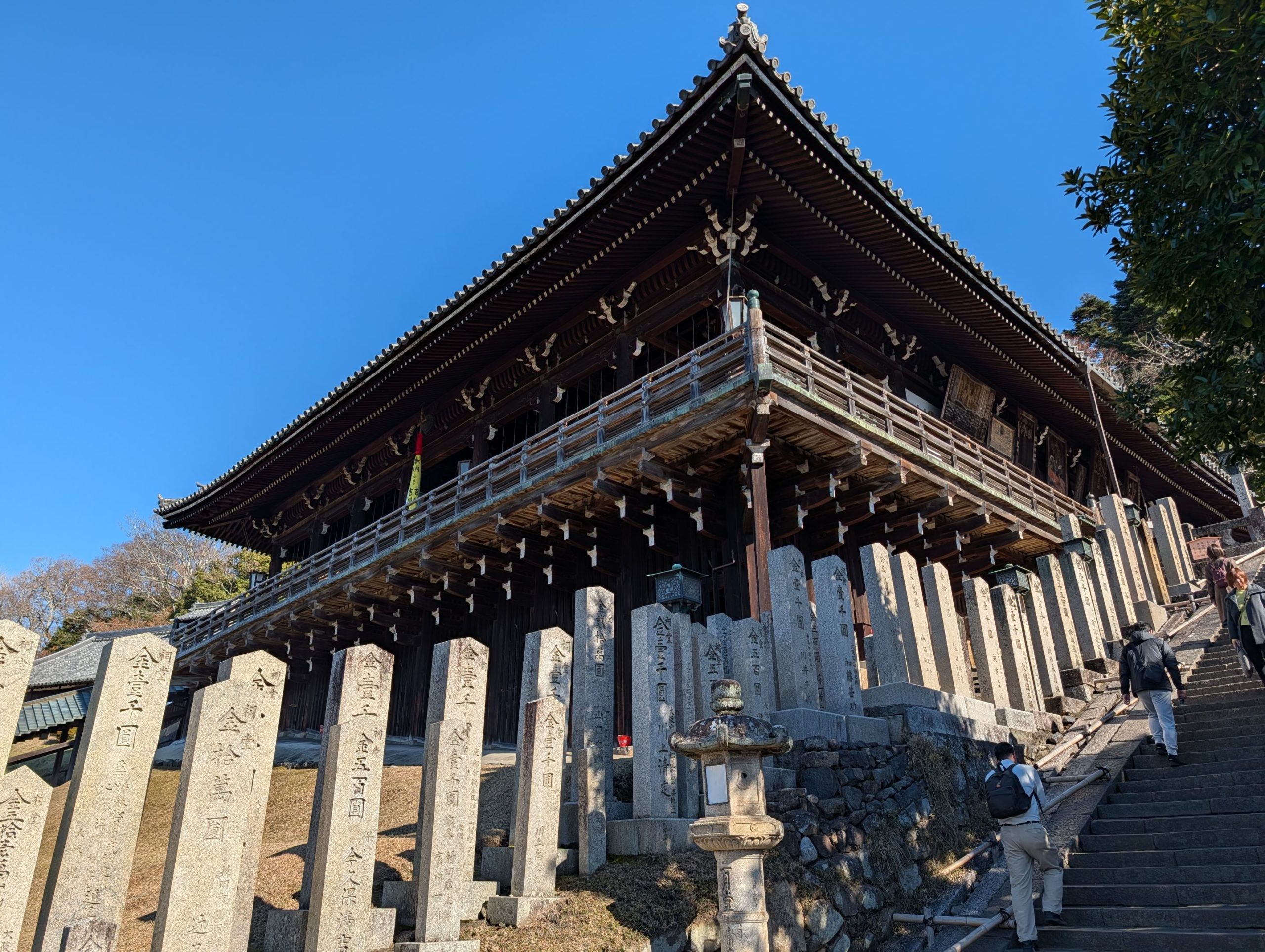
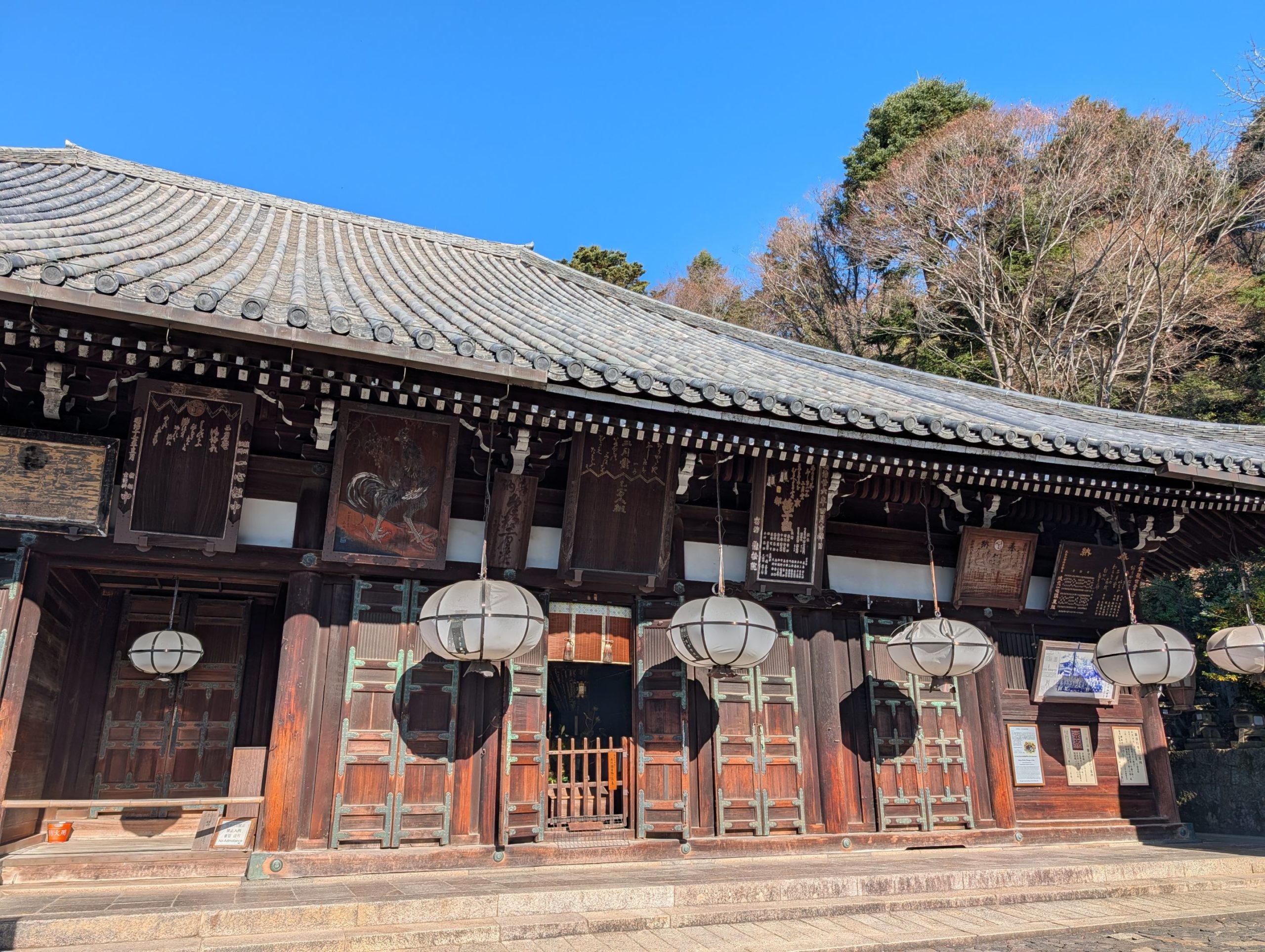
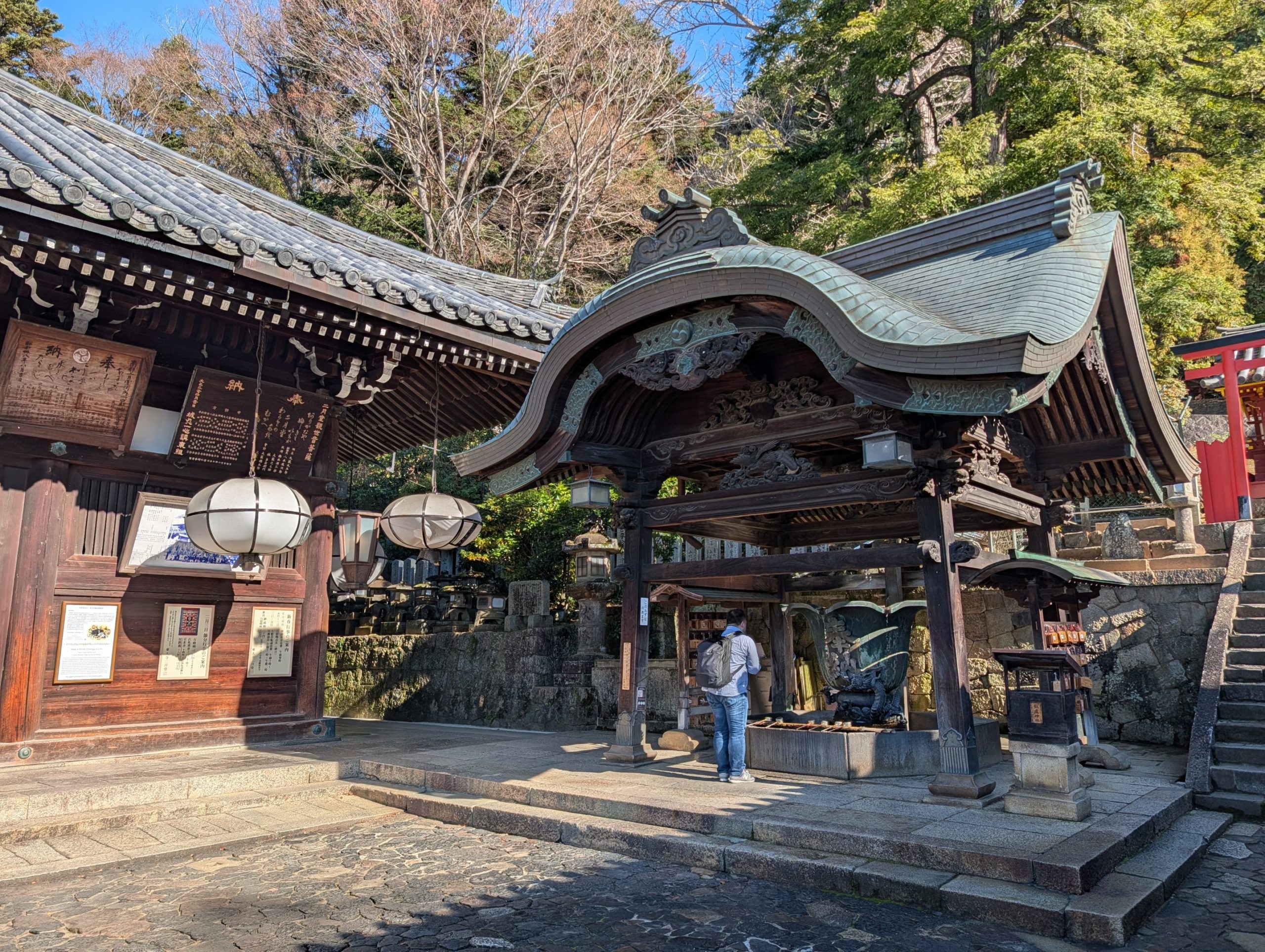
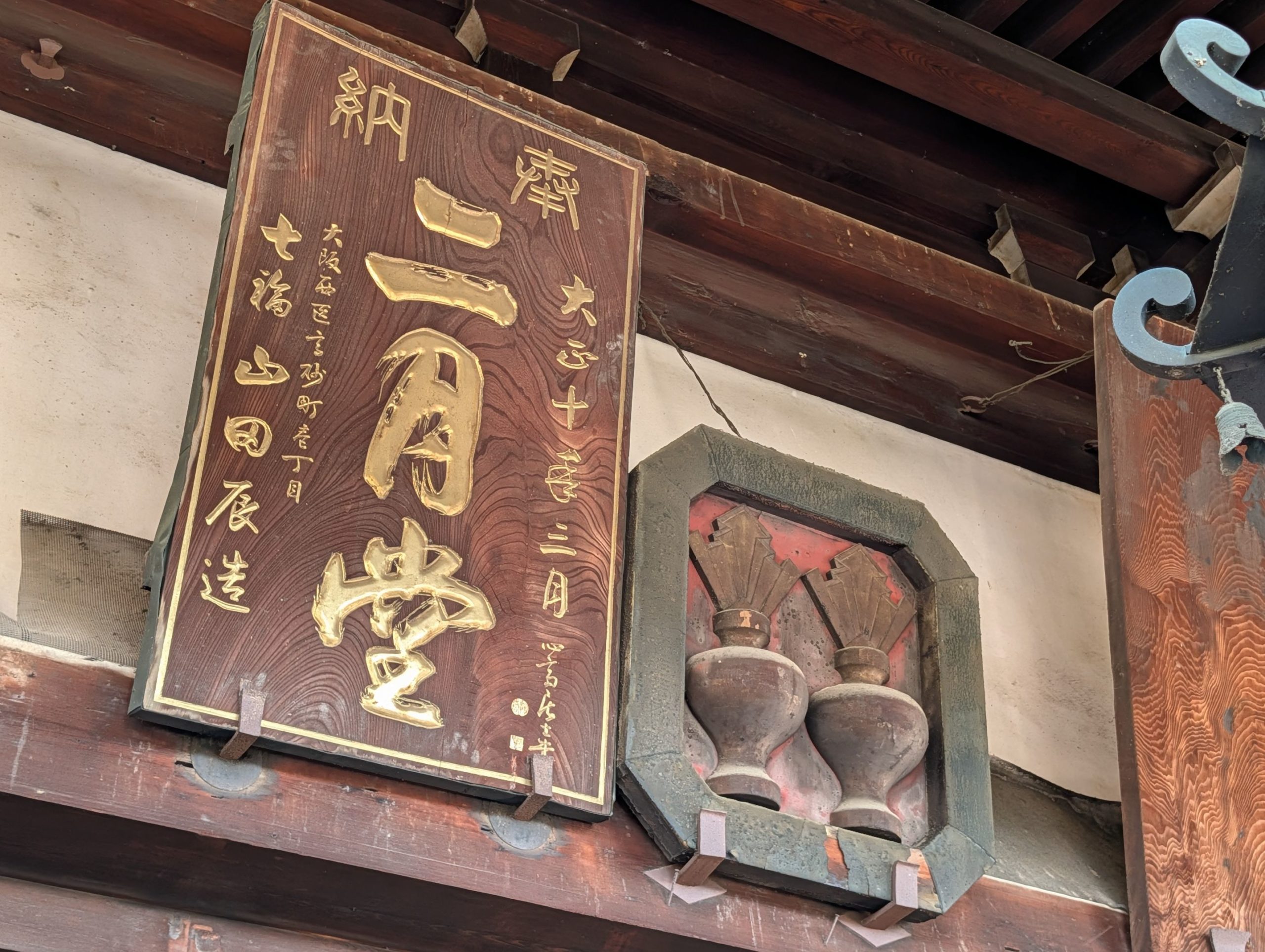
To the east of the Great Buddha Hall is Todai-ji Nigatsu-do. It’s said to be named after the Shuni-e ceremony, which includes the famous “Omizutori” ritual, held in the second month of the lunar calendar. It’s built cantilevered out from the hillside, and from the top, I could gaze out at the cityscape of Nara.
Although photography wasn’t allowed, I also visited the Kaidan-in Kaidan-do at Todai-ji Temple. In the center of the building, there’s a multi-storied pagoda (a building within a building, how cool!), flanked by the Tahō Nyorai and Shaka Nyorai, with the Four Heavenly Kings (Jikokuten, Zōchōten, Kōmokuten, and Tamonten) guarding the four directions. The statues of the Four Heavenly Kings here were incredibly expressive and left a strong impression on me.
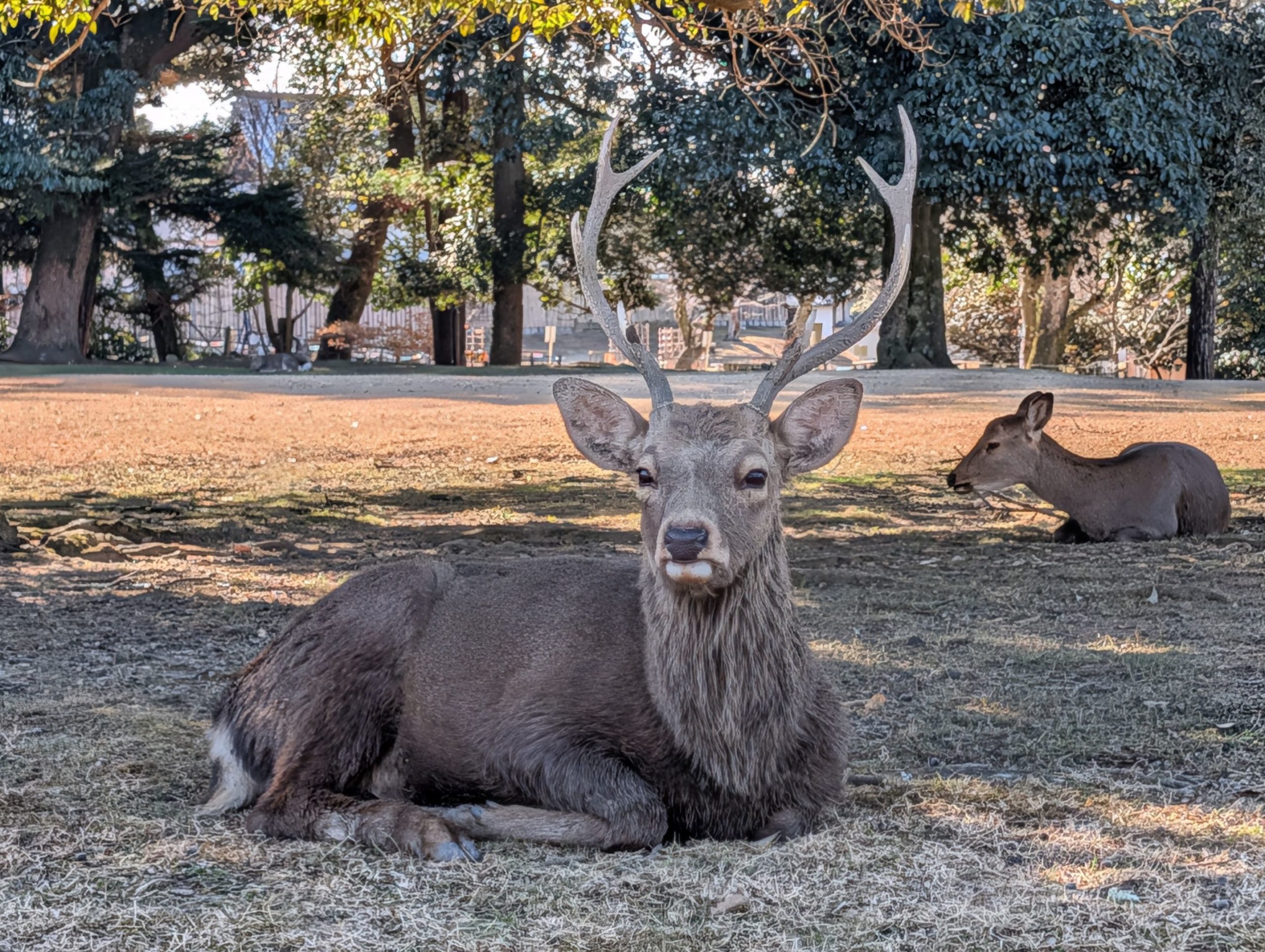
Nara Park is huge, and looking at Google Maps, I saw that the Shōsō-in Treasure Repository is located north of Todai-ji, and its exterior grounds are usually open to the public, so I decided to check it out.
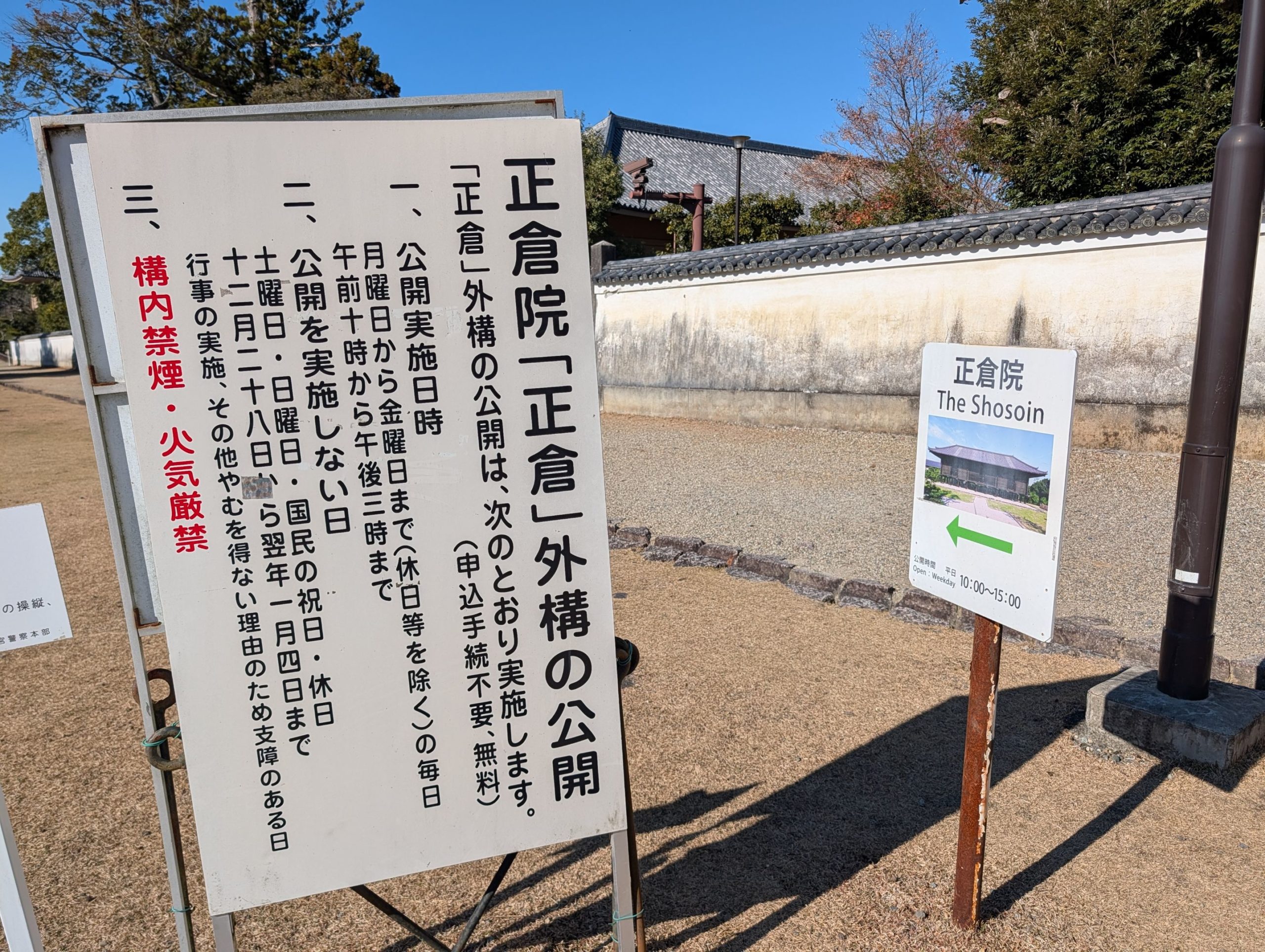
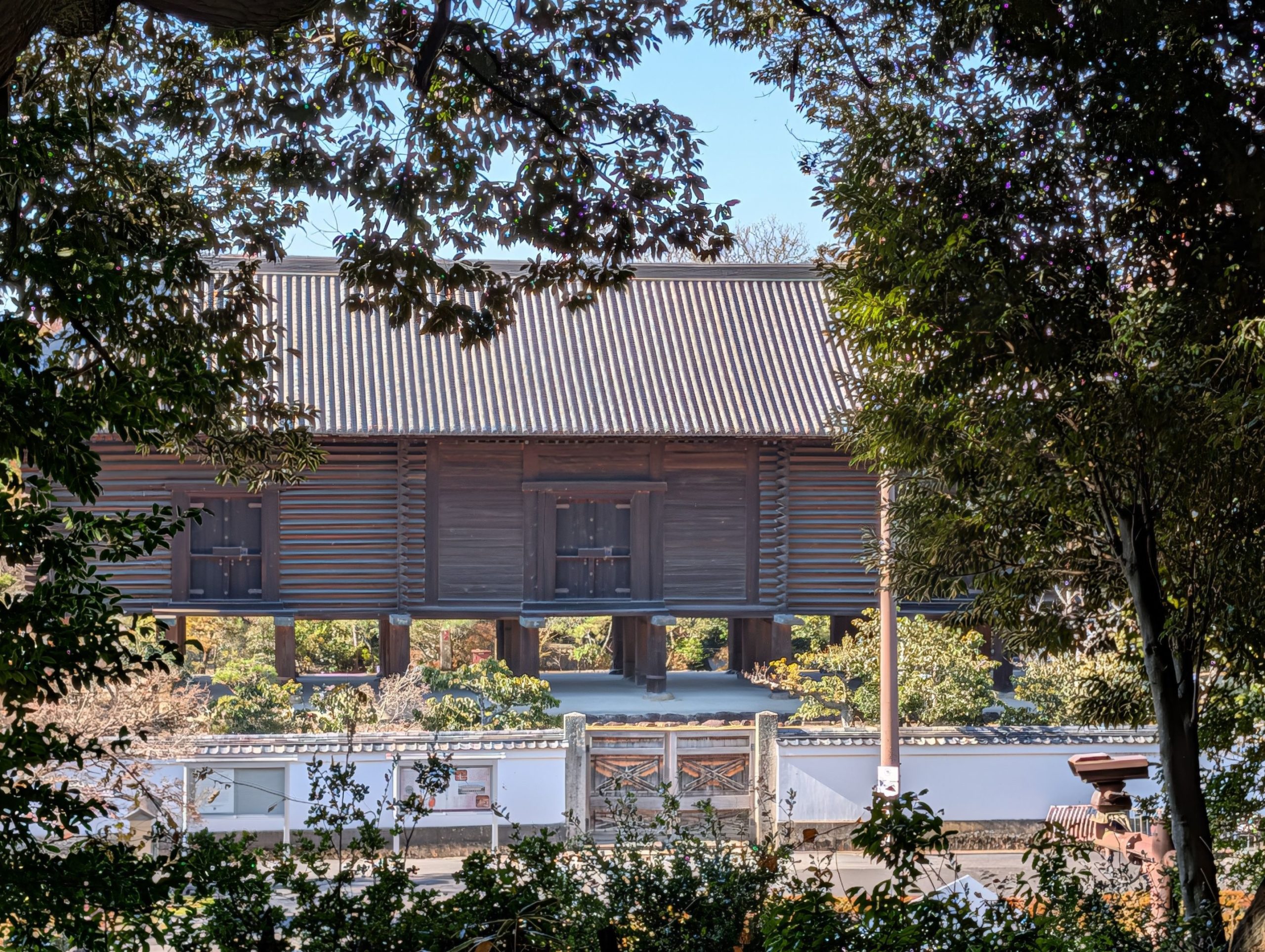
Unfortunately, it was Saturday, so the grounds weren’t open, and I could only catch a glimpse from outside the fence. Still, it was nice to see the raised-floor structure of the Shōsō-in main building.
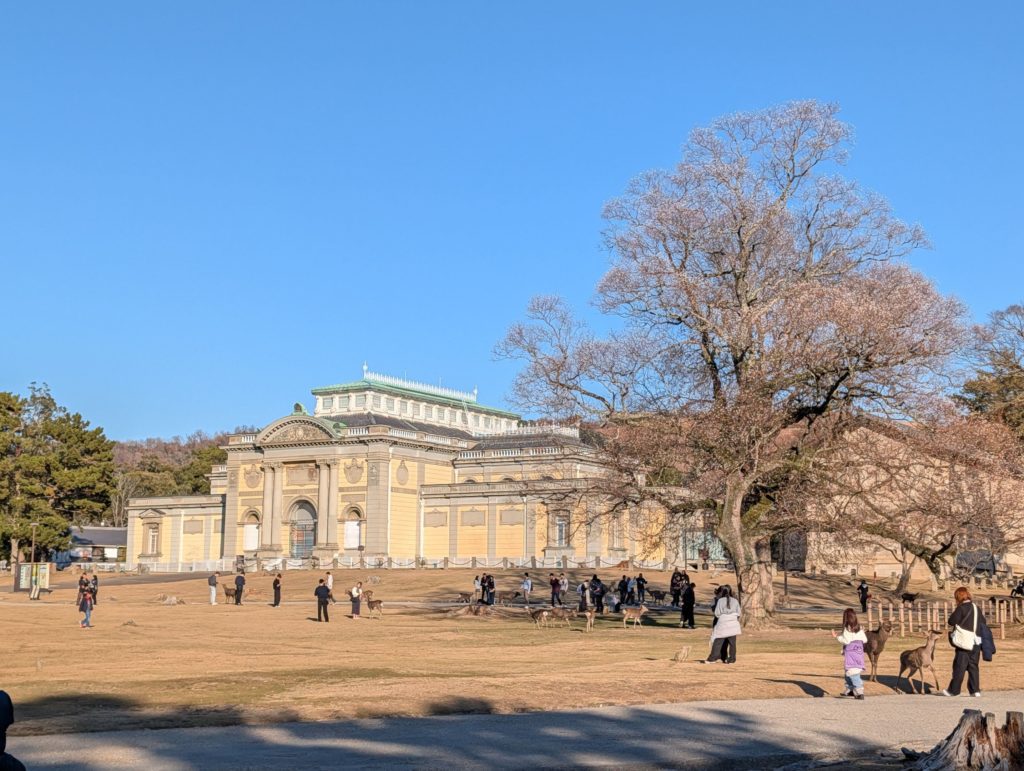
The Buddha Hall at Nara National Museum is one of Japan’s largest exhibition facilities for Buddha statues, with nearly 100 statues, including National Treasures and Important Cultural Properties, on permanent display.
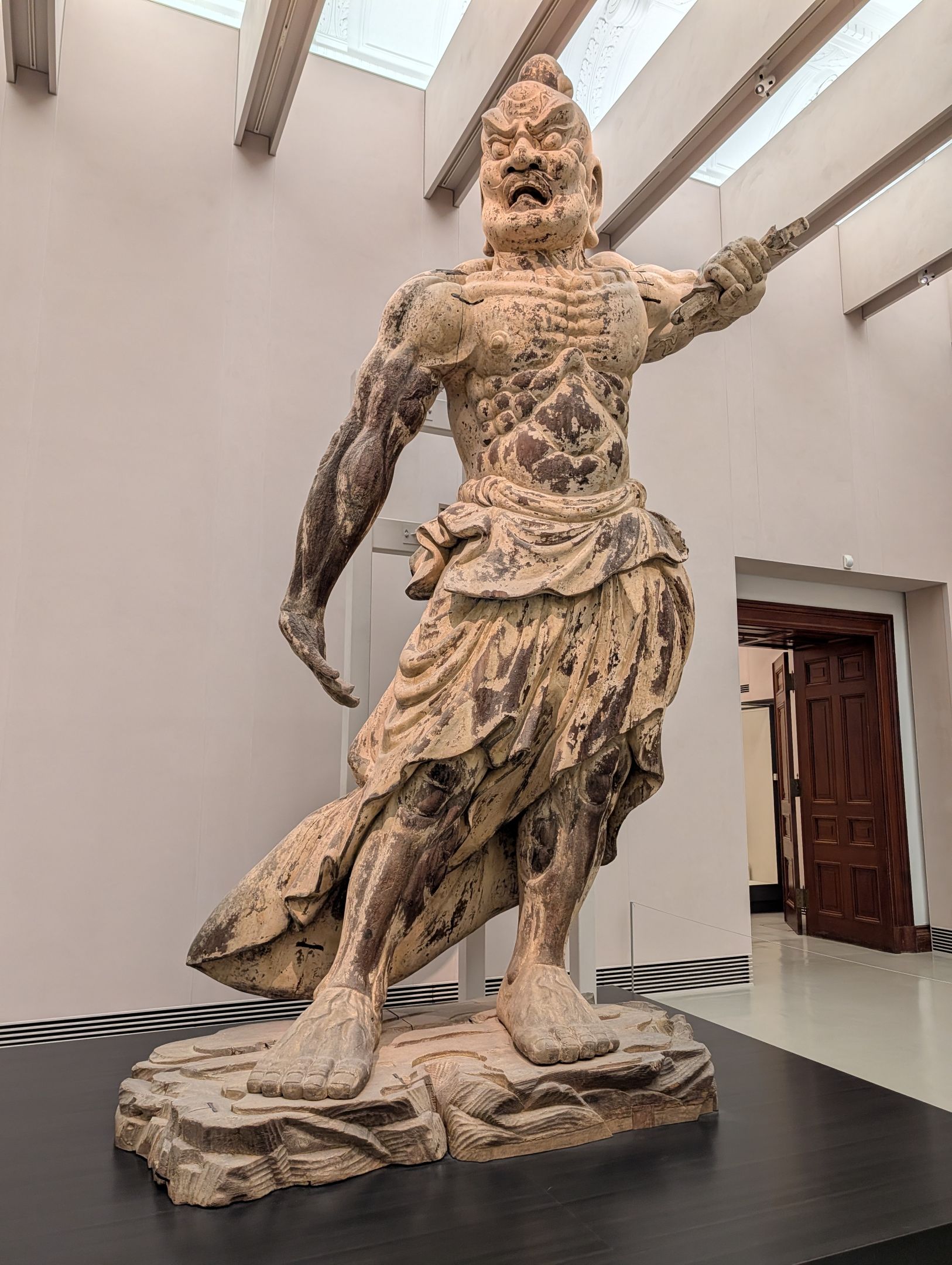
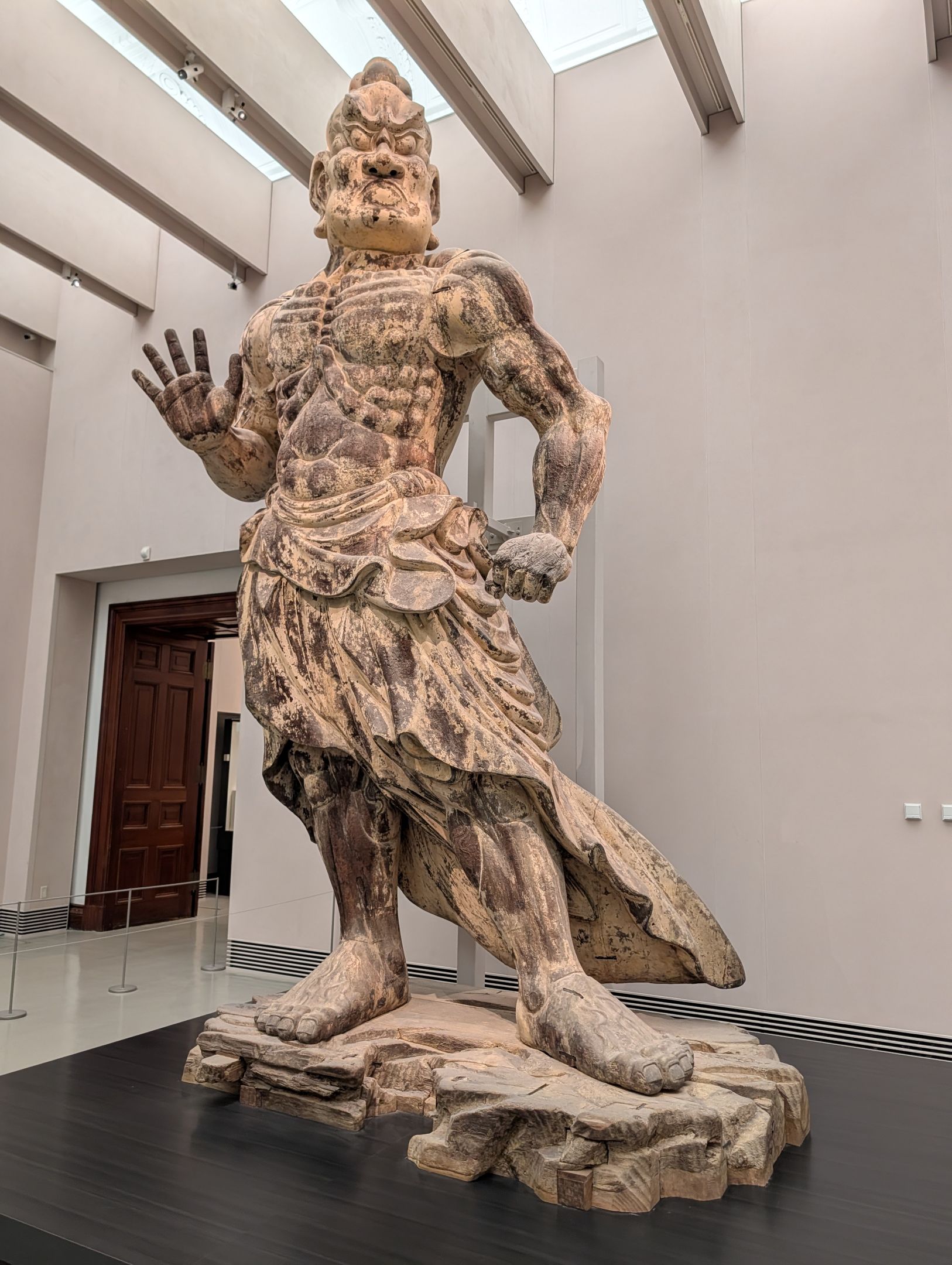


At the Nara National Museum, they handed out a viewing guide designed to be easy for children to understand, but it was actually really helpful for adults too! Especially the section “Four Groups of Buddha Statues Distinguished by Form (Nyorai, Bosatsu, Myo-o, Ten)” which simply explained the characteristics and how to tell them apart. I had a “Aha!” moment. Specifically, it had explanations like these:
Nyorai (Buddhas): If the following two points apply, it’s almost certainly a “Nyorai”
- The top of the head is prominently raised and has many small bumps.
- A simple fashion style, wearing only cloth.
Bosatsu (Bodhisattvas): If the following three points apply, it’s almost certainly a “Bosatsu”
- Wearing accessories.
- Has a gentle expression.
- Sitting or standing on a lotus flower.
Myo-o (Wisdom Kings): If the following two points apply, it’s almost certainly a “Myo-o”
- Has an angry face with fangs showing.
- Flames are depicted behind them.
Ten (Devas): If even one of the following applies, it’s almost certainly a “Ten”
- Wearing armor.
- Bare upper body, very muscular.
- Has long black hair loosely coiled around the shoulders.
- Wearing wide-sleeved clothes and shoes.
- Looks similar to a Bosatsu, but is not standing or sitting on a lotus flower.
- Wearing short trousers.
- Only the head is that of an animal.
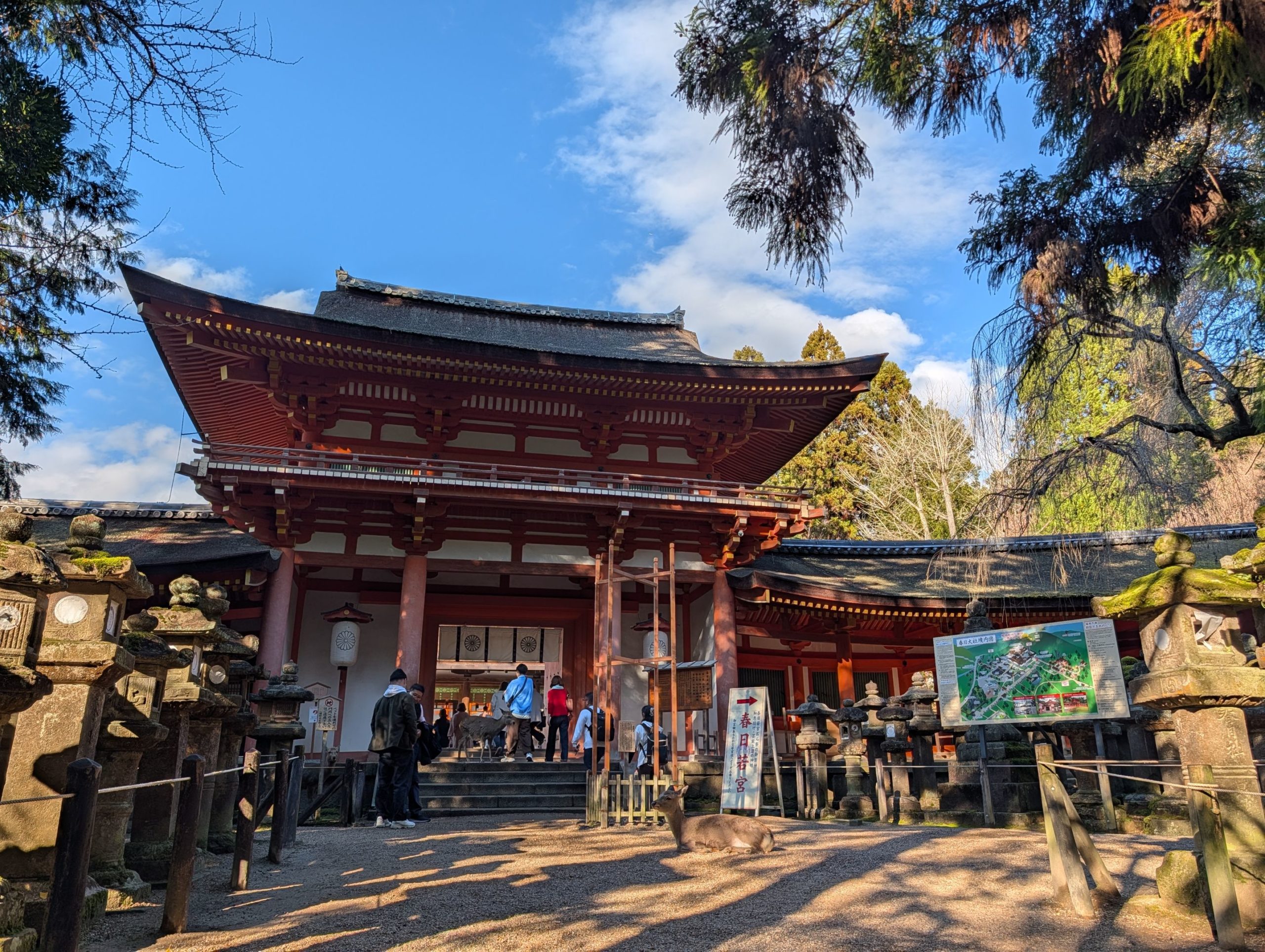
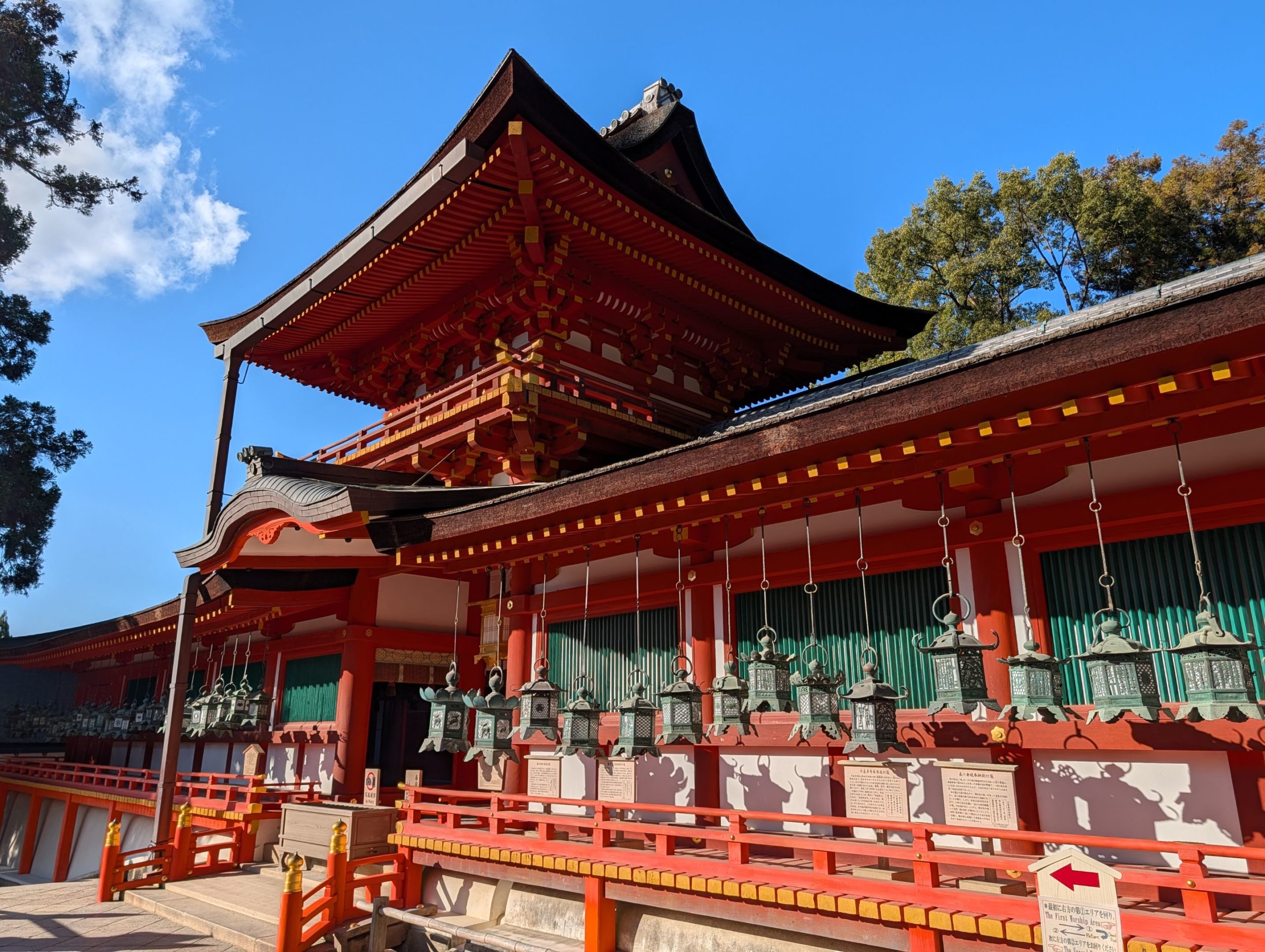
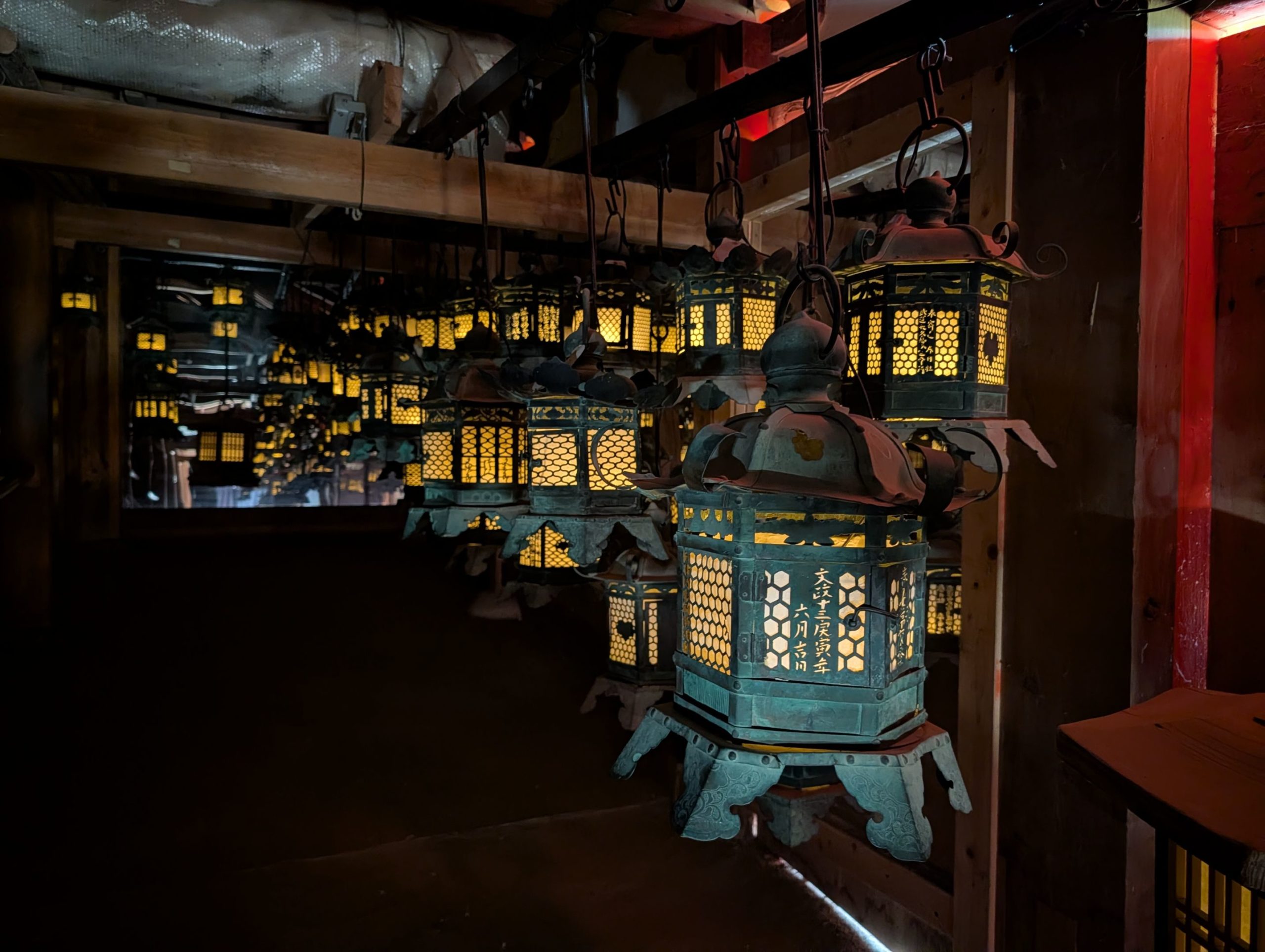
I also paid a visit to Kasuga Taisha Shrine. The vibrant vermillion buildings were beautiful, but the other temples within Nara Park left such a strong impression that Kasuga Taisha didn’t quite stand out as much. What I found really interesting, though, was the structure where there are so many smaller shrines within the main sanctuary of Kasuga Taisha. Specifically, there are 16 shrines: Ikuri Jinja, Anaguri Jinja, Karasaki Jinja, Aosakaki Jinja, Tajikarao Jinja, Hirai Tenjinja, Iwamoto Jinja, Kaze-no-Miya Jinja, Tsubakimoto Jinja, Taga Jinja, Sagun Jinja, Sugimoto Jinja, Umimoto Jinja, Kurigara Jinja, Hachirai Jinja, and Enomoto Jinja.
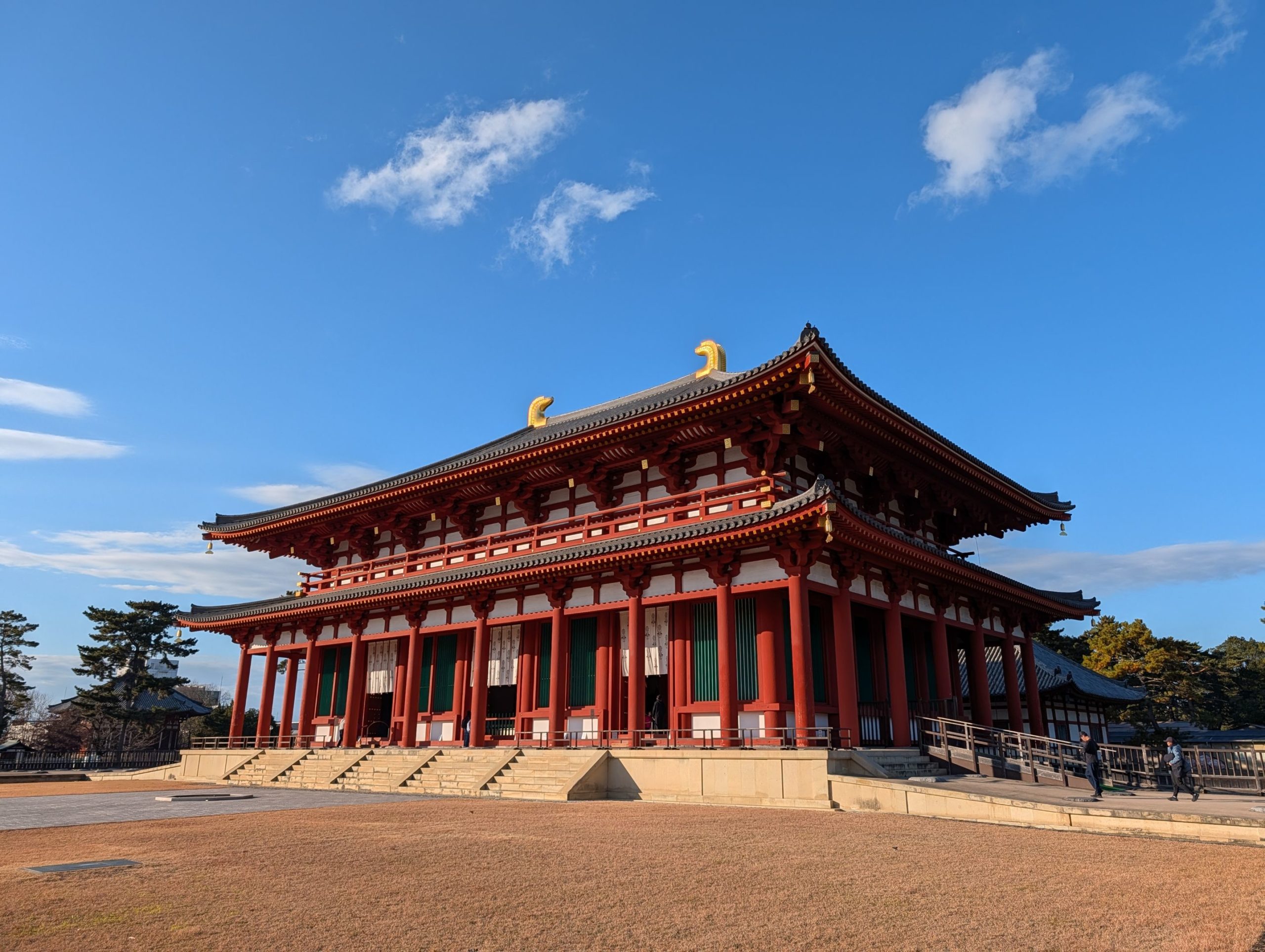
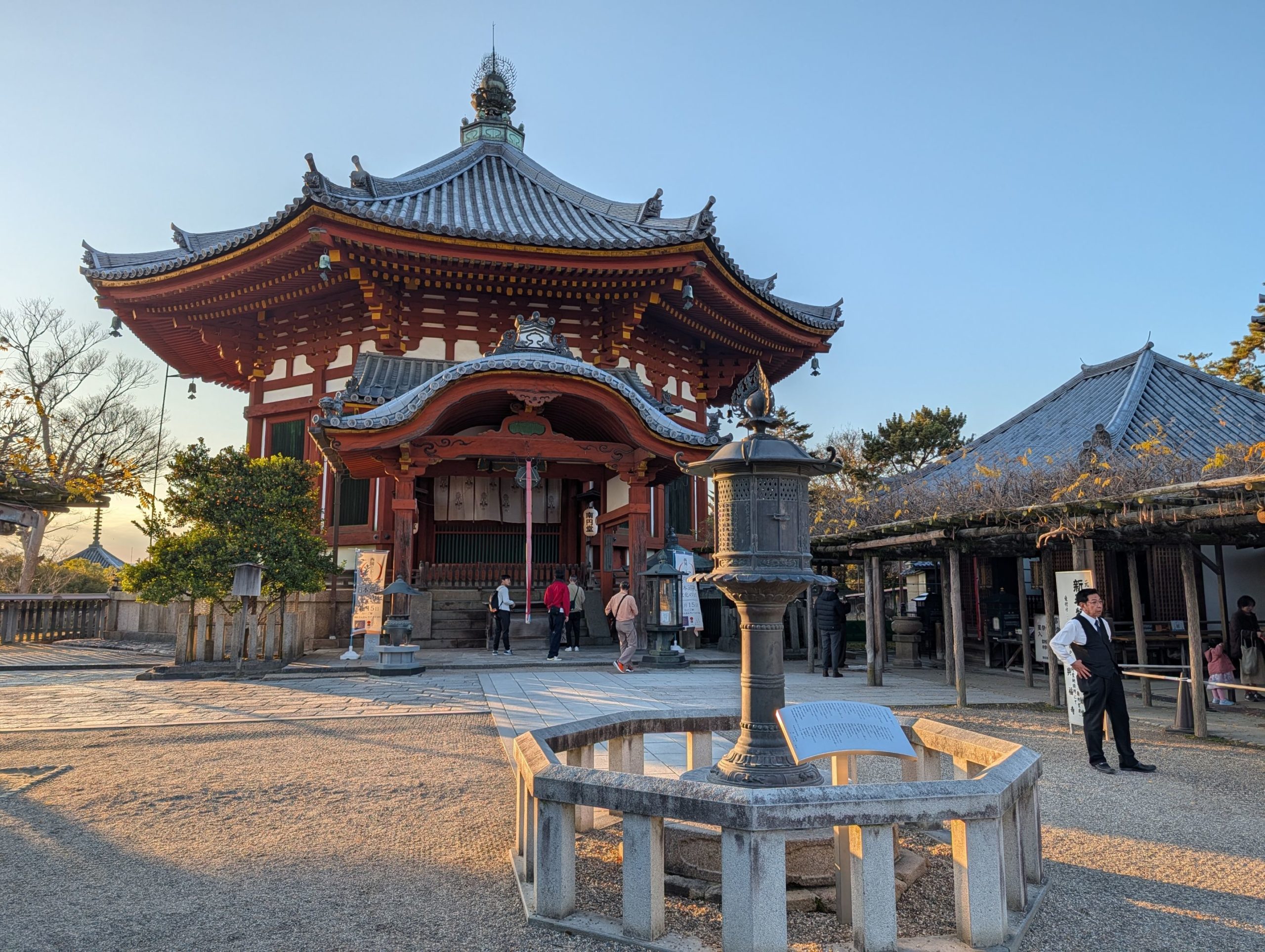
While the Great Buddha at Todai-ji was impressive, what left an even stronger impression was Kofuku-ji Temple. The photos show Kofuku-ji’s Chūkondō (Central Golden Hall) and Nan’endō (Southern Octagonal Hall), but I also explored the Tōkondō (Eastern Golden Hall), Hokkoku-dō (Northern Octagonal Hall), Sanjū-no-tō (Three-storied Pagoda), and the National Treasure Hall (the Five-storied Pagoda was under renovation…). The large Chūkondō housed a wooden seated statue of Shaka Nyorai, along with standing statues of Yakuō and Yakujō Bosatsu, National Treasure wooden standing statues of the Four Heavenly Kings, and a standing statue of Daikokuten. Even more impressive was the Tōkondō, a National Treasure, where the bronze statue of Yakushi Nyorai and standing statues of Nikkō and Gakkō Bosatsu, along with wooden standing statues of the Twelve Divine Generals, a seated statue of Yuima Koji, a seated statue of Monju Bosatsu, and standing statues of the Four Heavenly Kings—all designated National Treasures—were absolutely magnificent. I found myself gazing at them for a long time.
Furthermore, Kofuku-ji’s National Treasure Hall houses numerous National Treasures, and among them, the National Treasure dry lacquer statue of the Eight Legions (Hachibushū Ritsuzō), including the famous Ashura statue, was particularly magnificent. The Ashura statue is generally depicted with an intensely angry face, but Kofuku-ji’s statue conveys an introspective and delicate appearance, as if deep in thought or having made a resolute decision, and is depicted as a young boy with slender arms and a slim body. Along with the Ashura statue, the Shagara statue also captivated me with its expression. This one too was a boyish figure with an innocent aura, a unique and very impressive statue with a snake wrapped from its head down to its left chest.
Kofuku-ji Temple is truly a highly recommended place!
コメント