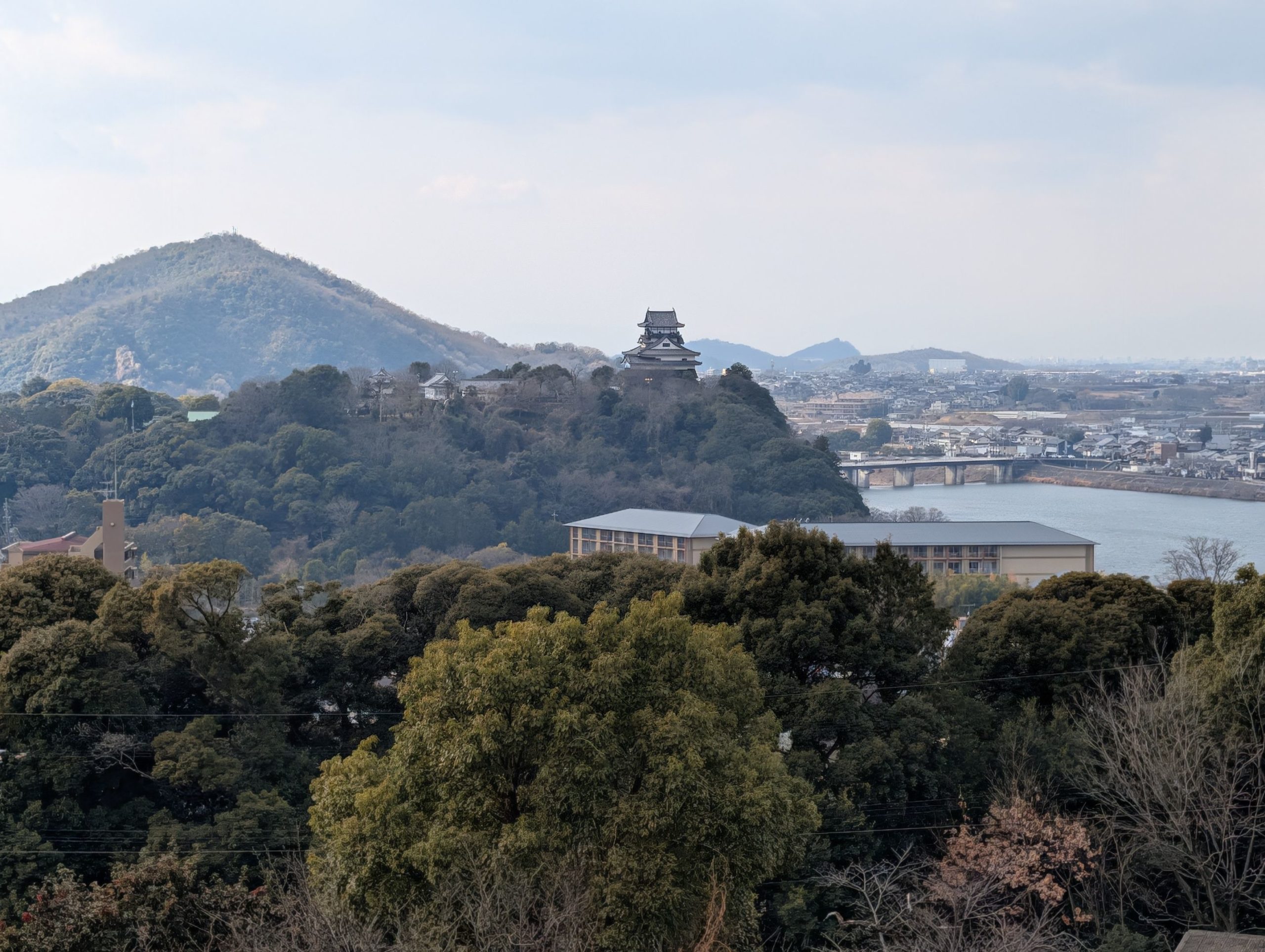
I found myself spending a weekend in Hamamatsu for the first time in a while and was thinking about what to do. Inuyama Castle, one of the twelve existing original keeps and a designated National Treasure, suddenly came to mind, along with a friend living nearby whom I hadn’t seen in ages. I sent a message saying, “Let’s meet if we can!” and decided to head out to Inuyama.
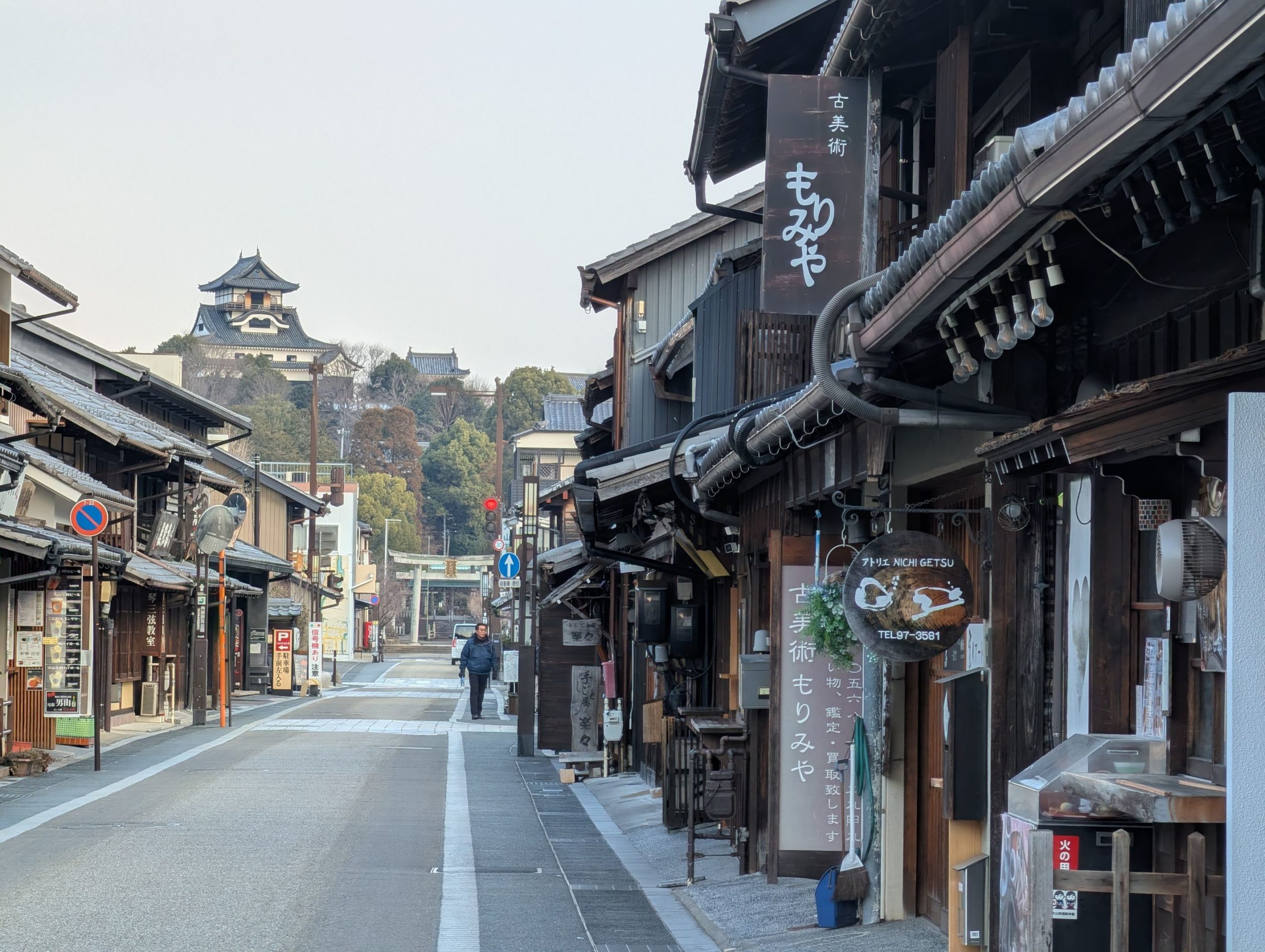
I caught the first train from Hamamatsu at 6:01 AM, transferred to the Meitetsu line at Toyohashi, and arrived at Inuyama Station at 8:17 AM. Usually, I’d just rent a car through a car-share service, but it’s actually not bad traveling by train—dozing off or getting some reading done along the way.
Looking at the map in front of the station, I saw there was a castle town (jokamachi), and since Inuyama Castle doesn’t open until 9:00 AM, I decided to take a slow stroll through the town on my way there. That said, because the castle wasn’t open yet, most of the shops in the town were still closed. It was a freezing day, and even though it was past 8:00 AM, there was a crisp, sharp chill in the air. The empty streets of the castle town had a really nice atmosphere.
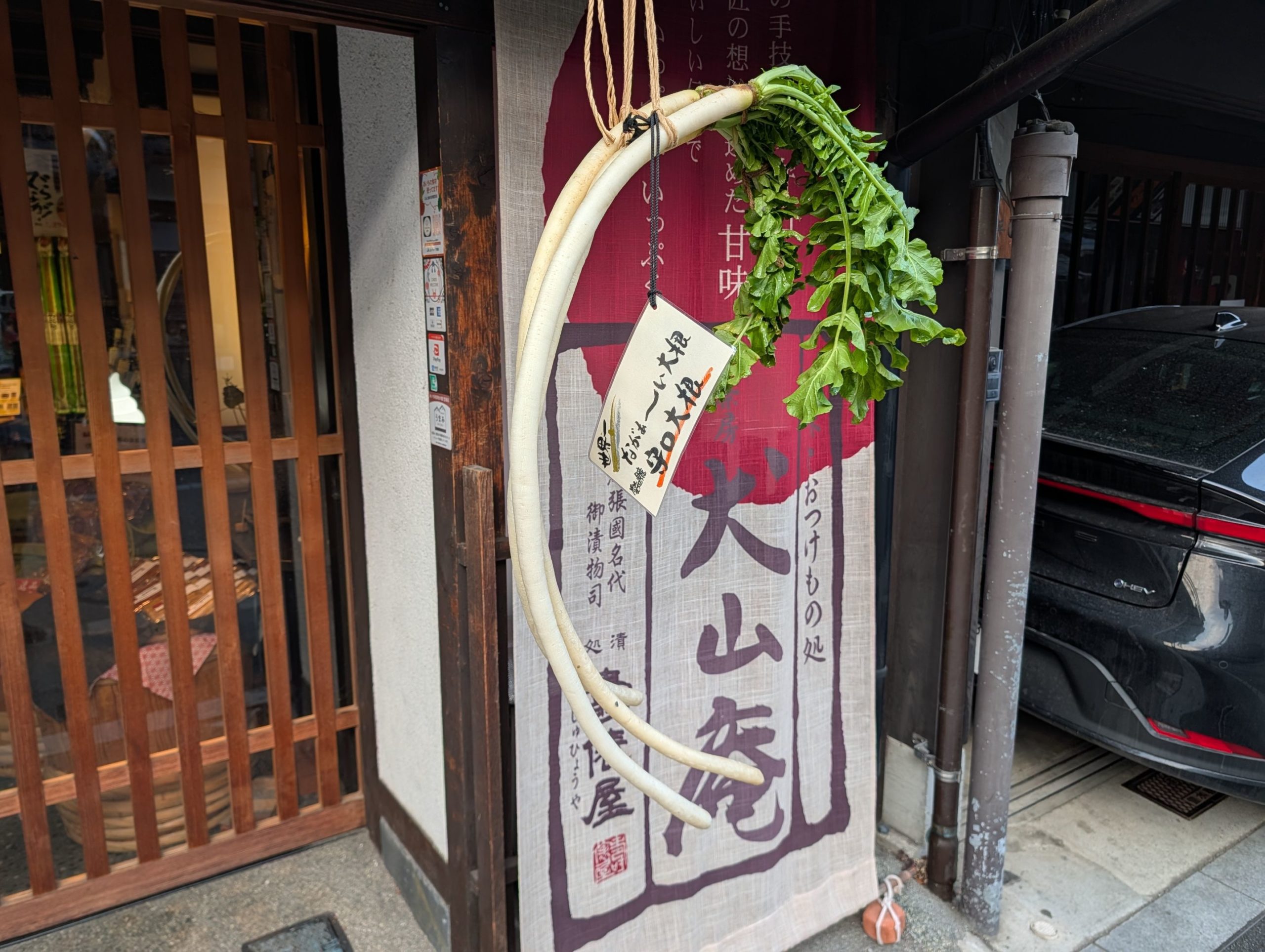
I spotted two shops with Moriguchi radishes hanging outside like this. I never expected to encounter Moriguchi-zuke (pickled radish) in Inuyama, something I’ve been curious about for a while. I had always assumed “Moriguchi” referred to the place where they were grown, but it turns out they are actually produced in the neighboring Fuso Town and Kakamigahara City. Apparently, the name comes from the fact that they were originally cultivated in a place called Moriguchi in Osaka. Seeing the actual radishes, I was amazed at how incredibly long and skinny they are before they get coiled up into pickles! lol.
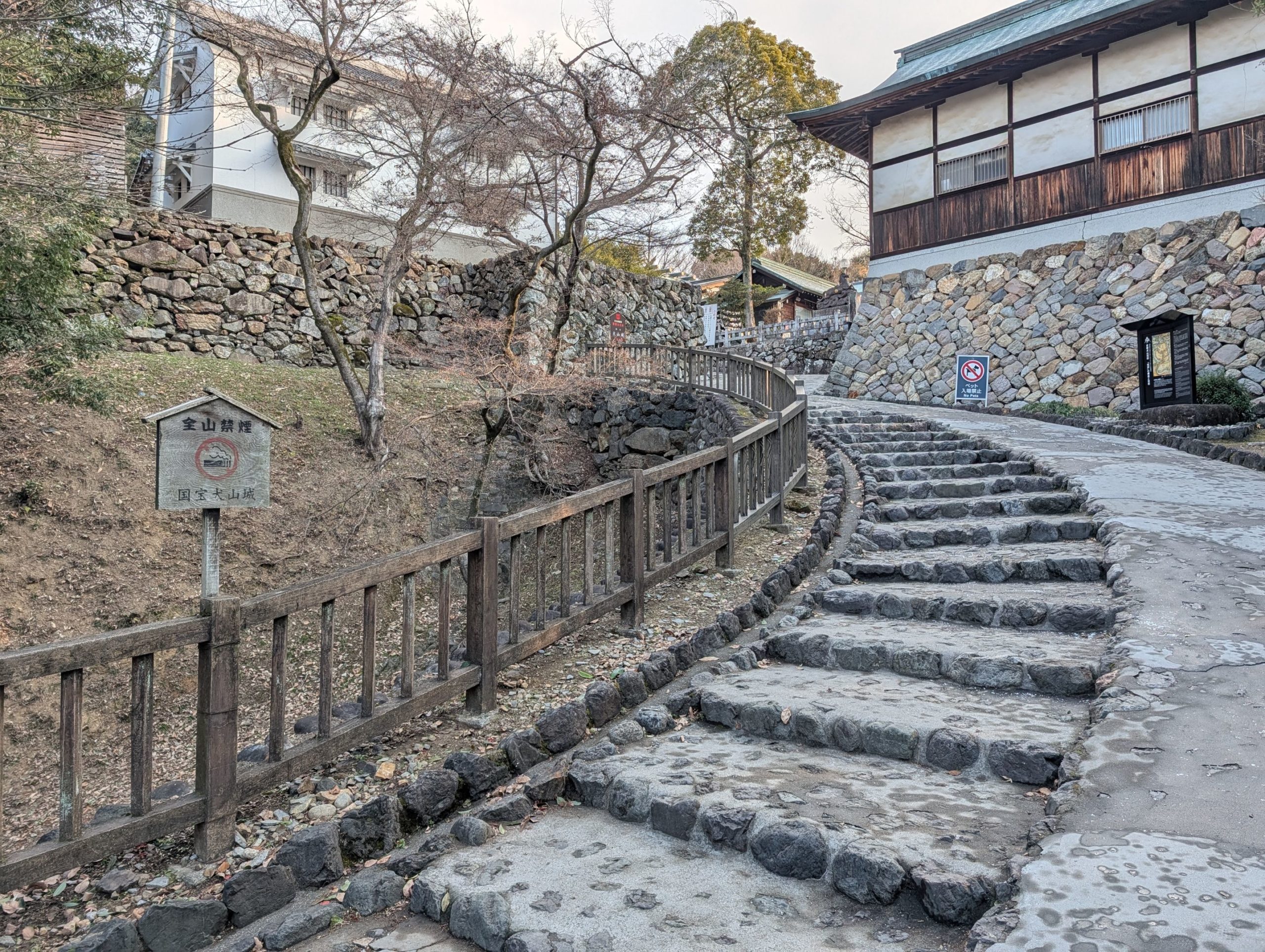
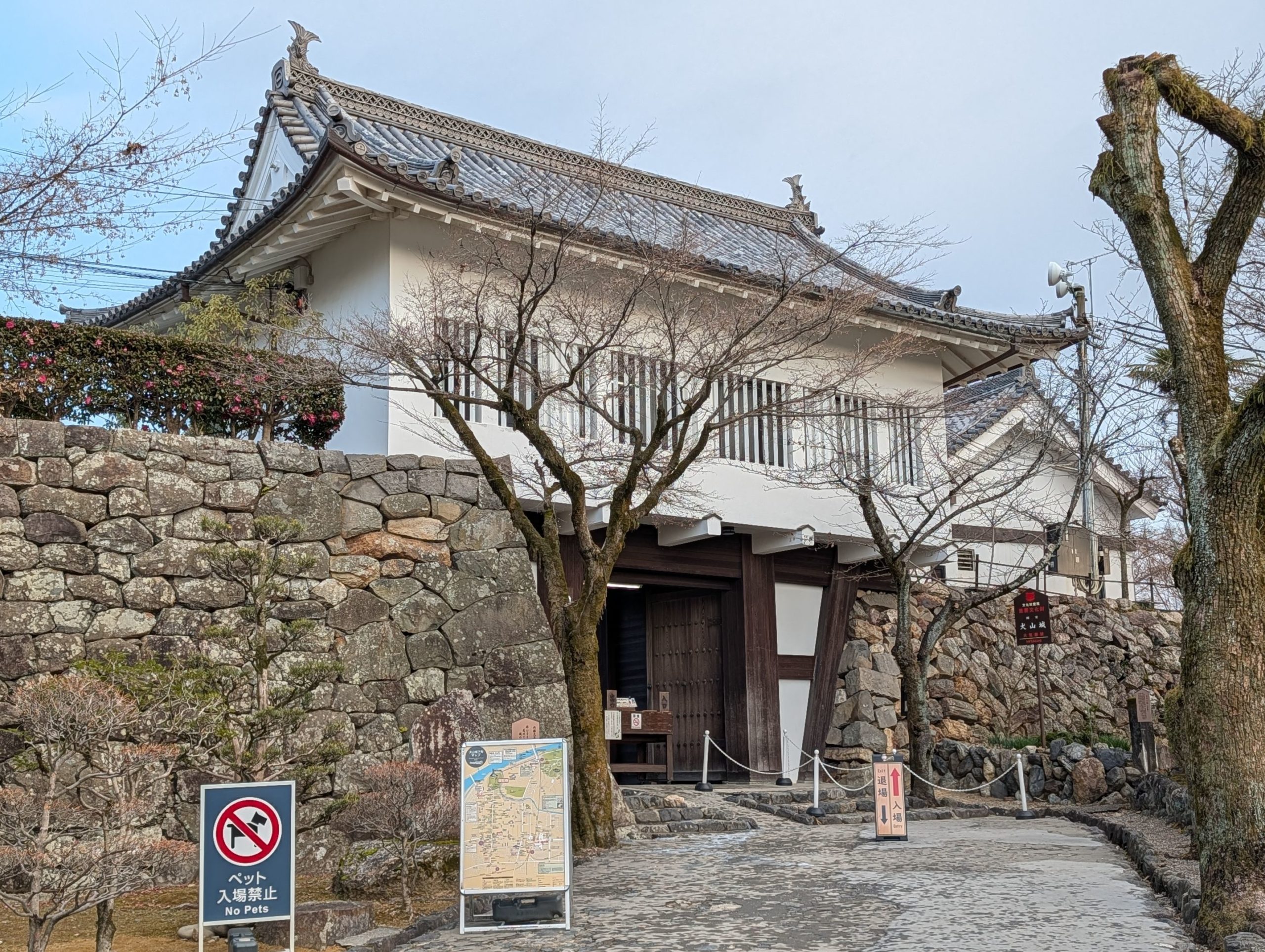
Inuyama Castle is said to have been built around 1537 when Oda Nobuyasu (Oda Nobunaga’s uncle) moved Kinoshita Castle to this site. During the Sengoku period, ownership changed hands many times, and the castle structures were significantly reinforced around the time of the Battle of Sekigahara in 1600. It’s also said that during the Battle of Komaki-Nagakute, Toyotomi Hideyoshi entered this castle with a massive army of 120,000 to face Tokugawa Ieyasu, who was stationed at Mount Komaki.
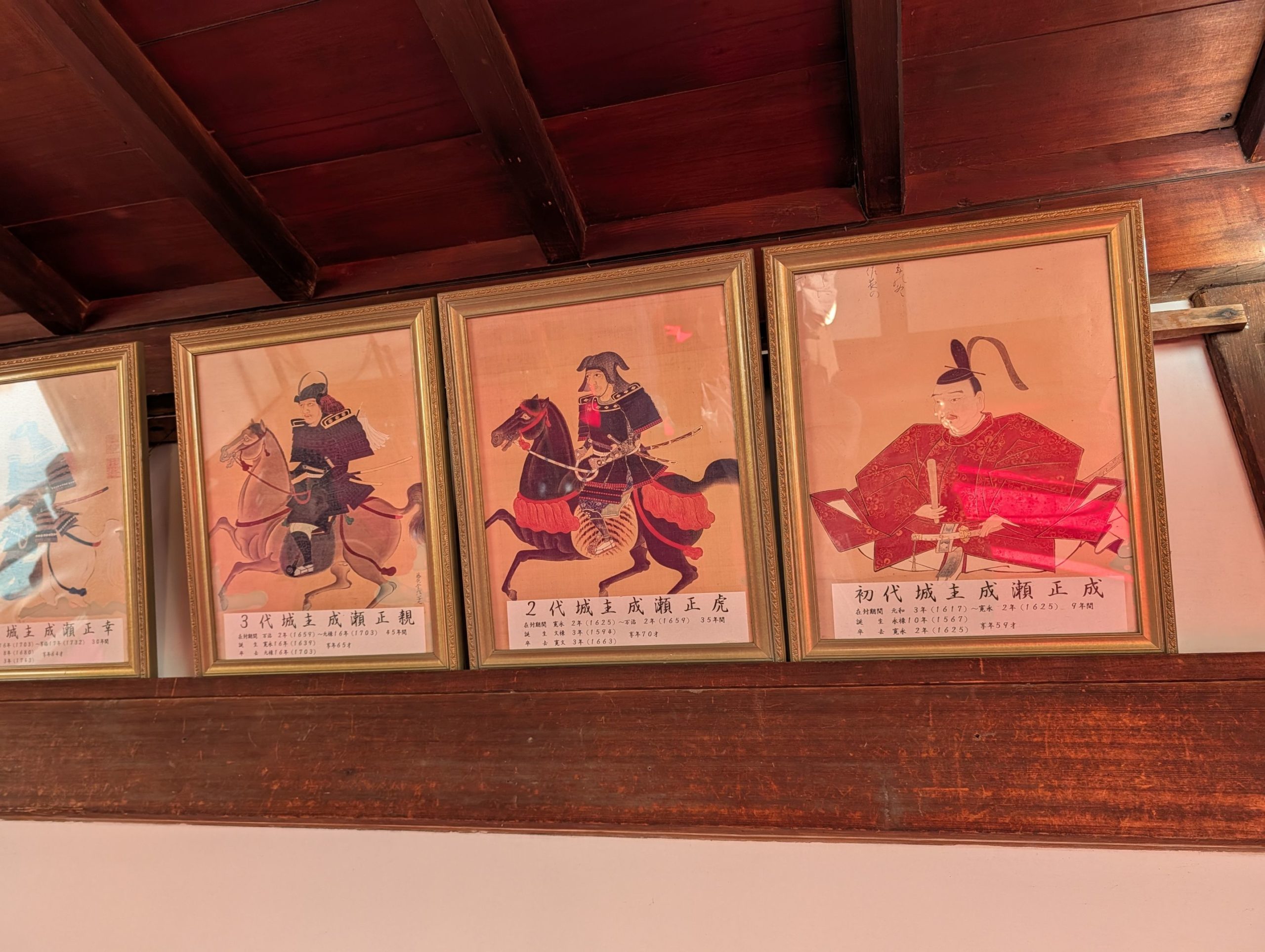
In 1871, during the Meiji era, the castle was decommissioned. Most buildings like the turrets and gates were demolished, leaving only the main keep (tenshu), and the grounds became a park. However, after the main keep was heavily damaged in the 1891 Nobi Earthquake, it was returned to the former lord, the Naruse family, on the condition they repair it. The restoration was apparently funded by donations from many citizens.
Among the National Treasure castles—Matsumoto, Hikone, Himeji, Matsue, and Inuyama—Inuyama is the oldest. For me, this was the last of the National Treasure keeps that I hadn’t visited yet. Now, the only “Existing Twelve Keeps” I have left to see are Hirosaki Castle and Bitchu Matsuyama Castle (though my parents say they took me to Bitchu Matsuyama when I was a kid living in Okayama because they loved castles… but I don’t remember it!)
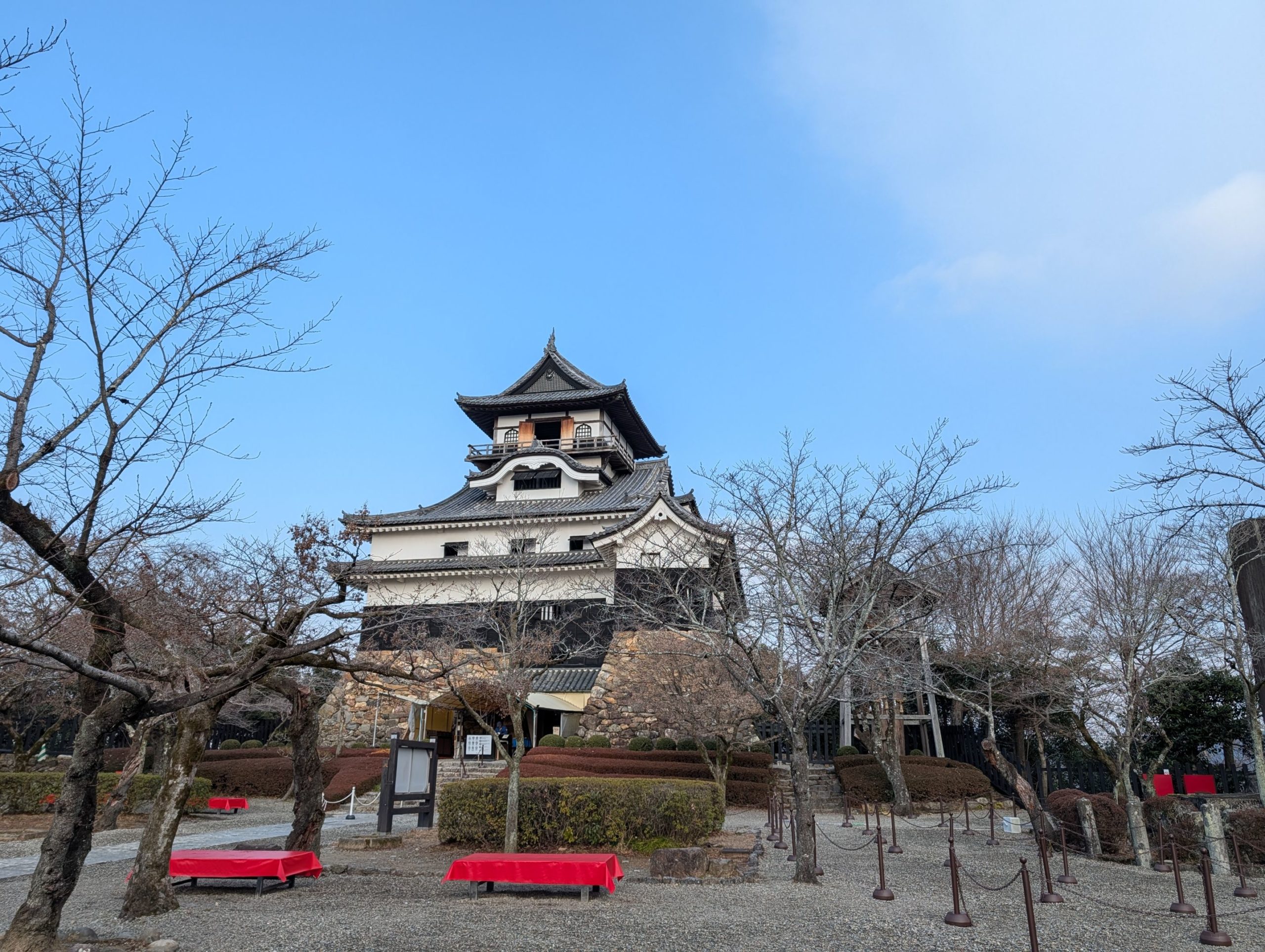
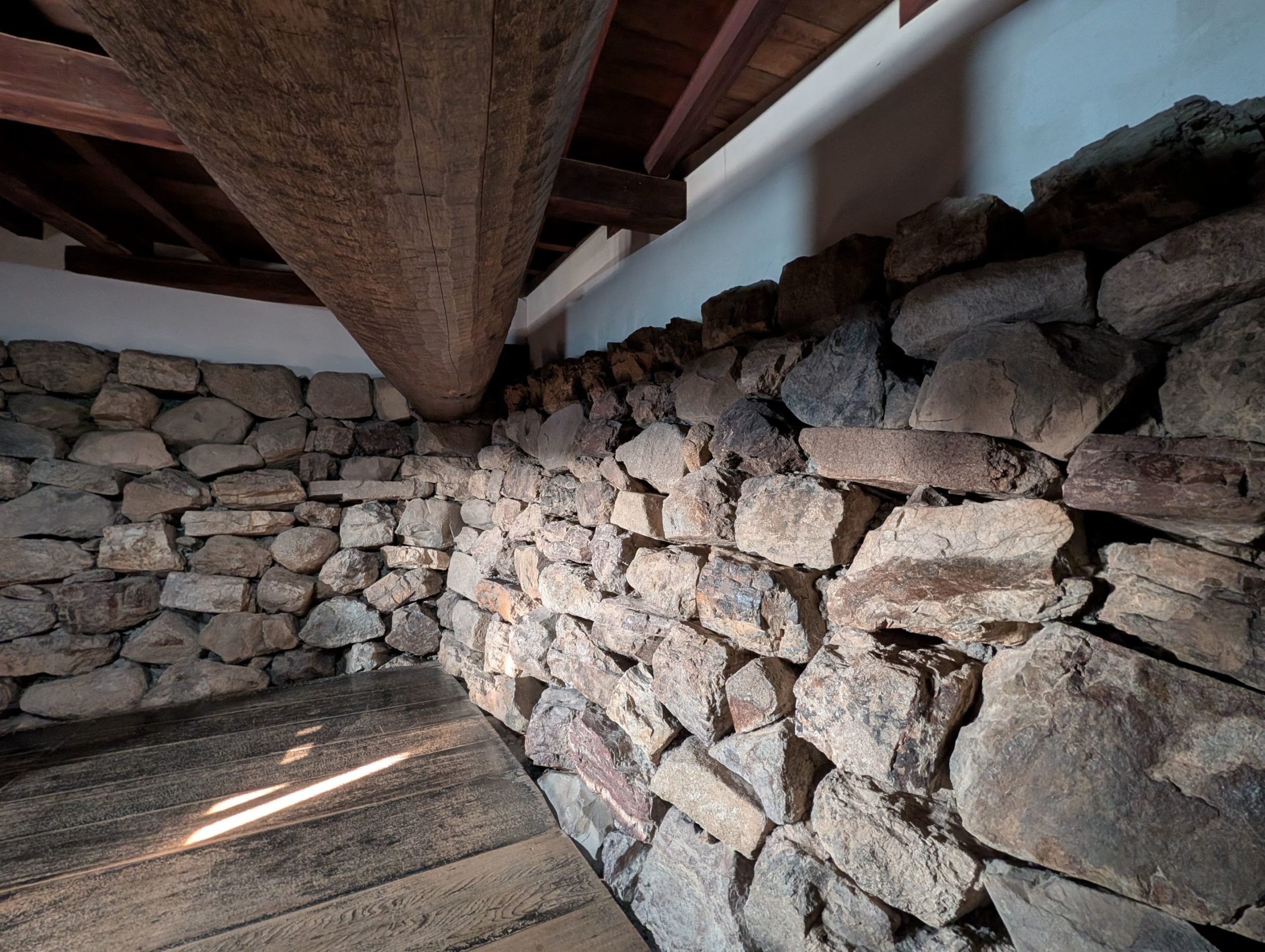
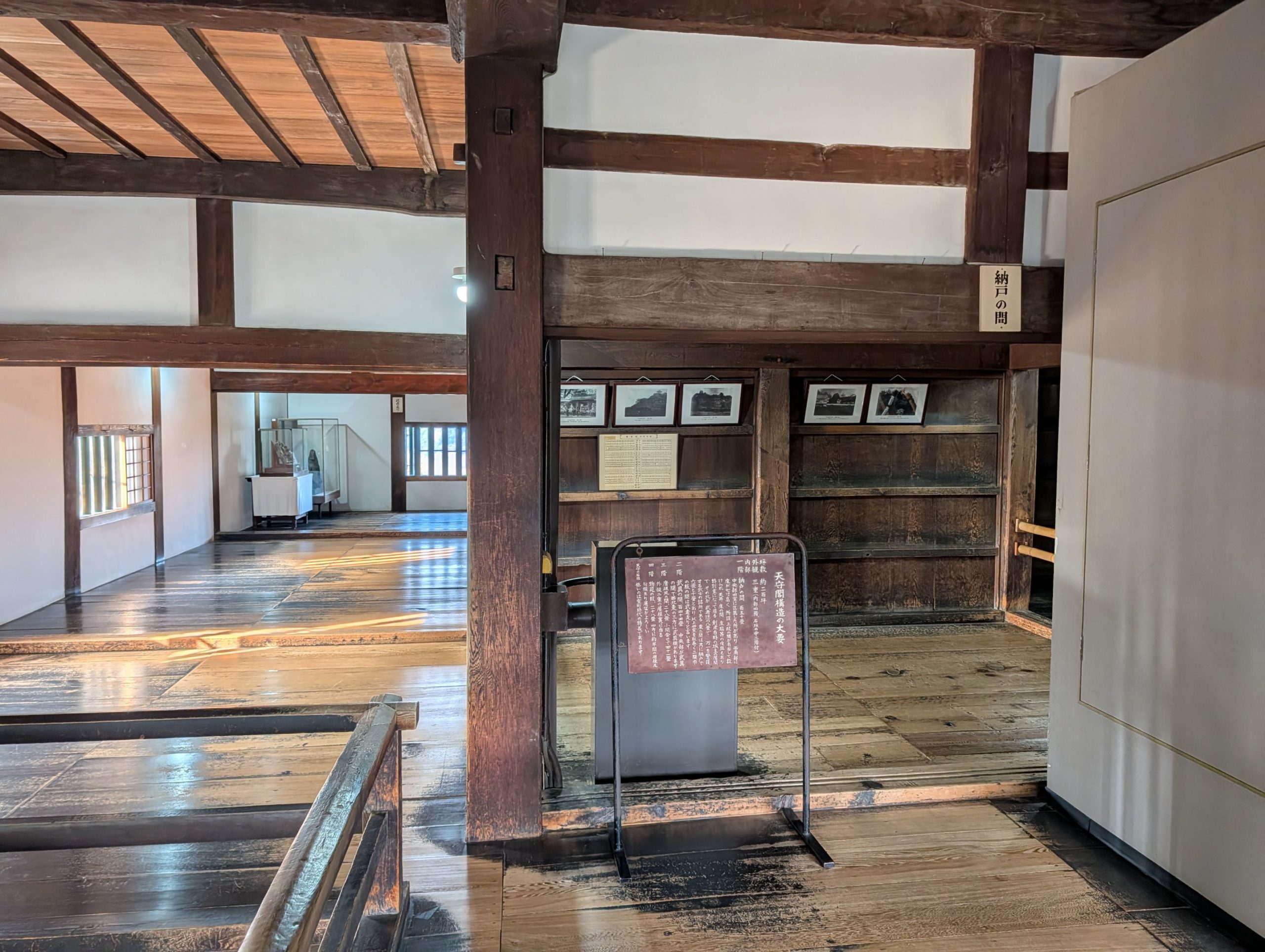
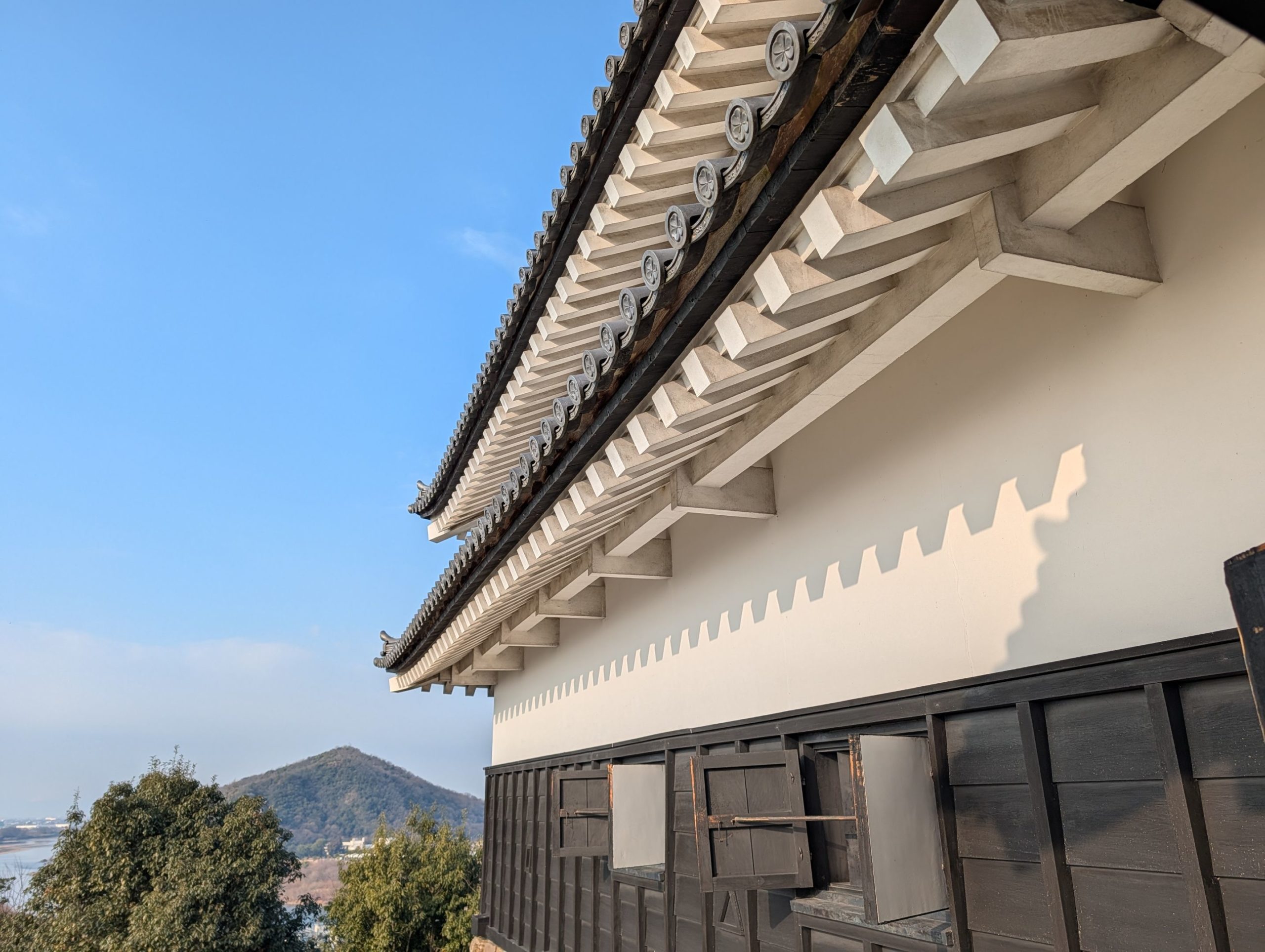
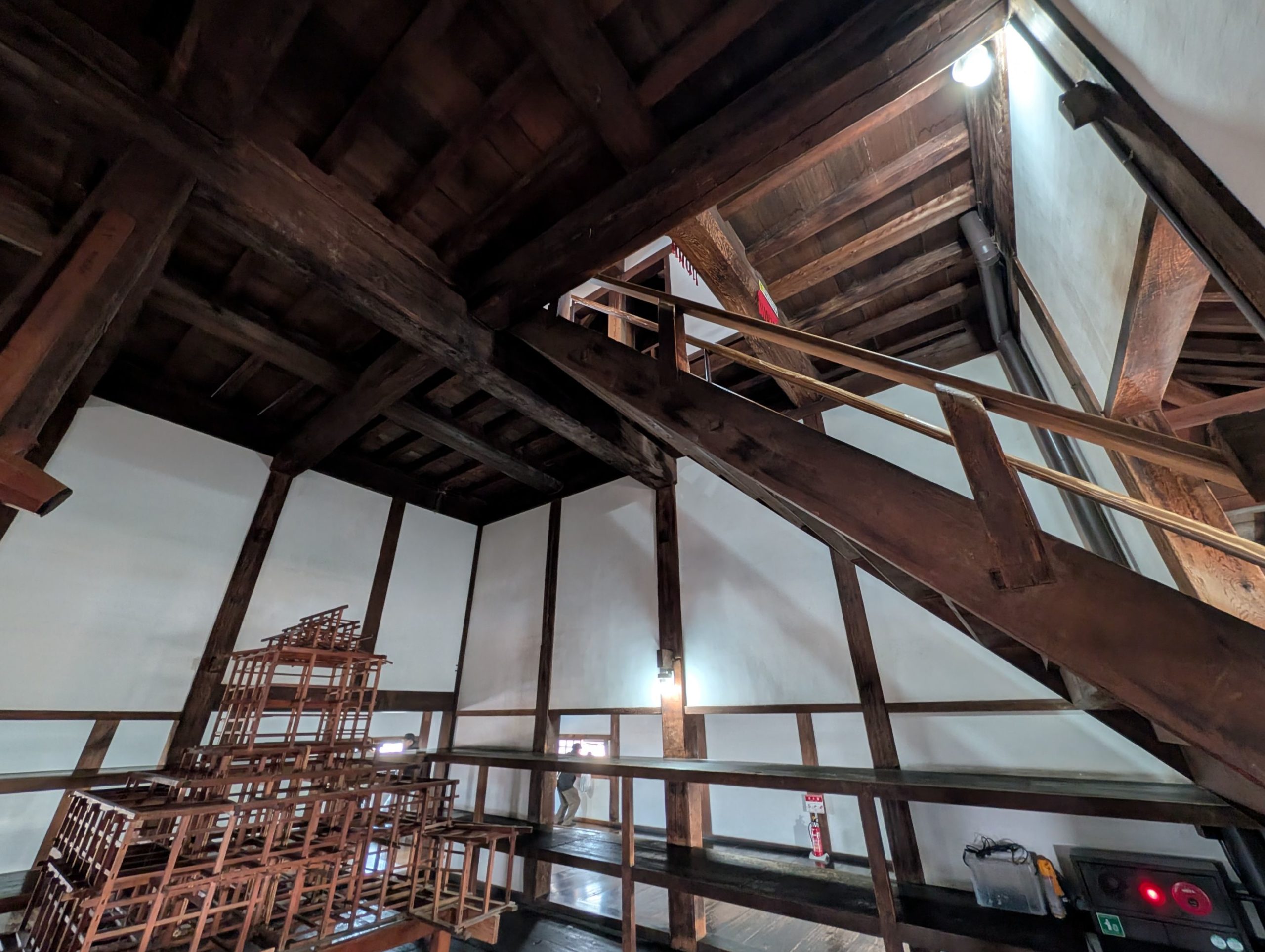
The keep is four stories high from the inside, with a three-tiered exterior reaching 24 meters. The stone base is about 5 meters high and uses a technique called “Nozura-zumi,” where natural stones are piled up with almost no processing. You can see this clearly as soon as you enter. On the first floor, the “Ishi-otoshi” (stone-dropping) room has been restored, giving you a good sense of how it was used back then.
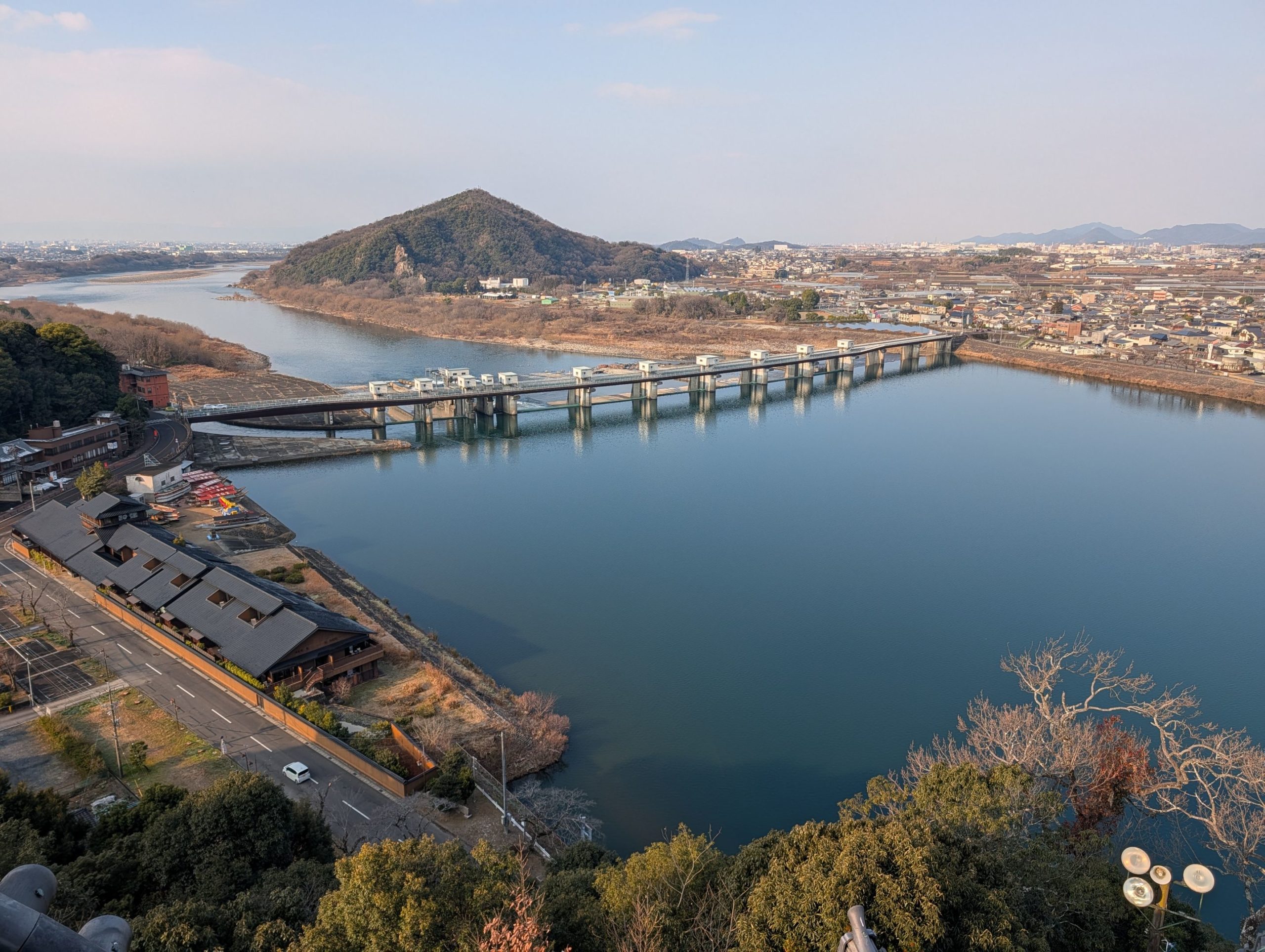
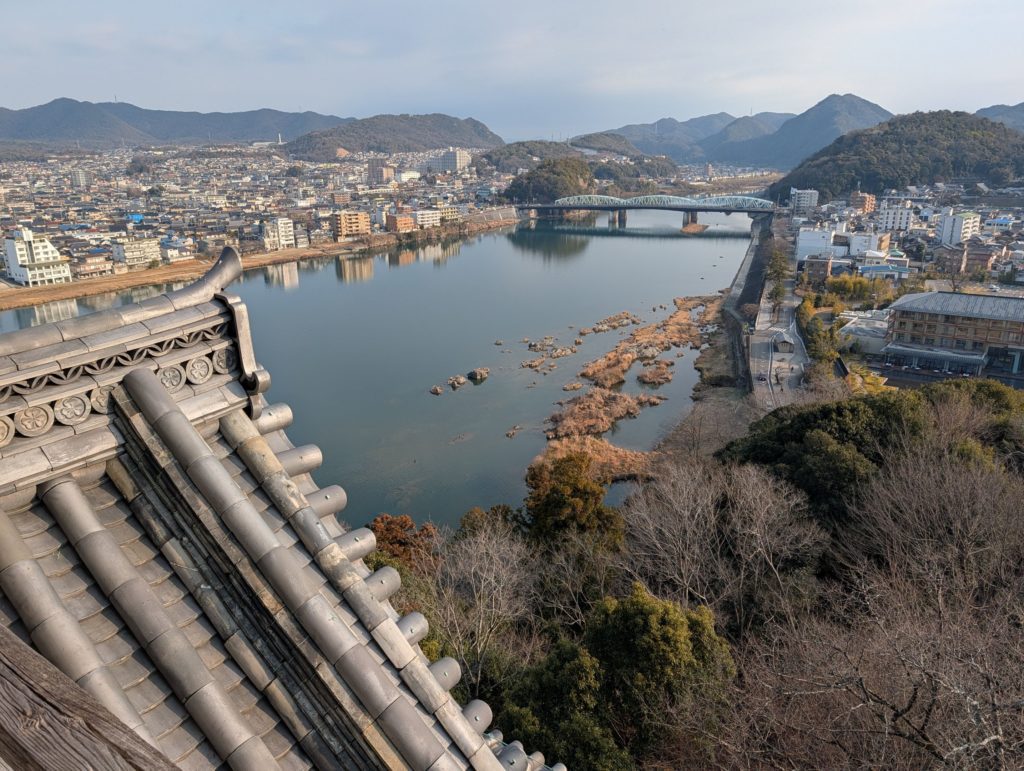
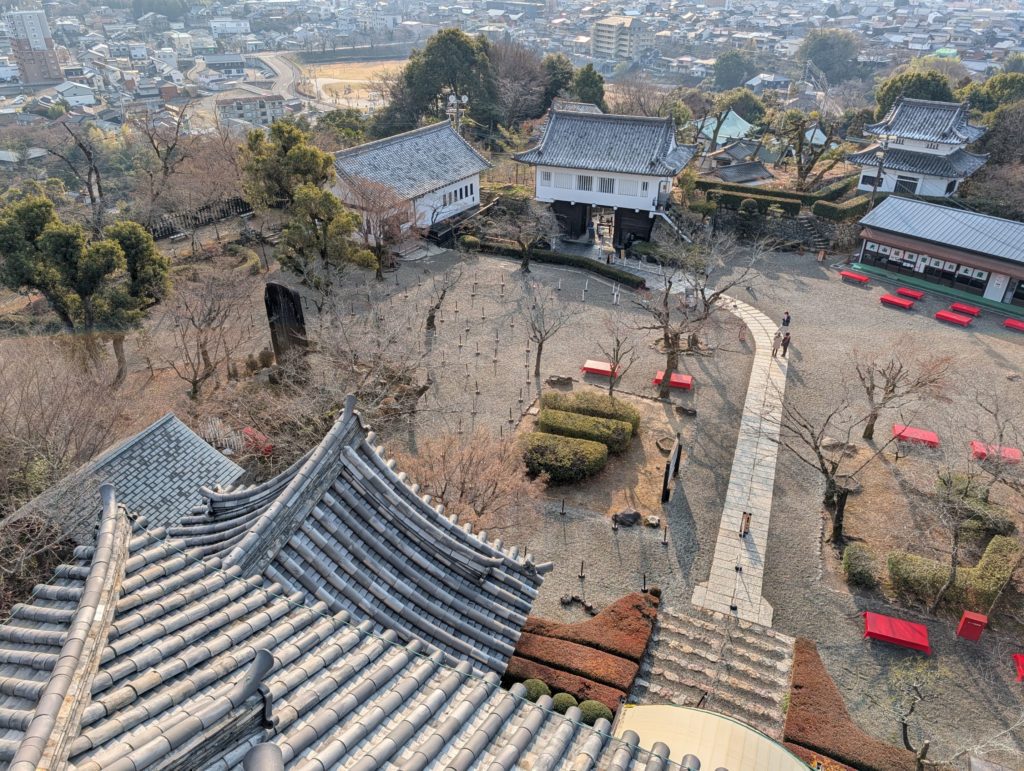
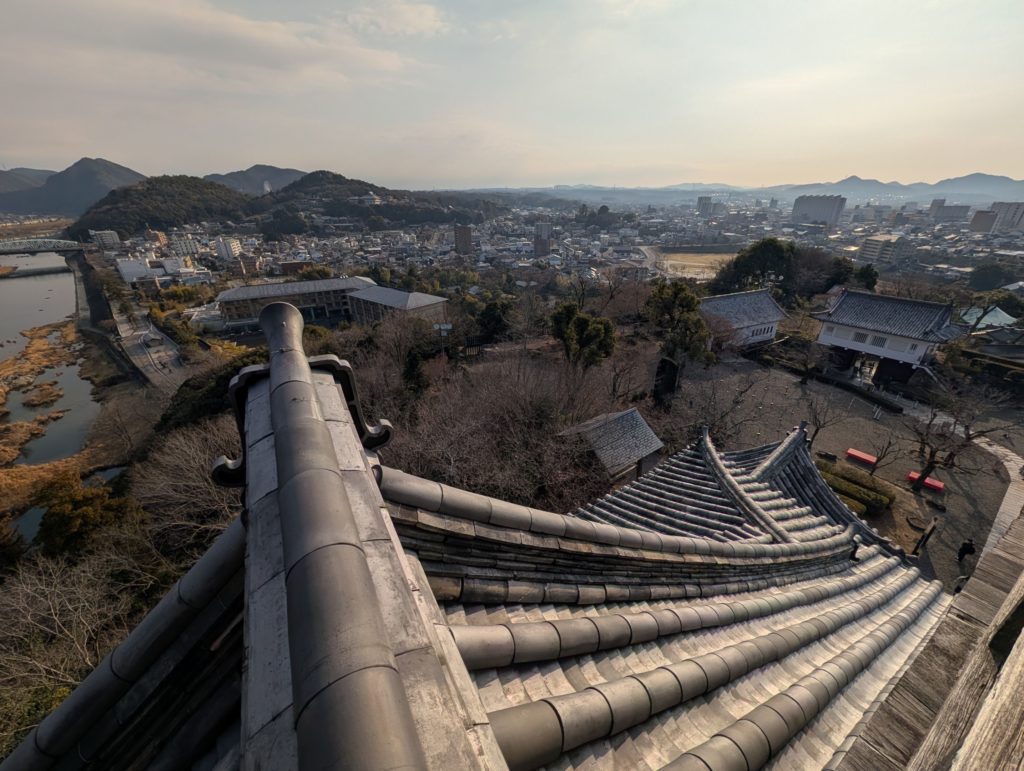
The balcony on the top floor has very low railings, so it’s a bit scary if you’re not careful—it feels like you could fall off! Unlike many other castles, there’s no safety netting, so you get an incredible, unobstructed 360-degree view. It was a bit hazy that day, so I couldn’t see them clearly, but apparently, you can see as far as Mount Ontake and Mount Gozaisho. The small, Fuji-shaped Igi-yama, the Rhine Ohashi Bridge, and Inuyama Bridge over the Kiso River were all striking, as was the Inuyama Naritasan temple, which reminds me of the famous Naritasan Shinshoji in Chiba.
After that, I was lucky enough to meet up with my friend. We ended up chatting about all sorts of things, and time just flew by. It was such a great catch-up.
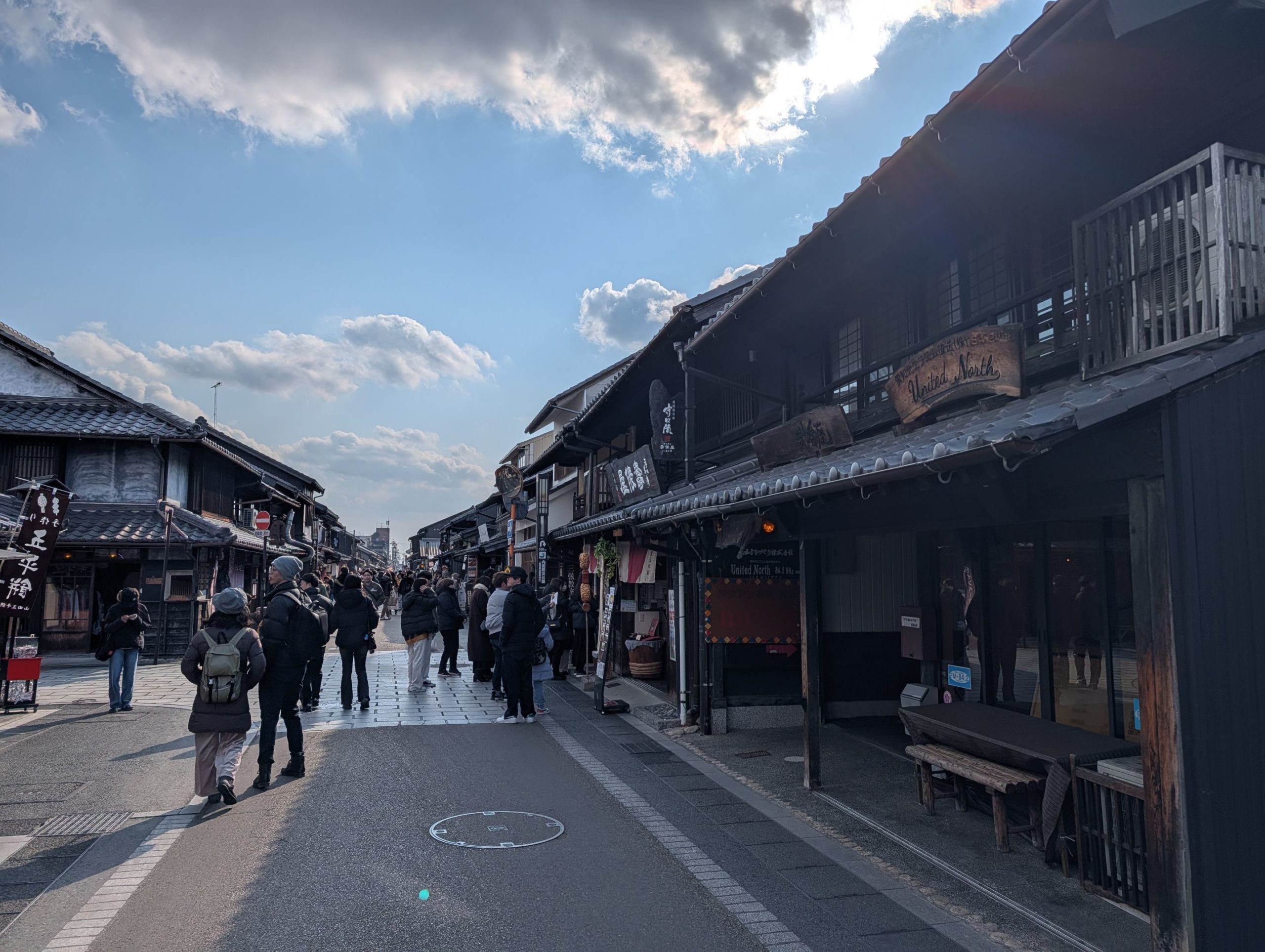
The castle town was so quiet in the early morning, but by noon it was packed with tourists. I picked up some Moriguchi radish pickles and, after walking through the town, I headed over to Naritasan and the Monkey Park to see Taro Okamoto’s “Tower of the Young Sun,” as my friend suggested. All in all, it was a really relaxing and enjoyable day in Inuyama.

コメント