A friend posted about “Meao Fudo-son” on Facebook, and I initially wondered if it was a mistake for the famous Meguro Fudo-son. But the photos looked different, and I figured they wouldn’t mix up Meguro and Meao, so I looked it up. That’s when I discovered the Edo Goshiki Fudo. These five Fudo statues are arranged in a circle around central Tokyo, and I thought it would be fun to visit them all on my eBike, so I set out right away.
The Edo Goshiki Fudo consist of Meguro Fudo Ryūsenji Temple, Mejiro Fudo Konjoin Temple, Meaka Fudo Nankokuji Temple, Meao Fudo Kyōin Temple, and Meki Fudo Eikyuji Temple/Saishoji Temple. Their names combine “Me” (eye) with five colors, and since there are two Meki Fudo statues, there are actually 5 types across 6 locations. These five colors are said to be derived from the Onmyodo Five Elements theory in Esoteric Buddhism, representing blue, white, red, black, and yellow, and each color is traditionally associated with East, West, South, North, and Center, respectively. However, as you can see from the map below, the actual arrangement of each Fudo temple doesn’t quite match those directions… a bit mysterious, isn’t it?
I’m quite familiar with Meguro Fudo, not just from my annual New Year’s visit but also from occasional visits, but I’ve never been to the other Fudo temples. For the two Meki Fudo temples, I just decided to visit Saishoji Temple, the one further away. I made a few detours, so my actual route was a bit longer than this, but it was generally this kind of circular tour.

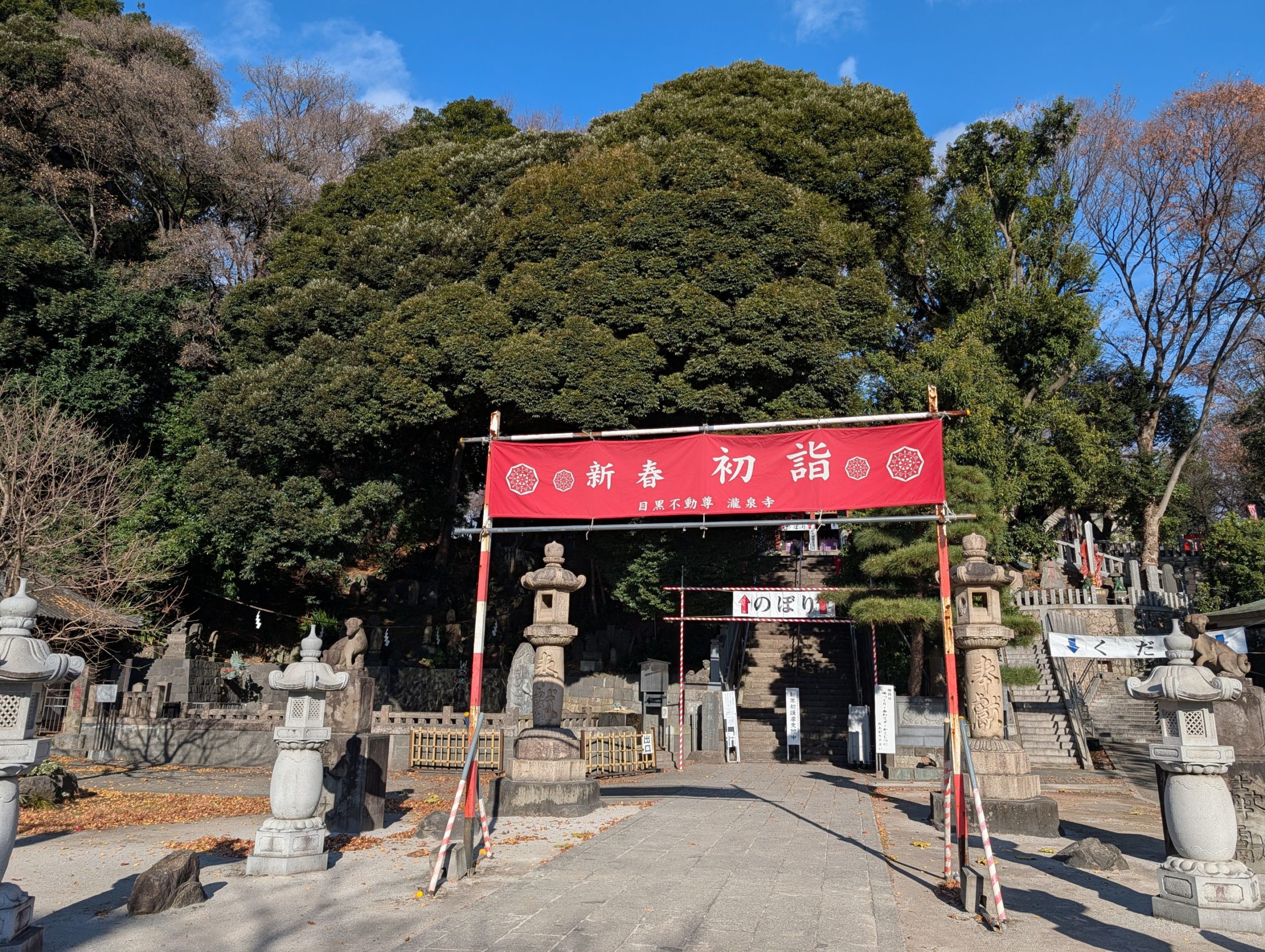
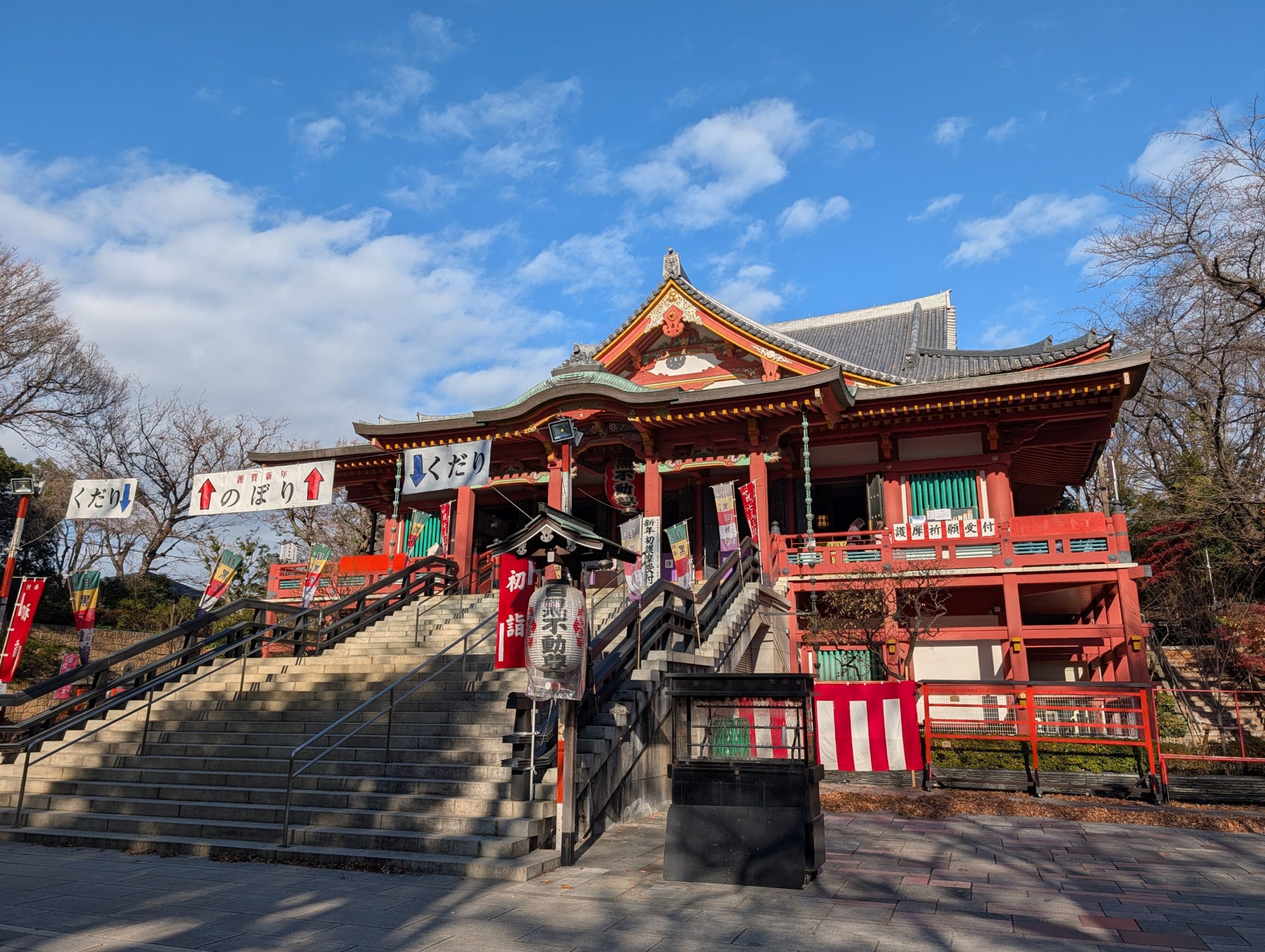
Meguro Fudo is the one I feel most familiar with and probably the most famous, in my opinion. I don’t usually visit at this time of year, so I was surprised to see that preparations for Hatsumode (first shrine visit of the New Year) were already complete. After visiting the other four locations, this one is by far the largest. Although I didn’t take a picture, another interesting feature of Ryūsenji Temple is the rather large outdoor statue of Dainichi Nyorai behind the main hall. You can also find the grave of Aoki Konyo, who popularized sweet potato cultivation. What I learned for the first time by researching this trip was that this temple is the final (33rd) pilgrimage site of the Edo 33 Kannon Pilgrimage. Since I’ve done the Shikoku Pilgrimage myself, the phrase “final pilgrimage site” resonates with me a bit.
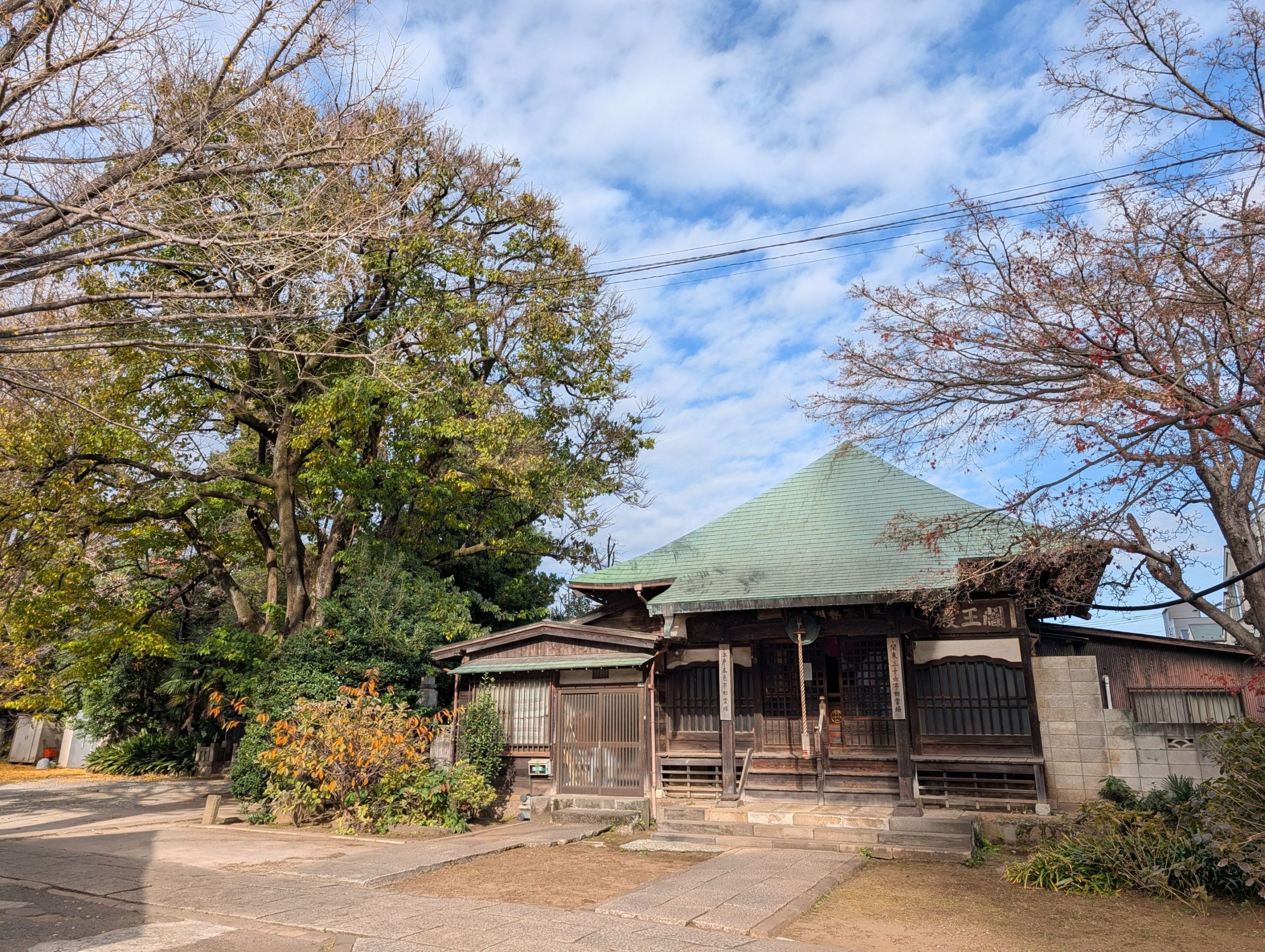

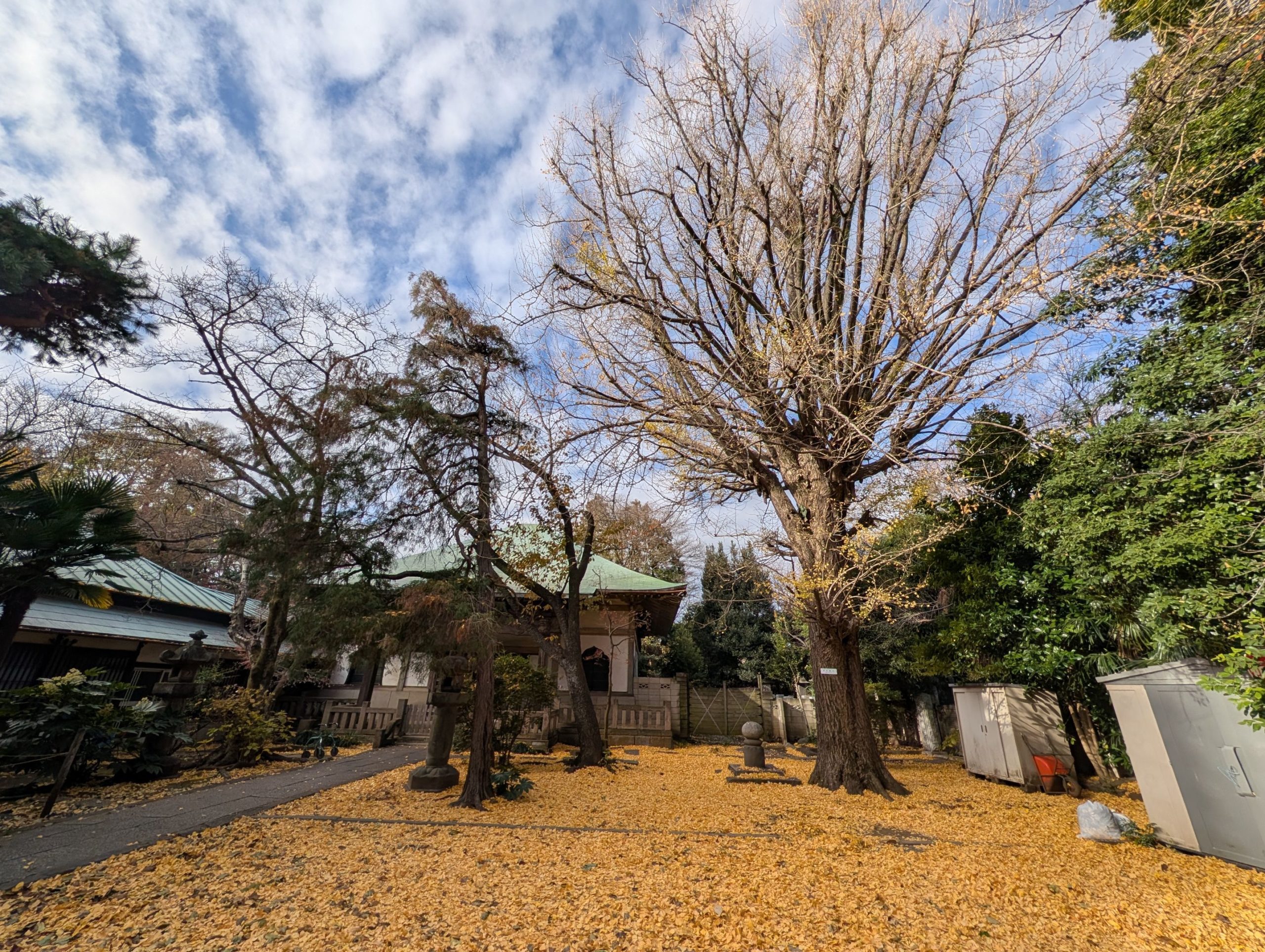
Meao Fudo-son is right next to Sangenjaya Station on the Setagaya Line, and it feels strange to find such a historical, quiet temple in the lively, bustling atmosphere of Sangenjaya. There’s a huge ginkgo tree on the temple grounds, and the ground was strikingly yellow from all the fallen leaves. The Fudo Myoo statue at Meao Fudo is a hidden Buddha (Hibutsu) and not publicly displayed; what you can see in the Fudo-do hall is a bronze “maedachi” (replica or stand-in) Fudo statue. It’s a small temple, but there were a steady number of visitors.
The route from Meao Fudo-son to Mejiro Fudo-son took me through places I’m personally nostalgic for, like Shimokitazawa → Hatsudai → Shinjuku → Takadanobaba. Riding on an eBike, I got the impression that these towns are closer to each other than I thought.
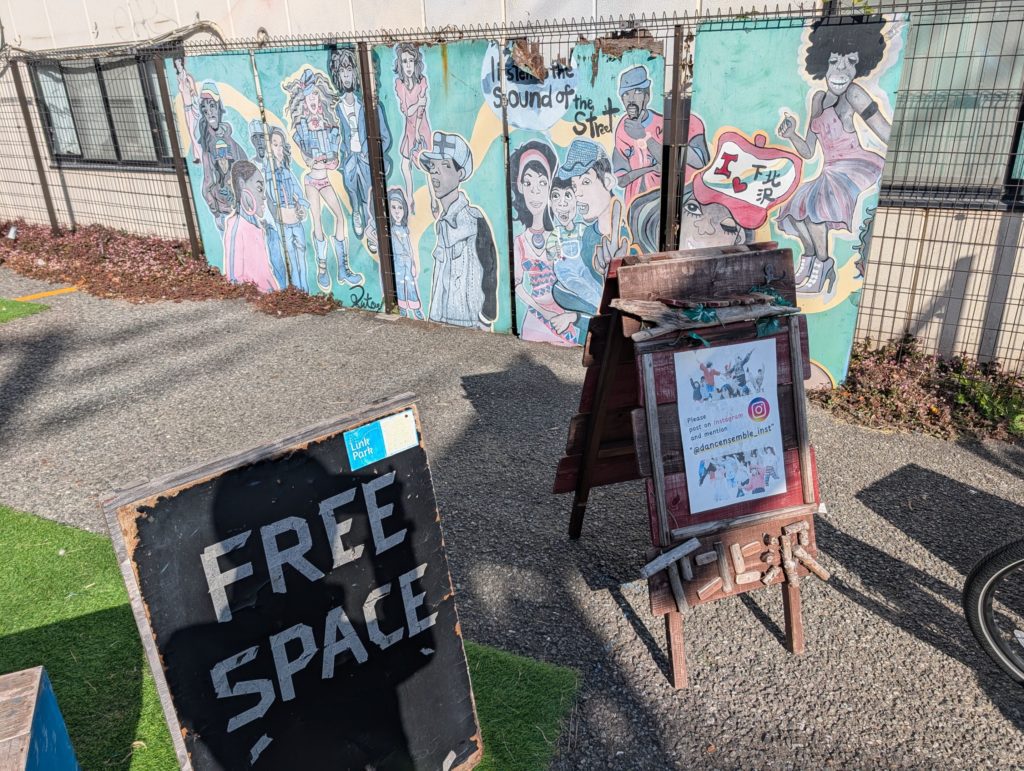
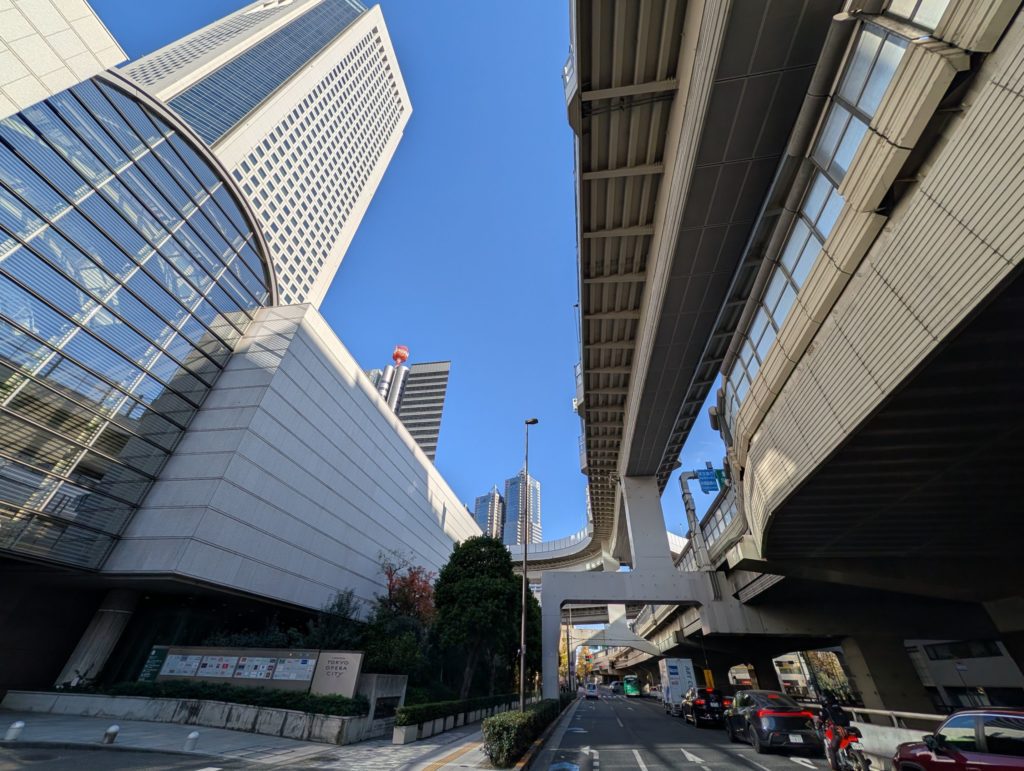
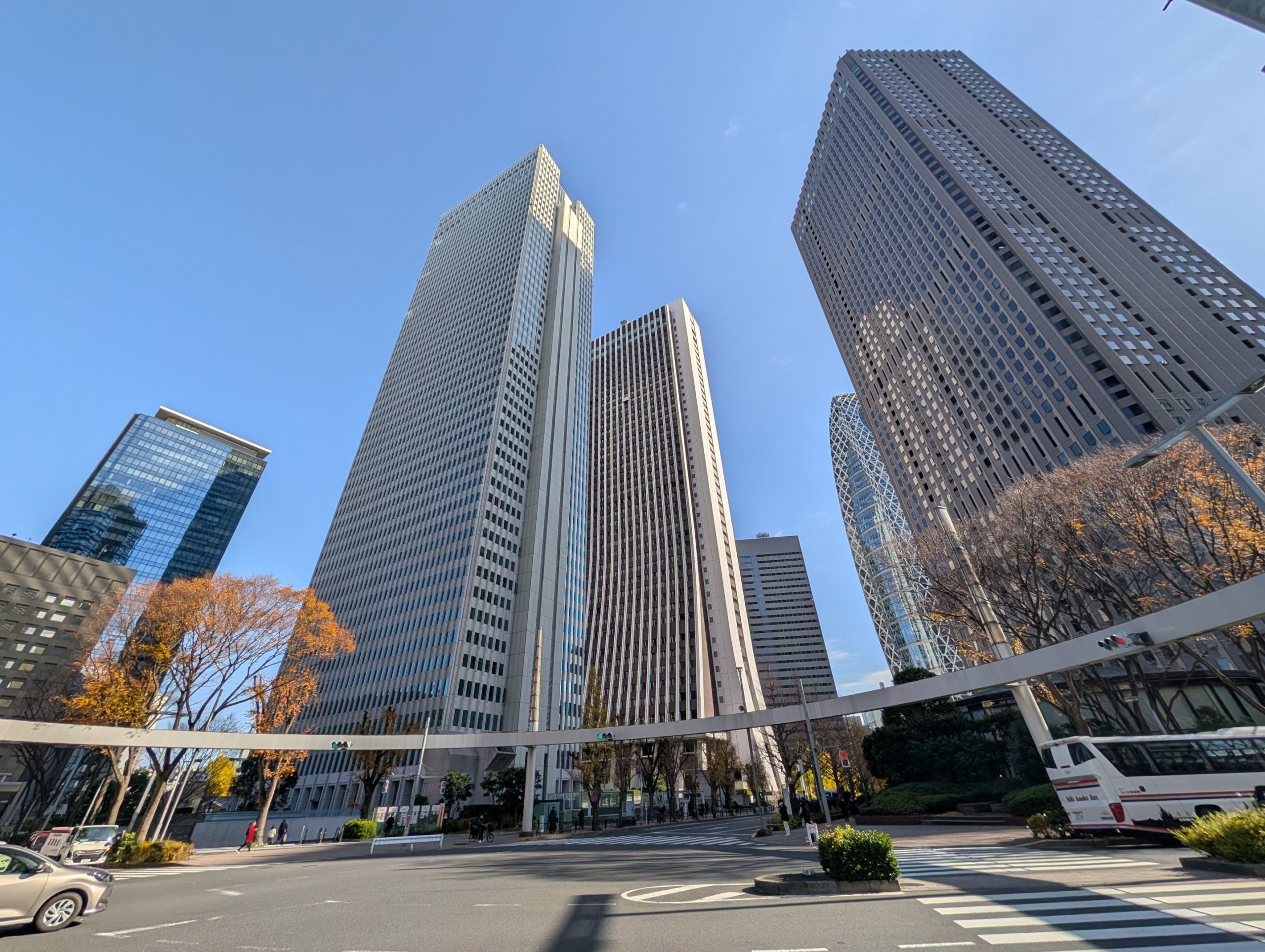
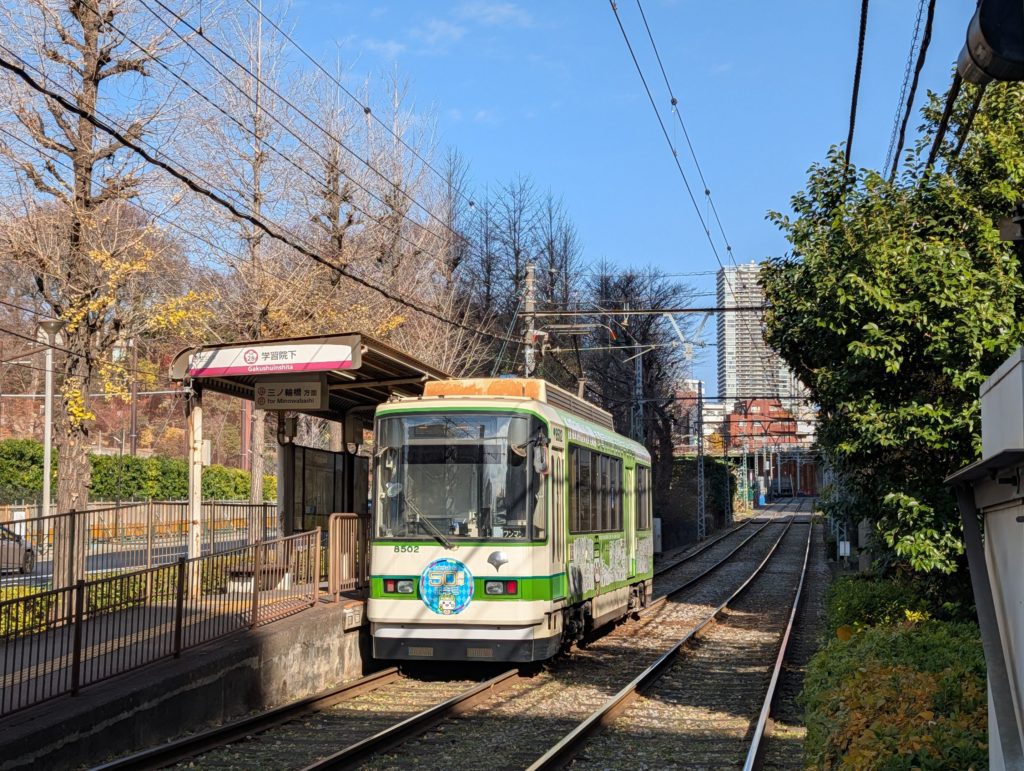
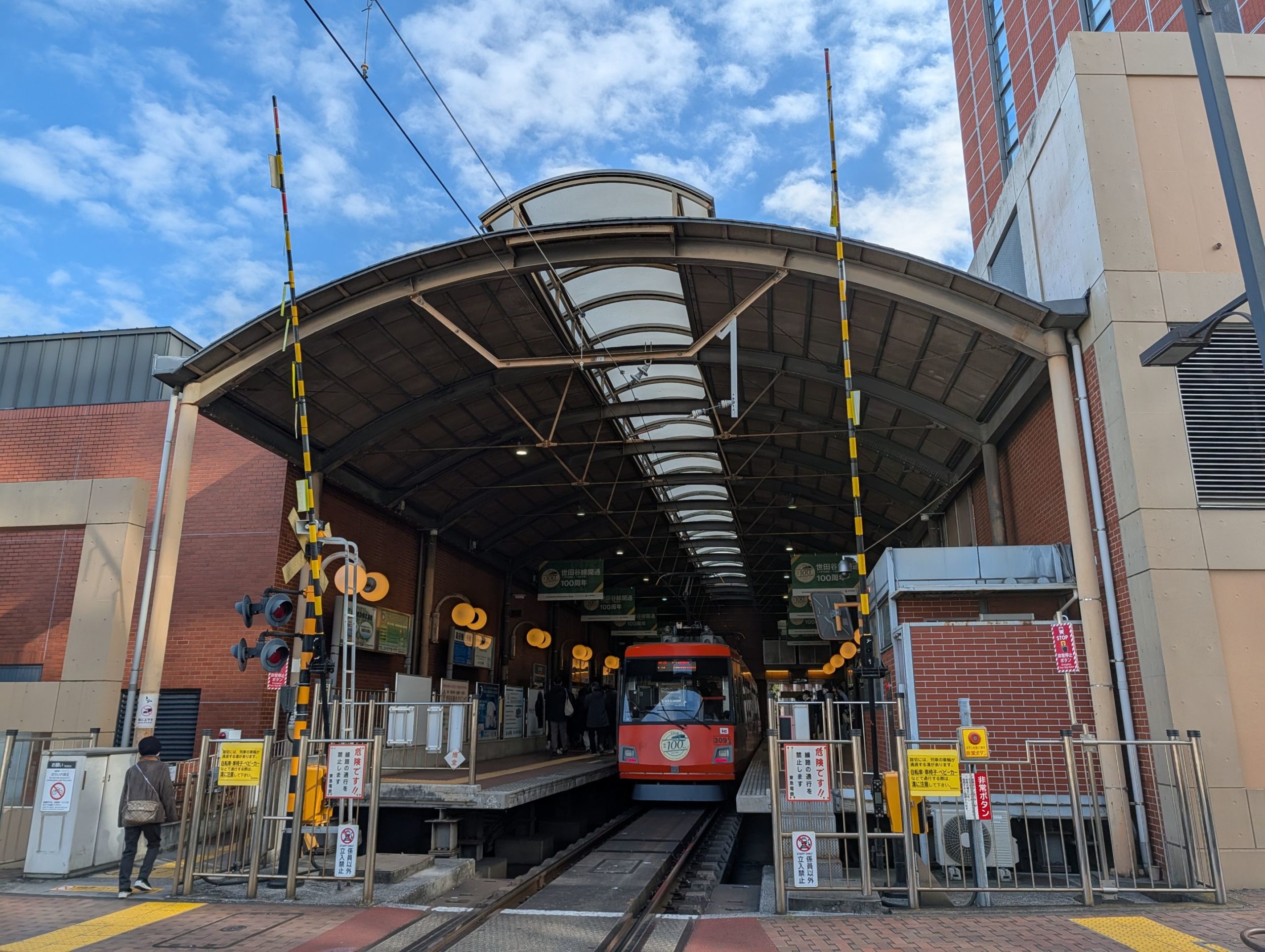
Just as I was finally getting closer to my destination, I encountered a Toden tram. Even though I know they exist, it’s always a little exciting to spot a streetcar in central Tokyo. The Mejiro Fudo-son I was heading to was quite close to Gakushuinshita Station.

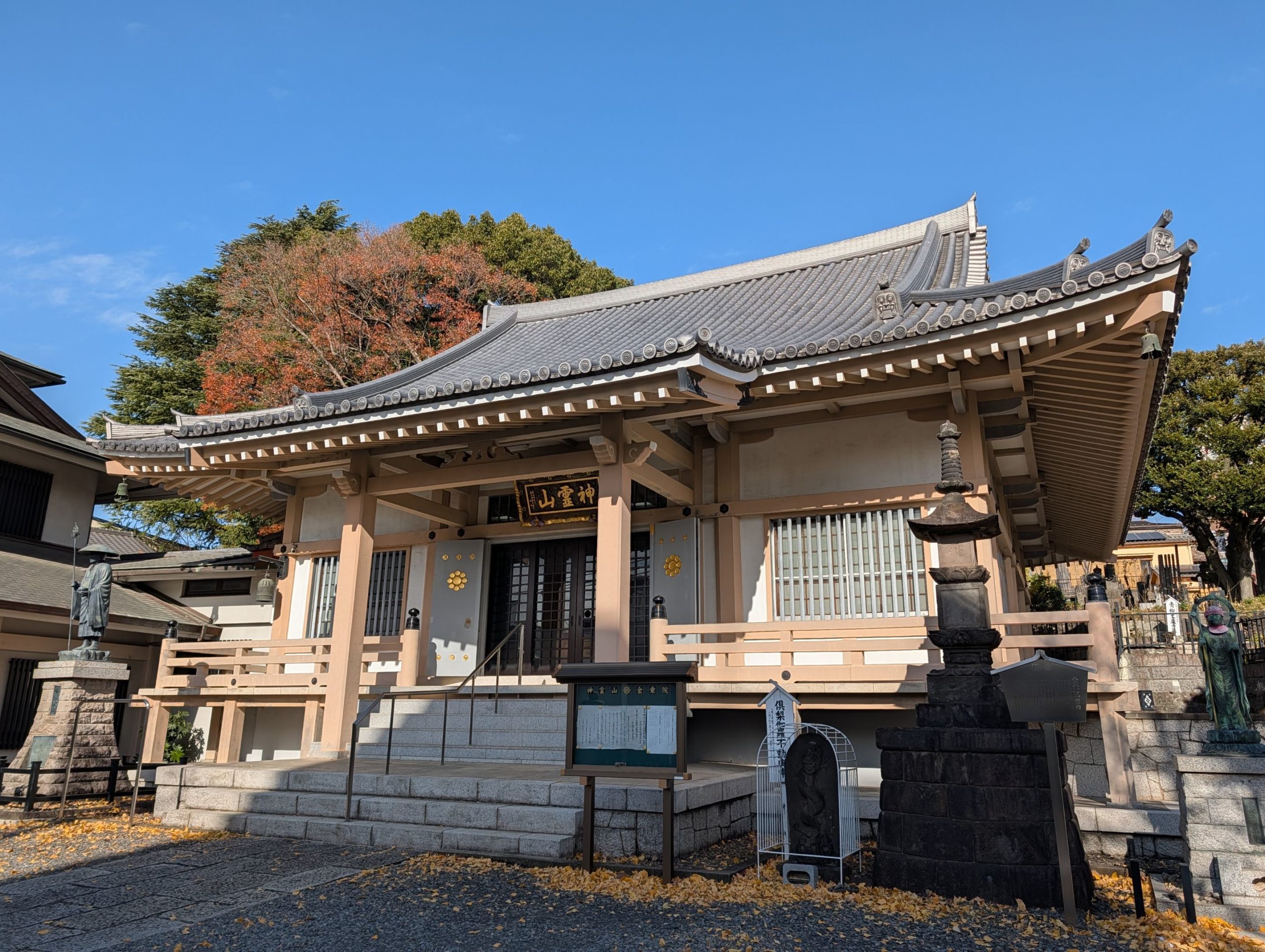
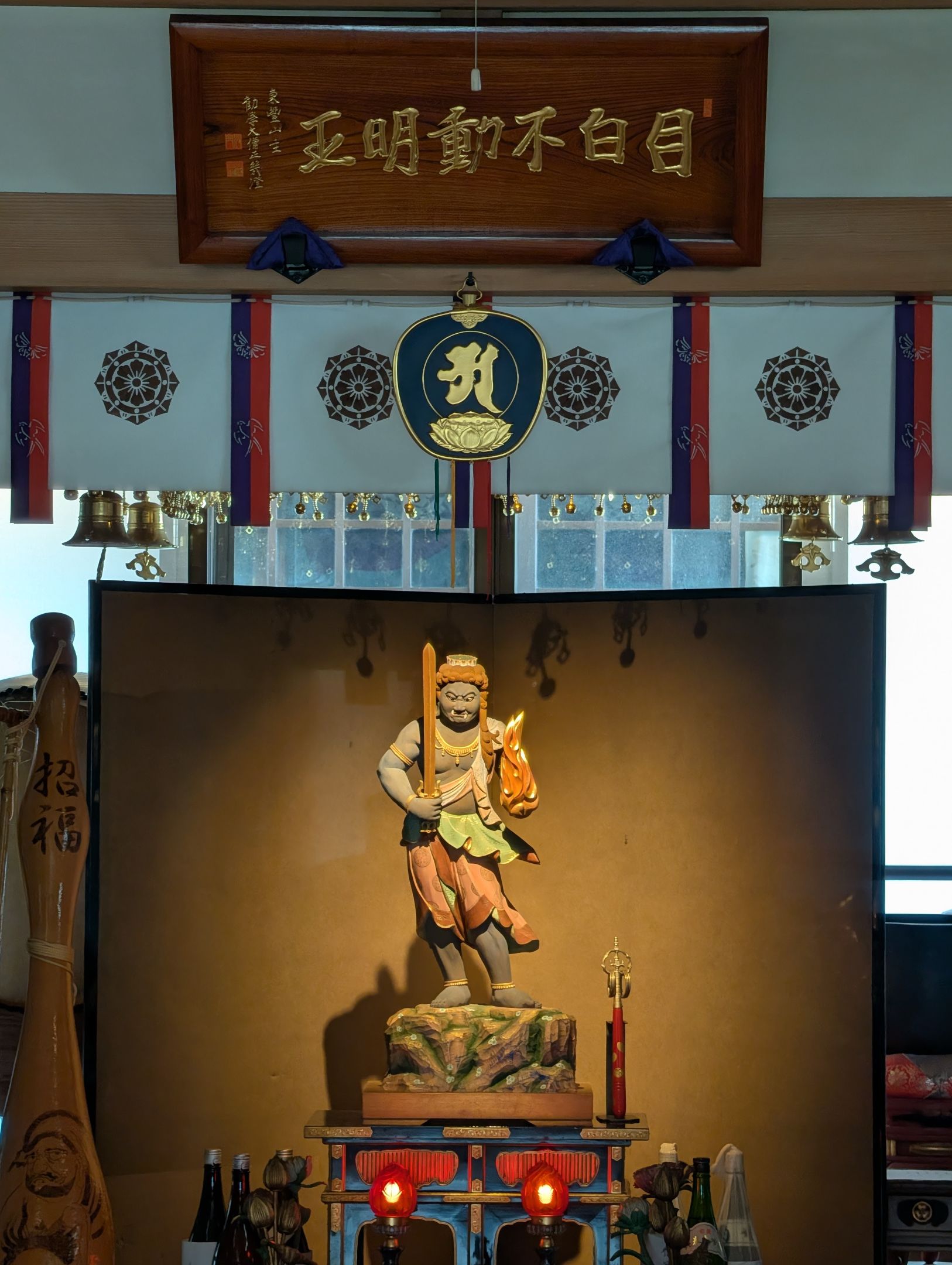
The Fudo statue at Mejiro Fudo depicts Fudo Myoo severing his own left arm, from which flames erupt. It’s said to possess exceptional power, but the temple’s explanation didn’t elaborate on its origin. On the other hand, the name Mejiro is said to have been bestowed by Tokugawa Iemitsu, the third shogun, during the Kan’ei era. While this Fudo statue is housed in a small Fudo-do hall, the relatively larger main hall enshrines Sho Kannon Bodhisattva. The temple grounds also feature many stone artifacts from the Edo period, such as the Kurikara Fudo Koshin-to pagoda and the Tsuba-zuka (guard mound), which are highlights.
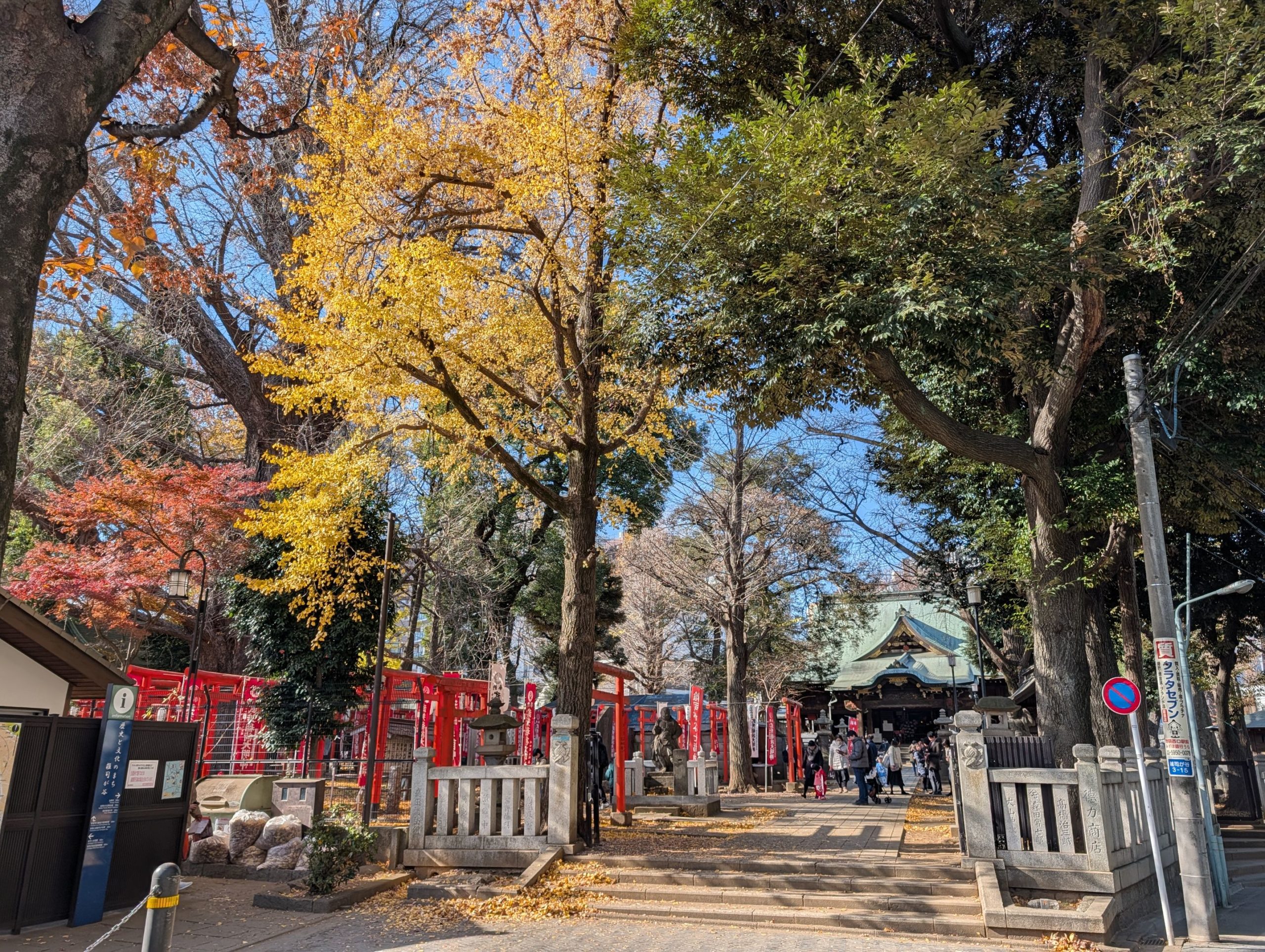
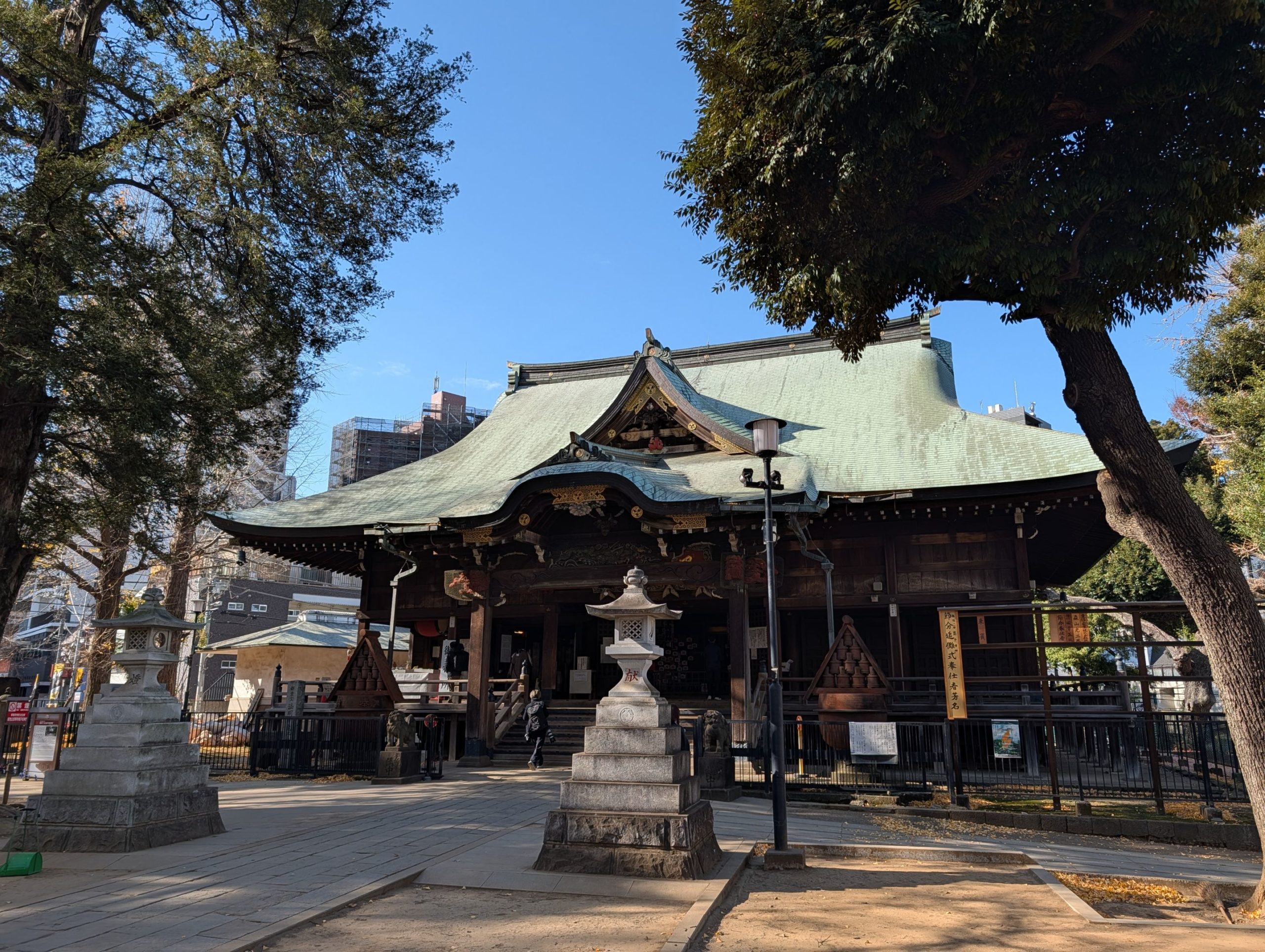

On my way from Mejiro Fudo-son to Meaka Fudo-son, I saw a sign for Kishimojin Temple nearby. Since I’d never been there, I decided to stop by. The temple grounds were bustling that day, with people celebrating Shichi-Go-San and what looked like a real-life mystery-solving event happening. Lots of ginkgo nuts had fallen from Kishimojin’s ancient ginkgo tree, which is over 600 years old, and a peculiar smell filled the air, haha.
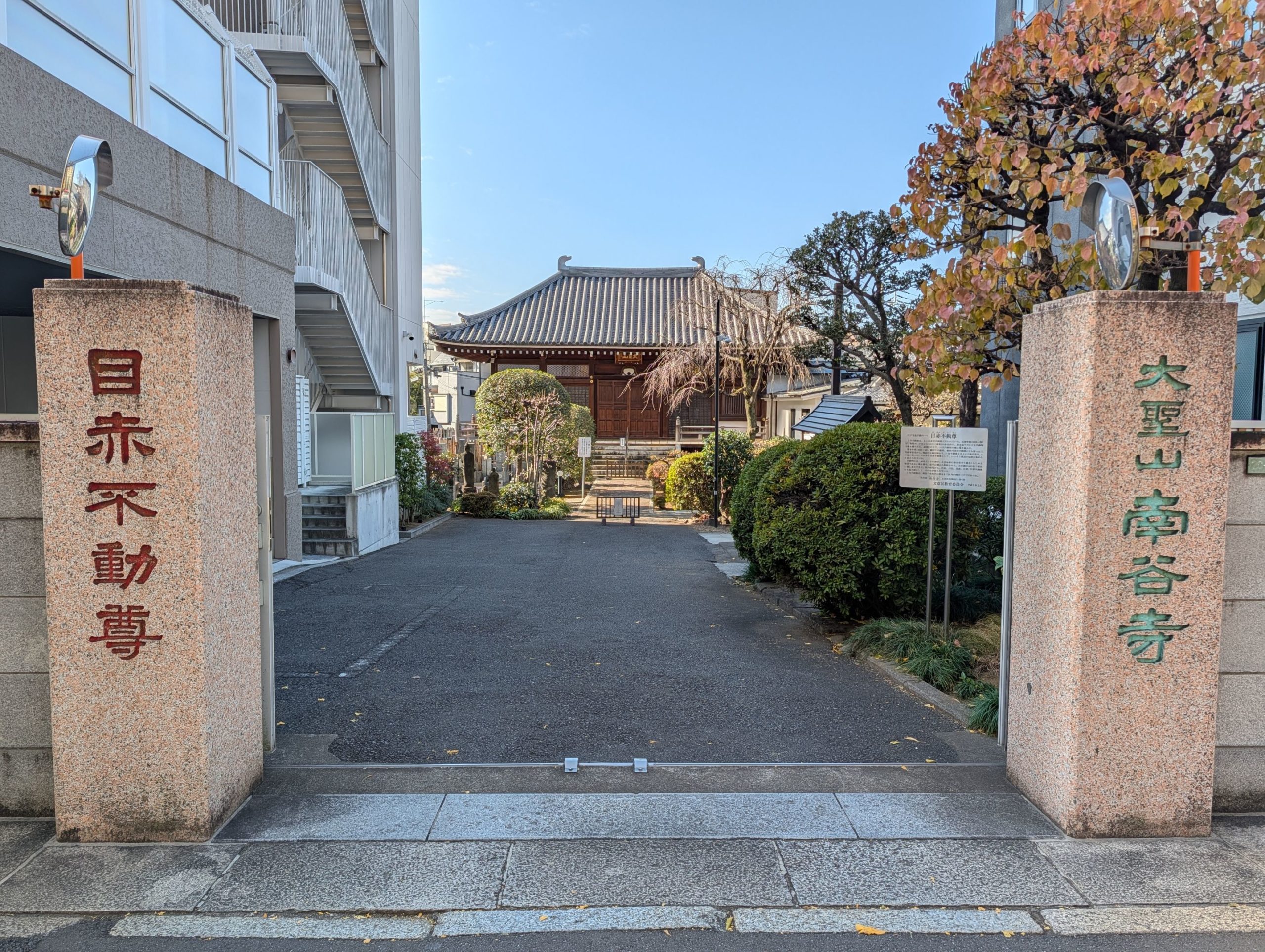
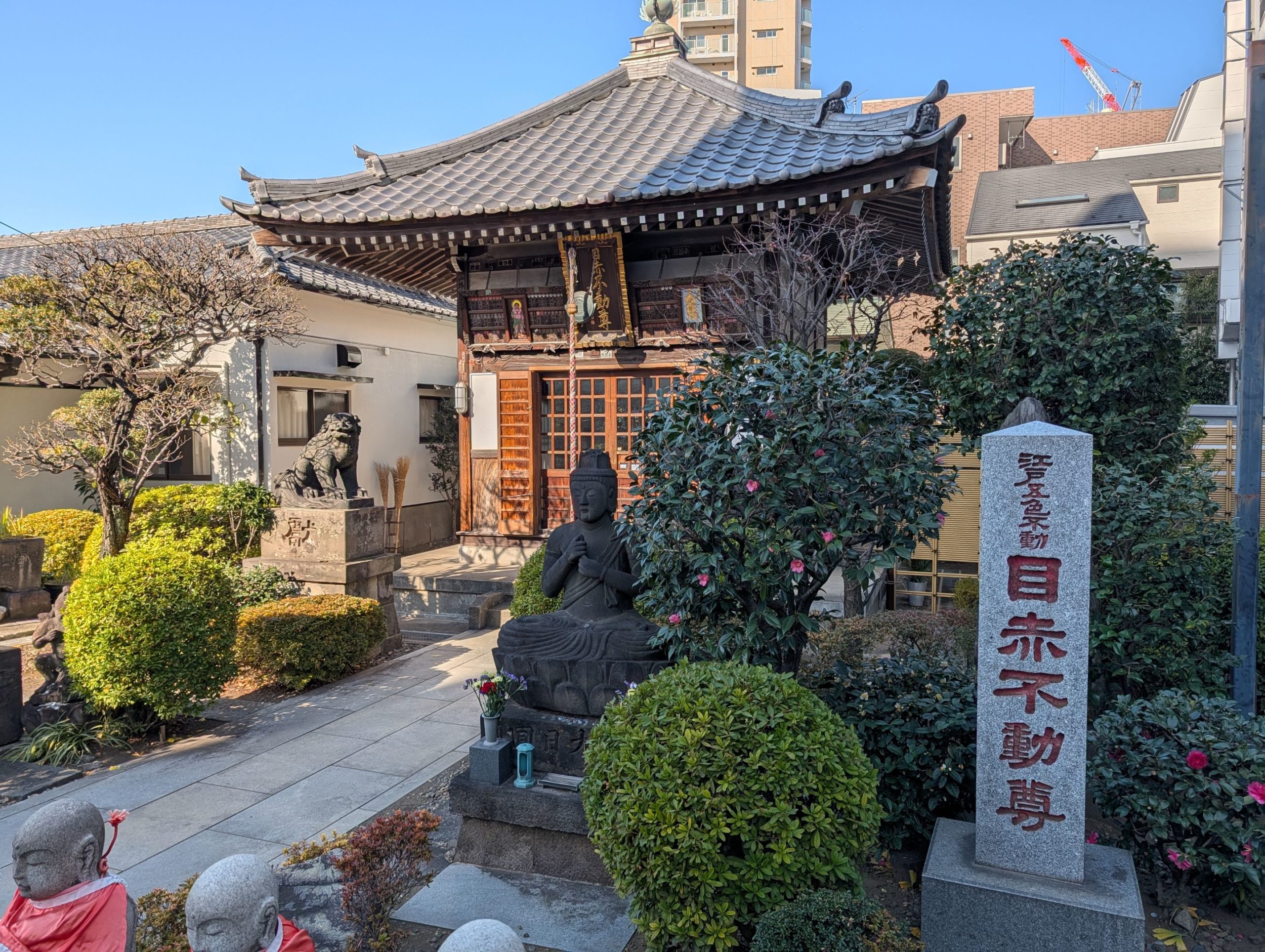
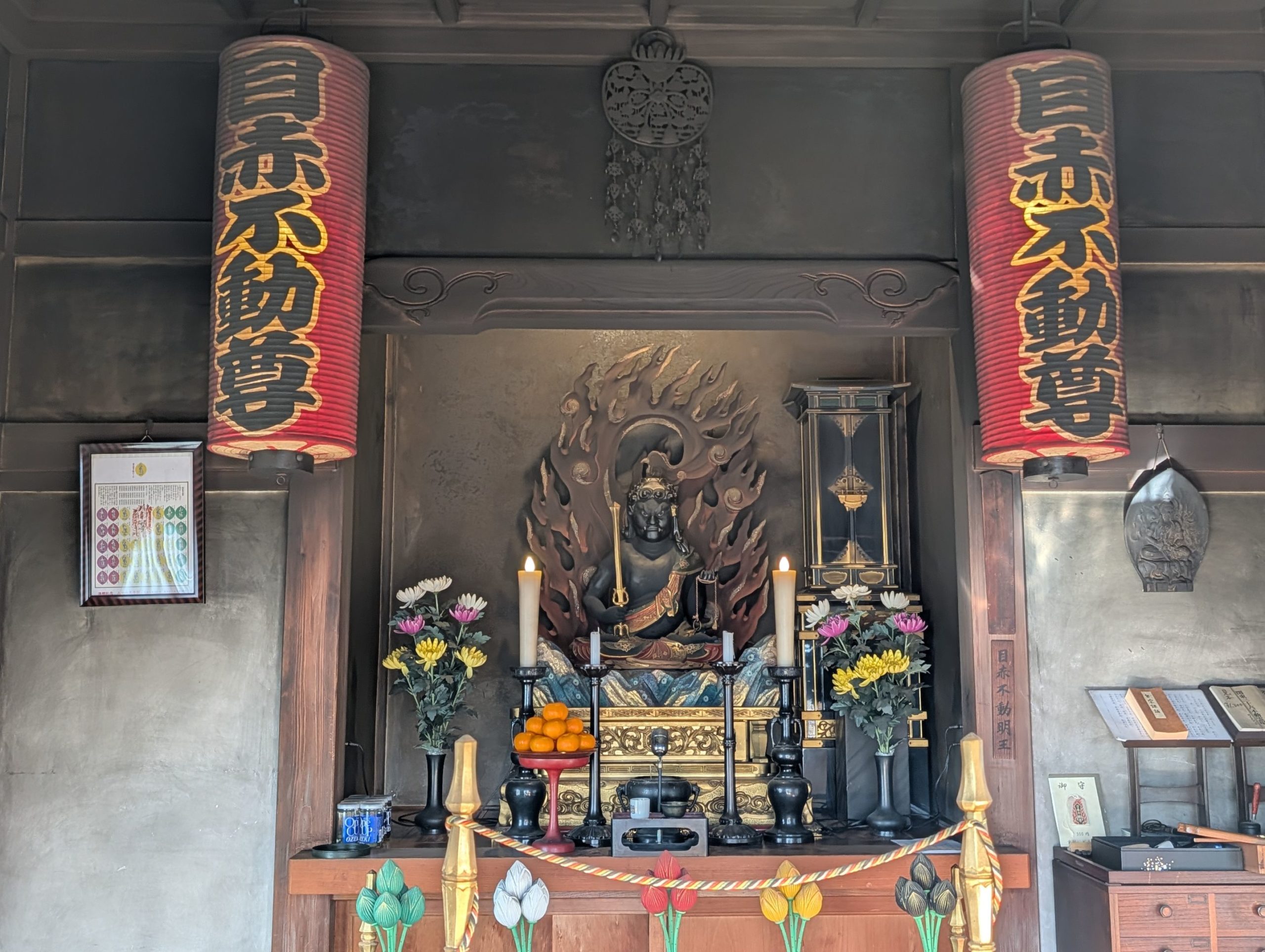
Meaka Fudo-son in Honkomagome, Bunkyo Ward, had the most compact grounds among the five temples I visited, and I think it was the only one clearly labeled as an “Edo Goshiki Fudo.” The Fudo statue enshrined at Meaka Fudo-son is an image of Fudo Myoo that a monk named Mangyo Oshō received at Mount Akame in Ise Province, originally called Akame Fudo. The story goes that the third shogun, Tokugawa Iemitsu, stopped at the hermitage where this Akame Fudo was enshrined during a falconry trip. Seeing that there were Meguro Fudo and Mejiro Fudo, he decreed that this one should be called Meaka Fudo. From this origin, it seems that the idea of the “five colors (blue, white, red, black, yellow) derived from Esoteric Buddhism’s Onmyodo Five Elements theory, with each color representing East, West, South, North, and Center” might not be very relevant here.
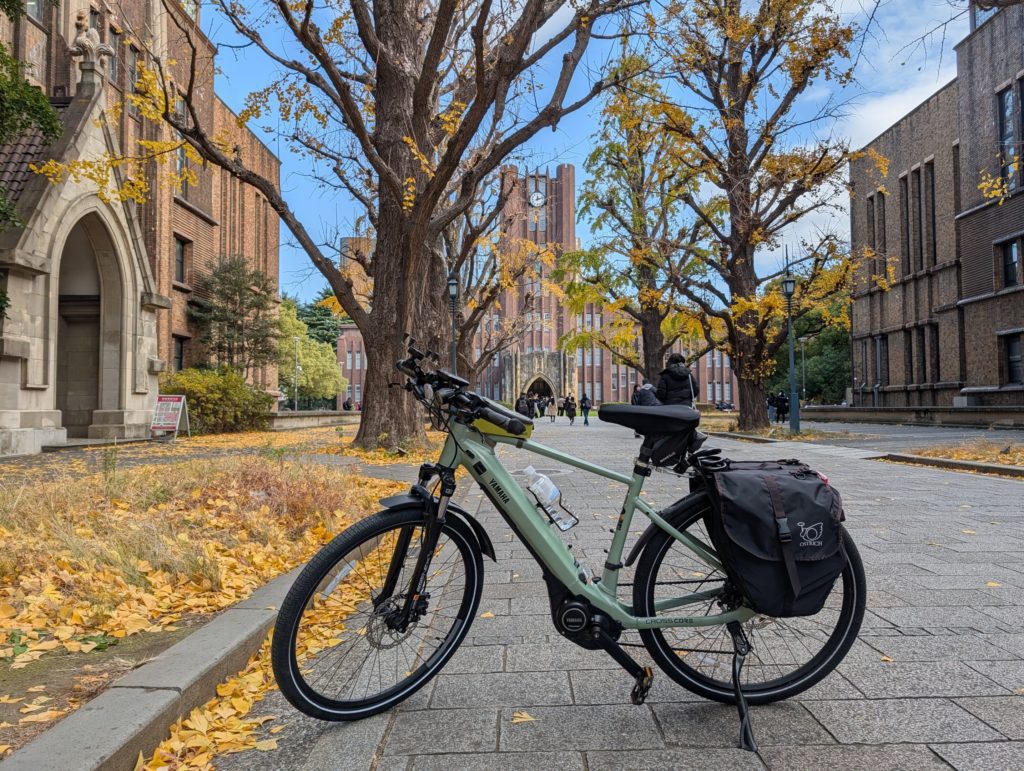
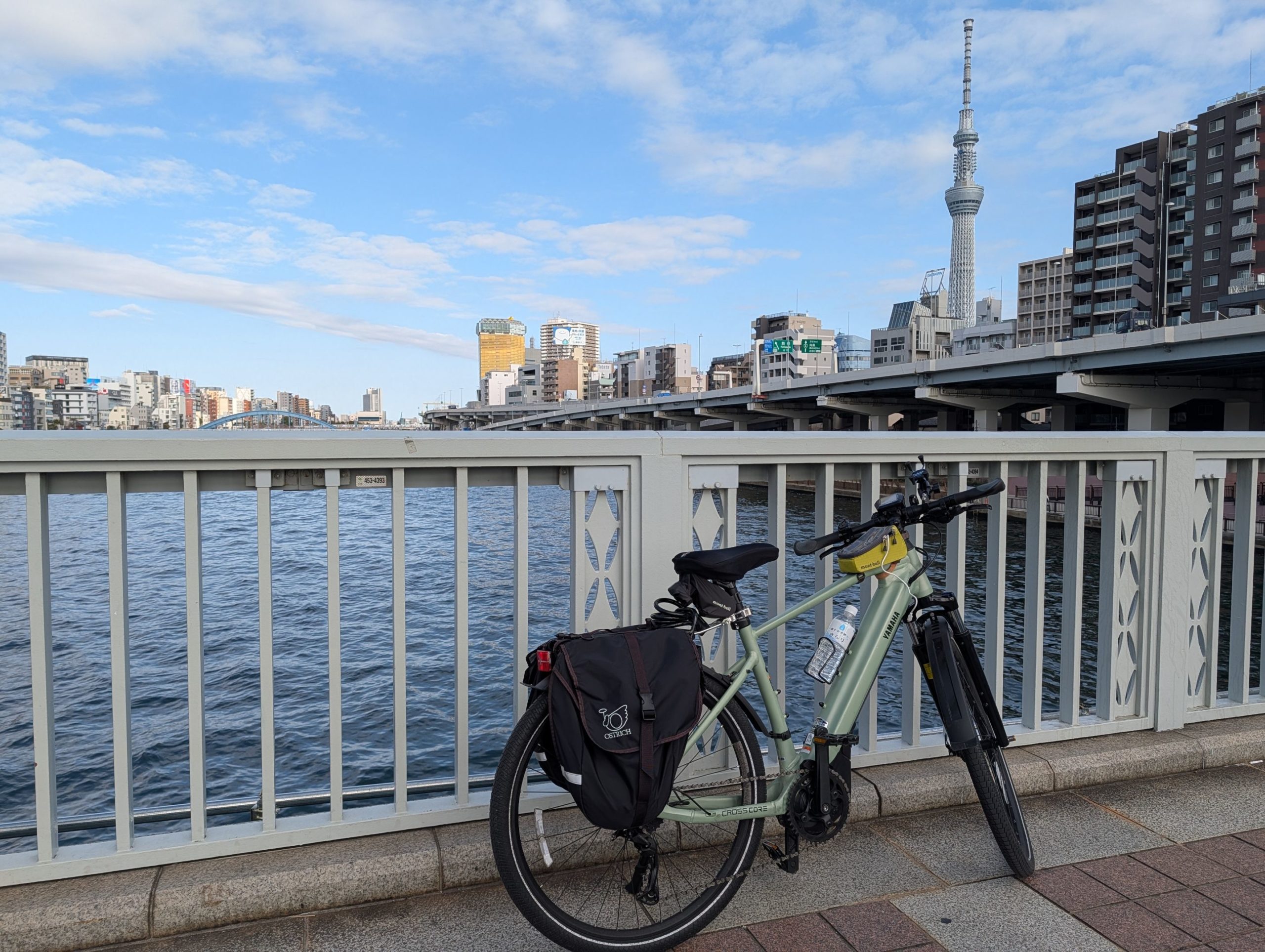
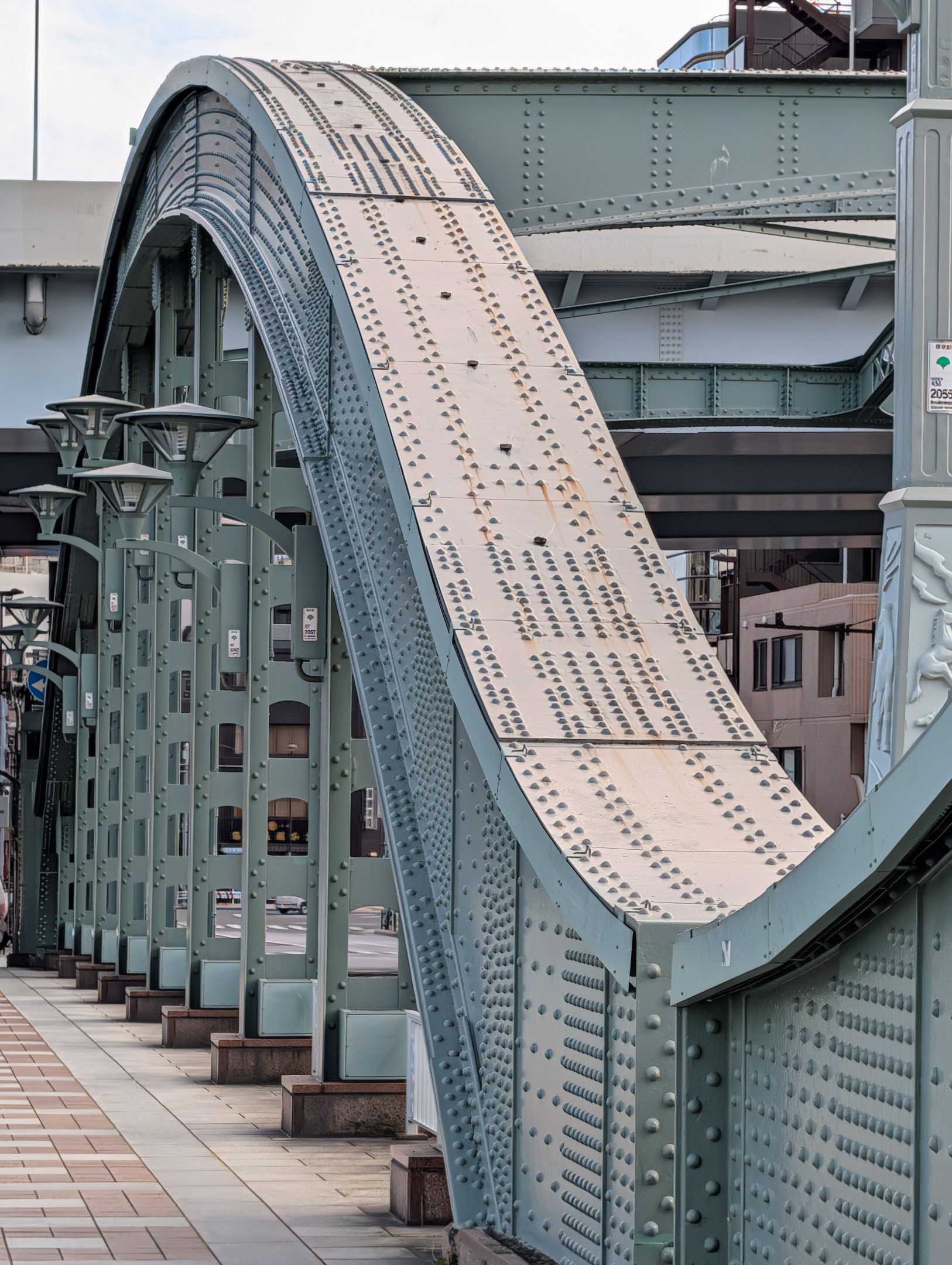
Crossing the Sumida River, and passing through Kinshicho and Kameido, I headed towards Meki Fudo-son located by the Arakawa River.

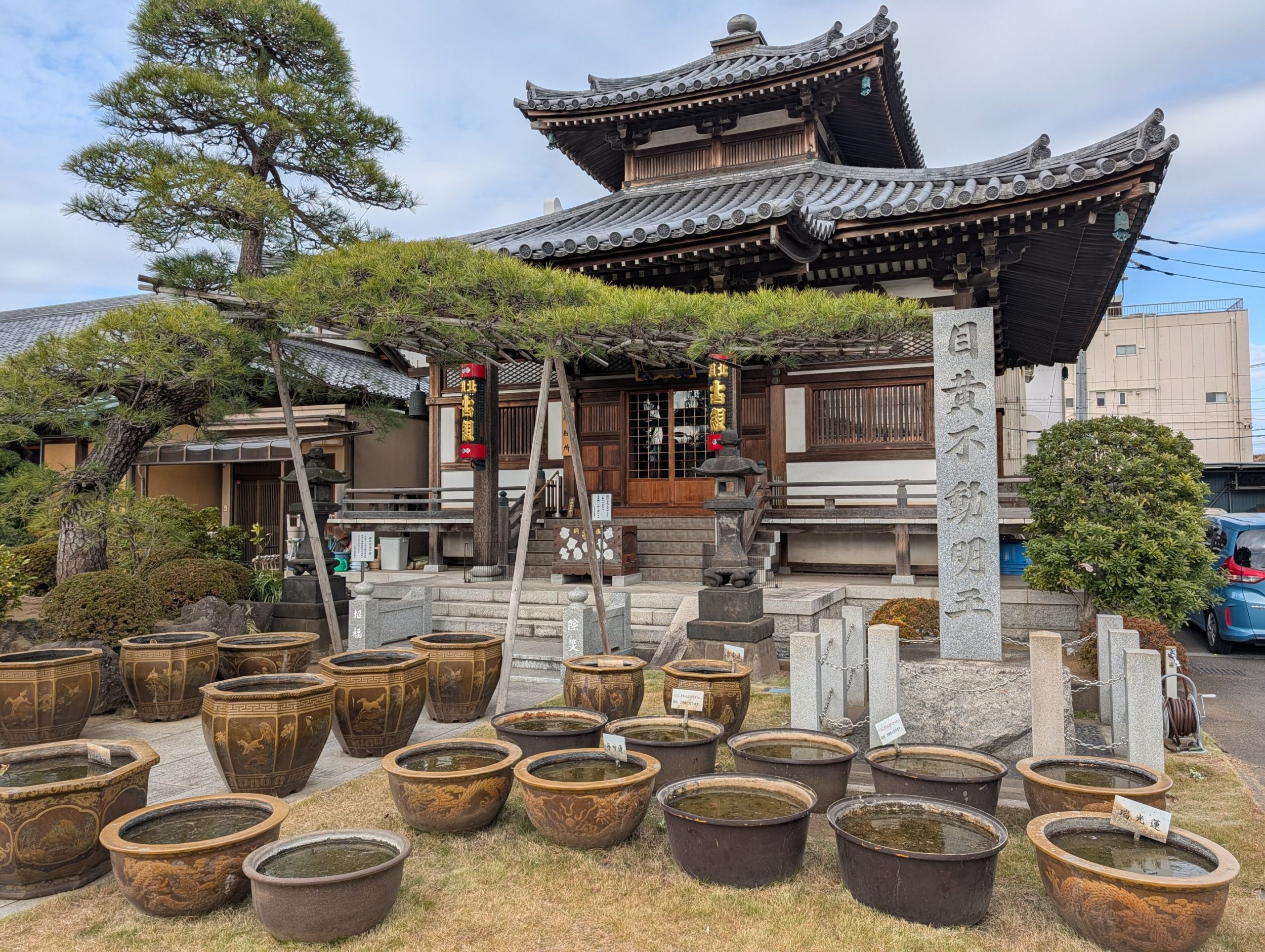
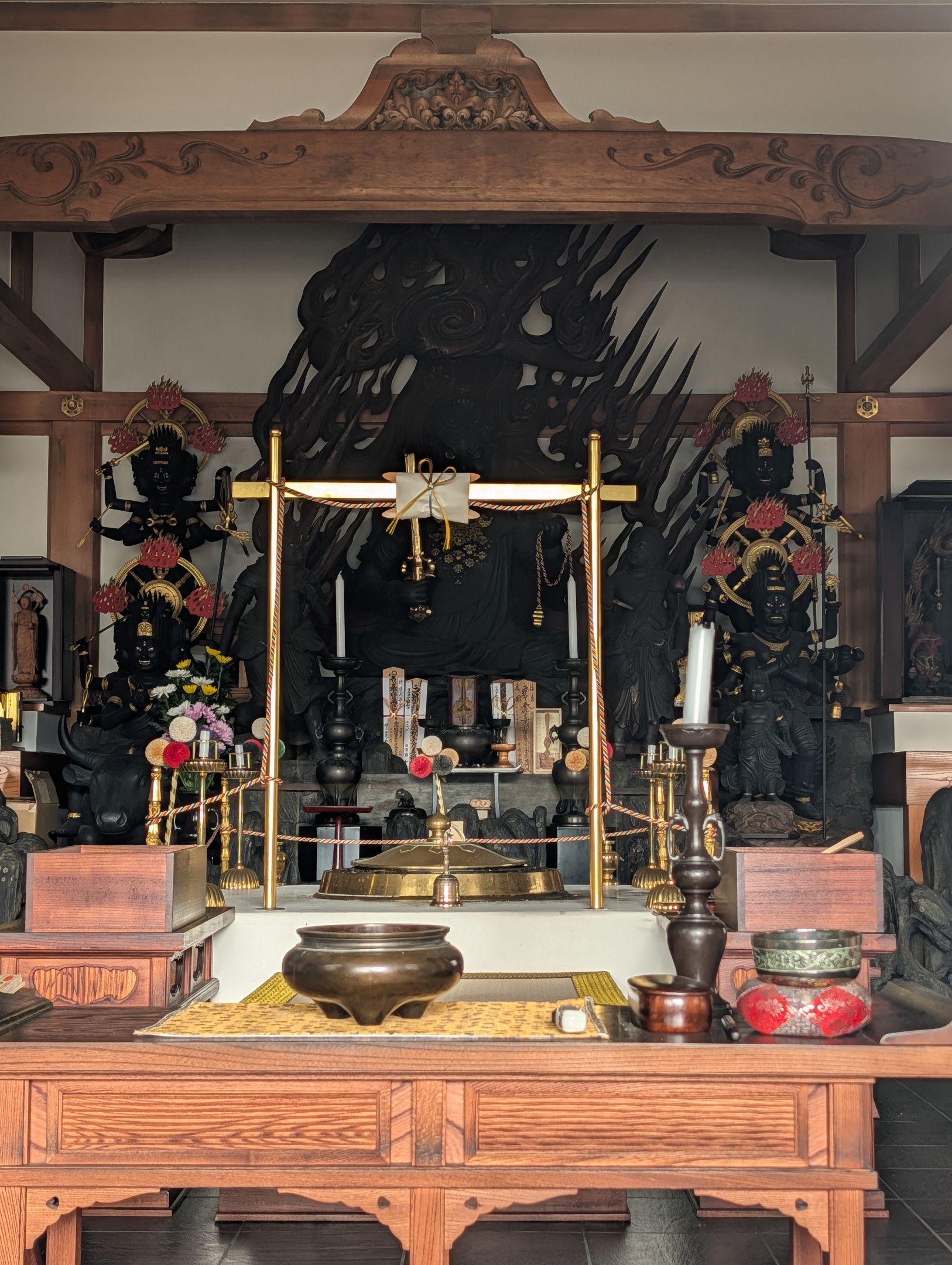
At the last Meki Fudo-son, what caught my eye immediately upon entering were the many stone Buddha towers and numerous jars placed in front of the Fudo-do hall. Inside the Fudo-do, a wooden Fudo statue, approximately 130 cm tall, was enshrined. Upon closer inspection, it had an open left eye and a large flaming halo, giving it a majestic appearance. It was a bit dim and hard to see clearly, which was a shame, but I think it was the most powerful Fudo Myoo statue I saw on this trip.
On the way back, I made a bit of a detour, stopping at Takeshiba Pier, and ended up with a roughly 60-kilometer circular cycling trip. Using an eBike, I realized that central Tokyo might be smaller than I thought. The Edo Goshiki Fudo are arranged perfectly around the center of Tokyo, making them an ideal distance for a cycling tour. I highly recommend it!
コメント