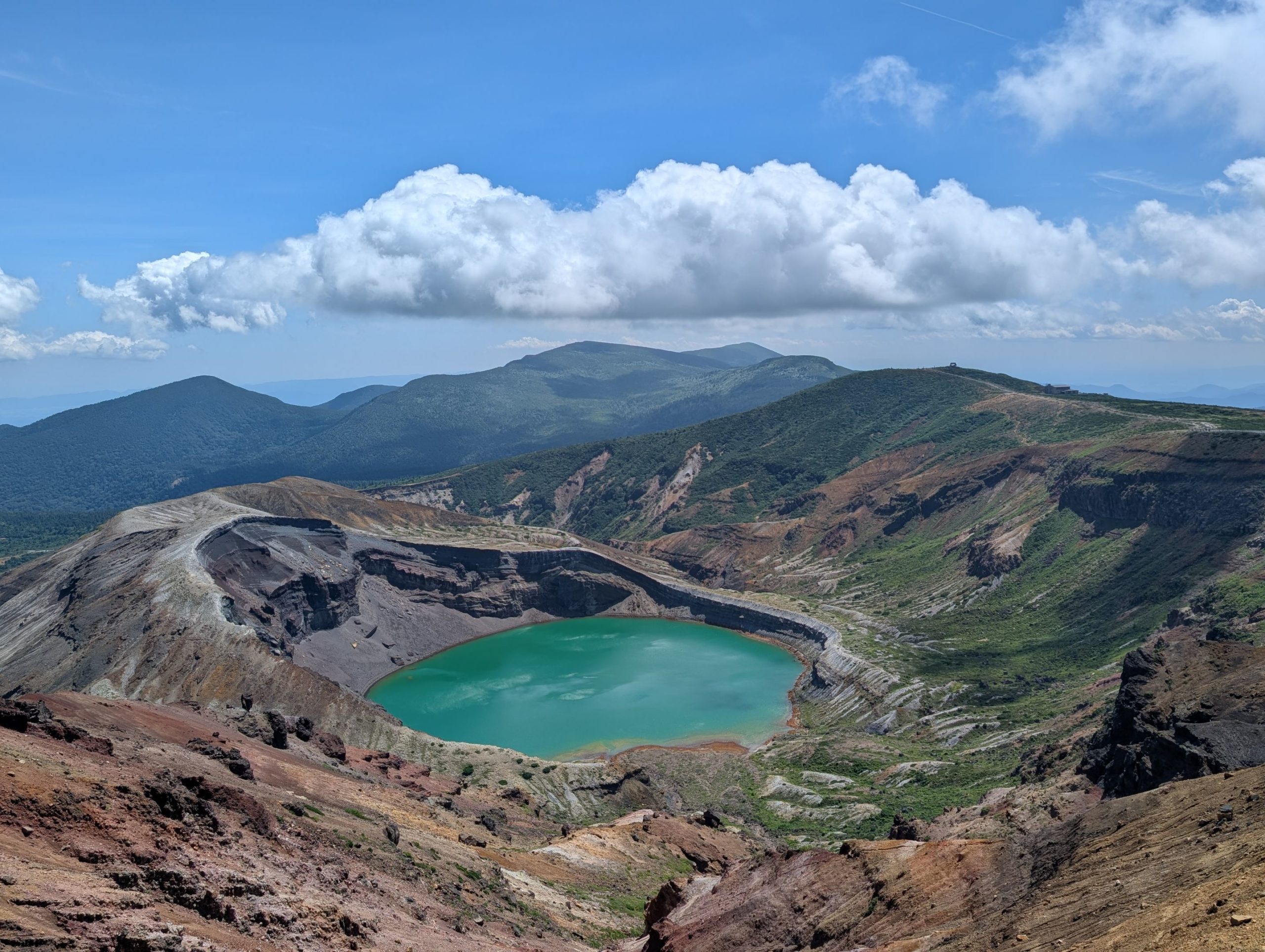
That weekend, after a colleague told me, “Yamagata, my hometown, is really wonderful, you should definitely go!”, I thought a day trip to explore Zao’s Okama crater lake and Mt. Zao seemed doable, so I impulsively decided to go.
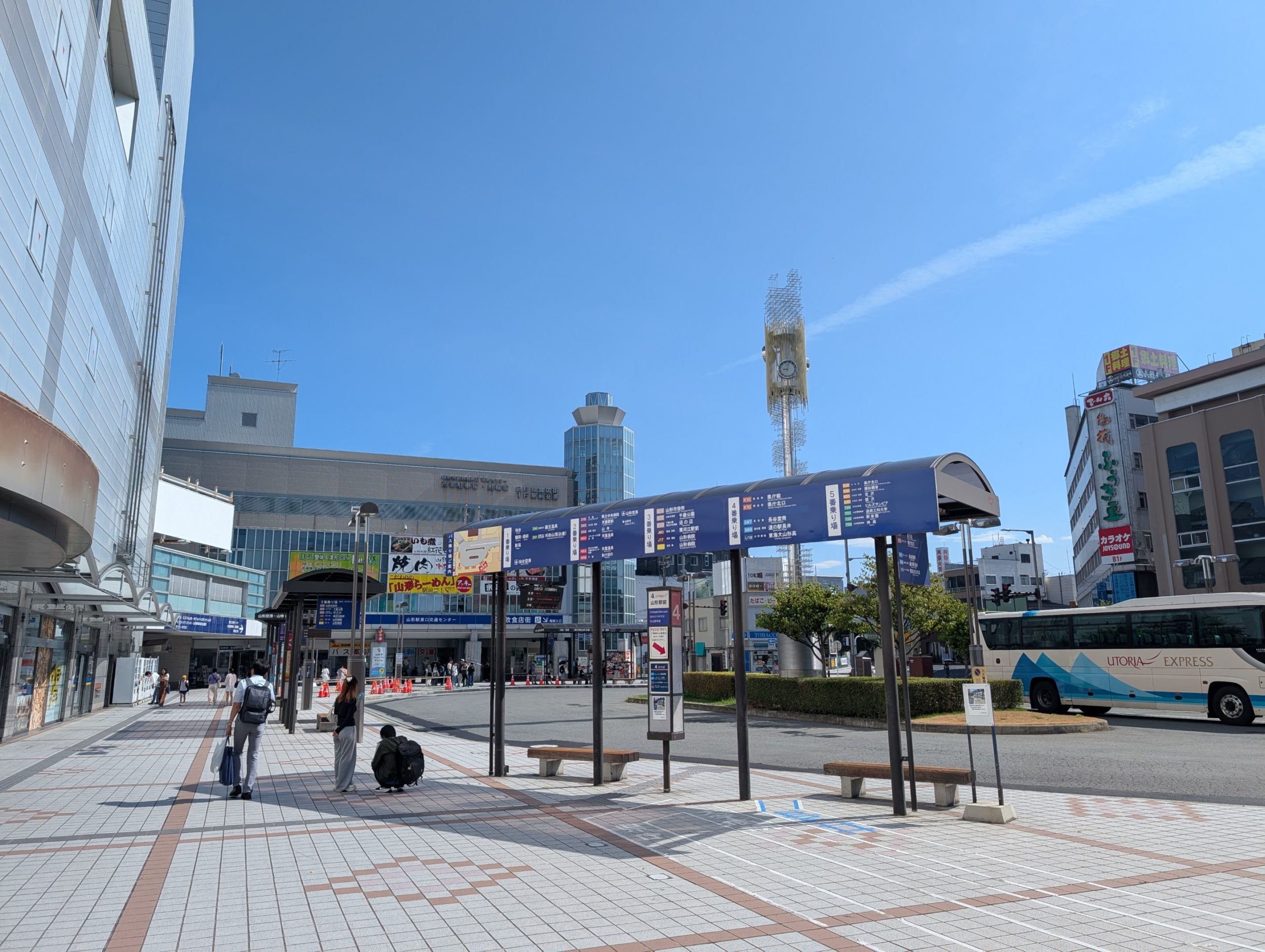
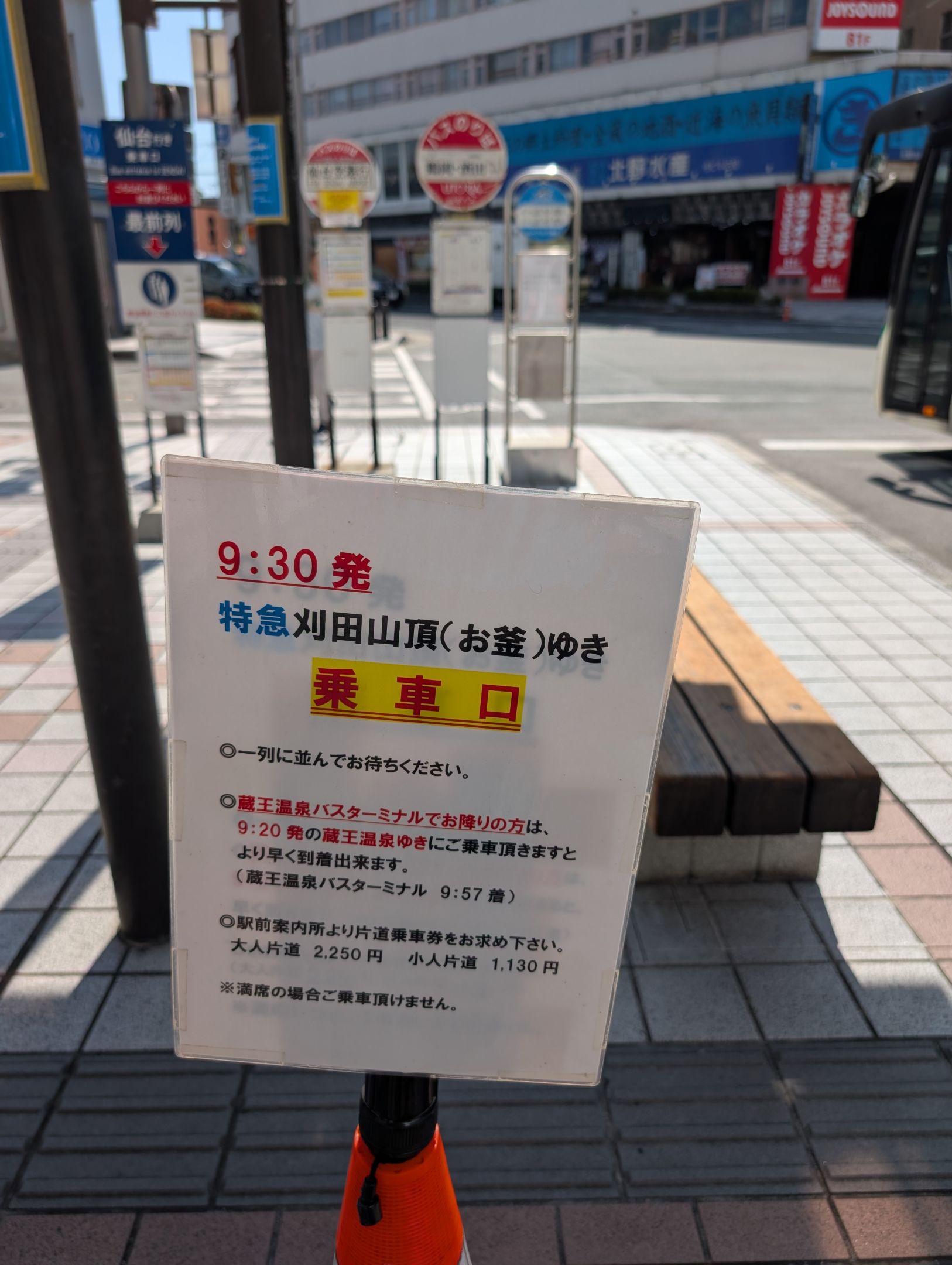
I arrived at Yamagata Station at 8:59 AM on the 6:12 AM Tsubasa train from Tokyo – much closer than I expected! It made me think back to when I first started working, and my wife’s company had a resort in Zao, so we used to come skiing here a lot in winter. I wondered, “Was it always this close?”
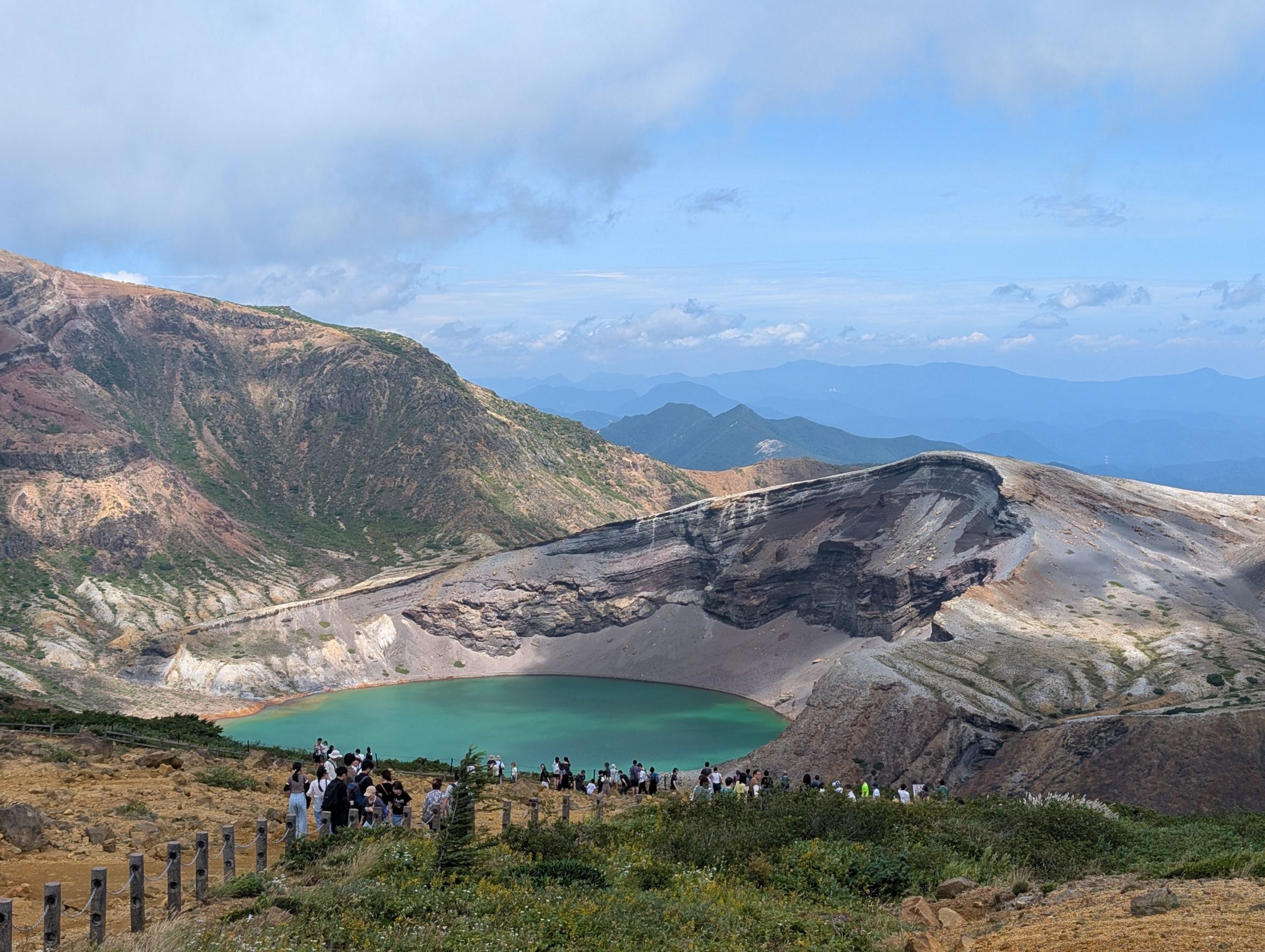
In winter, for skiing, I used to get off at Zao Onsen town by taxi or bus, but this time, we went even further up to the Katta Summit bus stop. It was my first time coming to Zao in summer, and I was so surprised to see such an incredible view right after getting off the bus. Everyone was marveling at the vibrant emerald-green water held within the desolate crater.
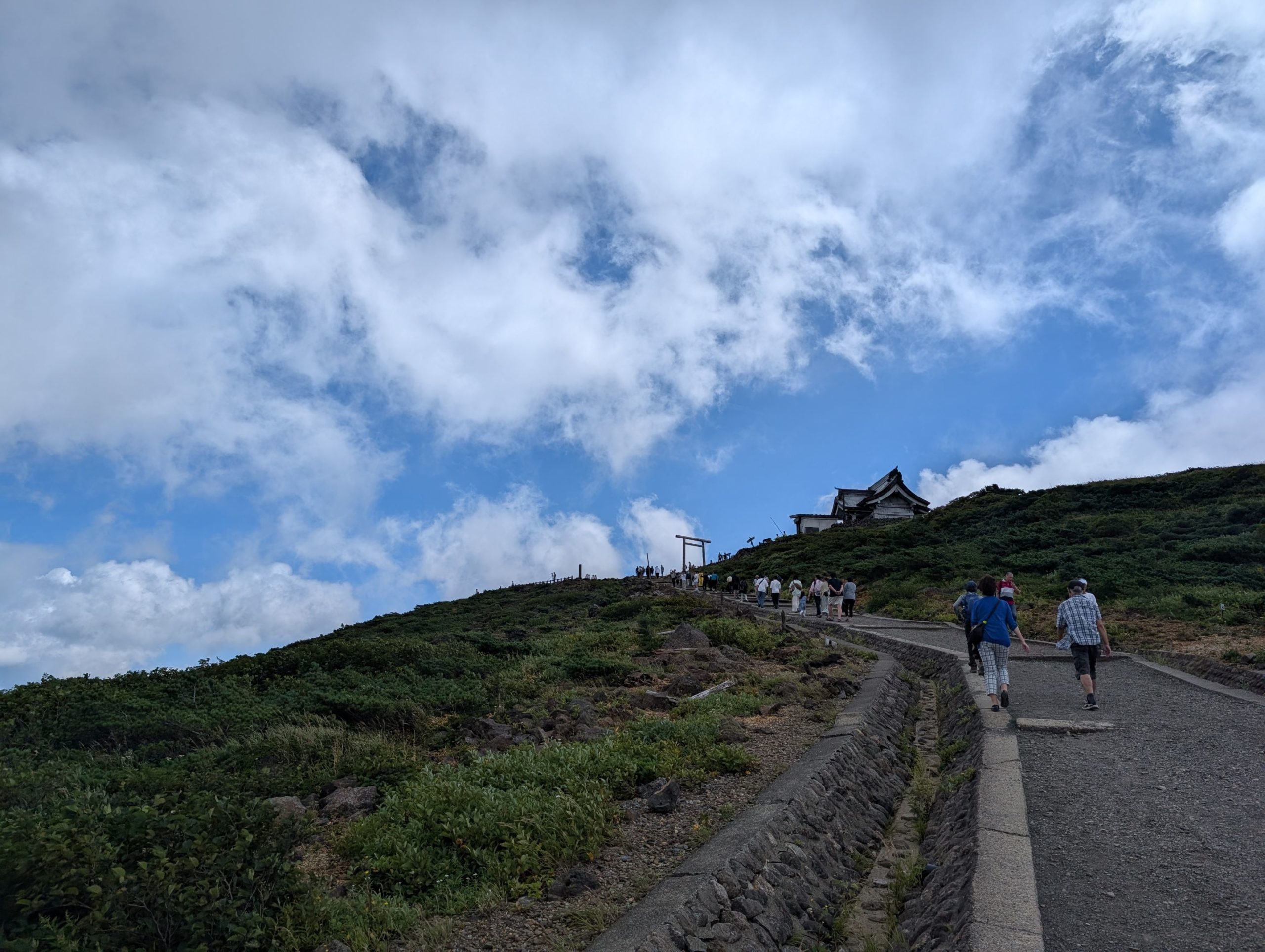
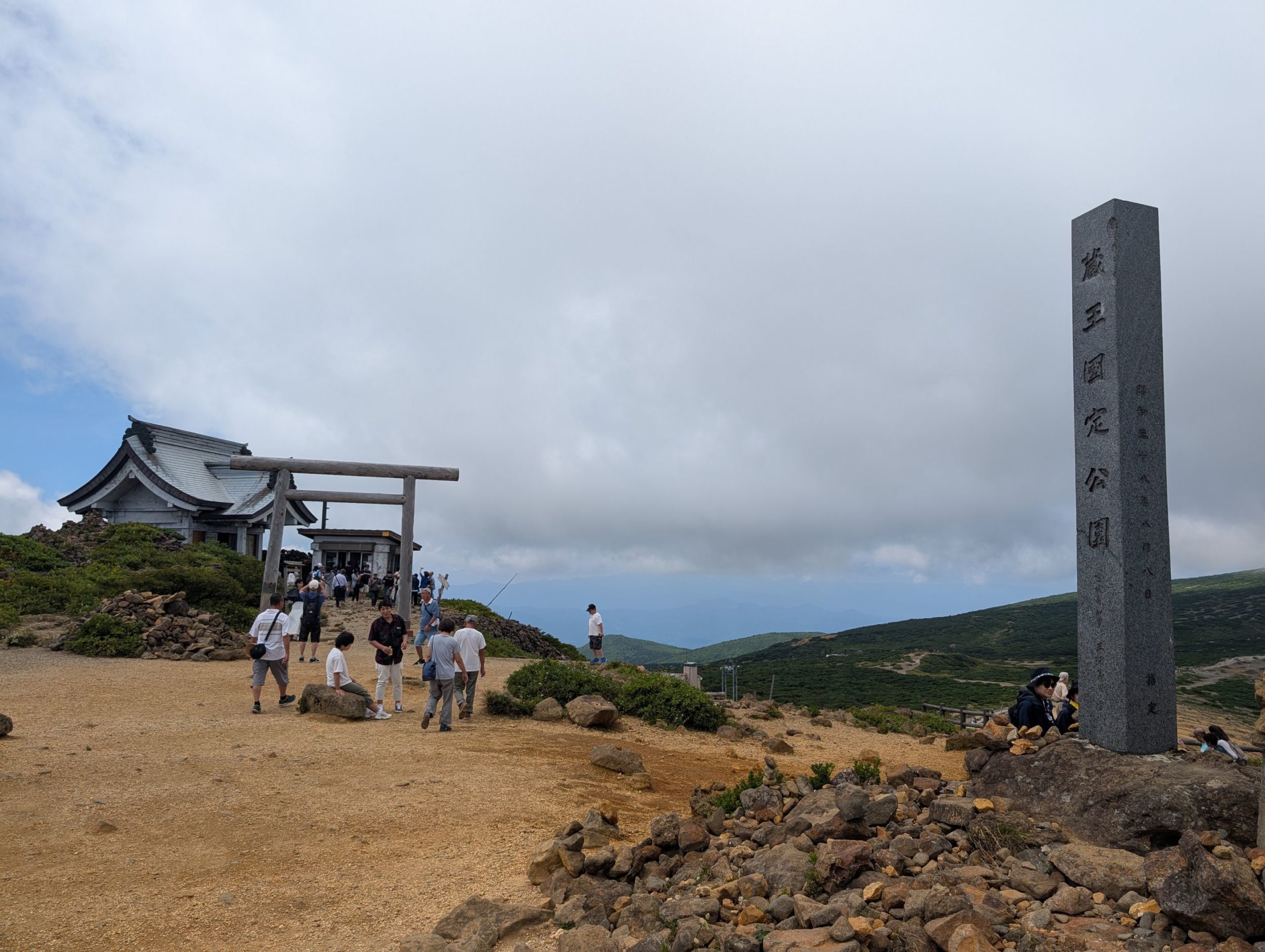
To clarify, there isn’t just one “Mt. Zao”; the northern side of Zao, including Okama, actually consists of several peaks like Mt. Kumanodake (the highest peak), Mt. Kattadake (where we are now), and Mt. Jizodake. I decided to try hiking around all three this time. Mt. Kattadake is right by the bus stop and a spot where you can enjoy Okama easily. There were quite a lot of people enjoying it in light clothing, as well as many elderly visitors.
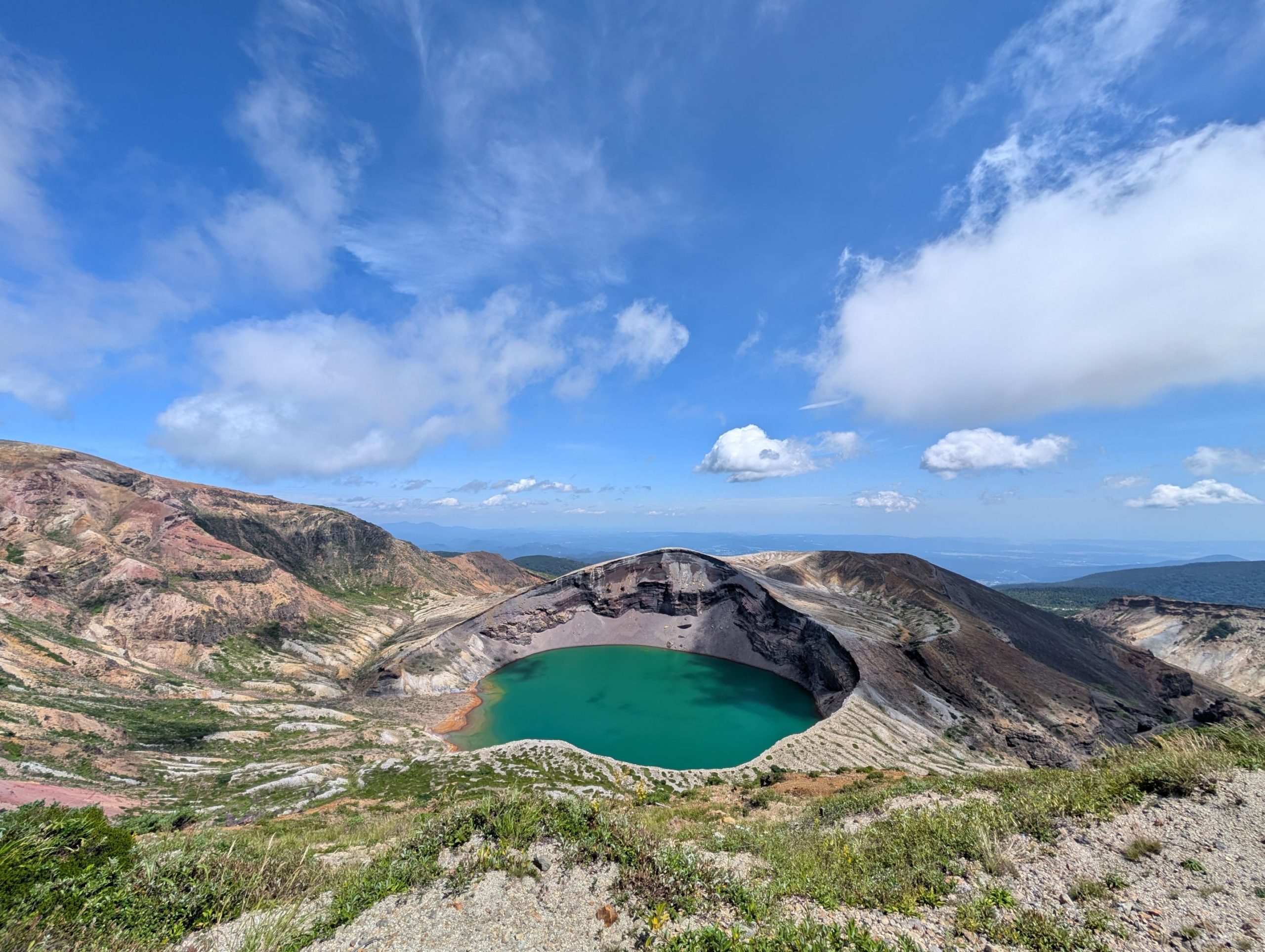
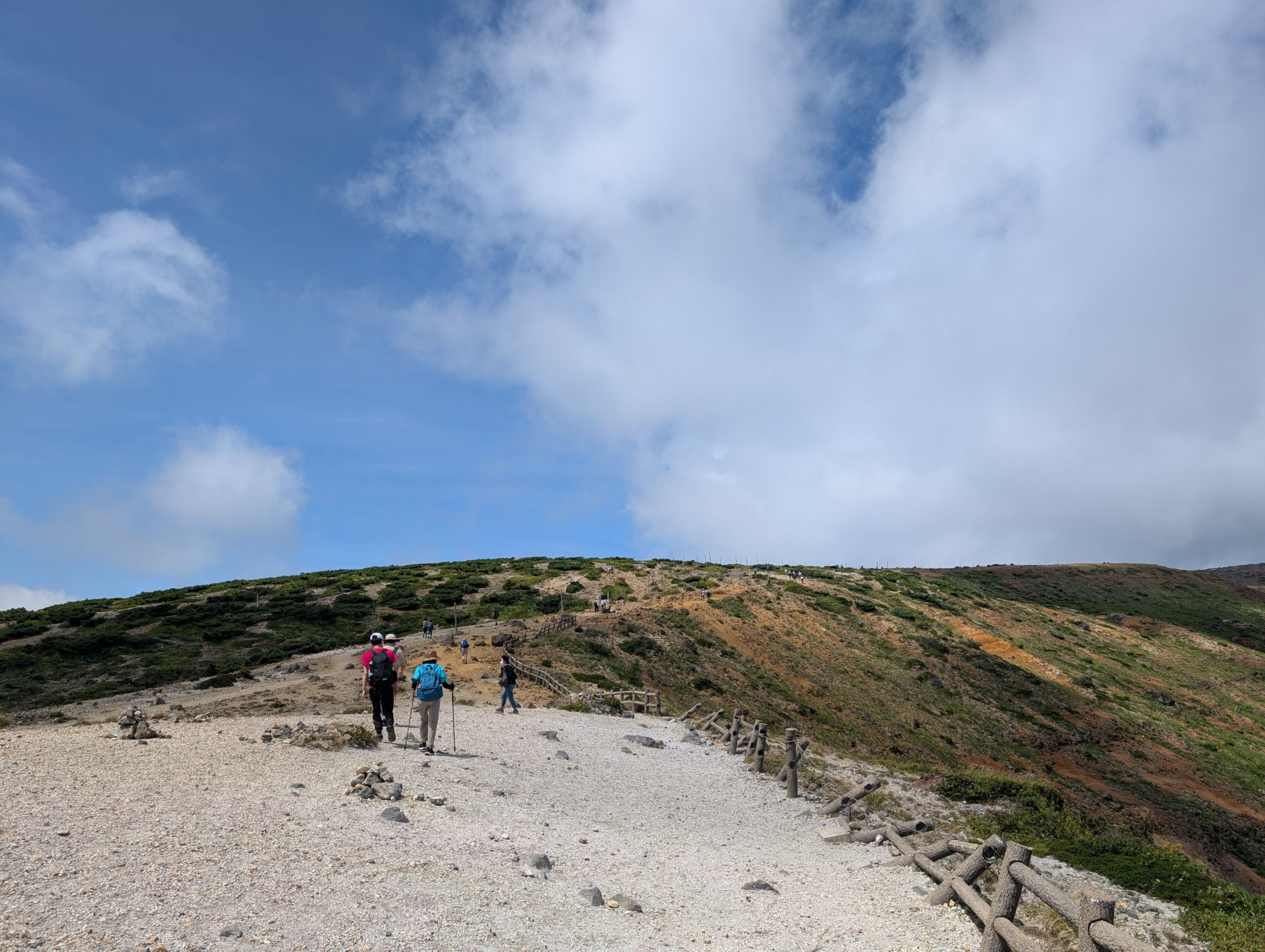
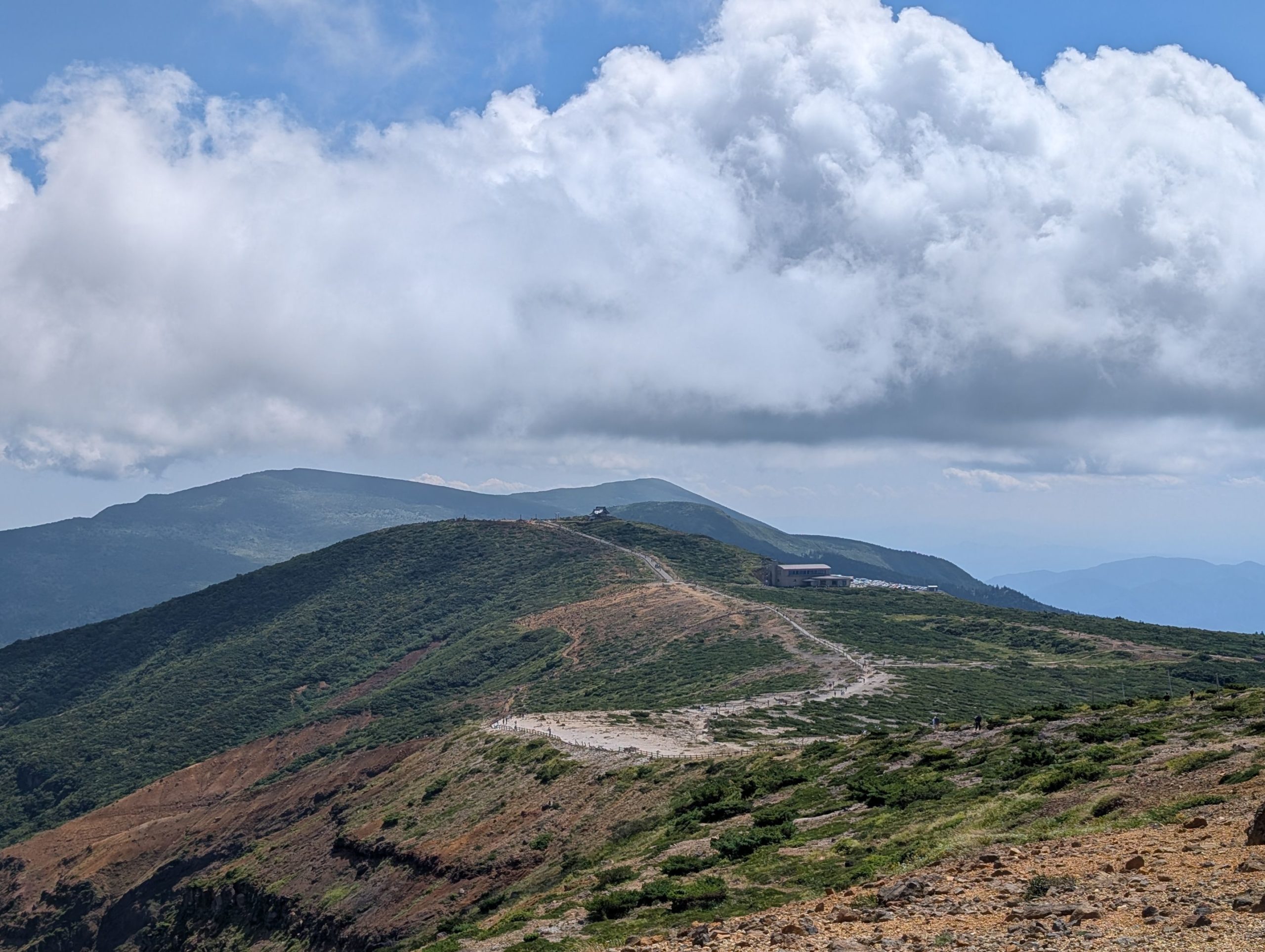
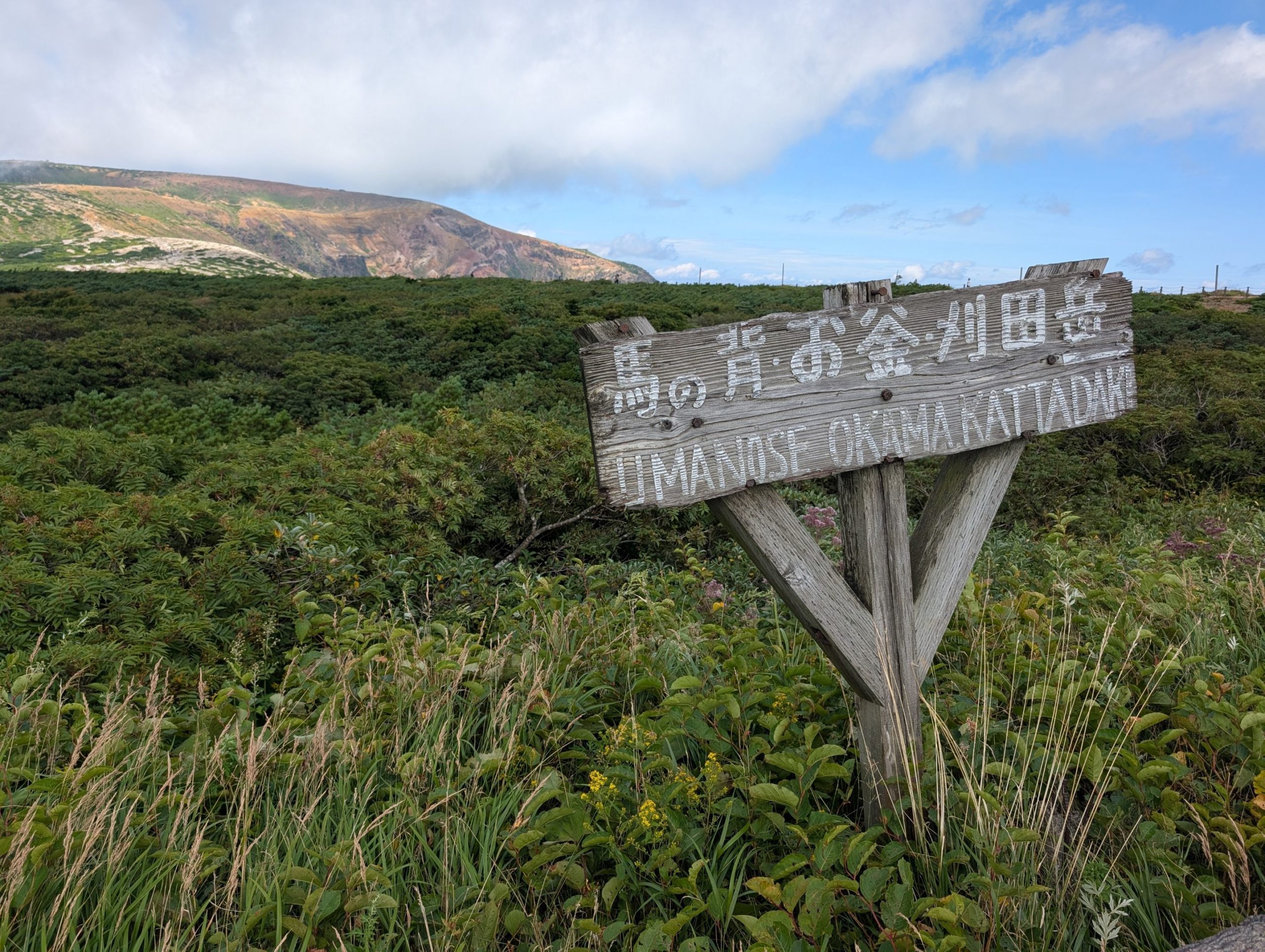
It was a windy day, with clouds moving quickly. When the blue sky spread out, the emerald green of Okama became even more vivid and utterly beautiful. This area, known as “Uma-no-se” (Horse’s Back), has no tall trees and stretches out with a desolate yet captivating landscape, making for a really pleasant walk.
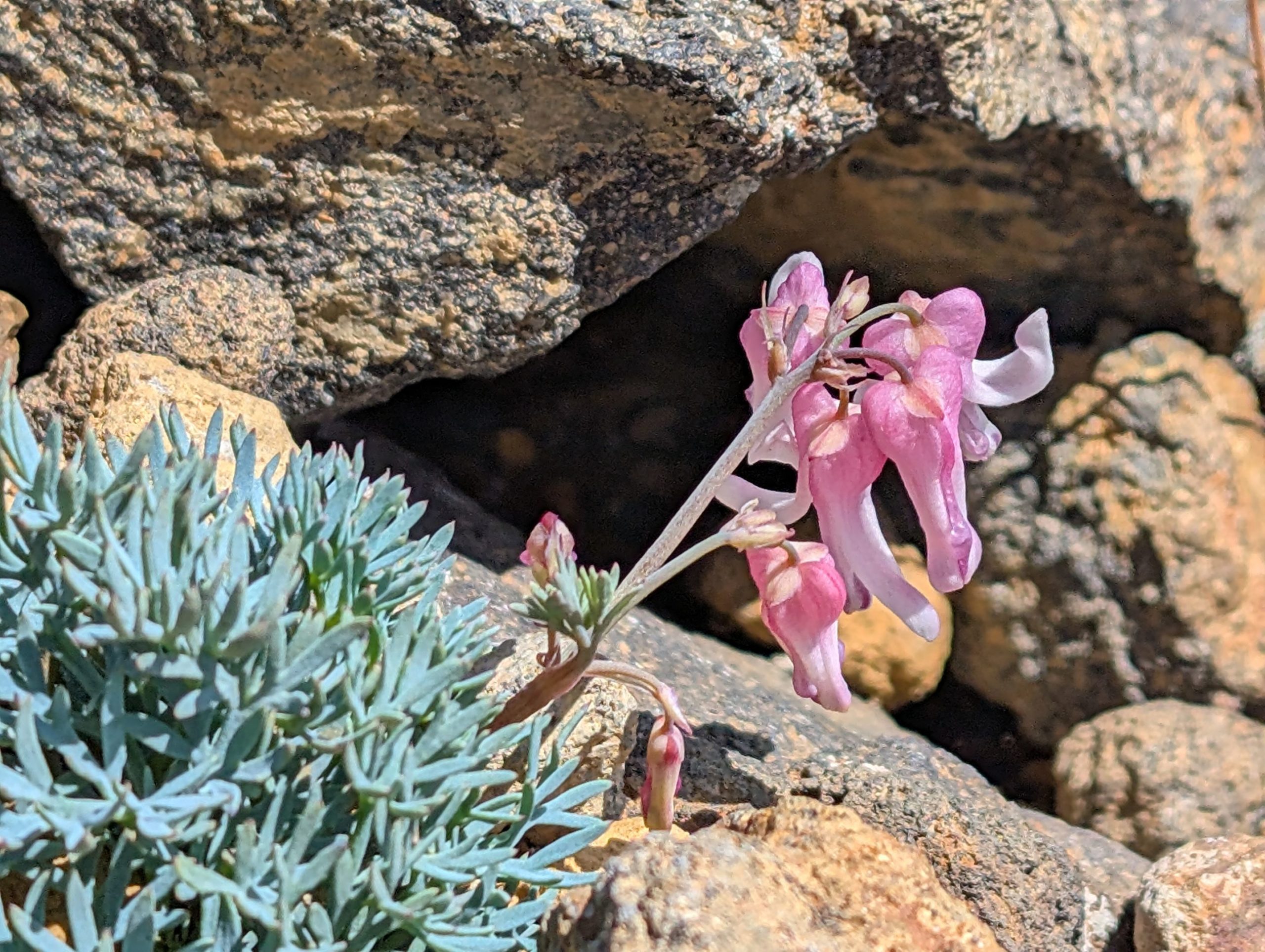
I found Komakusa in the shade of a rock; it’s amazing how such delicate flowers can bloom in such a rocky place.
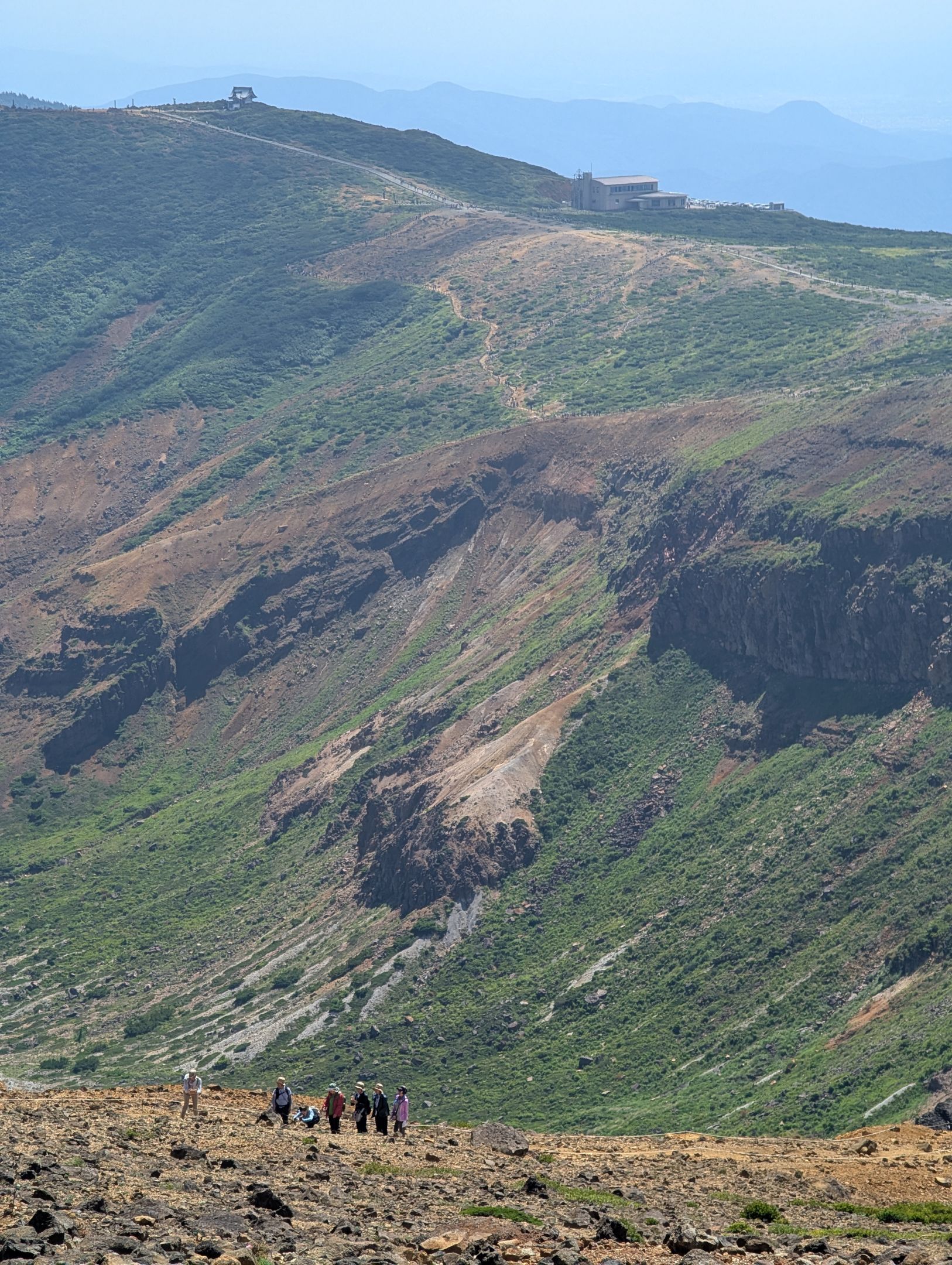
Looking back, the grand scenery of Uma-no-se spread out, and Okama looked magnificent from different angles, making it hard to keep walking.

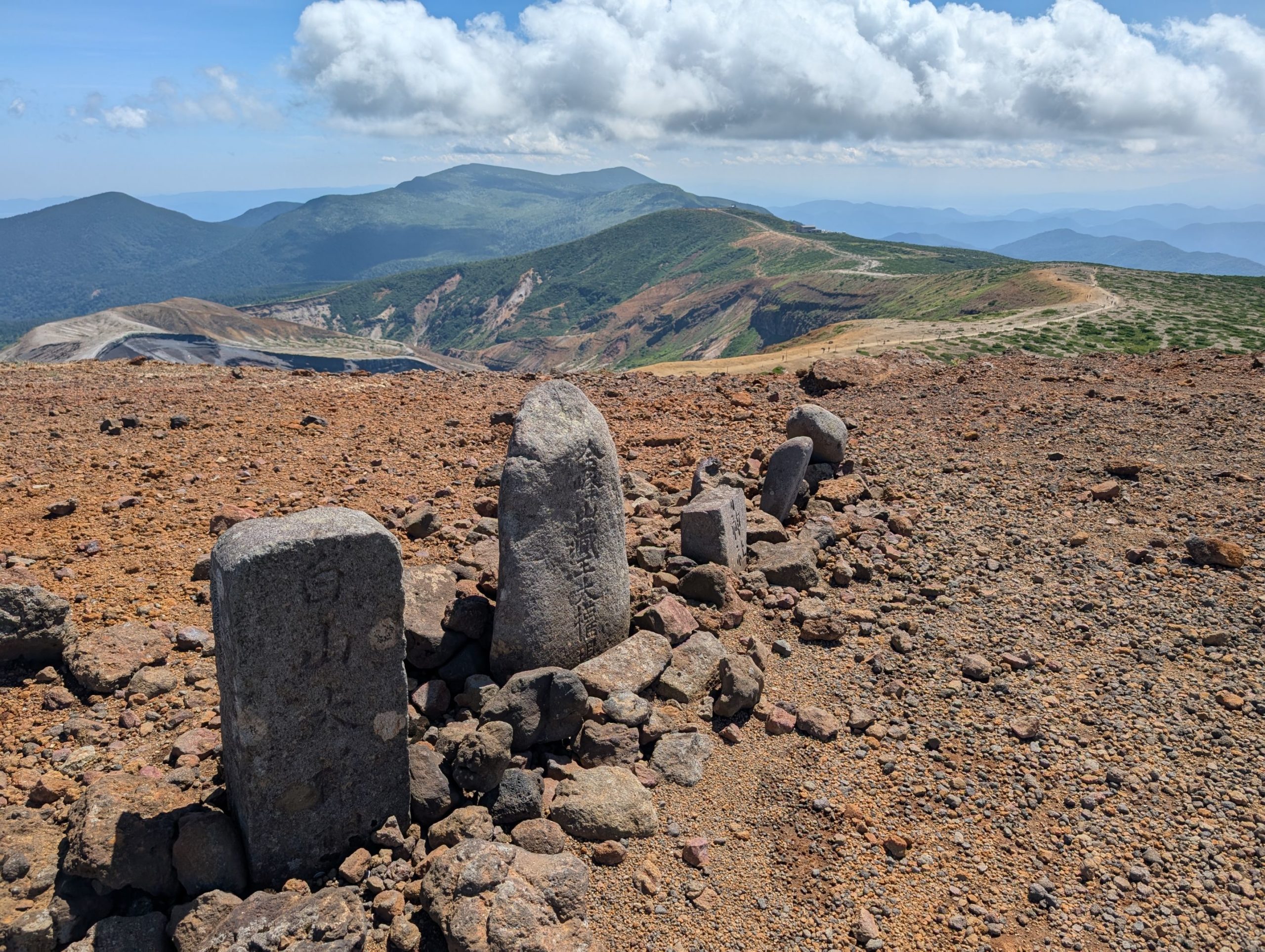

After walking for a while, we reached the gentle summit of Mt. Kumanodake. It felt more like a hike than a strenuous climb to get there. At the summit, there was a monument with a poem by Mokichi Saito and Kumanodake Shrine.
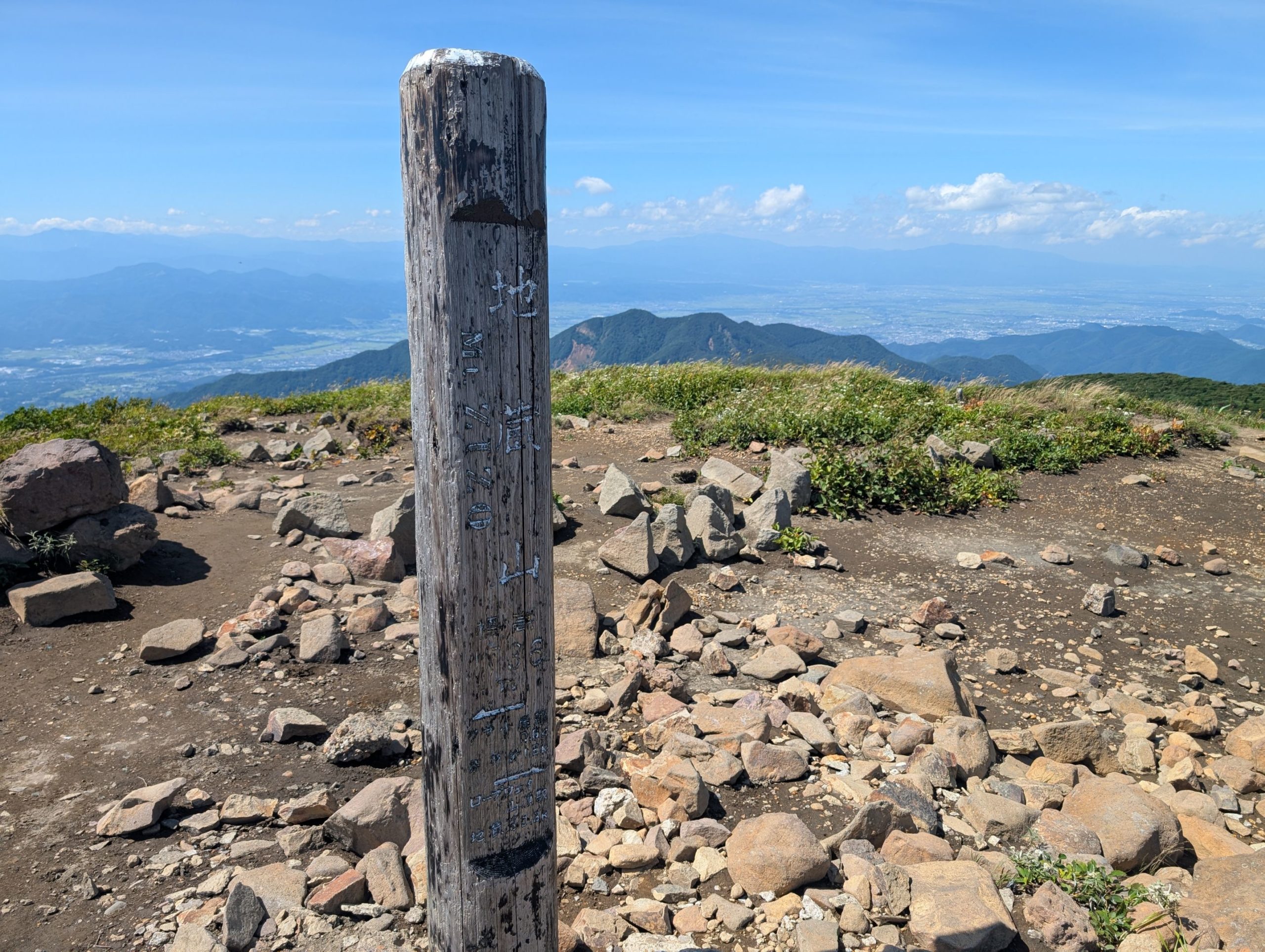
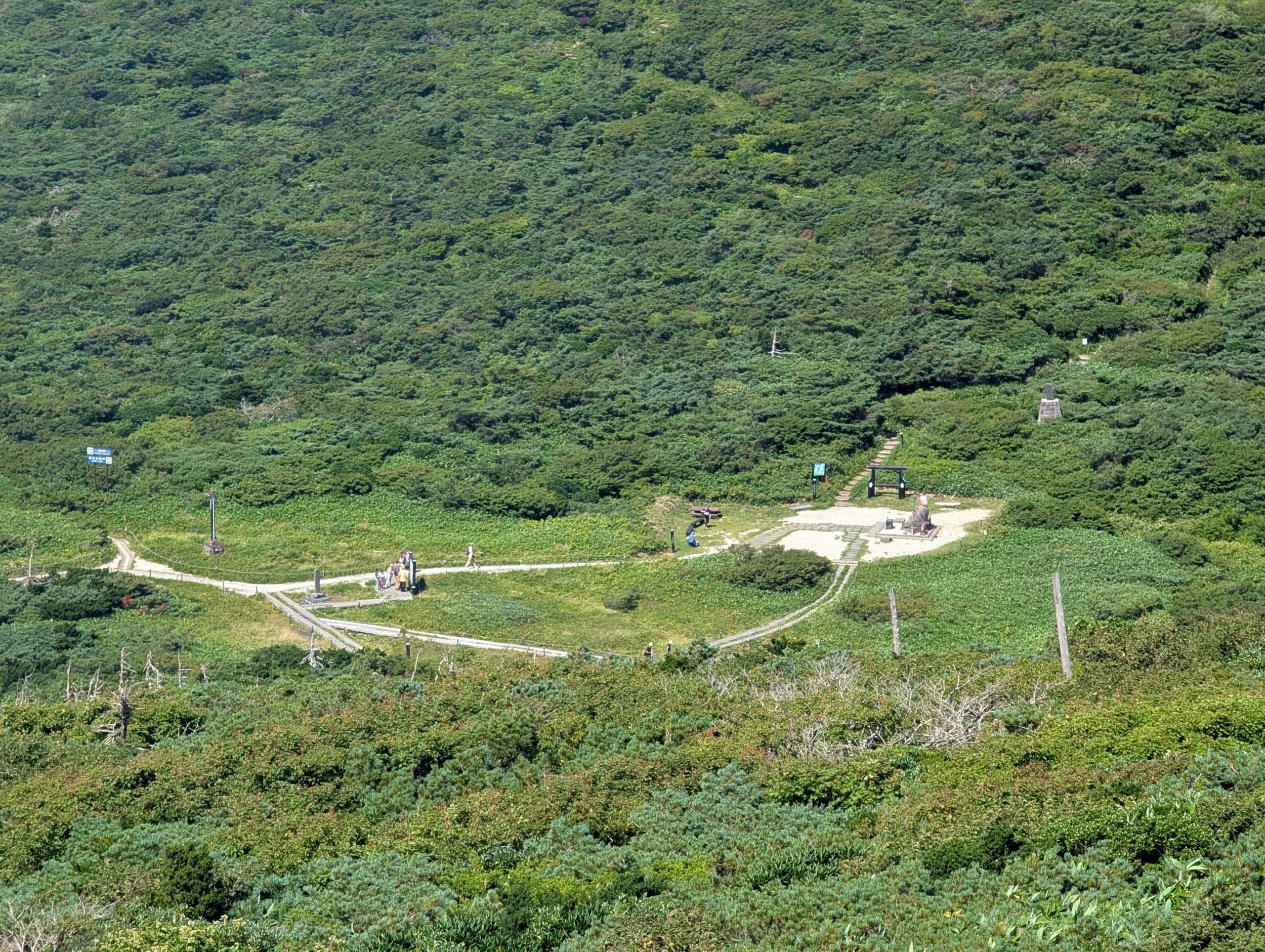
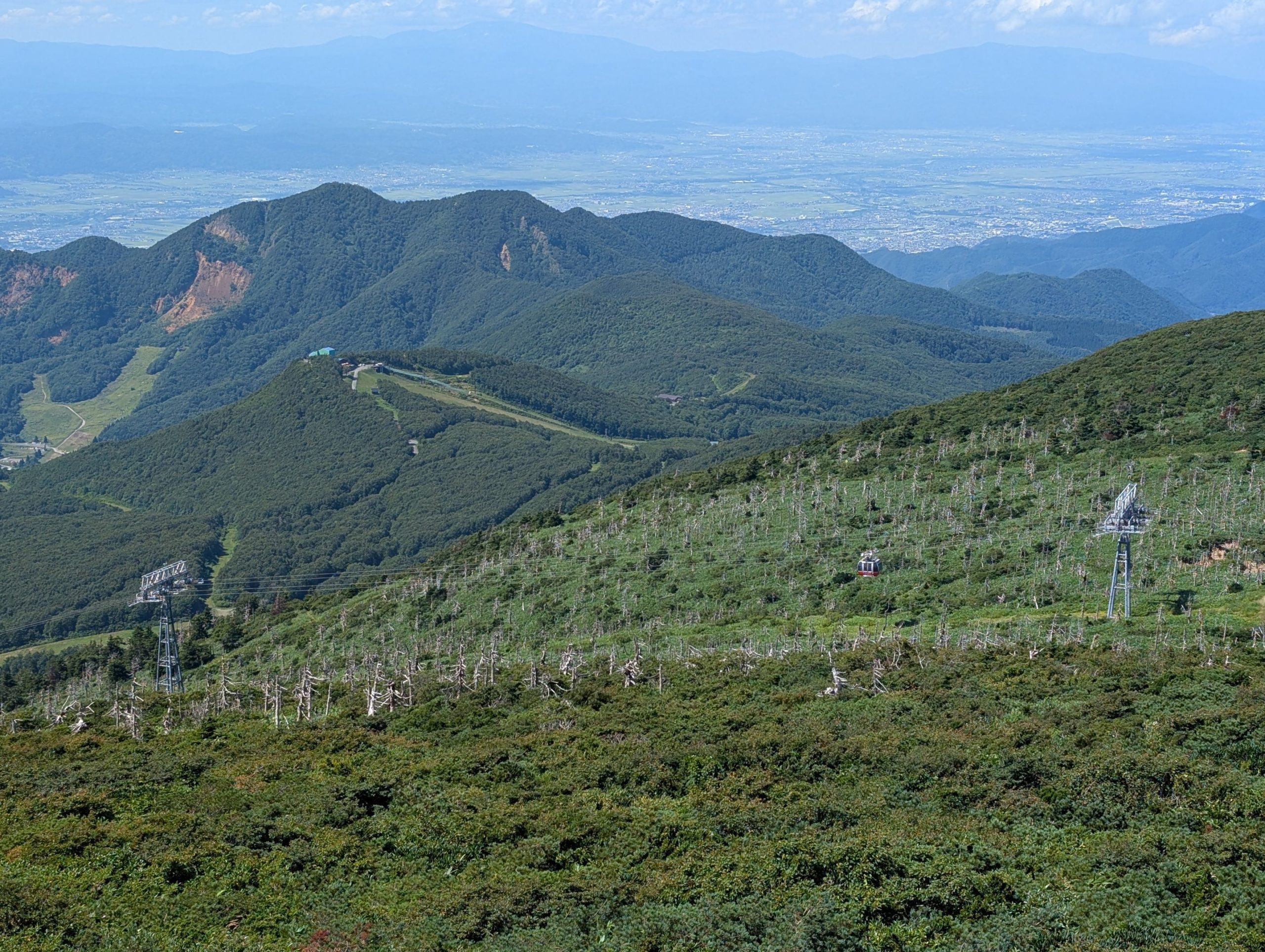
There were a fair number of people up to Mt. Kumanodake, but the crowds thinned out considerably by the time we reached Mt. Jizo. From the summit of Mt. Jizo, I could see the ropeway and many dead trees, which made me think these are likely the “snow monster” trees (juhyo) in winter. There’s also a large Jizo statue right near Jizosancho Station, and I remembered its body being quite buried in winter. Considering the amount of snow here, it actually feels more natural for it to be completely covered.
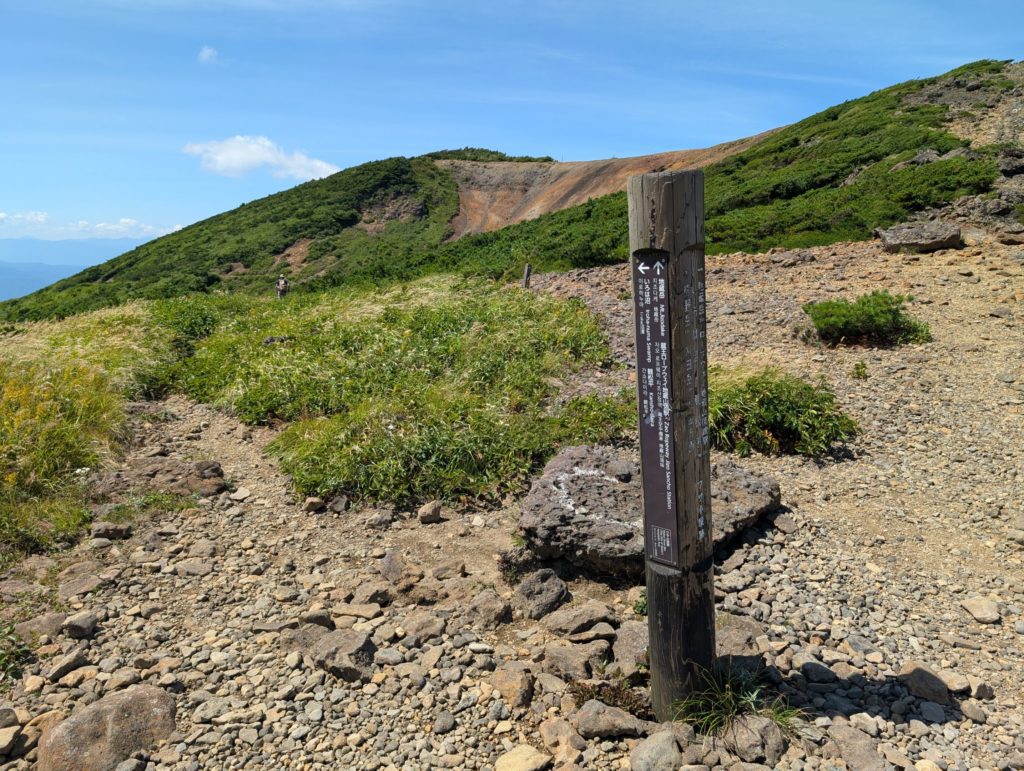
We could have descended from Mt. Jizo summit to the Jizosancho Ropeway Station and taken the ropeway down from there, but since we were already here, I decided to try a different route down. However, that’s where things got pretty challenging.
In this photo, there’s a person walking towards us from the path on the left. This person asked me, “I’m not sure if the path ahead is truly passable, can I follow you?” I said it was fine, but as we walked, I couldn’t help but wonder, “Huh? I thought this was a path even beginners could manage…”
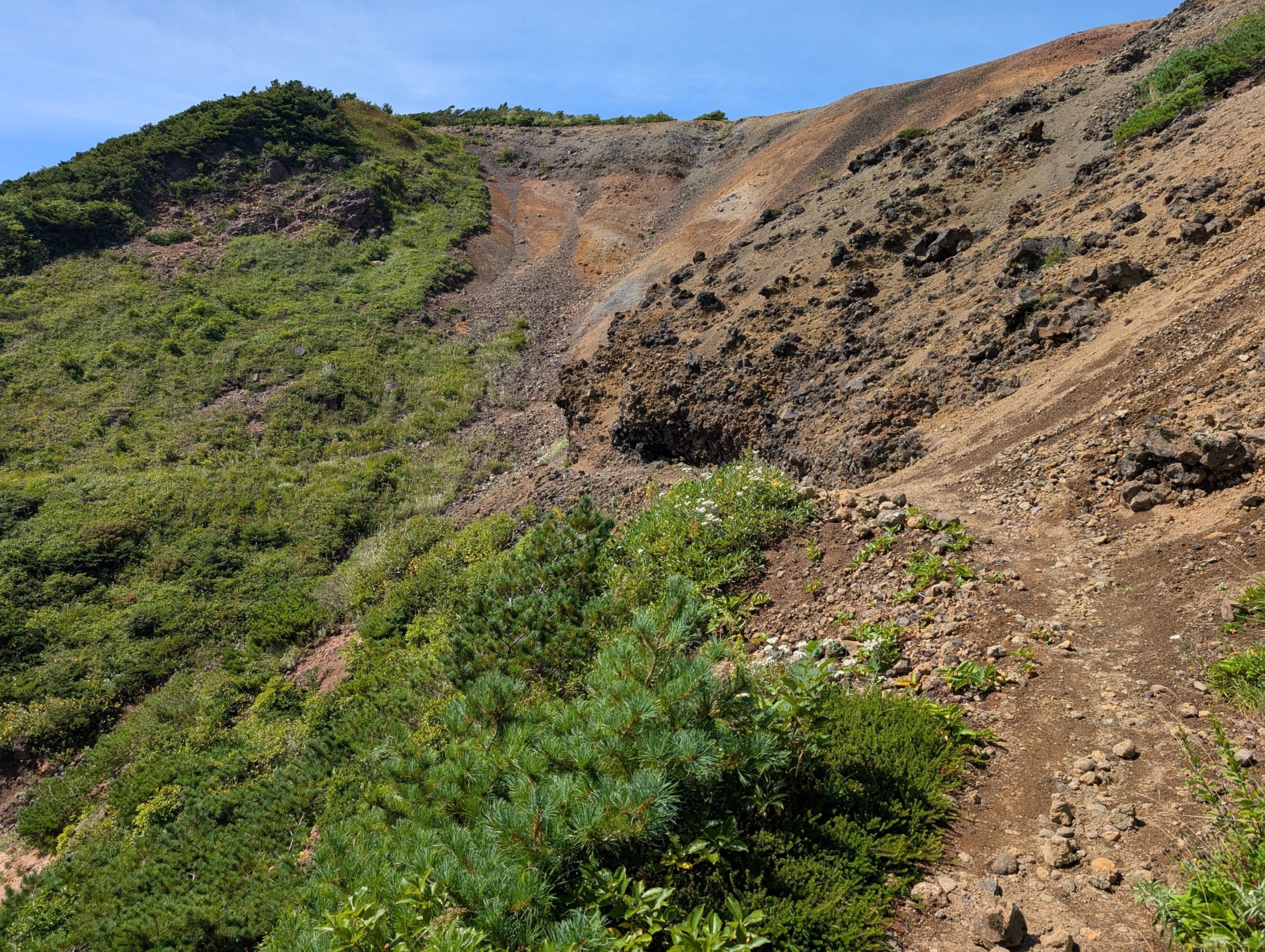
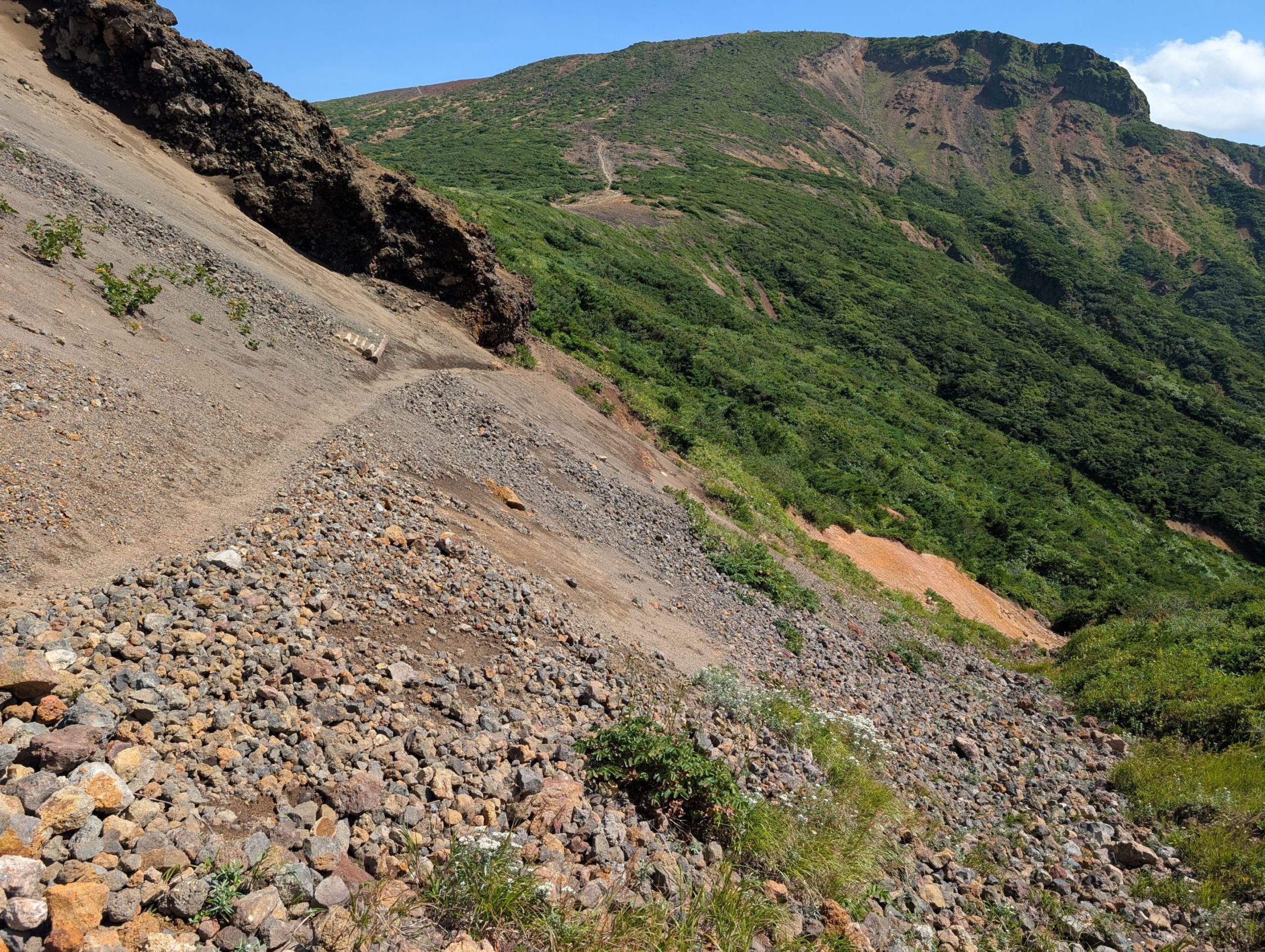
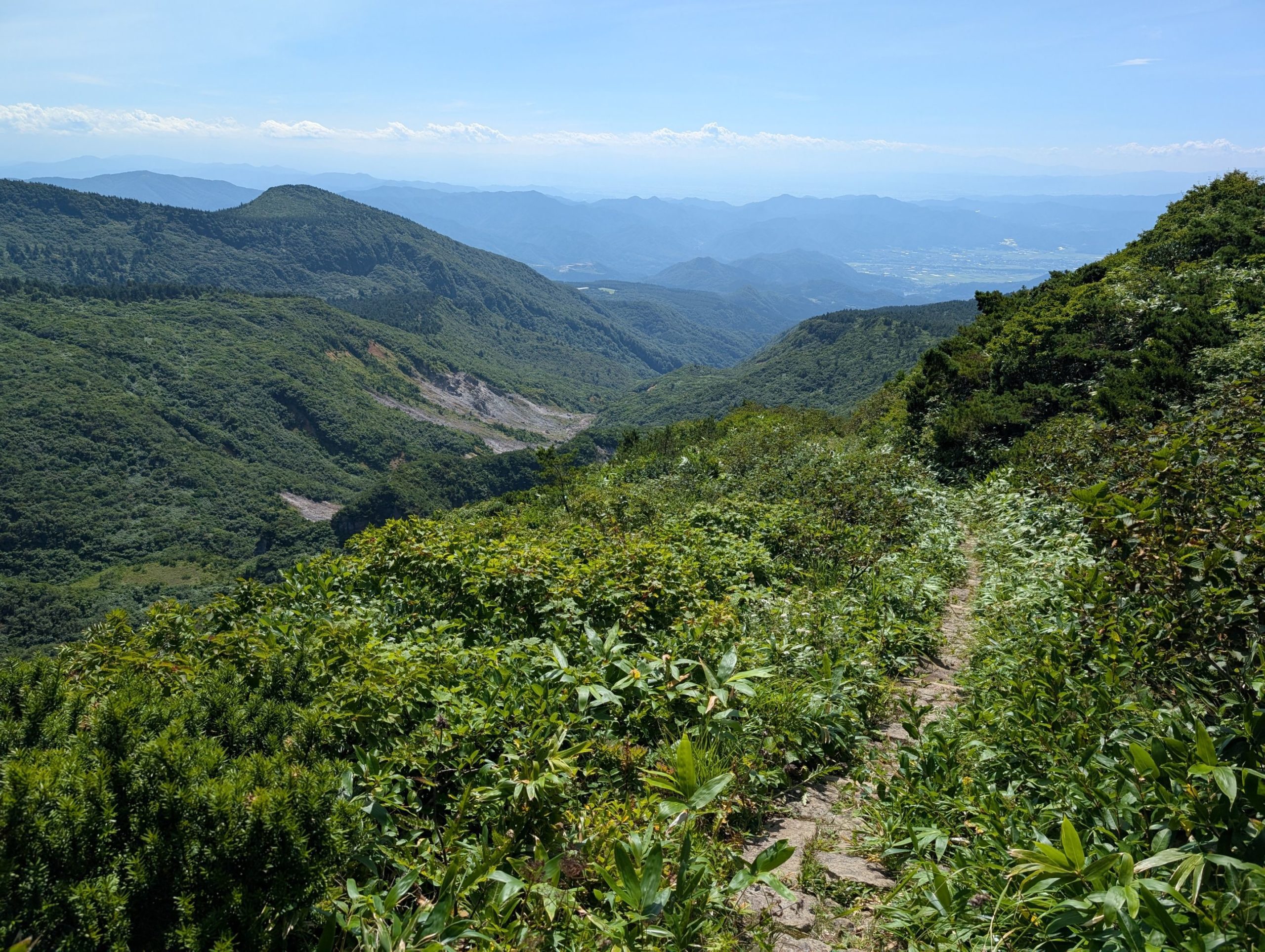
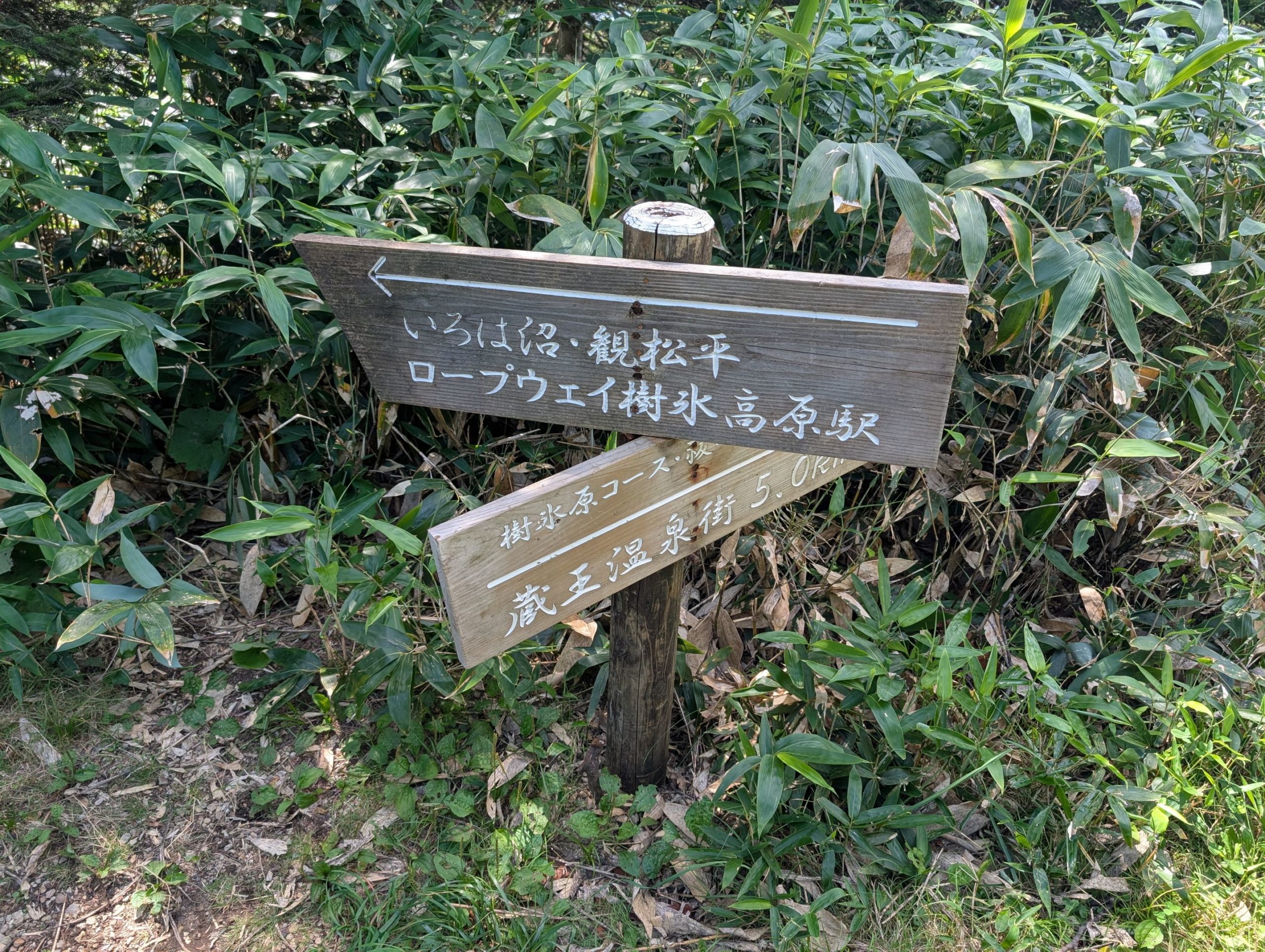
Indeed, it was quite different from the path we’d been on. There were traverses that required caution, and perhaps because not many people use it, the path became overgrown, requiring bushwhacking. It was definitely the kind of path that would make beginners nervous. Honestly, I was scared of bears on this bushwhacking section.
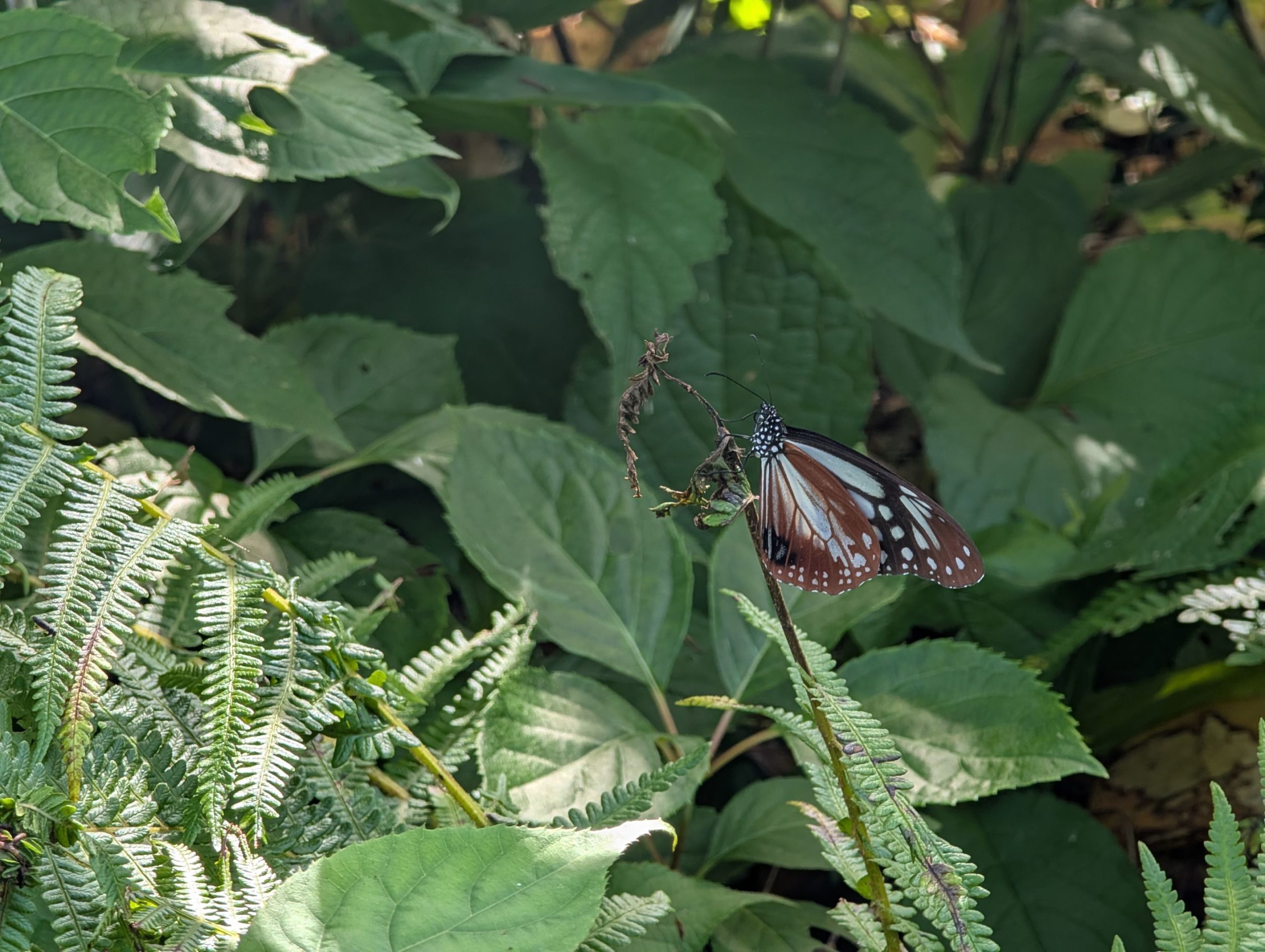
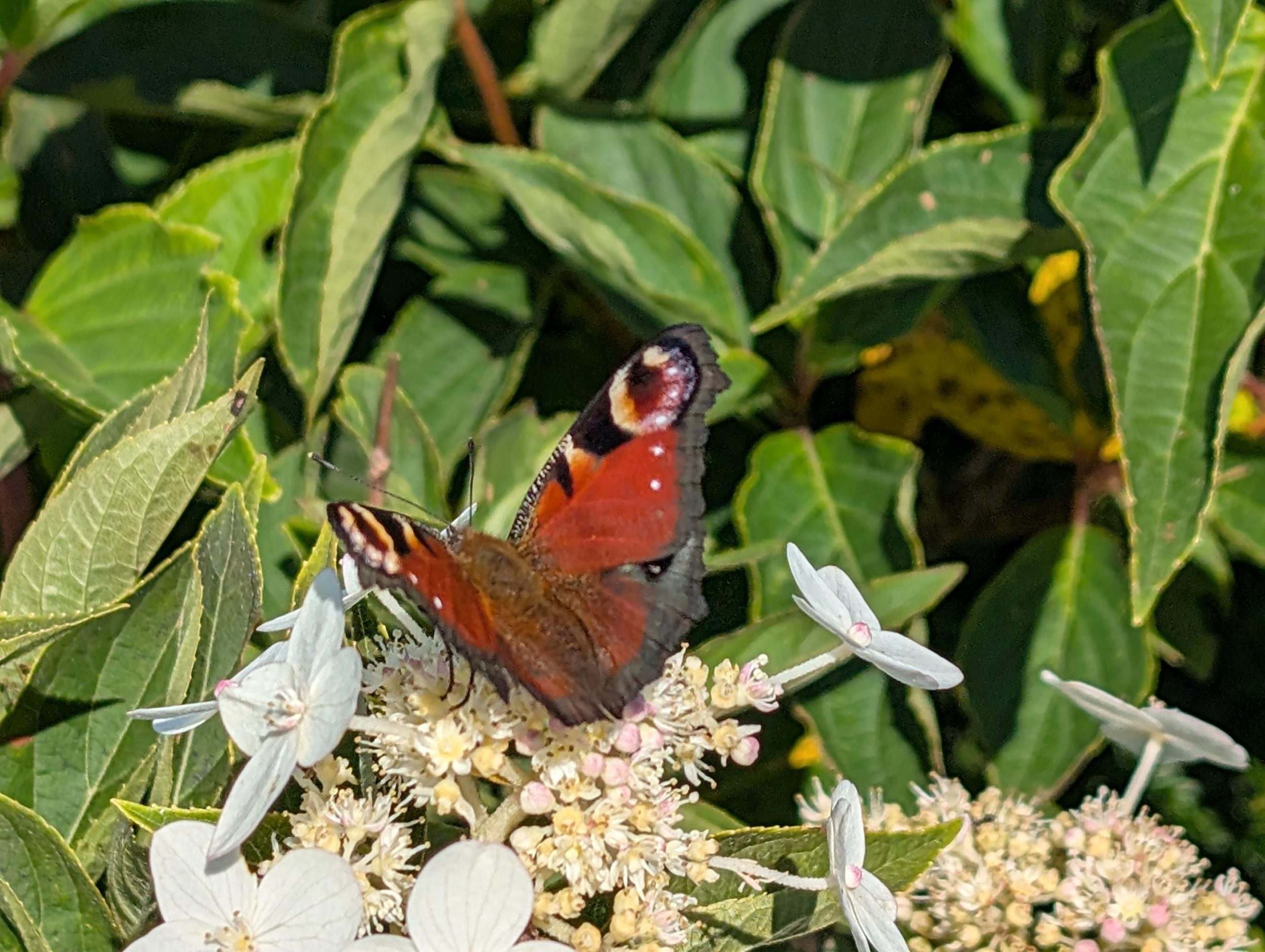
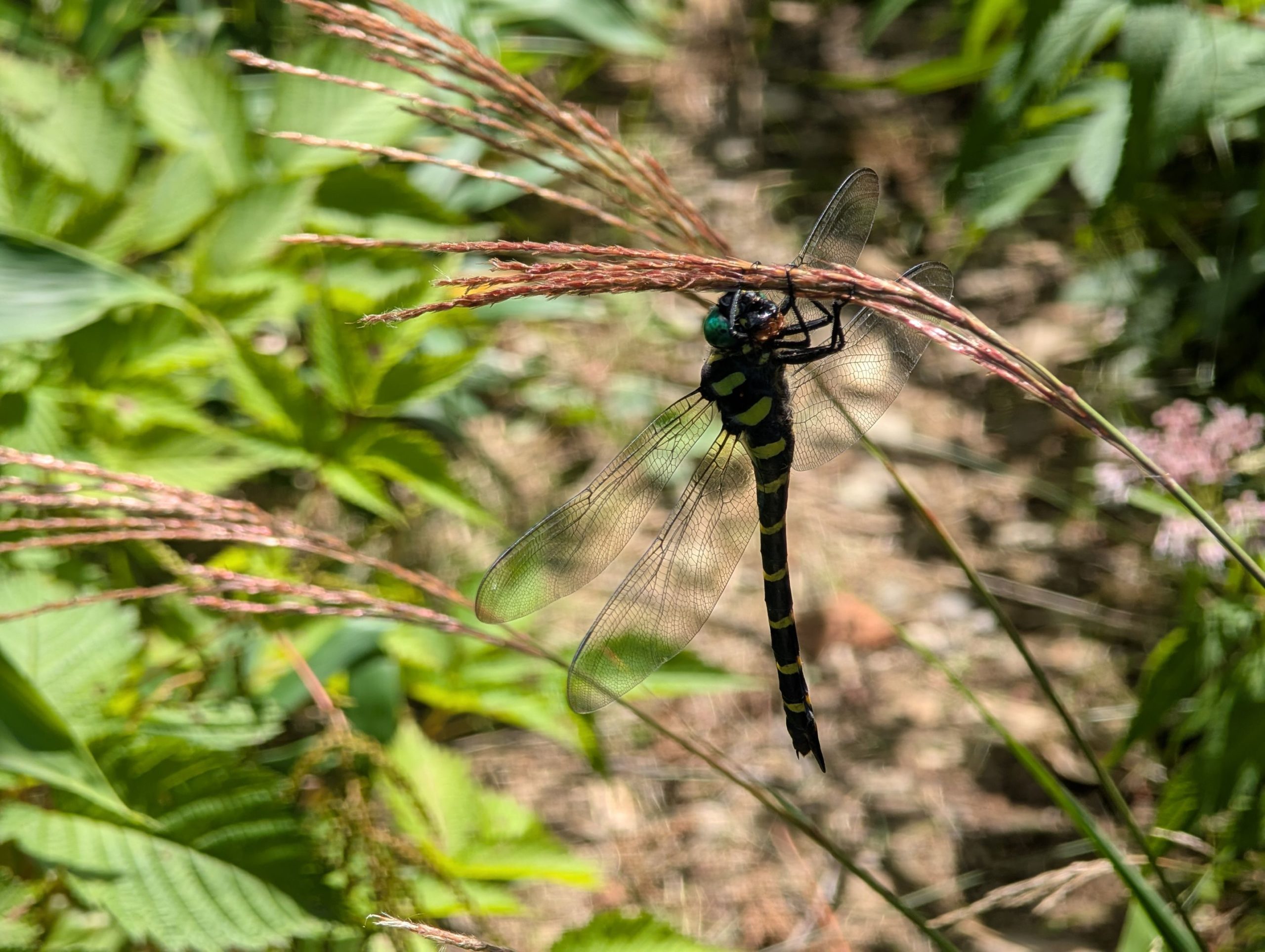
Thanks to the greenery, I saw various insects along this path. What really surprised me was when a giant dragonfly (oni-yanma) that had been flying along the trail, as if it owned the territory, suddenly landed on a pampas grass plume right in front of me. It was so close, it seemed completely unfazed by my presence.
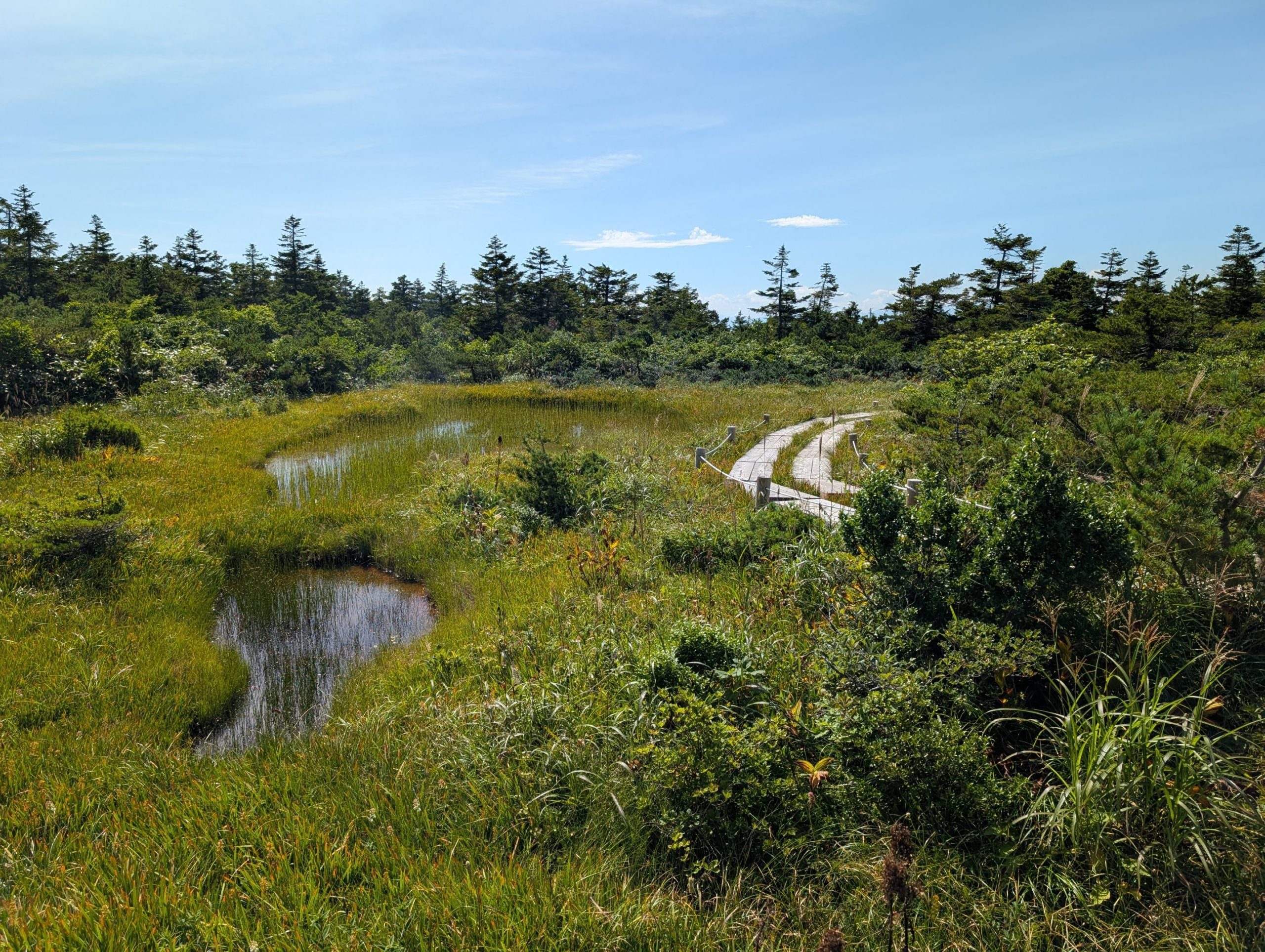
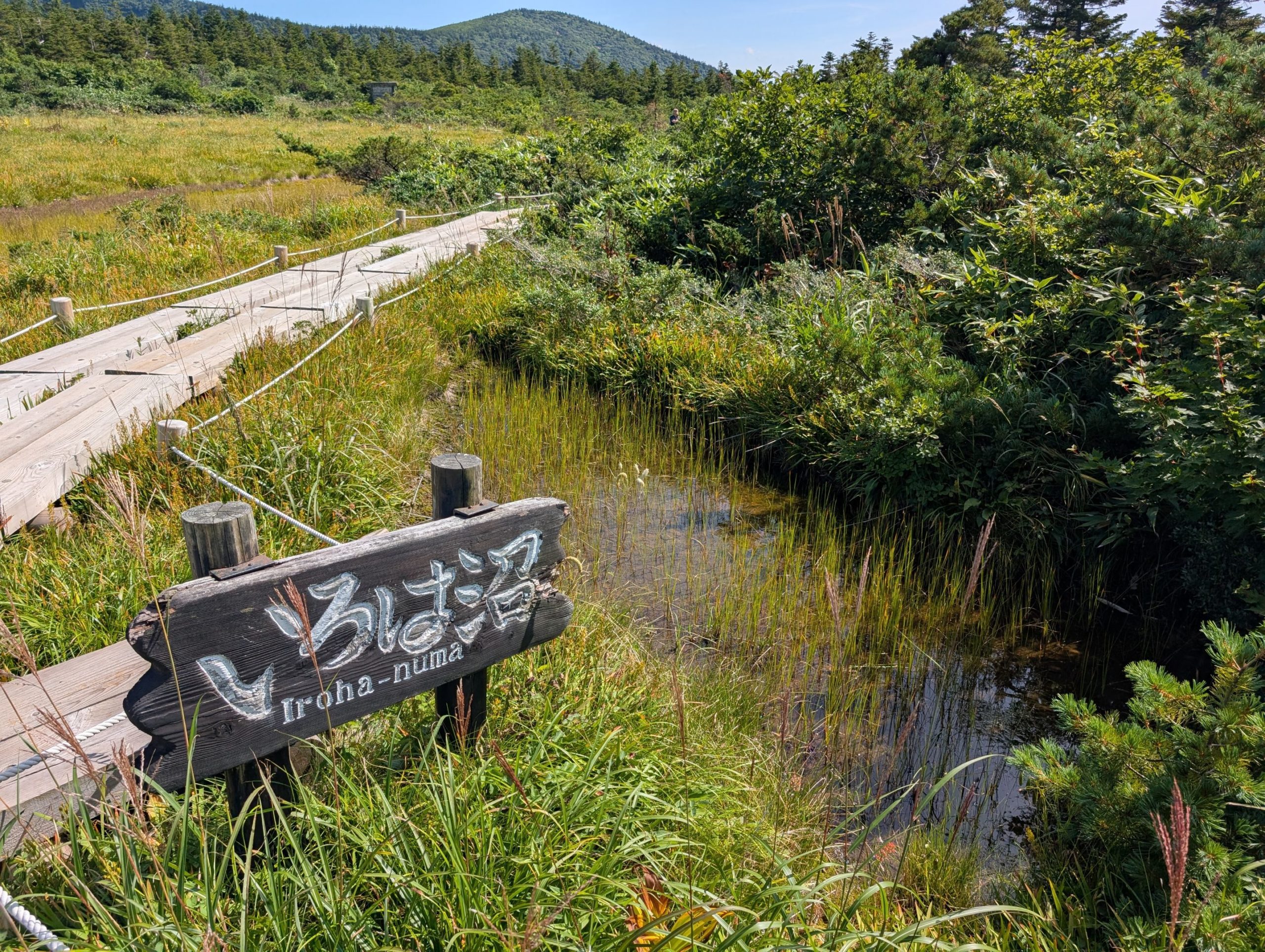
On the descent path, covered in tall grasses and trees, there were no views at all, and I was starting to think it was a bit boring when suddenly, the view opened up, and I came out into an area with widespread marsh ponds. It seemed we had finally reached Iroha-numa. Here, unlike the giant dragonflies, many beautiful blue dragonflies were flying around, and I spent some time leisurely watching them.
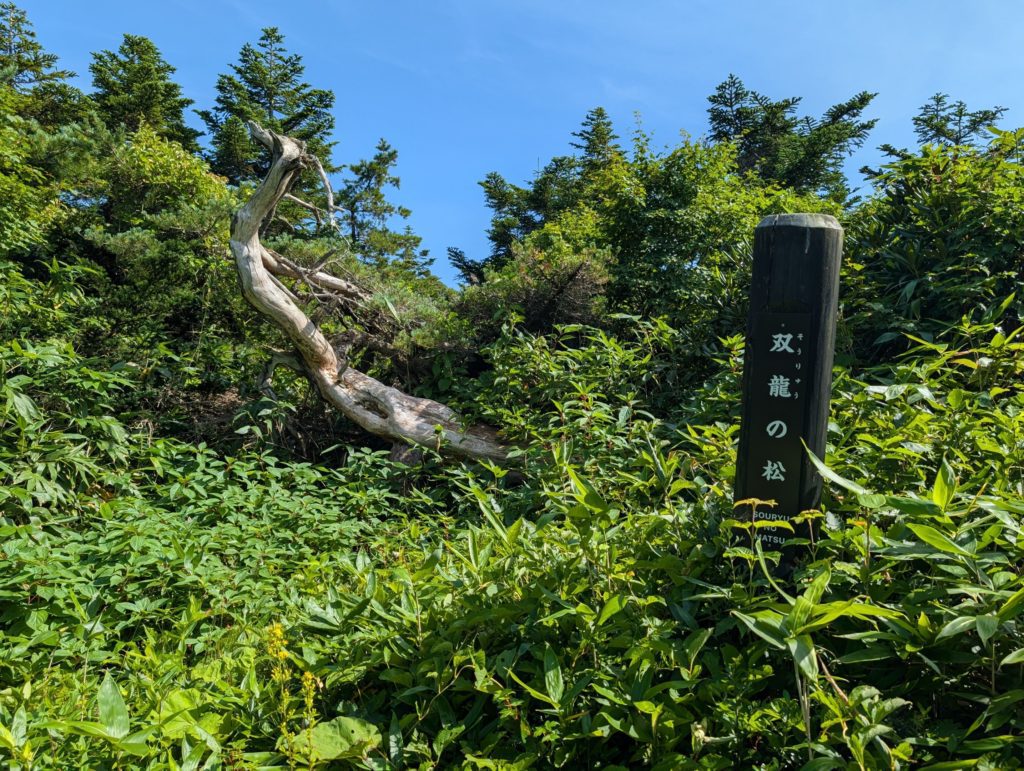
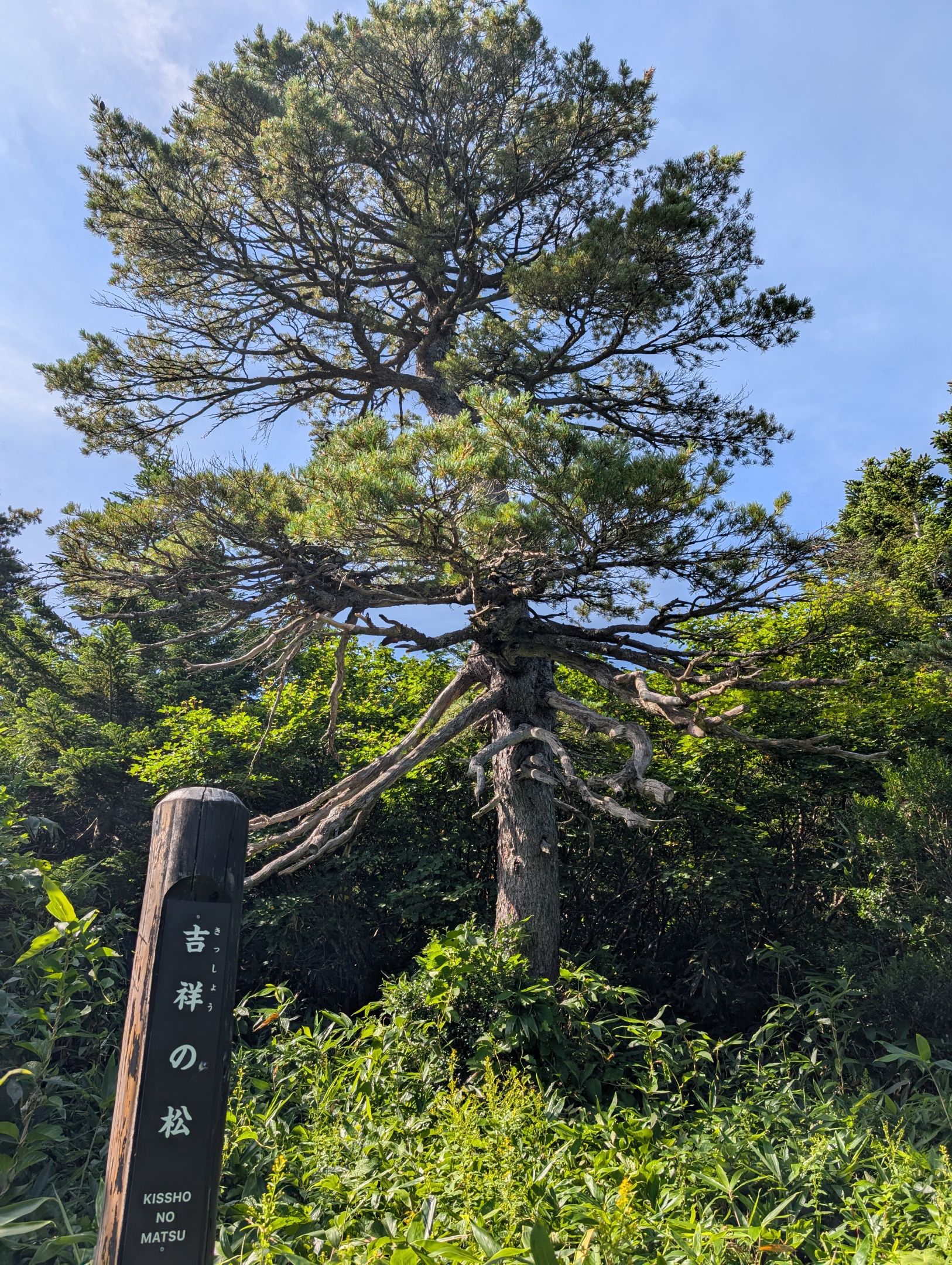
Beyond Iroha-numa, there were many uniquely shaped pine trees, each with its own name. I imagine their trunks were bent and twisted due to heavy snowfall, but they still radiated a powerful will to grow.
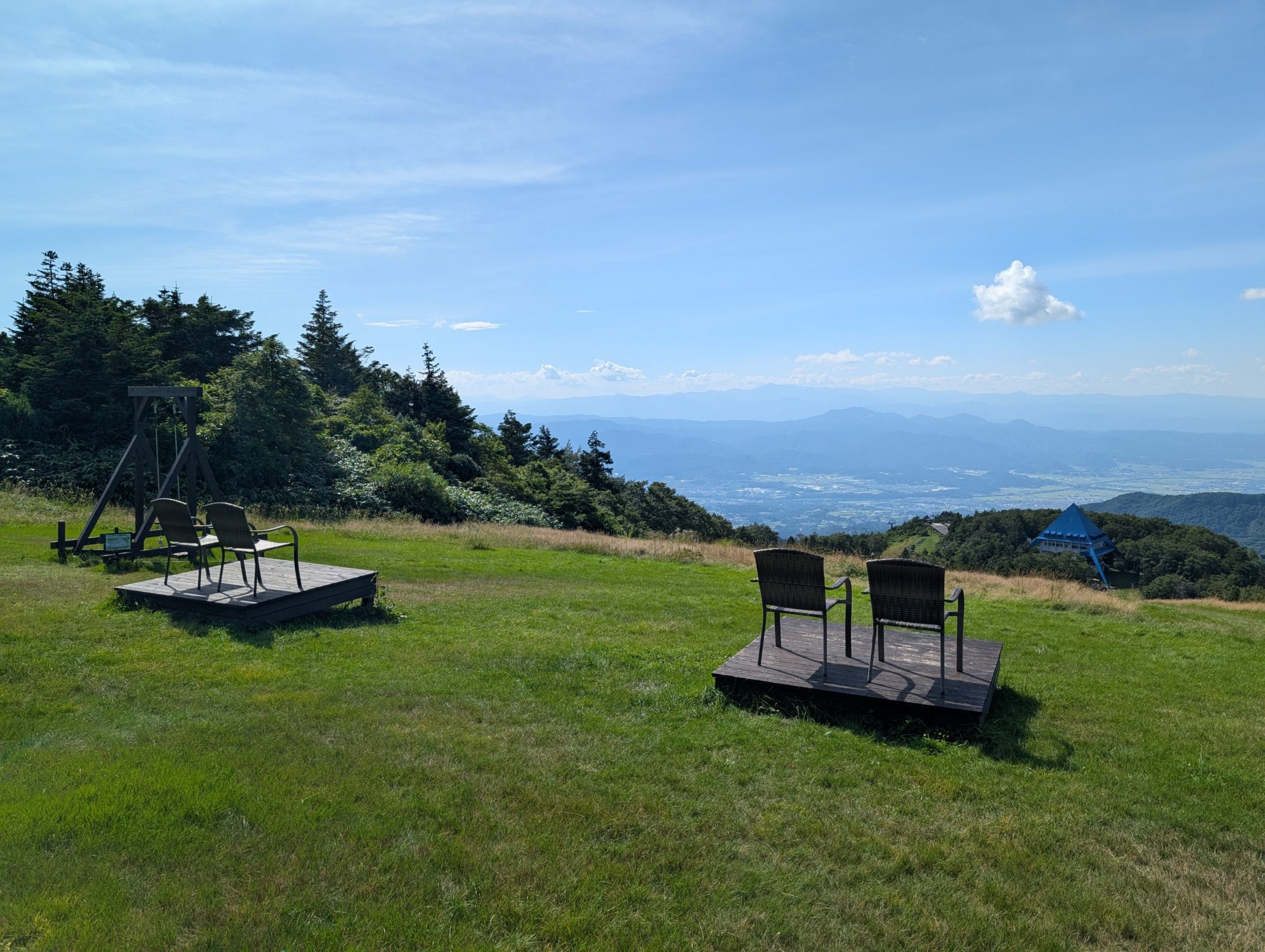
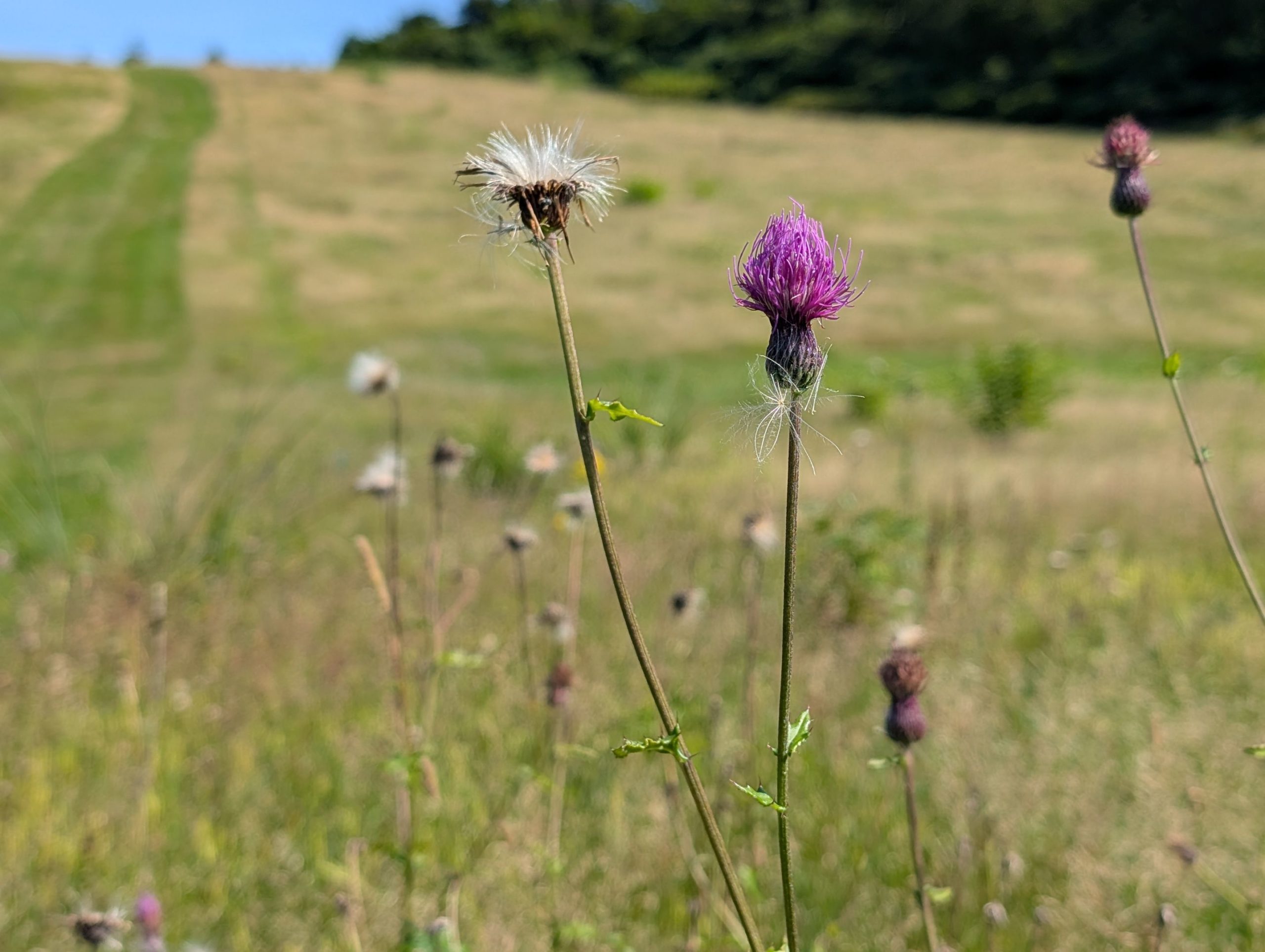
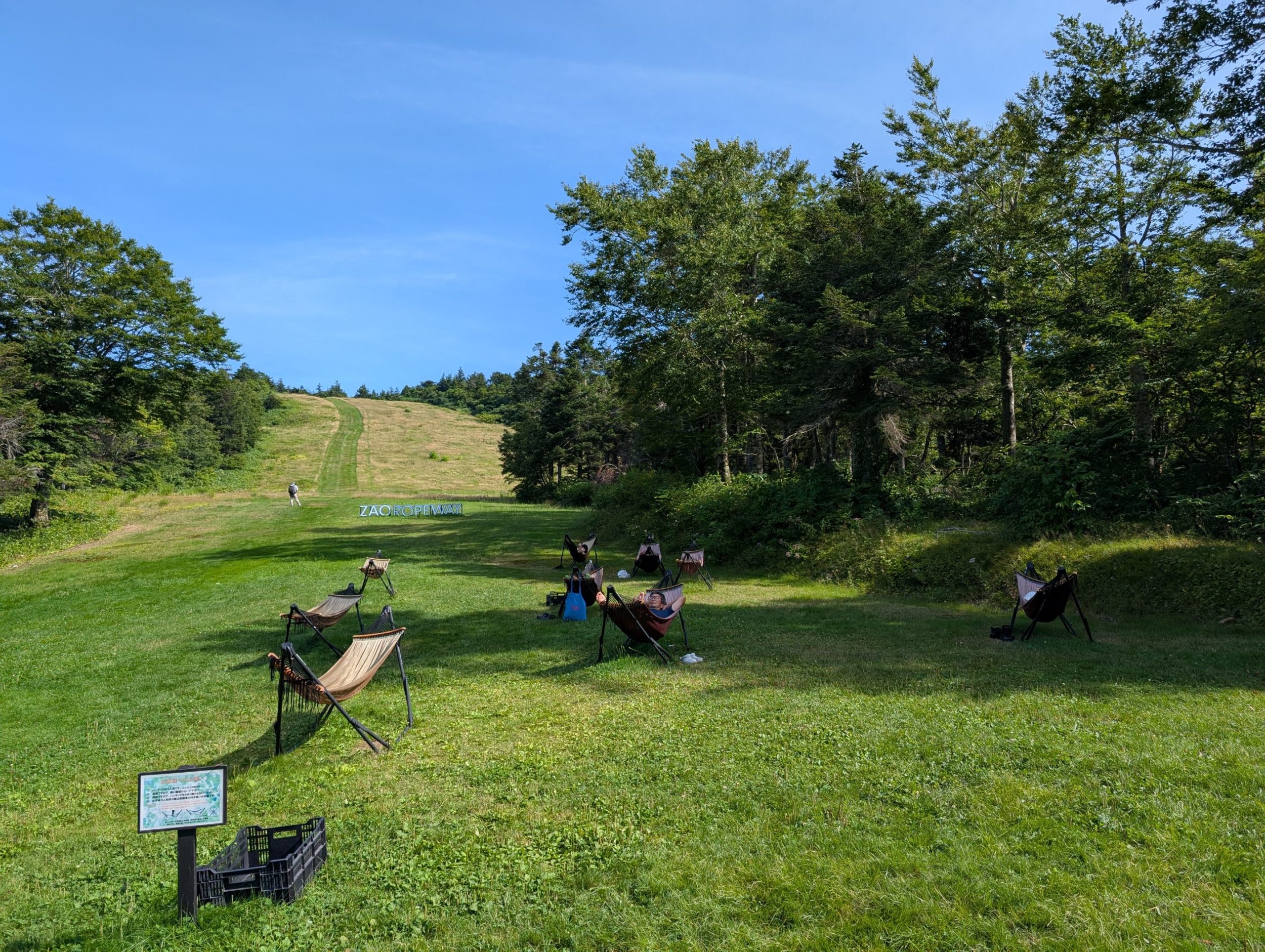
The hiking trail merged near the lift disembarkation point, and from there, we descended the ski slope to the Juhyo Kogen Station of the gondola. In summer, the ski slopes had hammocks and chairs set up, allowing visitors to spend a relaxing time, enjoying the pleasant cool breeze.
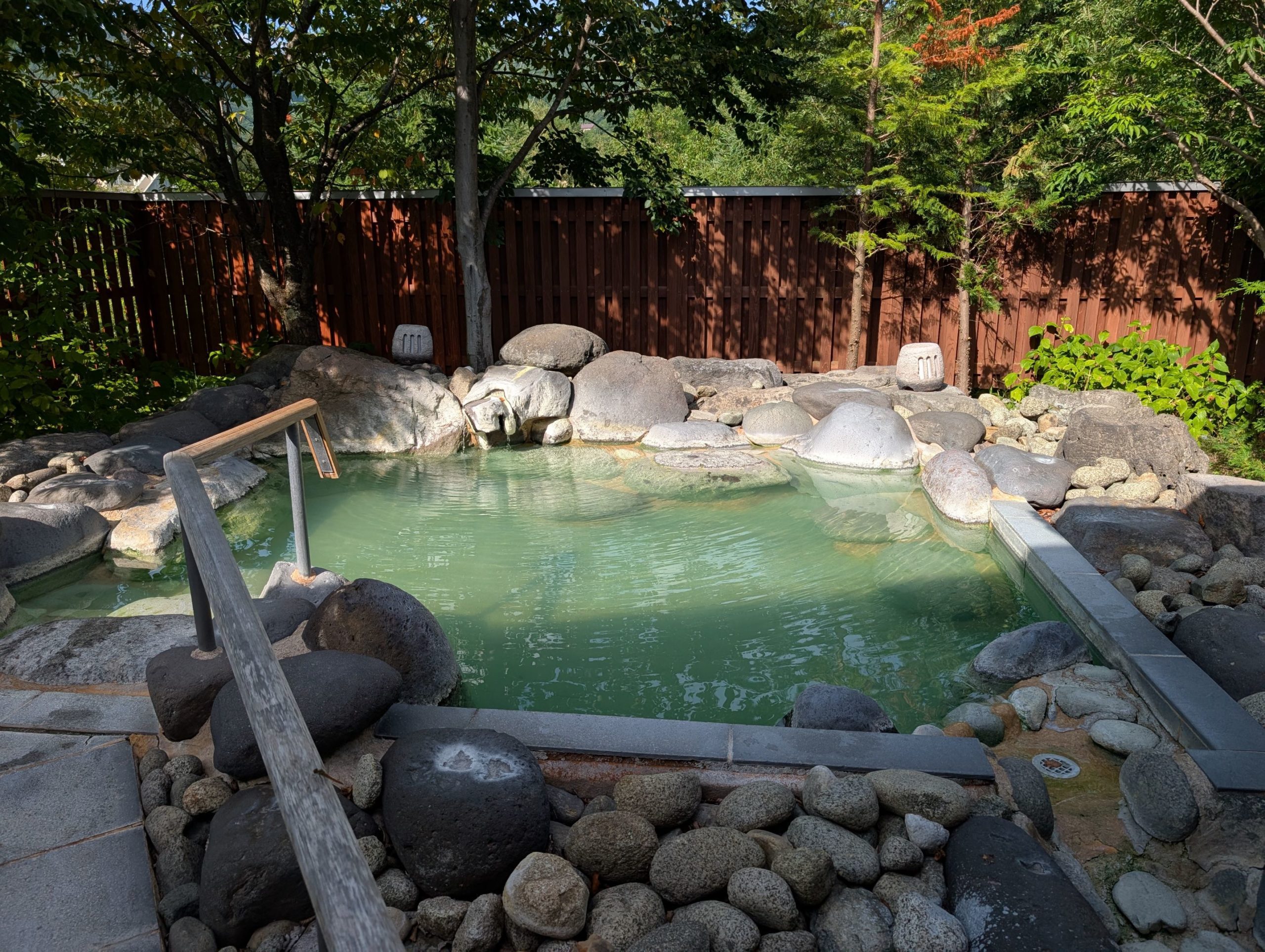
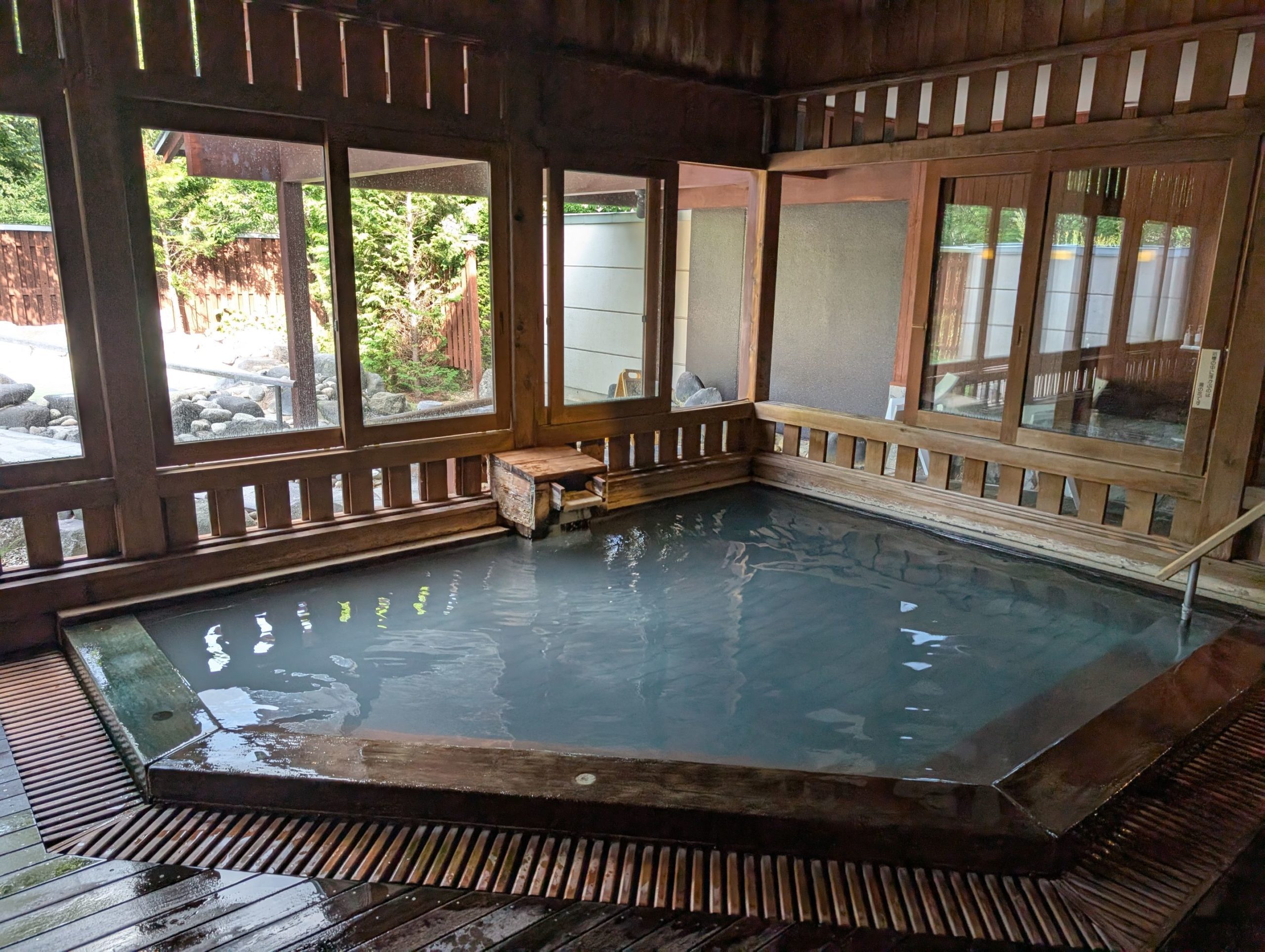
Since I was already in Zao, I was really looking forward to a post-hike onsen. After taking the ropeway down from Juhyo Kogen Station to Zao Sanroku Station, I looked at Google Maps for a hot spring. Hanareyu Hyappo, a little further from the station, looked promising, so I headed there right away.
Luckily, that day there were no other bathers, so I had both the open-air bath and the indoor bath all to myself! The indoor bath had a pale blue tint depending on the light, with a gentle sulfur aroma, and it was a lukewarm temperature that felt so perfect I could have stayed in forever.
The weather, which I had worried about, was perfectly fine. Both the hike and the onsen were fantastic! It was also great fun that a junior colleague, who is now working back in Yamagata, called me and we got to chat over some delicious soba. I’m truly glad I was inspired by my other colleague’s “Yamagata, my hometown, is really wonderful, you should definitely go!” comment and decided to come.


コメント