
Every summer, my Hokkaido trip usually involves visiting friends in Higashikawa Town and enjoying a relaxed stay. But this year, we headed to Rishiri Island! Our goals were to climb Mt. Rishiri, savor sea urchin and Rishiri ramen, indulge in hot springs, and simply soak in the unique scenery and atmosphere of a remote island. As for Rebun Island, considering my wife isn’t a fan of boats, the plan was to extend our trip there only if the weather and timing were perfect.
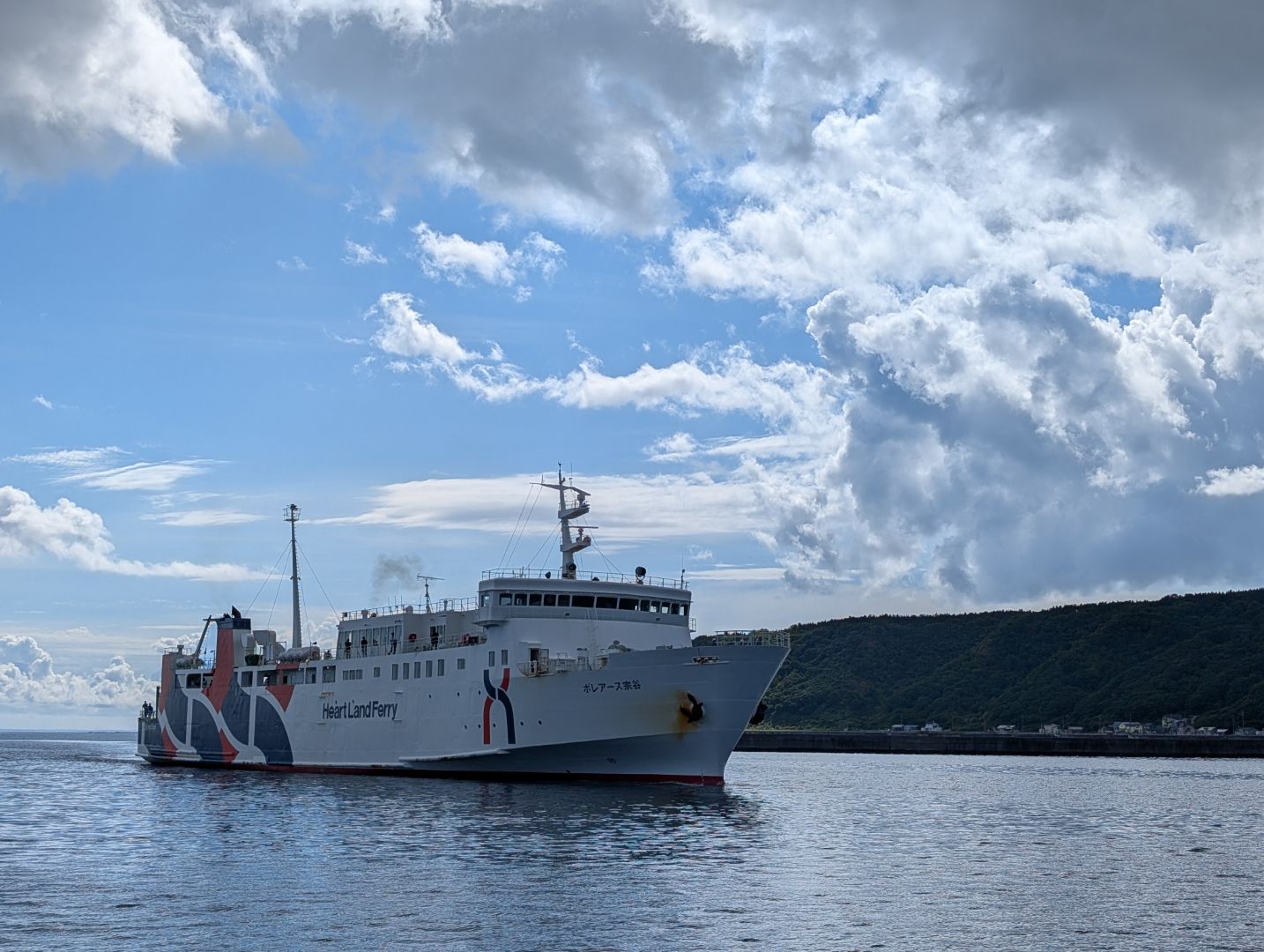
I kept a close eye on the Mt. Rishiri weather forecast for the next couple of days using “Tenkura” (a mountain weather app). We decided to climb two days later when the weather was stable and the hiking index was good. For the next day, though there were some clouds over the mountain, it looked sunny and calm, so we decided to visit Rebun Island. Since our original plan was a relaxed 4-night, 5-day stay entirely on Rishiri Island, it actually turned out to be great that we could be flexible with our schedule on the spot.
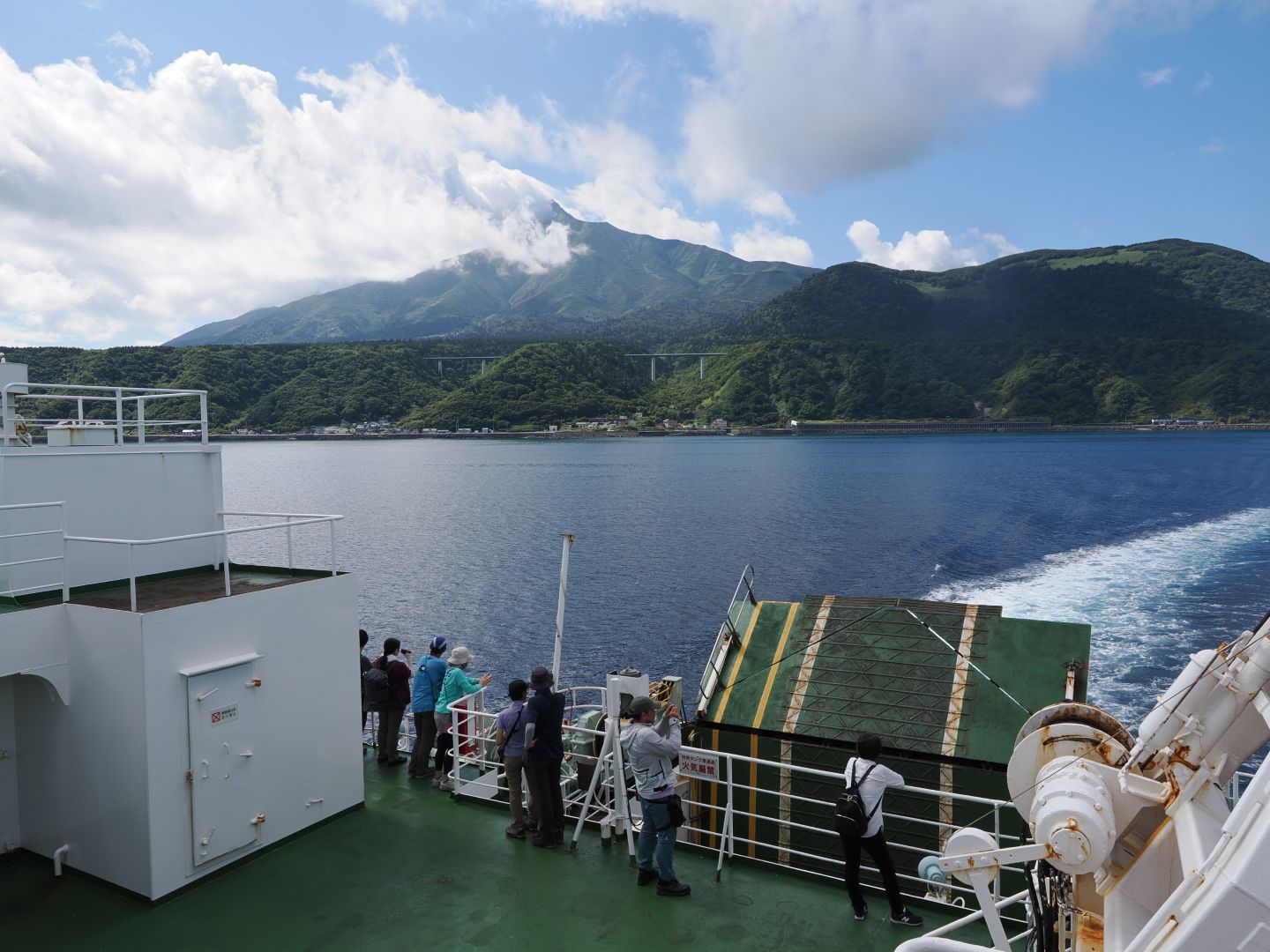
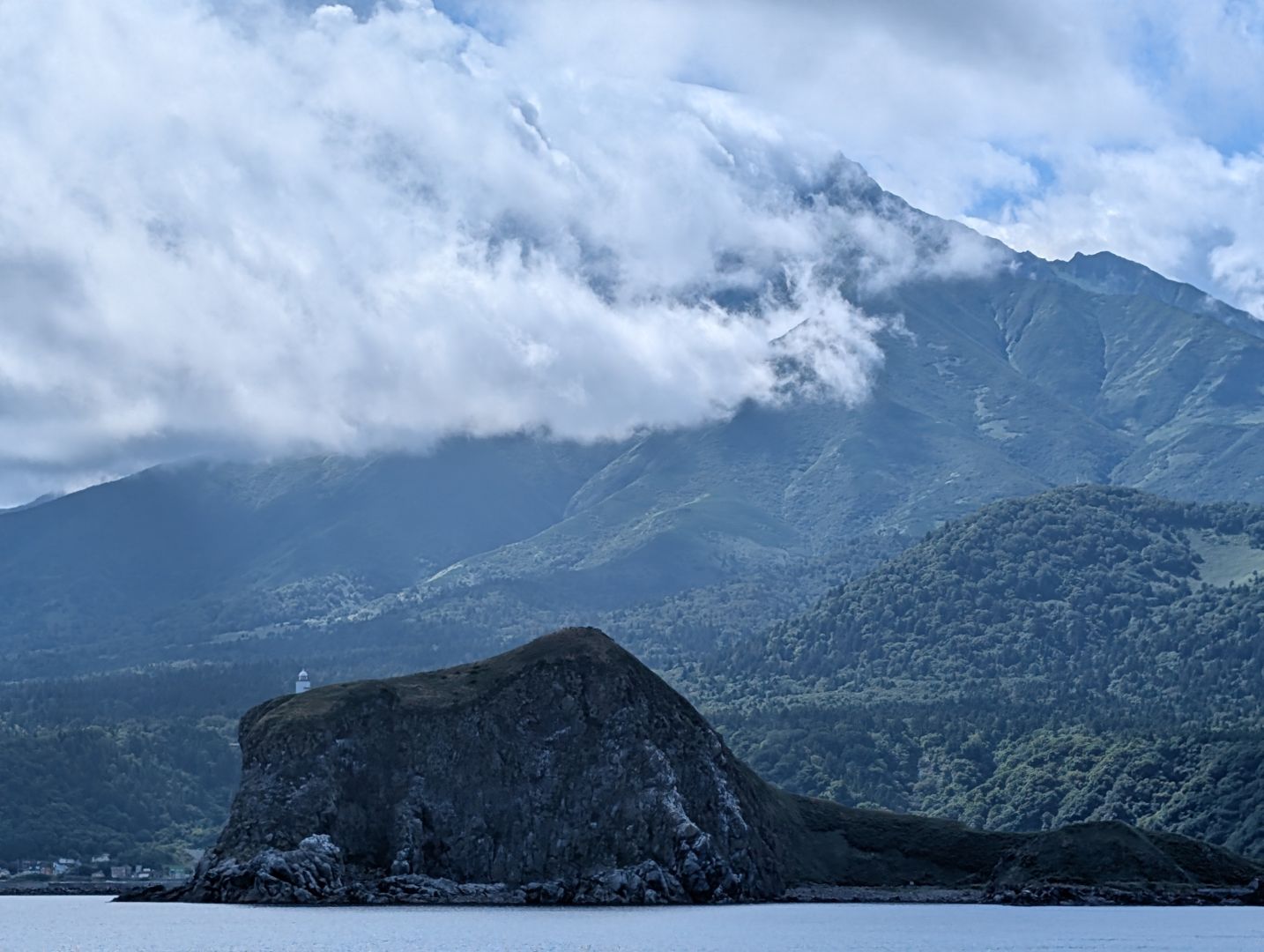
We took our rental car from Rishiri Island onto the car ferry. This was my first car ferry trip since I used one from Irago Cape to Toba. Traveling by boat with your car just has a special, indescribable charm, I really love it.
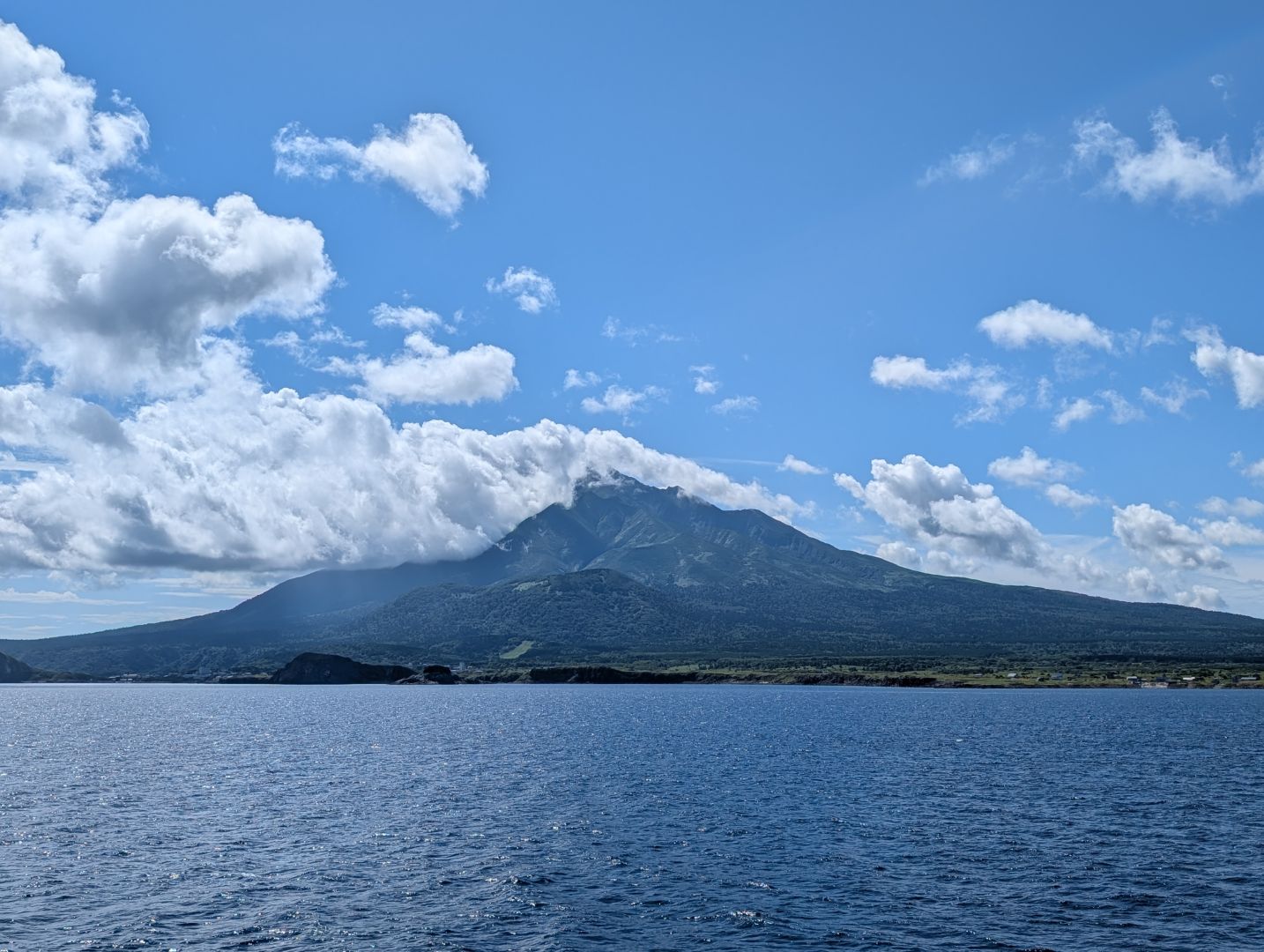
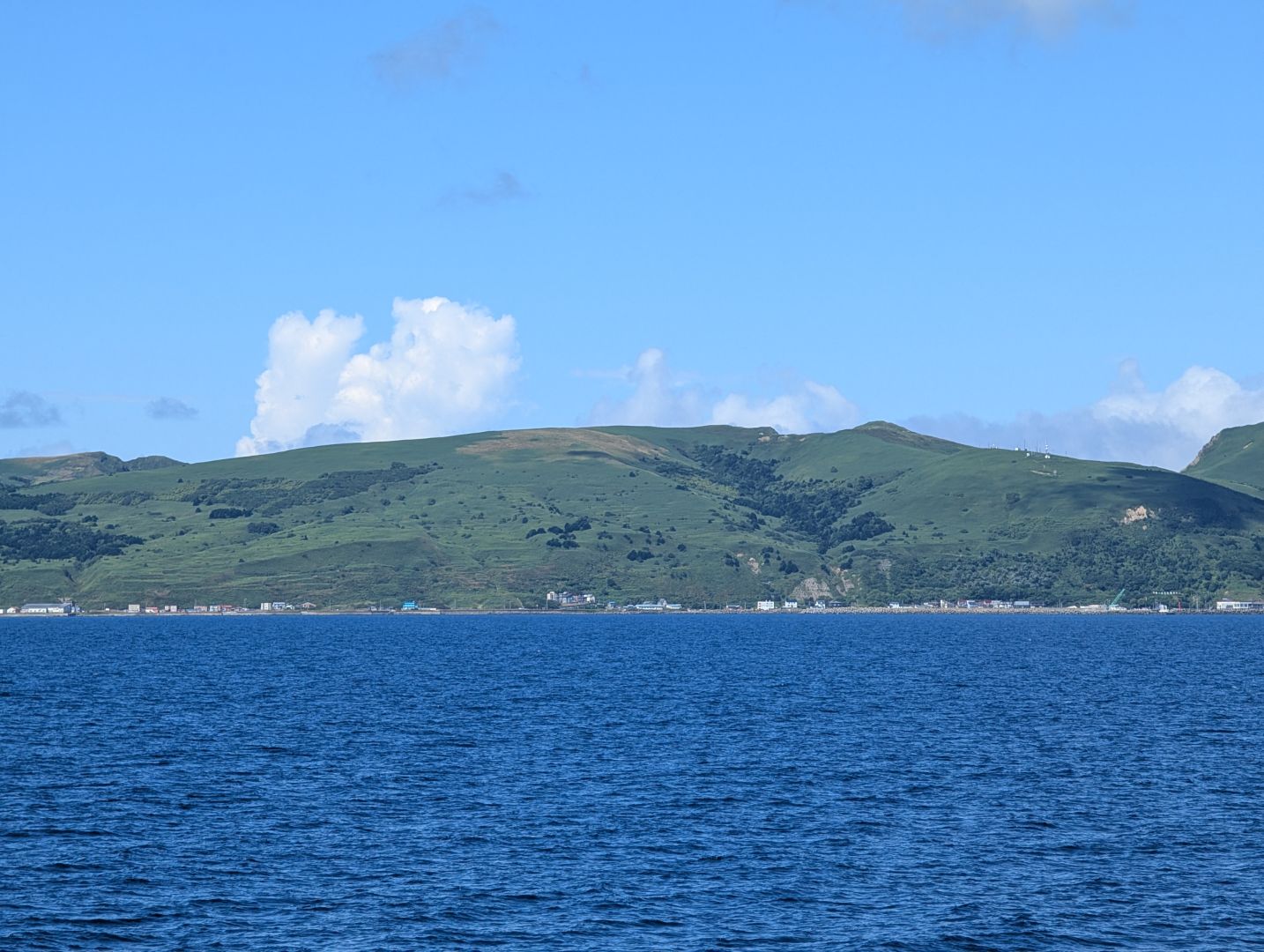
After leaving Rishiri Island and getting a full view of it, it wasn’t long before Rebun Island came into sight ahead of us, with its impressive gentle hills covered in bright, beautiful greenery.
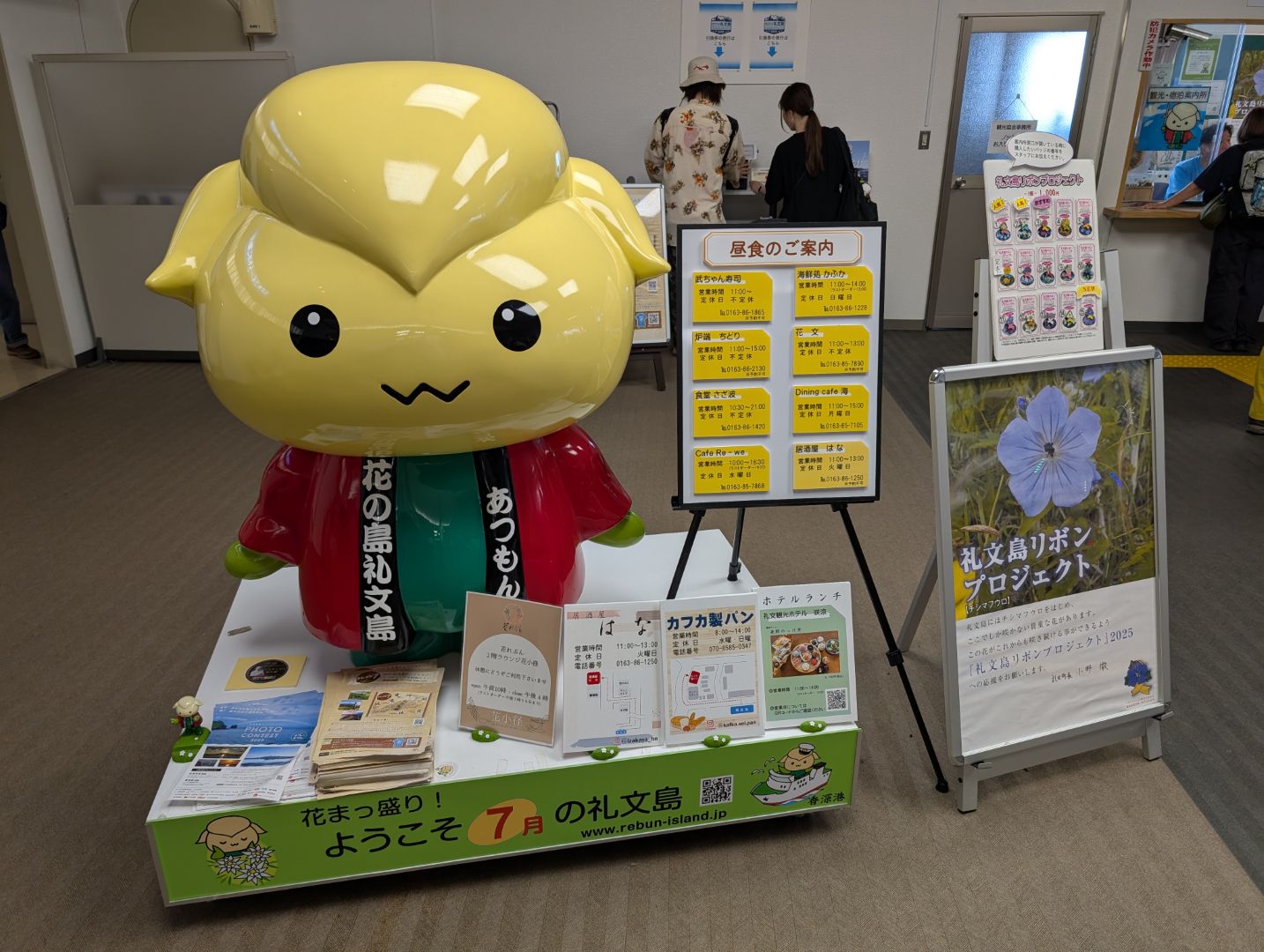
We arrived at Kafuka Port on Rebun Island. We were greeted by “Atsumon,” a character designed after the Rebun Lady’s Slipper Orchid, a species unique to Rebun Island. At that moment, I noticed a “Lunch Information” sign to the right of this local mascot, and I wonder if it was some kind of premonition.
After our sightseeing, we returned to the port a bit late for lunch, only to find huge queues at the eateries, even though it was already around 3 PM. It seems some restaurants were closed or had ended their service early due to the Obon holiday rush, leaving us as “lunch refugees.” So, we ended up having convenience store food from Secoma.
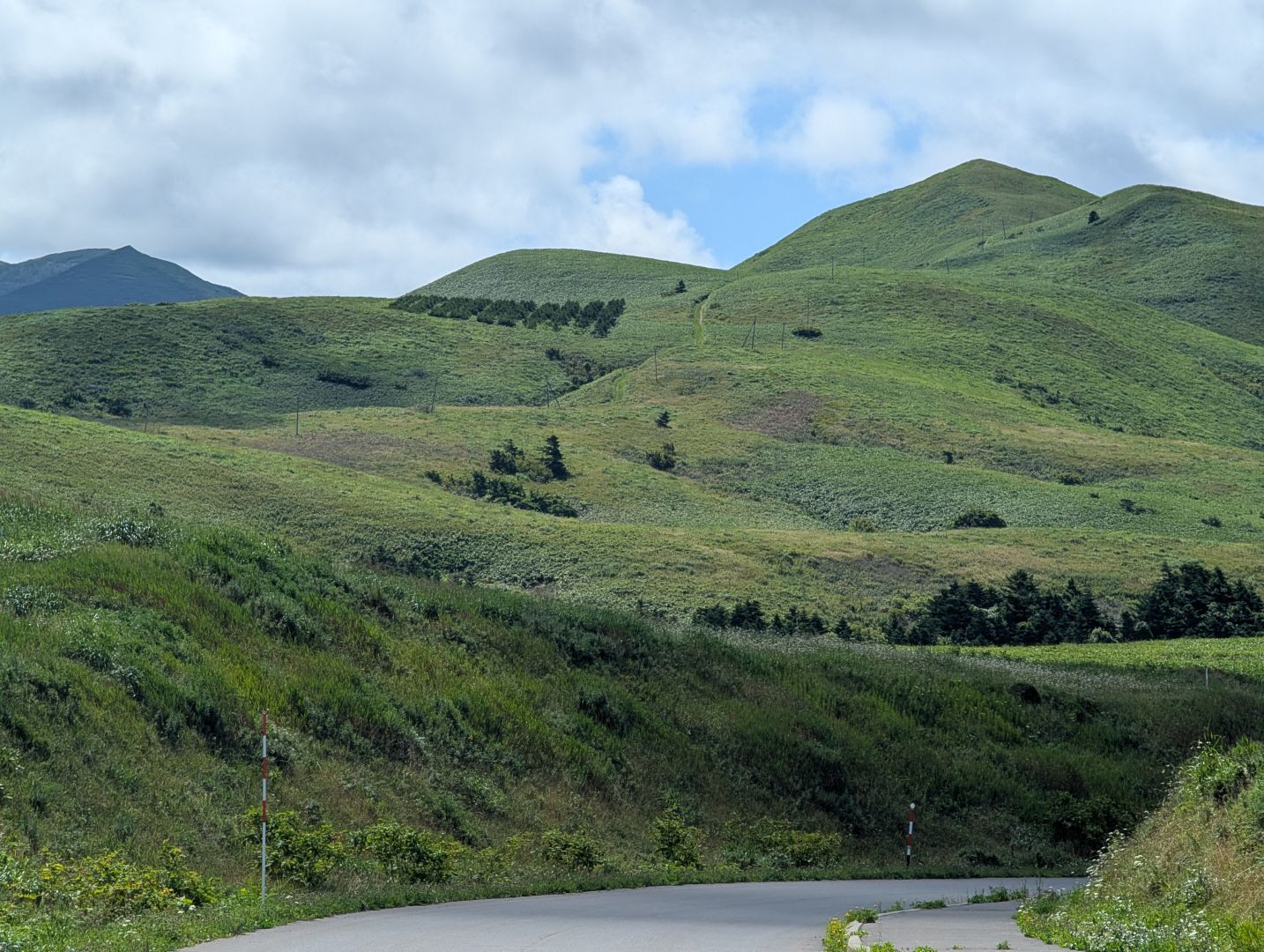

If I were to come to Rebun Island alone and stay overnight, hiking would definitely be my top choice. However, since it was a day trip with my family, our plan was to drive from Kafuka Port on the south side of the island all the way to Sukoton Cape in the north, stopping to leisurely walk and enjoy the island’s scenery along the way. Perhaps due to the harsh winters, many areas are covered in low-growing plants, giving it the appearance of gentle green rolling hills during this summer season.
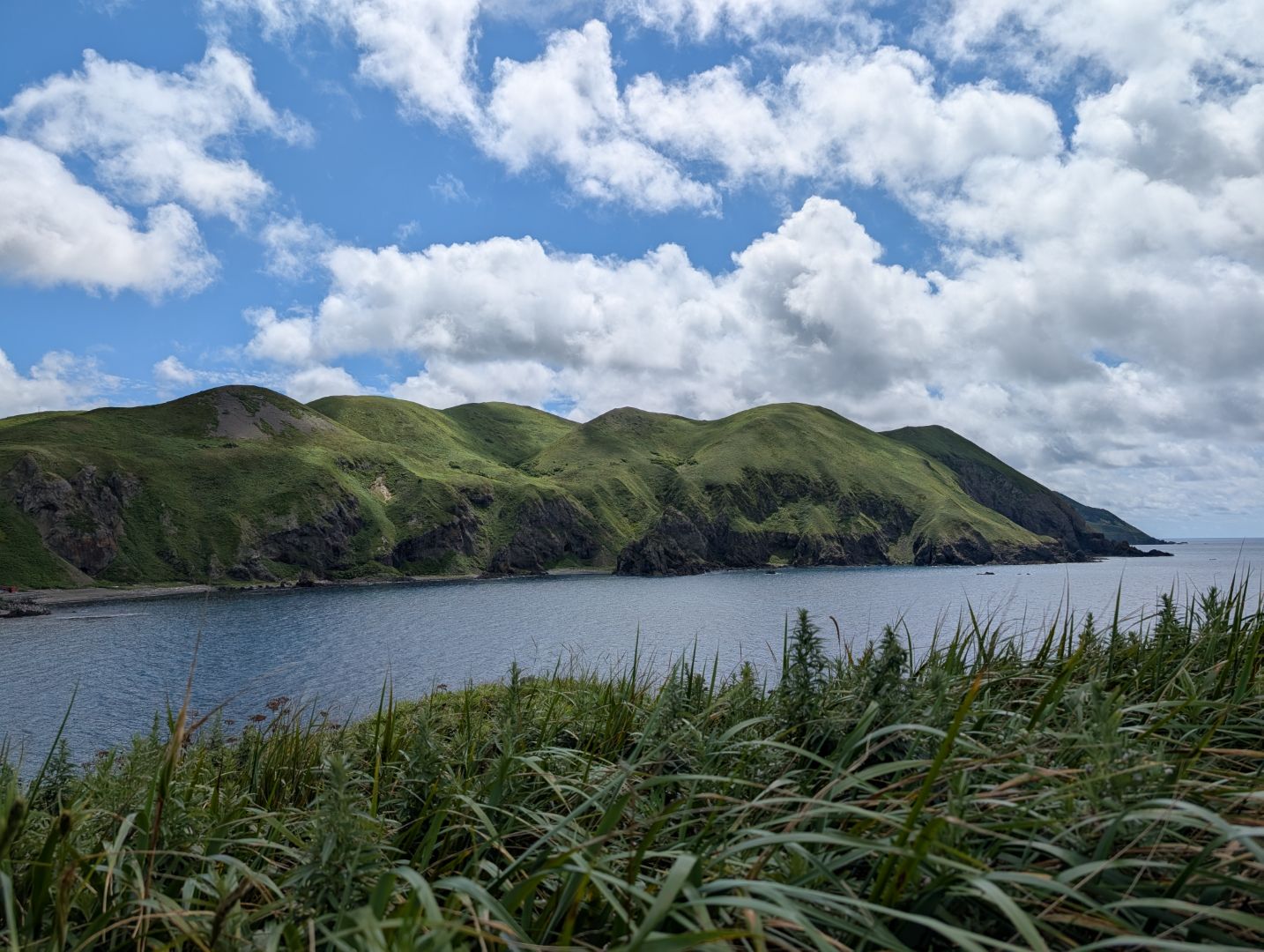
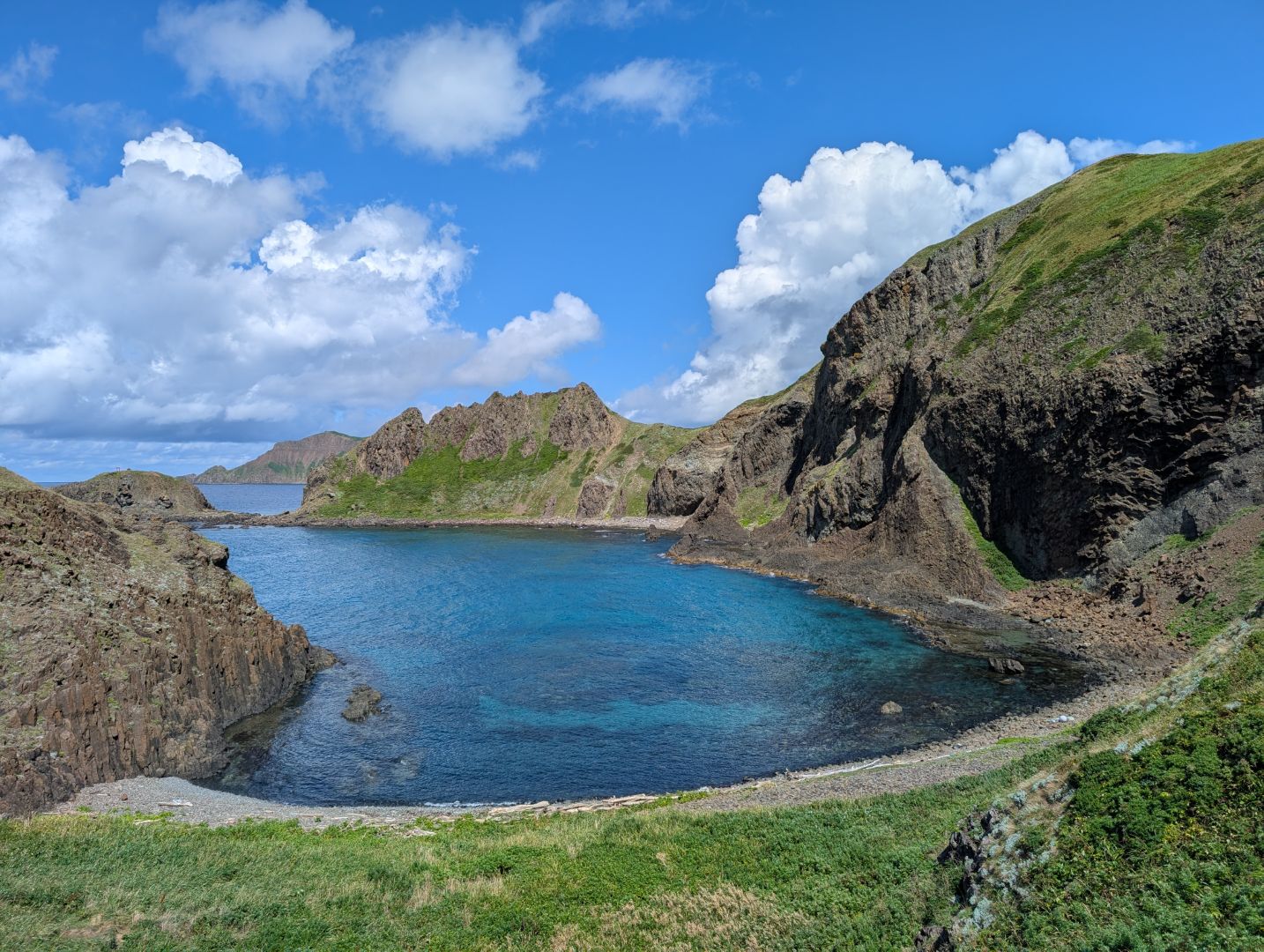
Cape Sukai features a beautiful curving inlet filled with transparent, stunning jade-colored water, famously known as “Rebun Blue.” The slight clouds added some nice shadows to the landscape, making it even more picturesque. The inlet isn’t a swimming beach, and there didn’t seem to be a way to go down to the water. Thanks to that, I guess we get to enjoy this kind of pristine scenery, which is quite a blessing.

It was quite humid and hot that day, warm enough to work up a sweat even on the short walk from the parking lot to the cape. There was a gelato shop at the parking lot, and on our way back from Cape Sukai, I ordered a red melon gelato – it was absolutely divine! It was so hot and delicious that I completely forgot to take a picture, lol.
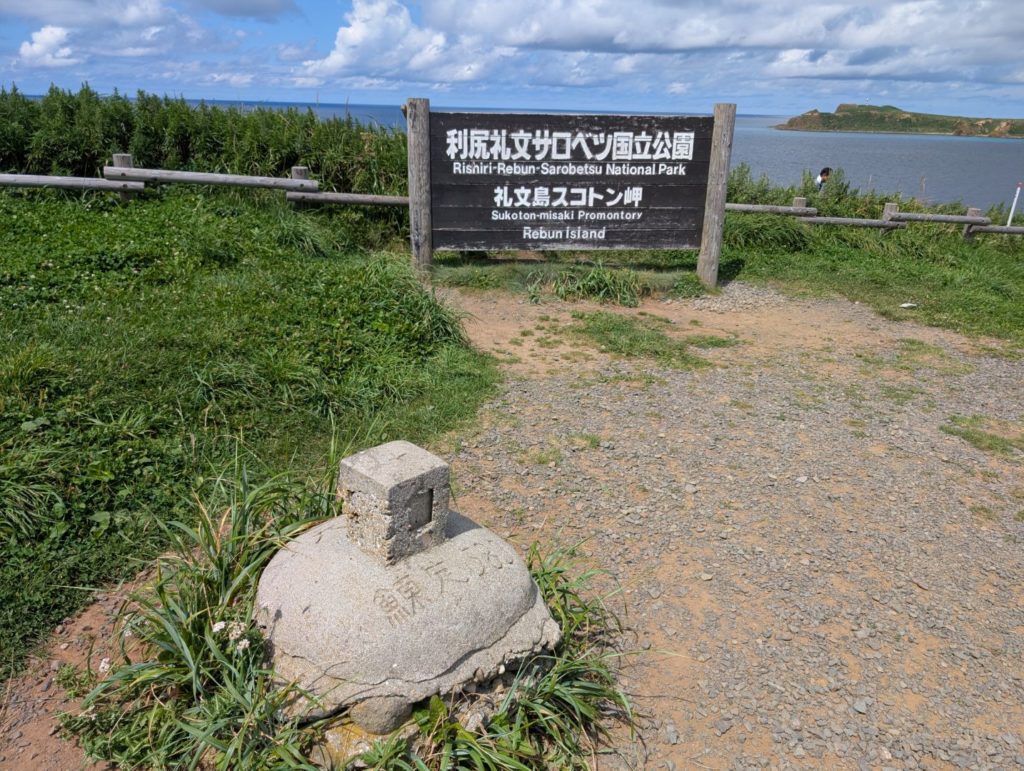
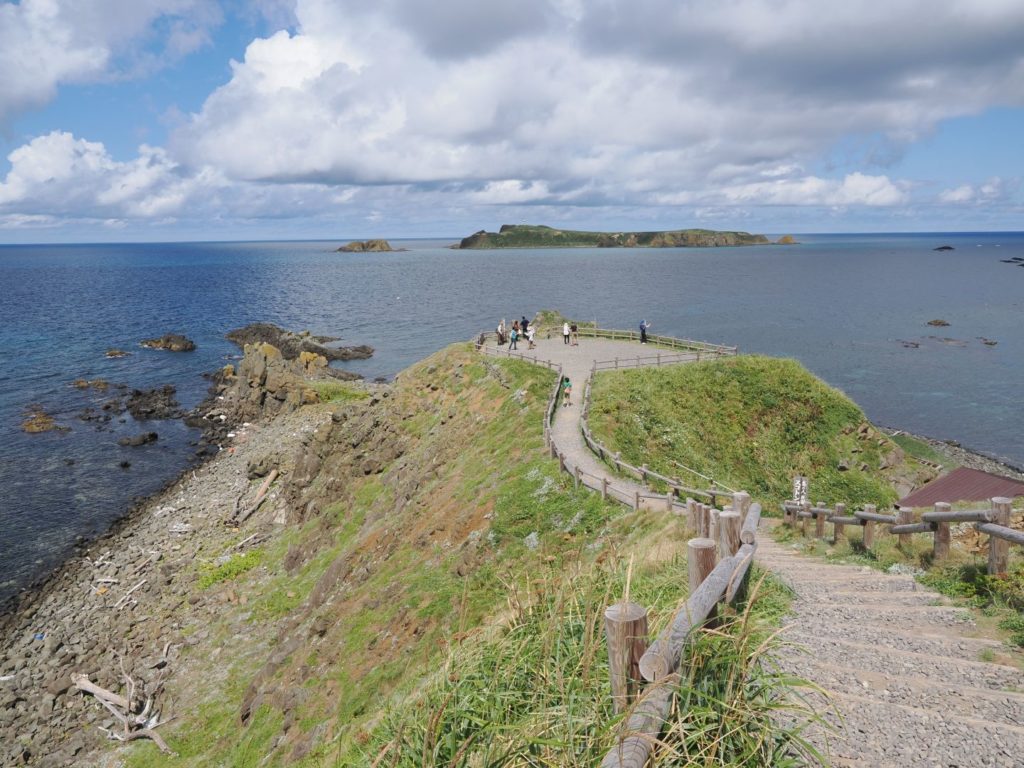
Next, we headed to Sukoton Cape, the northernmost tip of Rebun Island. More than just being the island’s northernmost point, its name alone piqued my interest enough to want to visit. On clear days, you can even see Sakhalin from here, making it one of Japan’s almost northernmost points, alongside Cape Soya in Wakkanai. Naturally, there was even a public restroom boasting “the northernmost toilet” (and yes, I used it, lol!). What surprised me even more was finding a guesthouse just before the very tip of the cape. You can see a bit of its roof on the right side of the photo.
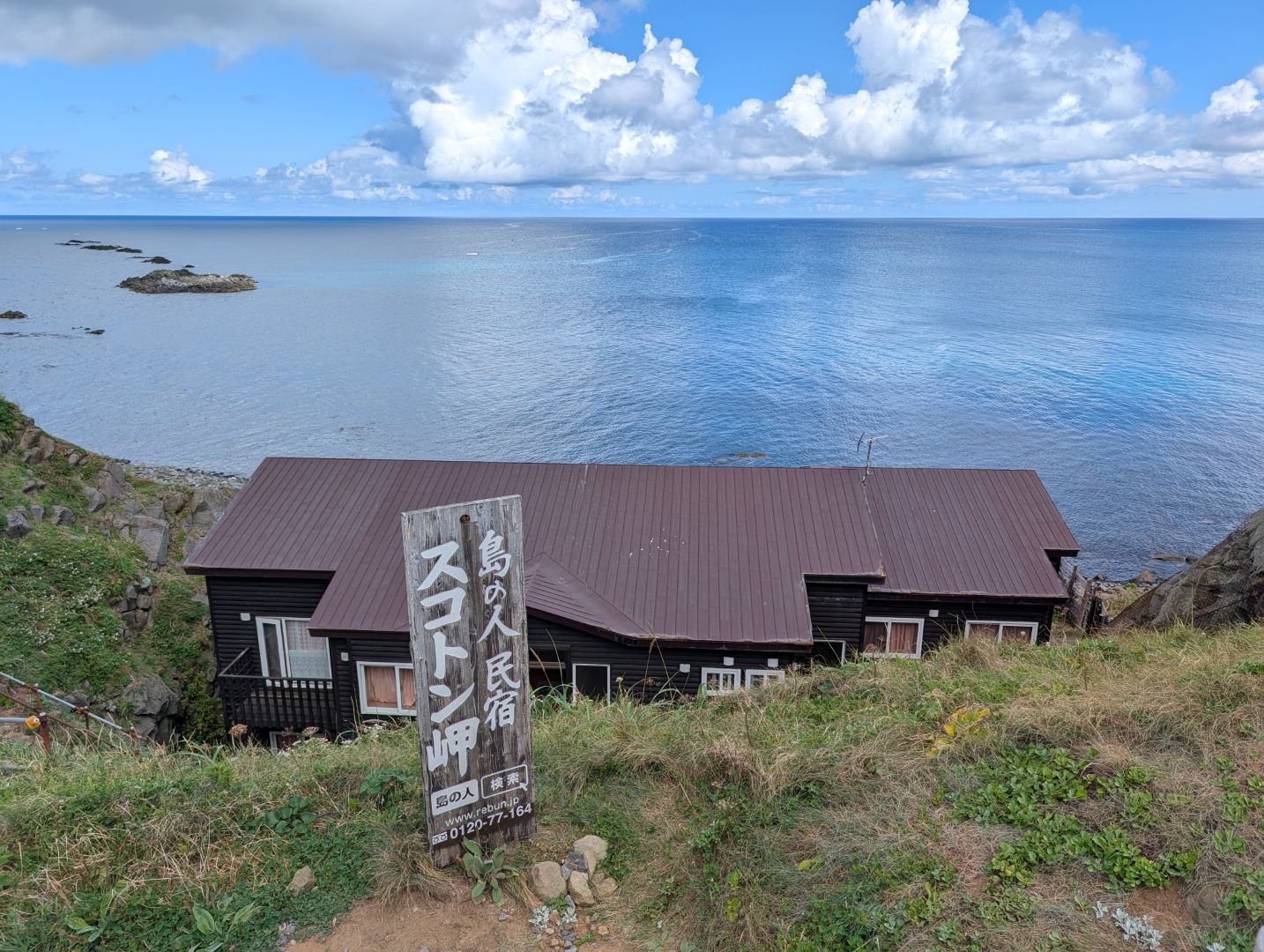
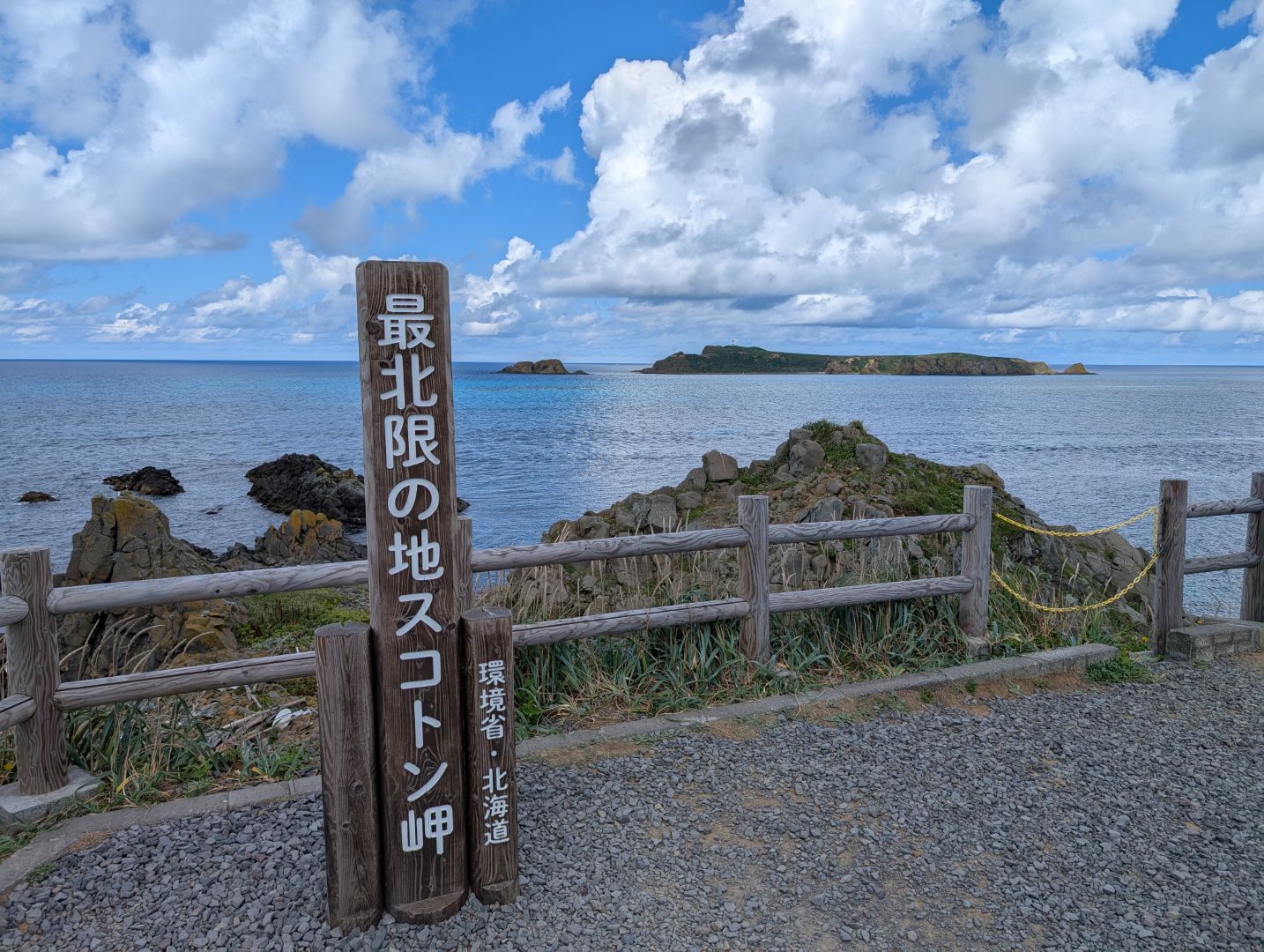
The sea viewed from a northernmost cape often evokes an image of being somewhat gloomy and dark, but as you can see, a clear, bright blue ocean stretches out before you, creating a peculiar impression. I only learned about this guesthouse being in such a remote spot once we arrived, but checking out their website below, it looks quite good.
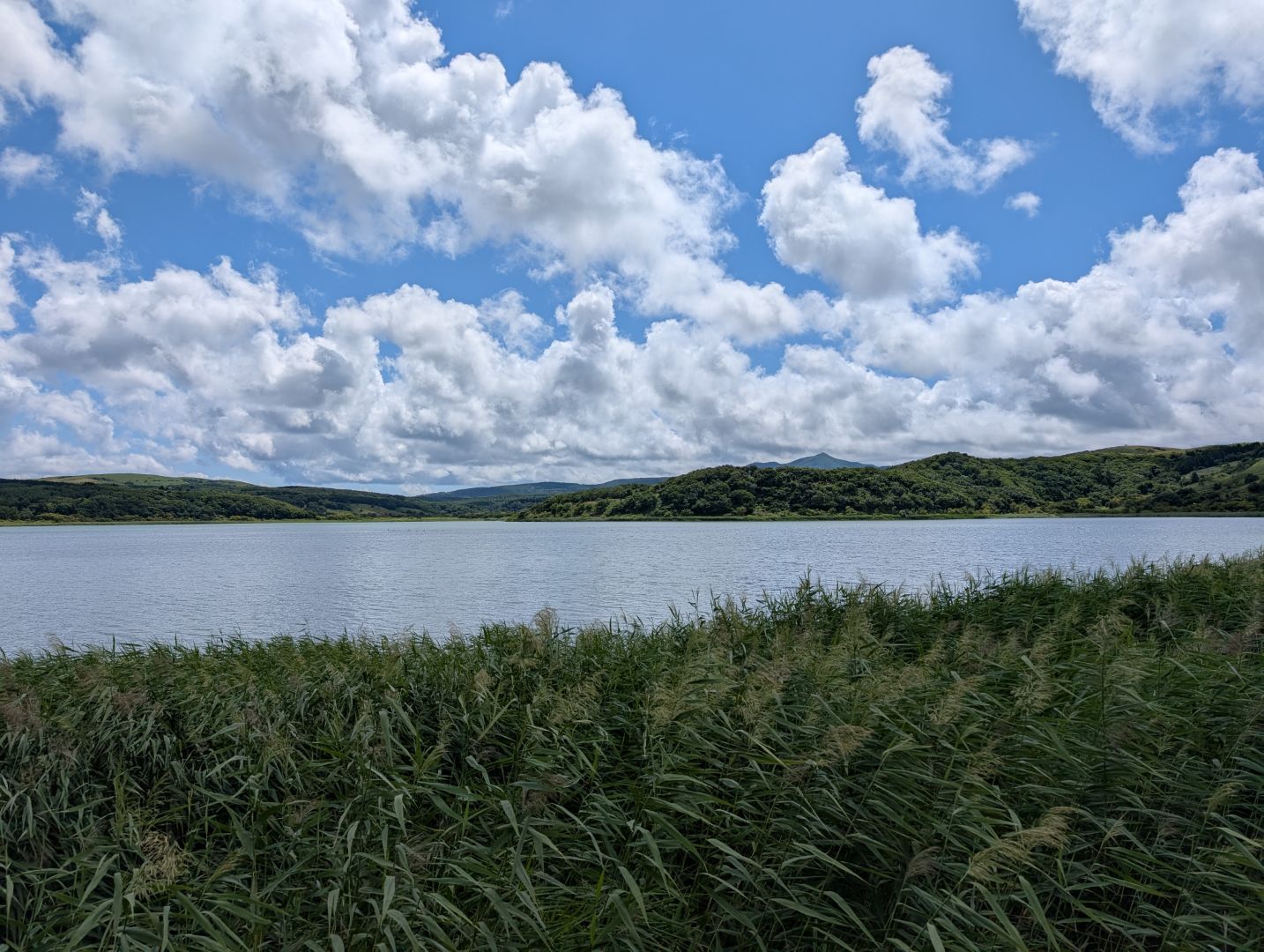
I was really hoping to see the Rebun Lady’s Slipper Orchids, and we did make our way to their colony, but unfortunately, it seemed we were out of season, and they weren’t blooming. There’s also a large Mizubasho (Skunk Cabbage) colony near Lake Kushu, close to the orchid colony, so perhaps if we had come a bit earlier in the season, we could have enjoyed more of the flowers that give Rebun Island its nickname, “Floating Island of Flowers.”
After enjoying the northern part of Rebun Island, I had planned to head back to the port, leisurely enjoy some delicious seafood, and then return to Rishiri Island. But as I mentioned earlier in this post, we became “lunch refugees” and ended up with convenience store food from Secoma. This freed up a bit of time, so I started looking for nearby tourist spots and discovered “Momoiwa.”
I remembered the name “Momoiwa” because several people mentioned it when I told them I was going to Rishiri Island this summer. To be precise, it wasn’t just Momoiwa, but Momoiwa-so. People would say things like, “Oh, you’re staying at Momoiwa-so and climbing Mt. Rishiri, right?!” or “Are you actually staying at Momoiwa-so?!” Momoiwa-so is a super famous youth hostel located on Rebun Island, not Rishiri Island. I had heard about this unique accommodation back when I was a student and used to travel around Japan staying at youth hostels.
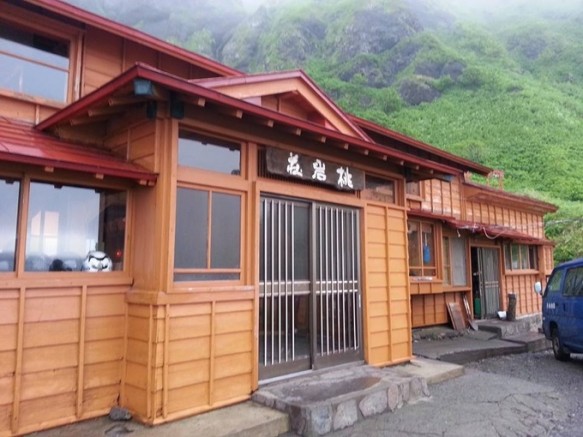
It’s kind of funny to think that people around me picture me going to places like that.
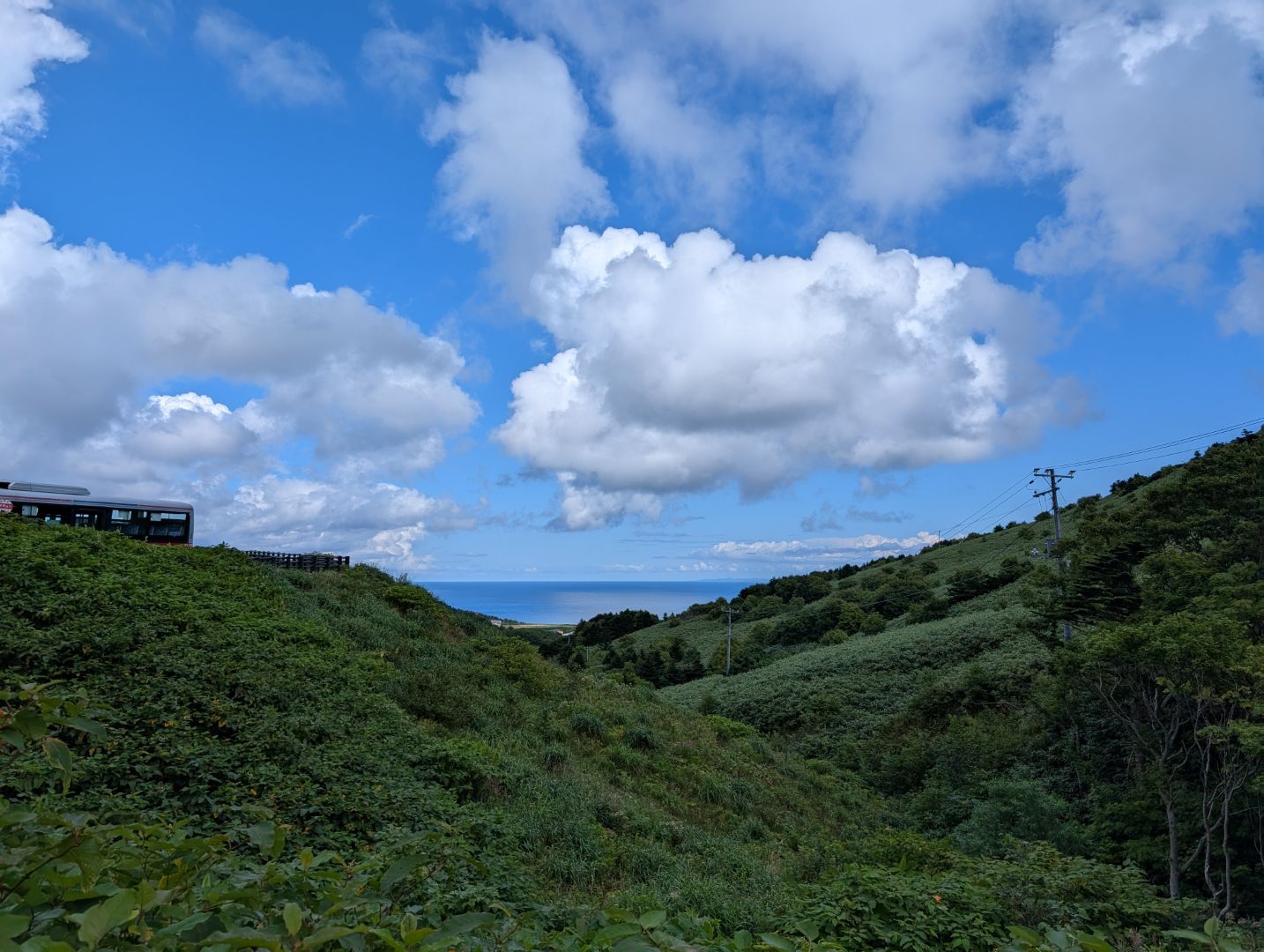
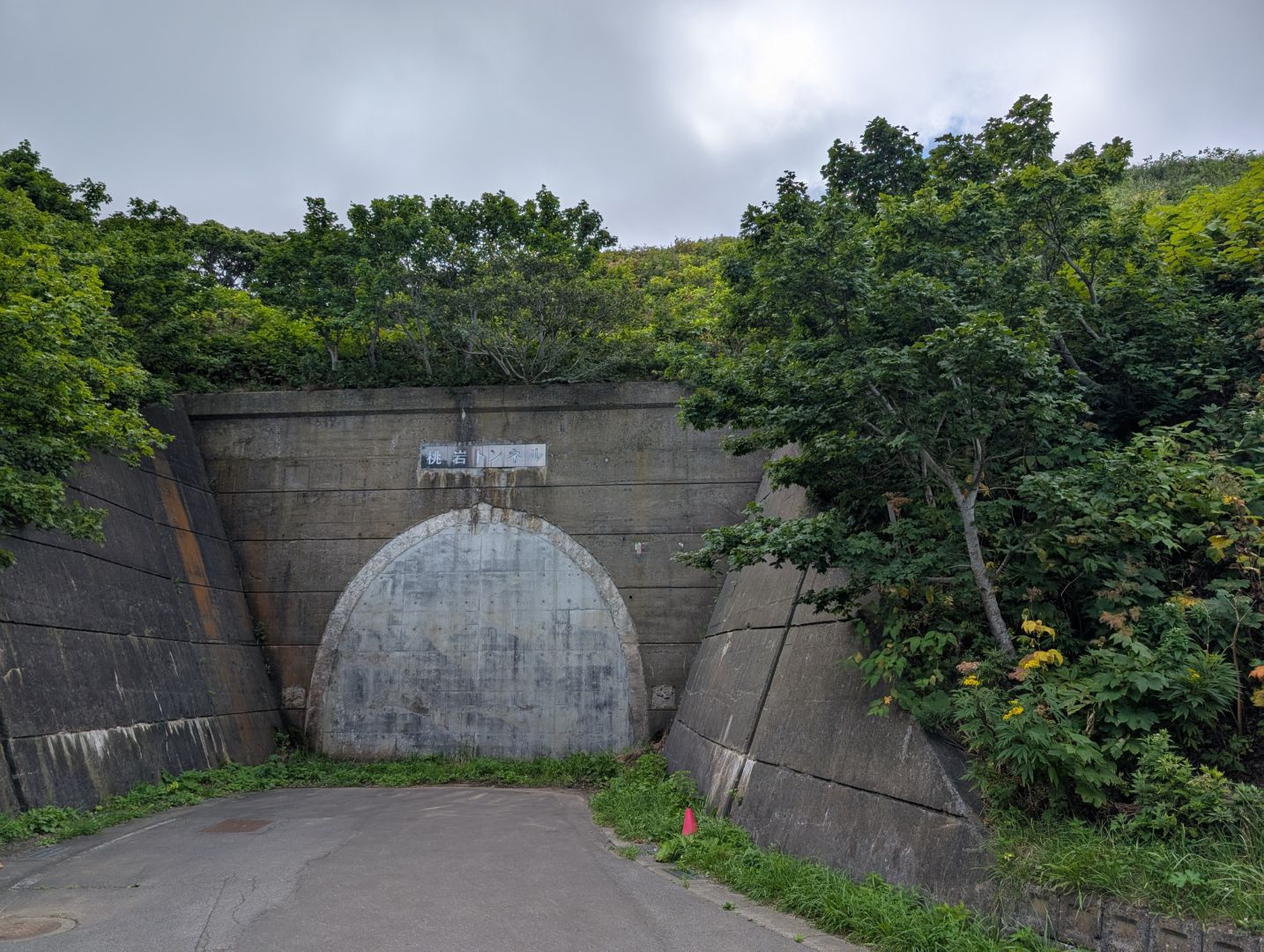
Momoiwa Observatory is relatively close to Kafuka Port, and there’s a bus that goes right up to the trailhead. Just as we were driving there, a bus stopped at the Momoiwa trailhead, and hikers started pouring out. Our car’s navigation seemed to be guiding us closer, past the trailhead, but then we unexpectedly hit a roadblock – a tunnel that the navigation showed as connected was blocked off like this. While we were wondering what to do, a hiker told us, “You can take that narrow road over there to get to Momoiwa Observatory by car.” It was a pretty tight road, so I hesitated a bit to drive in, but it really helped us out.
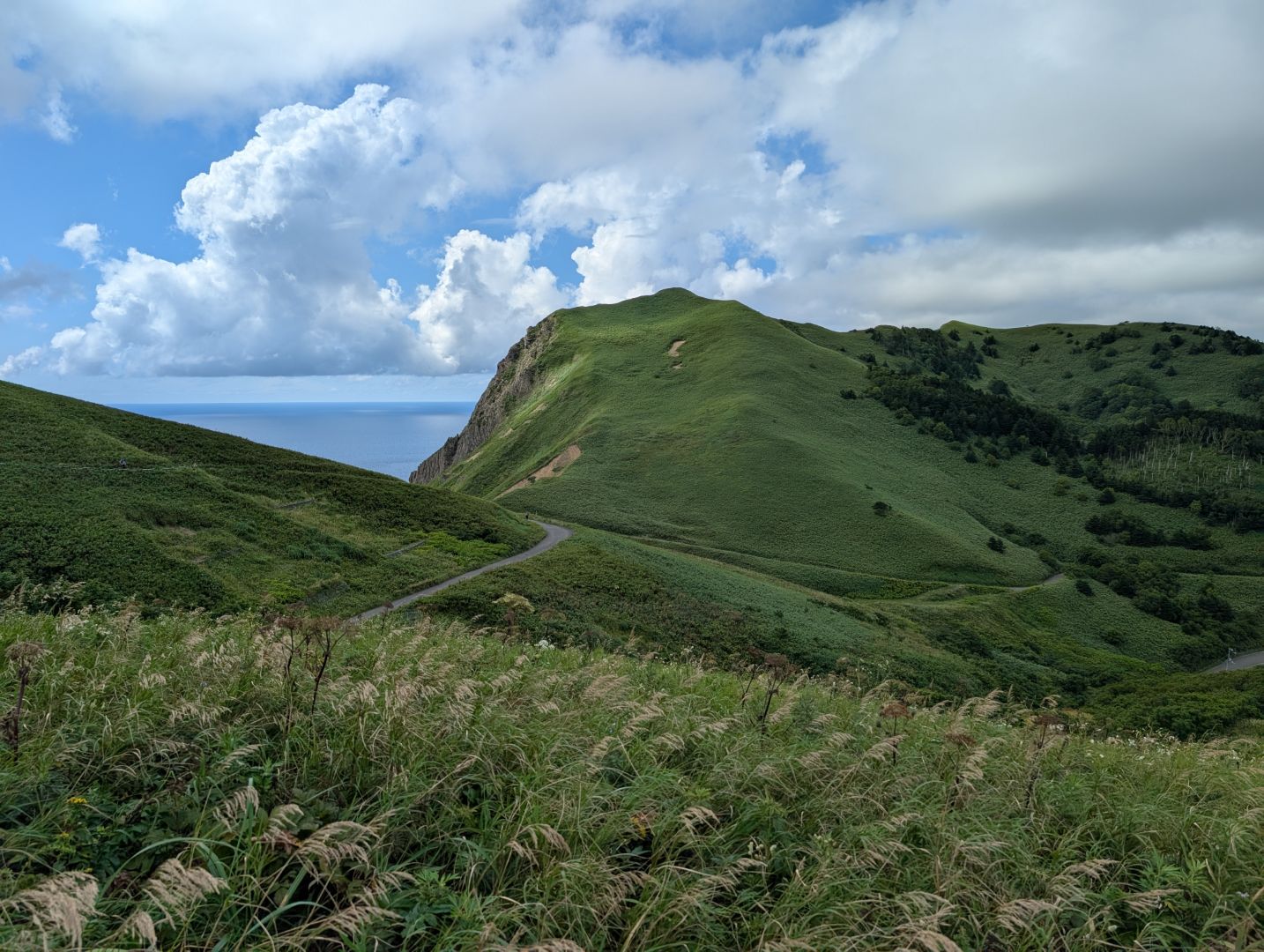
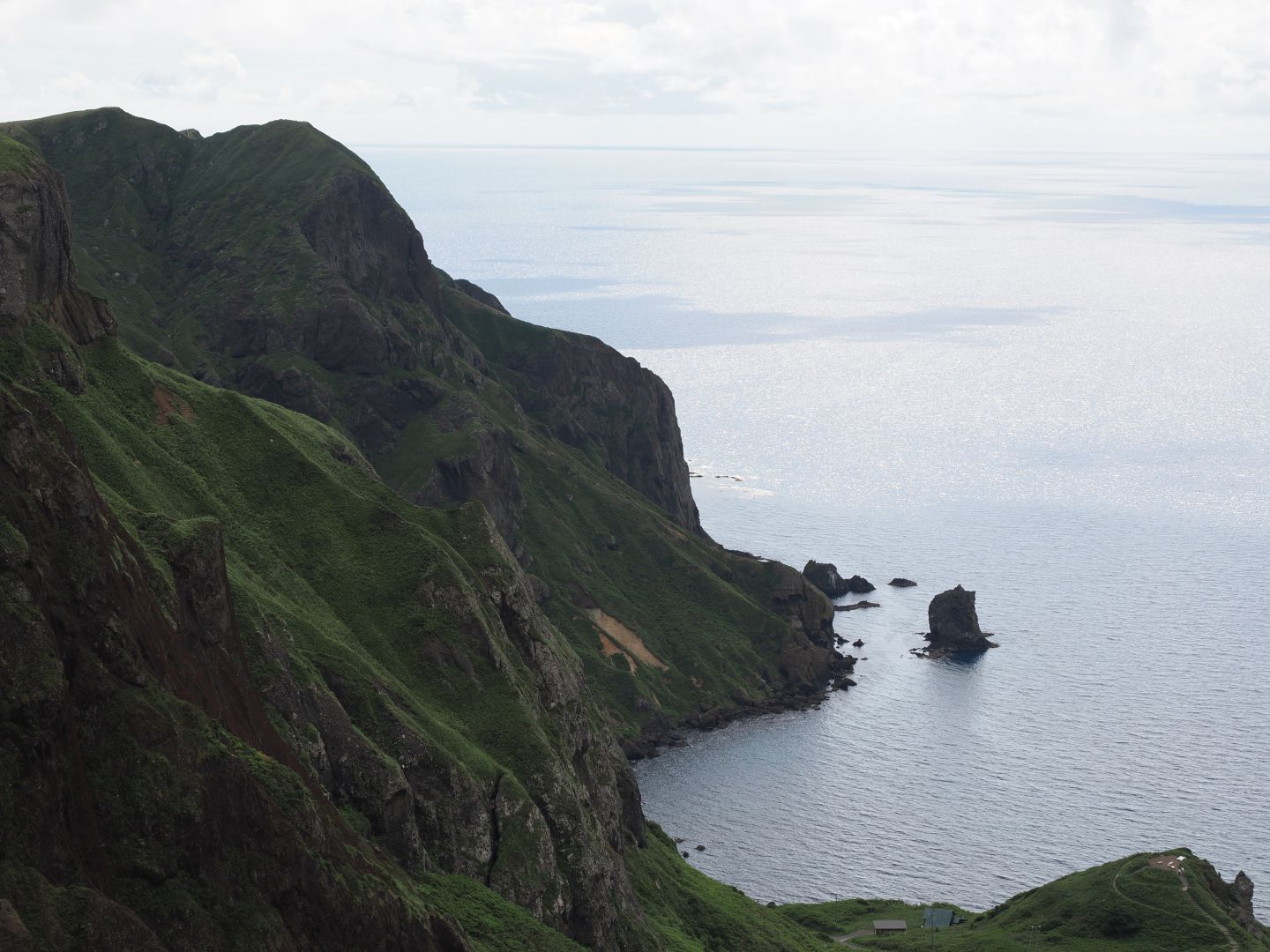
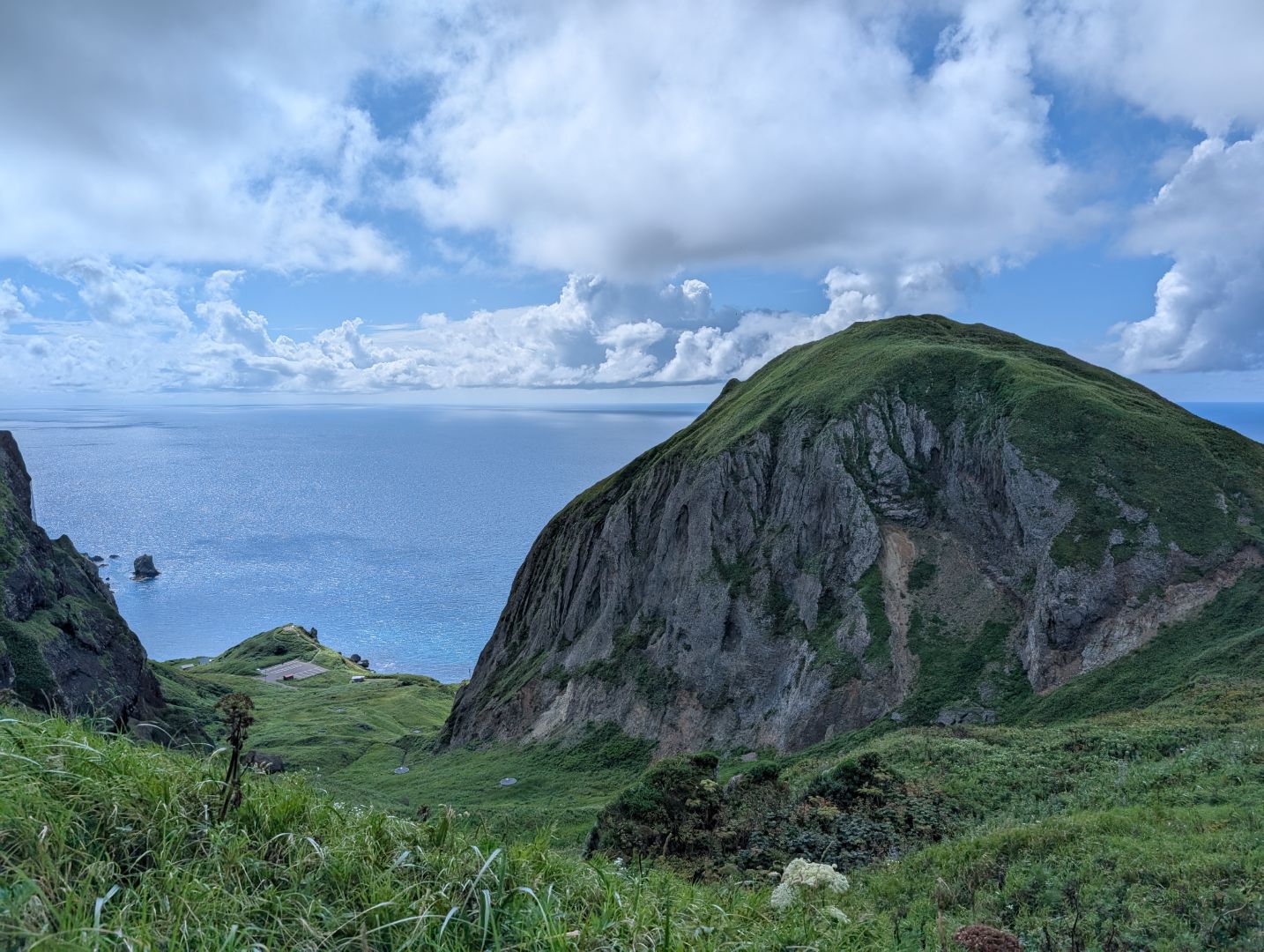
The road to the parking lot was so narrow that it was difficult for oncoming cars to pass, which made me a bit worried. However, once we got out of the car, there was a well-maintained boardwalk where we could leisurely enjoy the magnificent scenery all the way to Momoiwa Observatory.
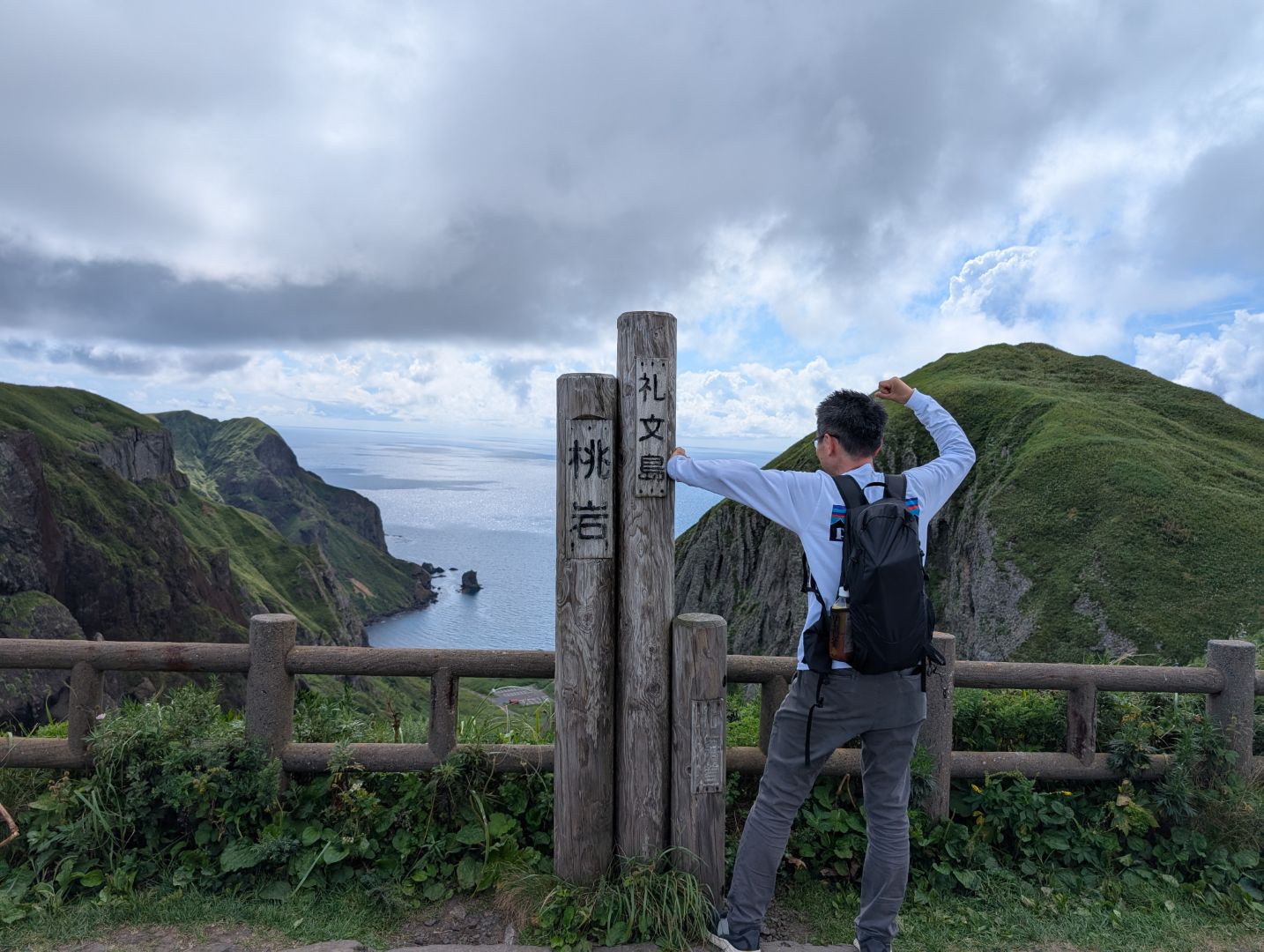
There were still quite a few flowers left along this boardwalk. I can imagine that if we had come around July, we would have seen a beautiful landscape covered in a vast flower field.

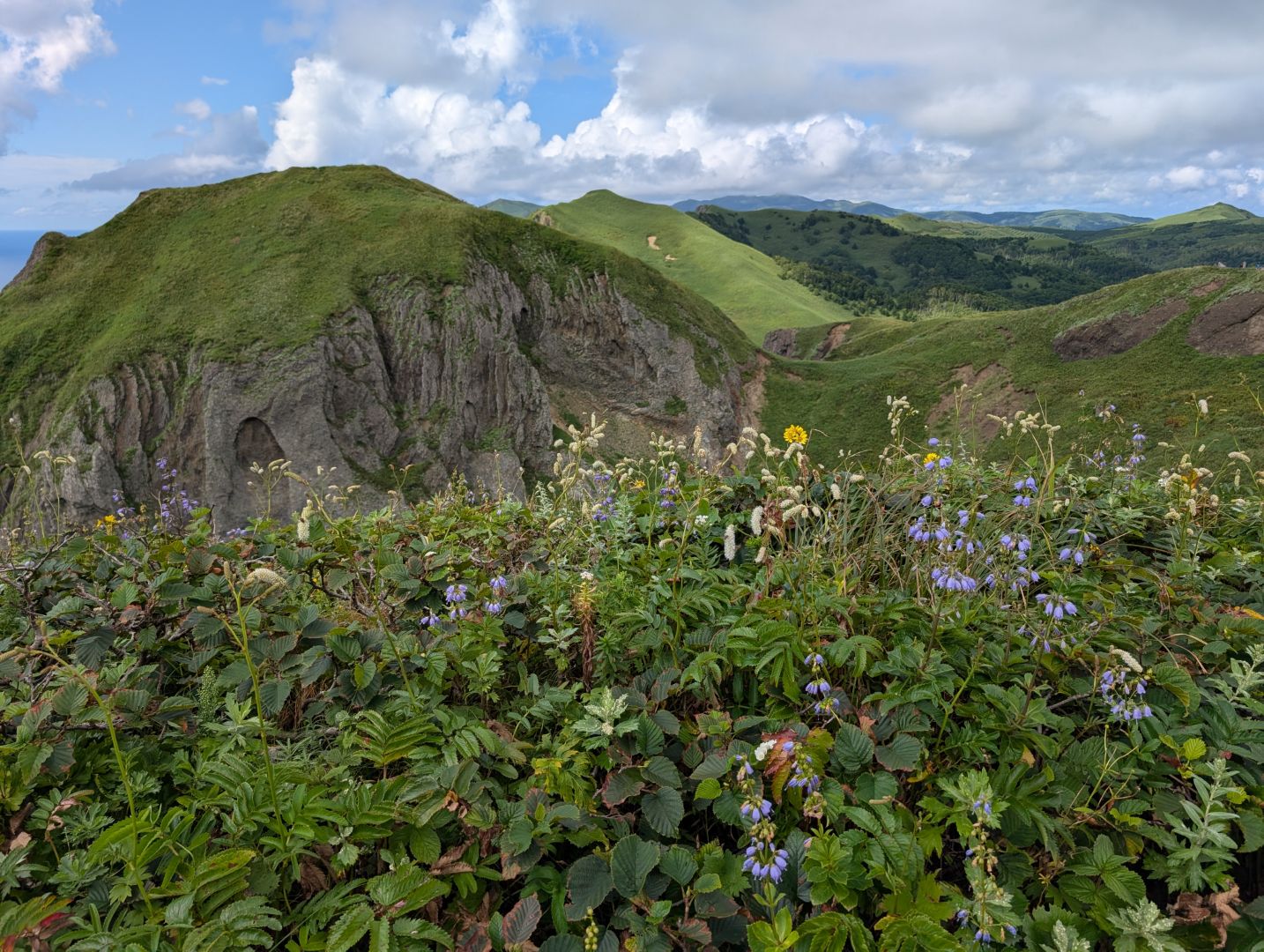
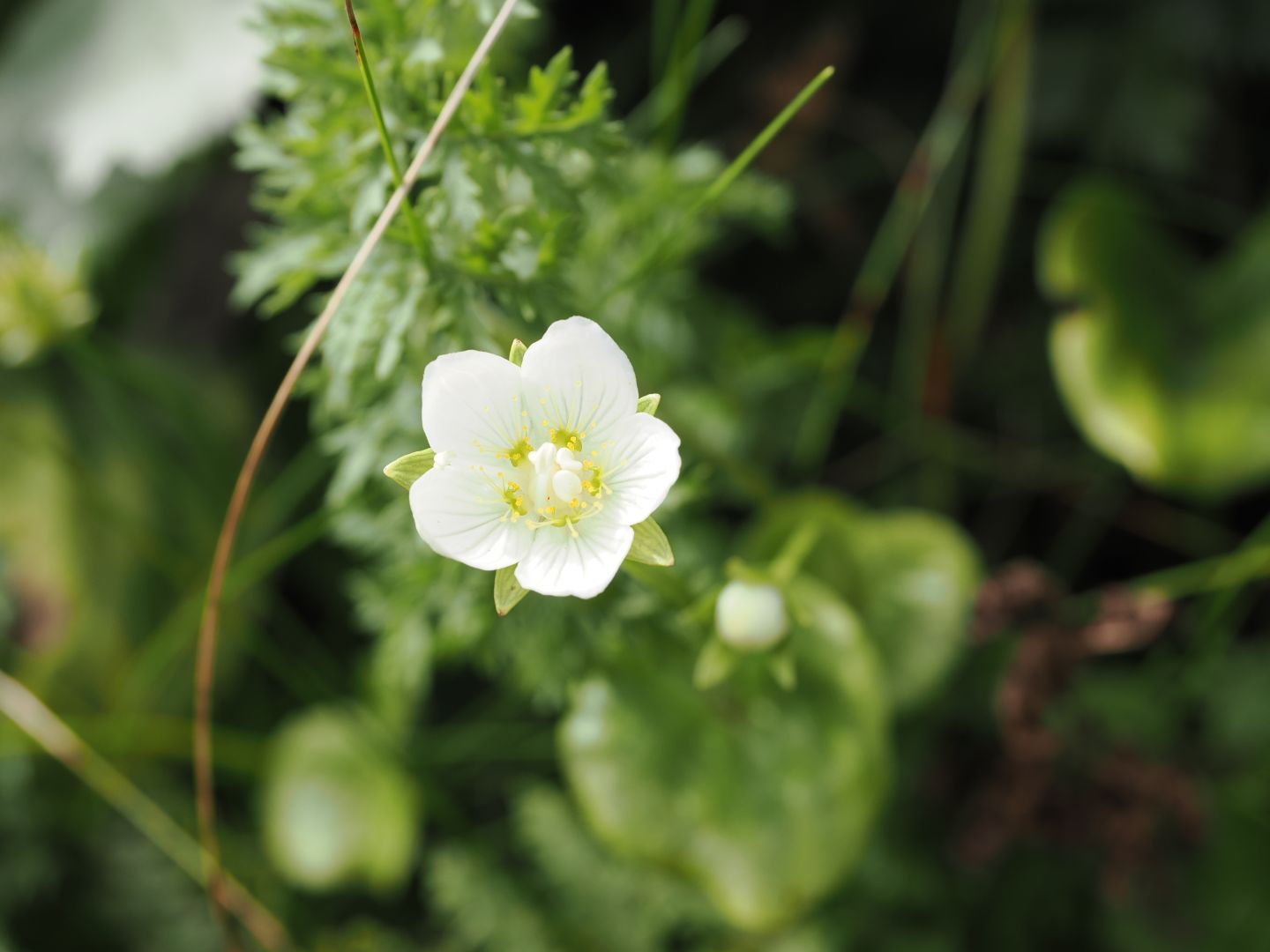

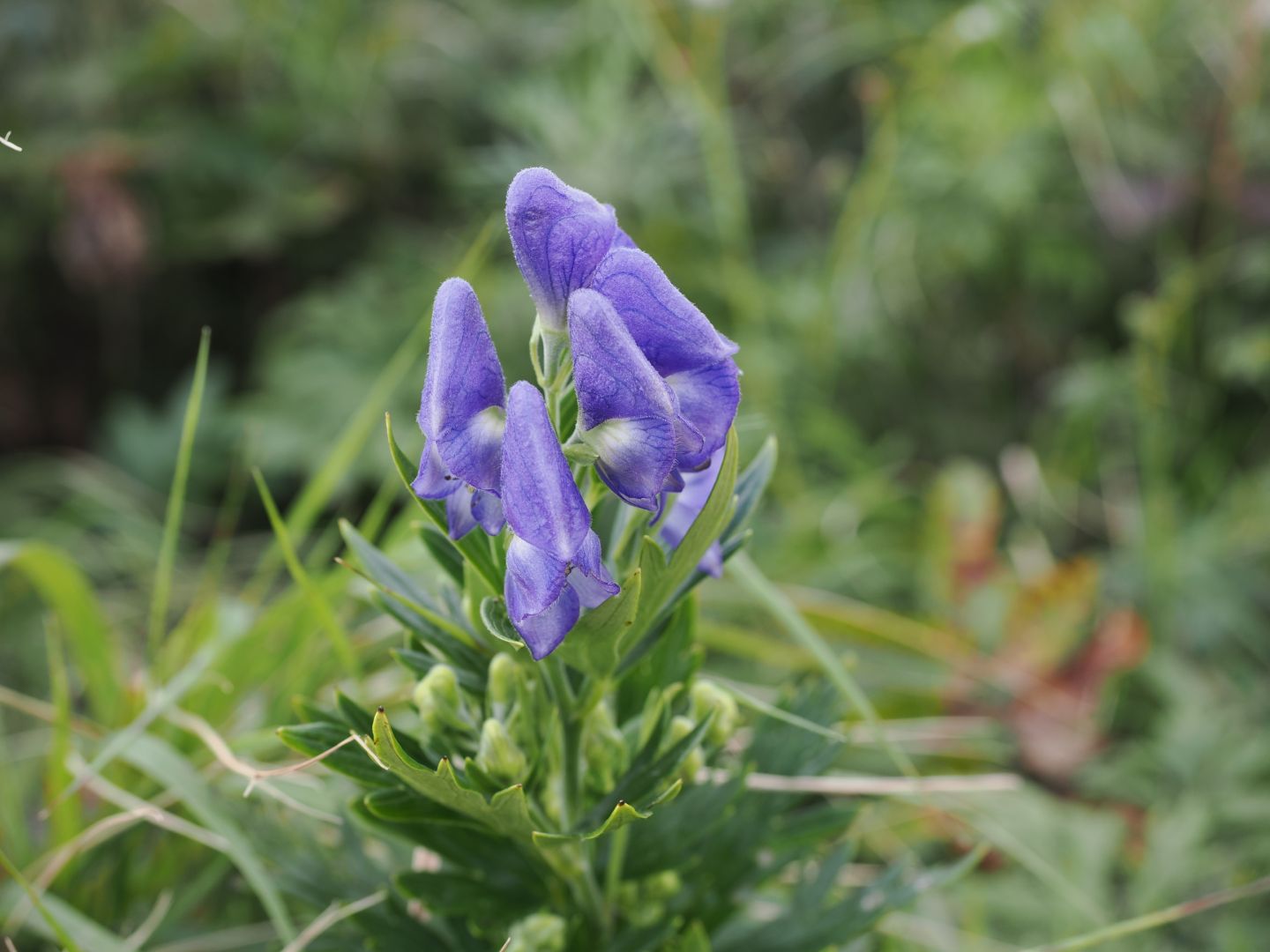
Colorful flowers were blooming everywhere, and the contrast between the green hills and the deep blue sea was absolutely stunning – it was the kind of place where you could easily lose track of time. What surprised me a bit was seeing “Rishiribushi,” a type of Aconitum (monkshood), in bloom. It might have been my first time seeing wild Aconitum. Also, it was a strange experience to actually see flowers near the sea that you’d typically only find in high mountains on the main island.
Since it was just a day trip from Rishiri Island, we didn’t have ample time for extensive hiking or sightseeing, but I’m truly glad we got to visit. Next time, I’d love to stay longer on Rebun Island, take my time, and fully enjoy the hiking trails.

コメント