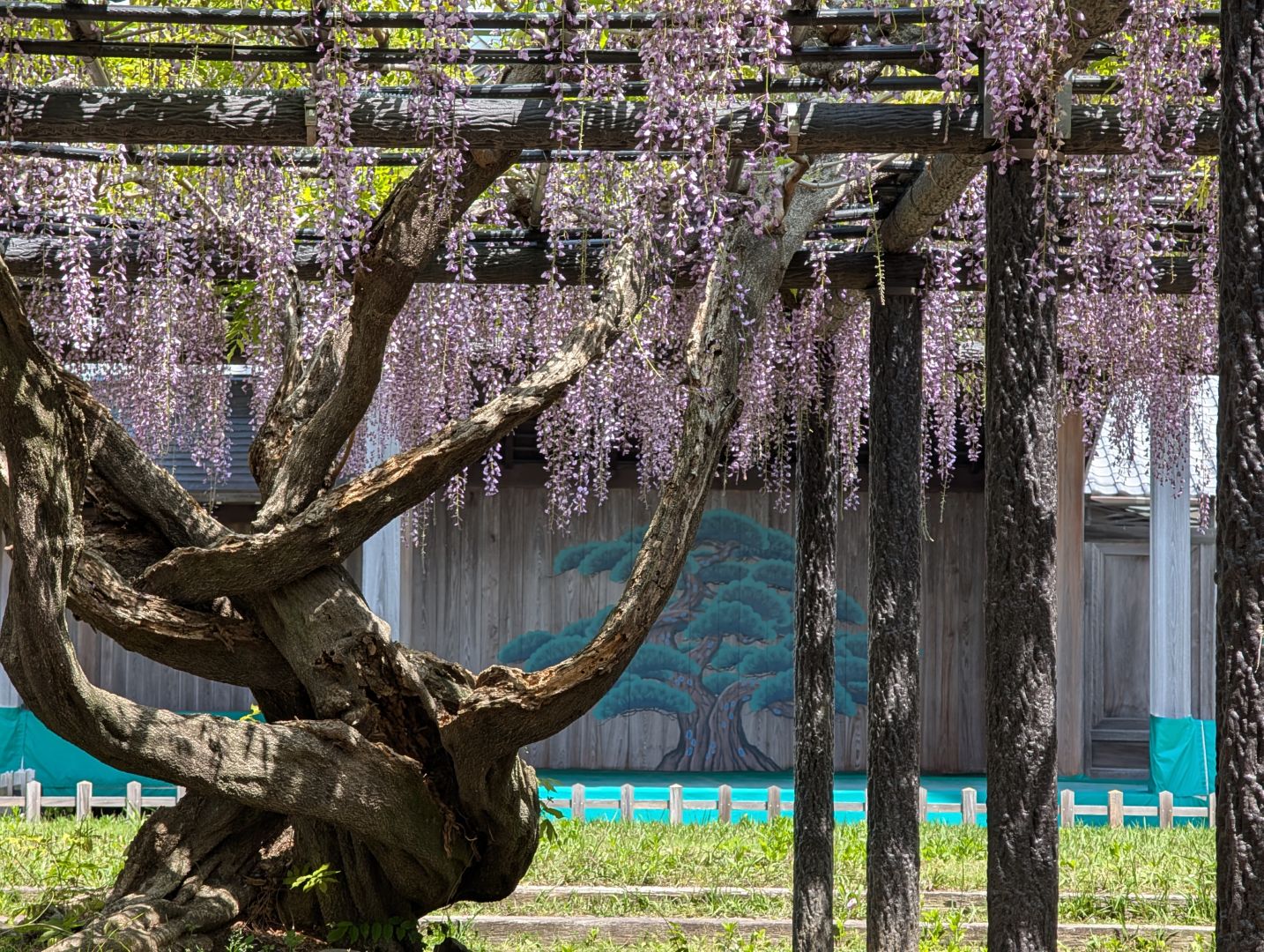
On Tokaido Line stations, you often find information about nearby tourist spots on the platforms. At Iwata Station, “Kumano no Nagafuji” (Kumano’s Long Wisteria) is introduced as a nationally designated natural monument. Since I had just been around the Kumano area, I got curious about why there’s a famous spot called “Kumano” in Iwata and why this wisteria is a natural monument, so I decided to go check it out for myself.
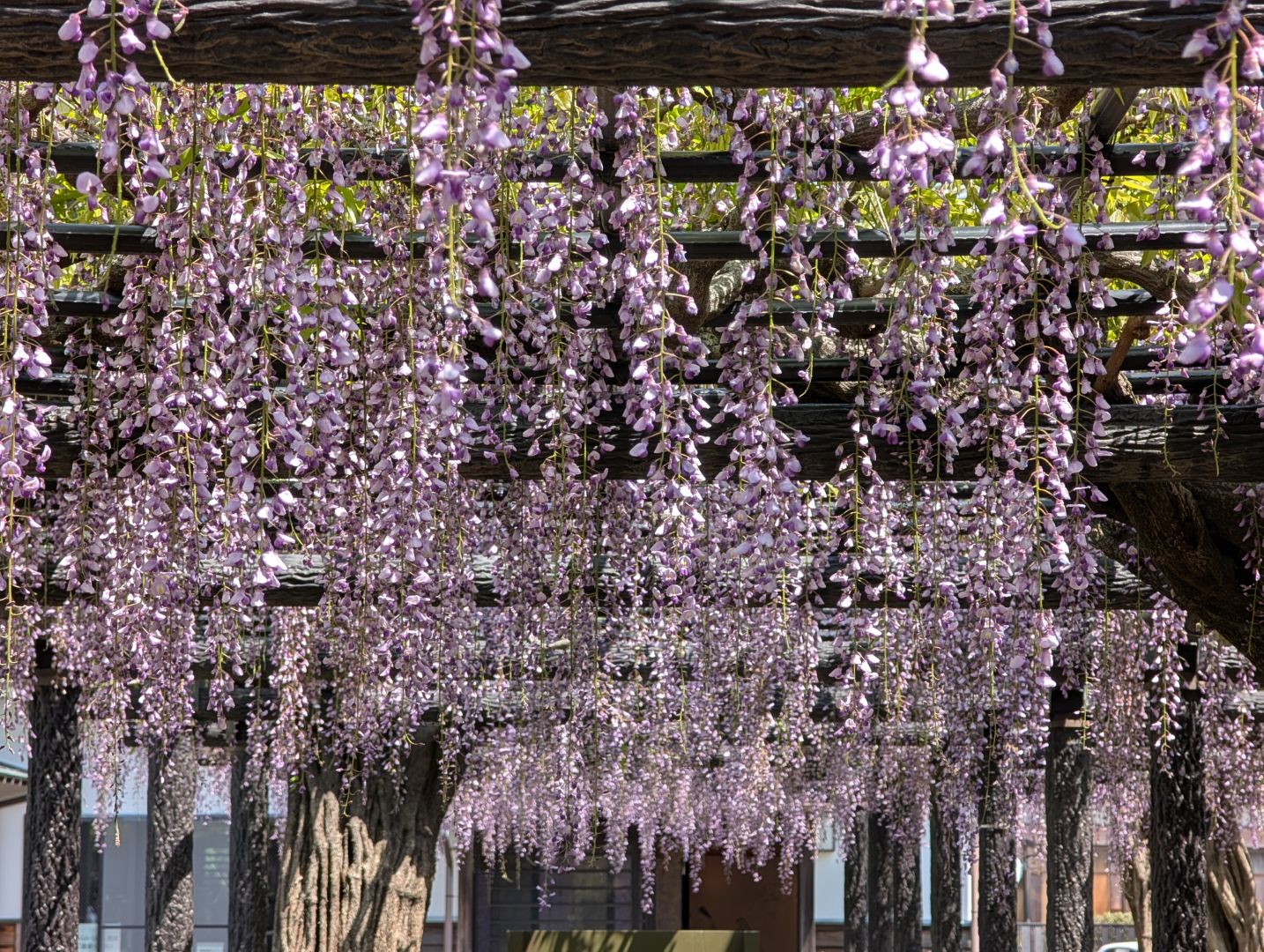
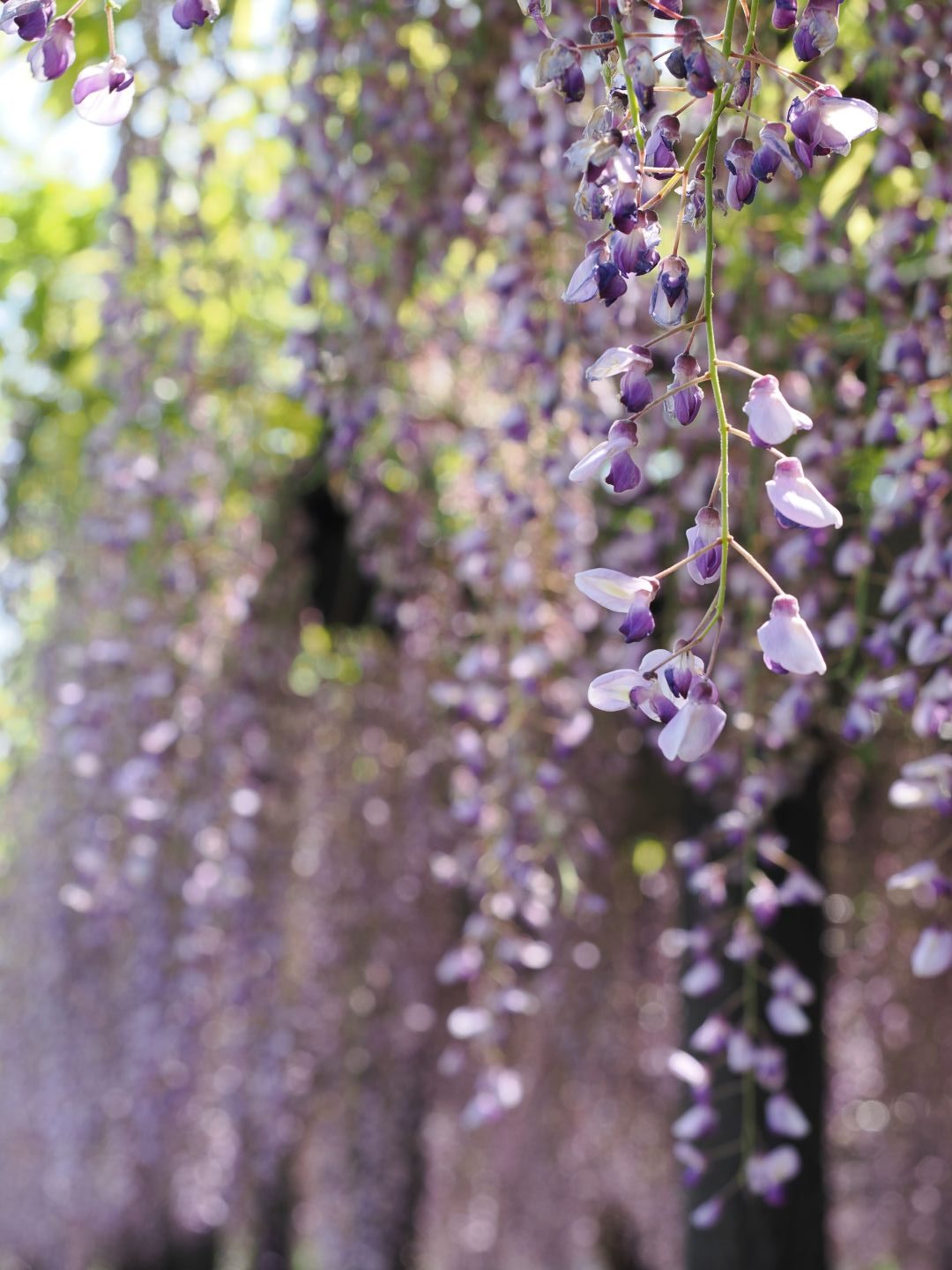
As I got closer to the spot and rode around looking for a place to park my bike, I saw some beautiful wisteria trellises. Even though it was morning, there were quite a few people, and I even saw cosplayers dressed like samurai enjoying photo shoots. The wisteria bloomed across a wide area of trellises, emitting a gentle, lovely fragrance, which was beautiful, but honestly, I couldn’t quite grasp why it was designated a national natural monument.
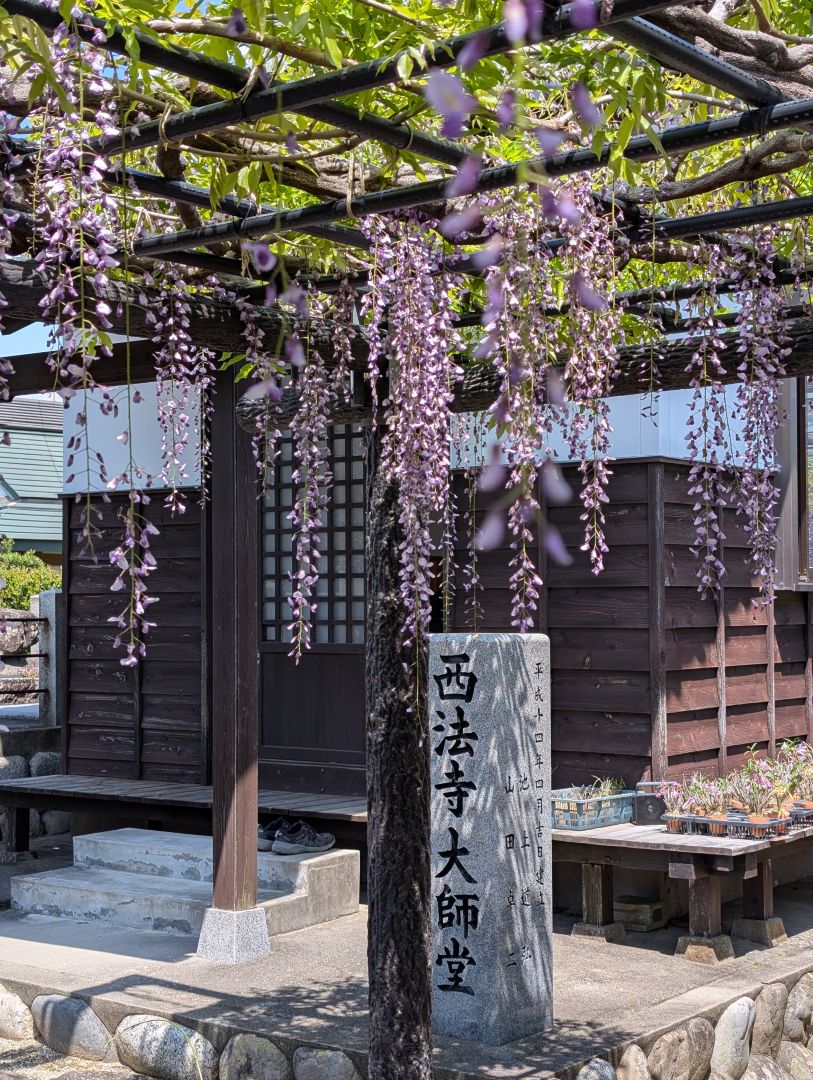
Suddenly, looking further in, I saw a stone pillar for “Saihoji Temple Daishido Hall.” Given it’s a Daishido Hall, I figured it must be a place associated with Kukai, and indeed, a nearby sign confirmed that. But then I realized something felt off—there was no mention of “Kumano no Nagafuji” anywhere here. Looking around, it seemed like the crowd was heading in a different direction. Oops, looks like I got the wrong place, haha!
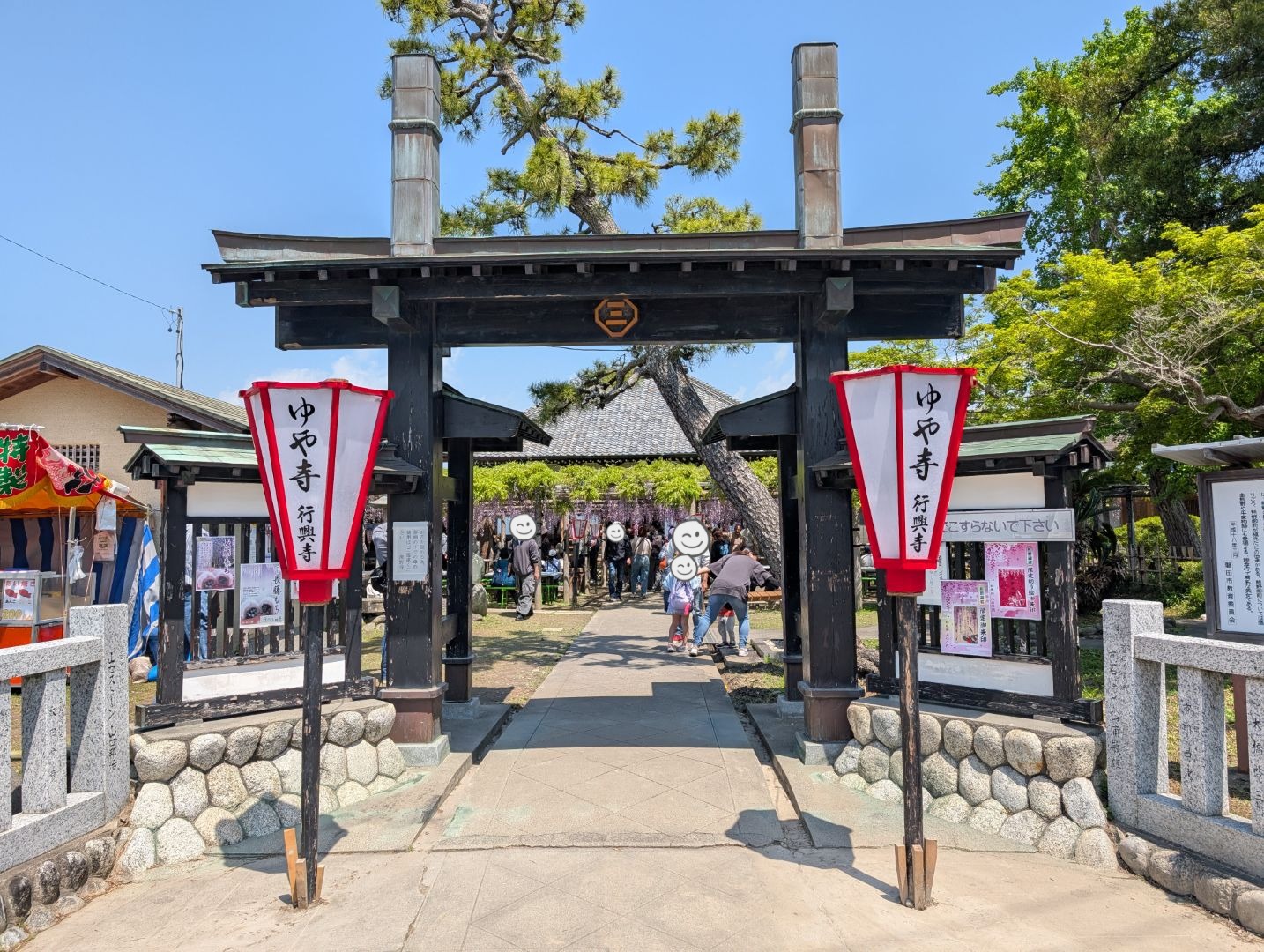
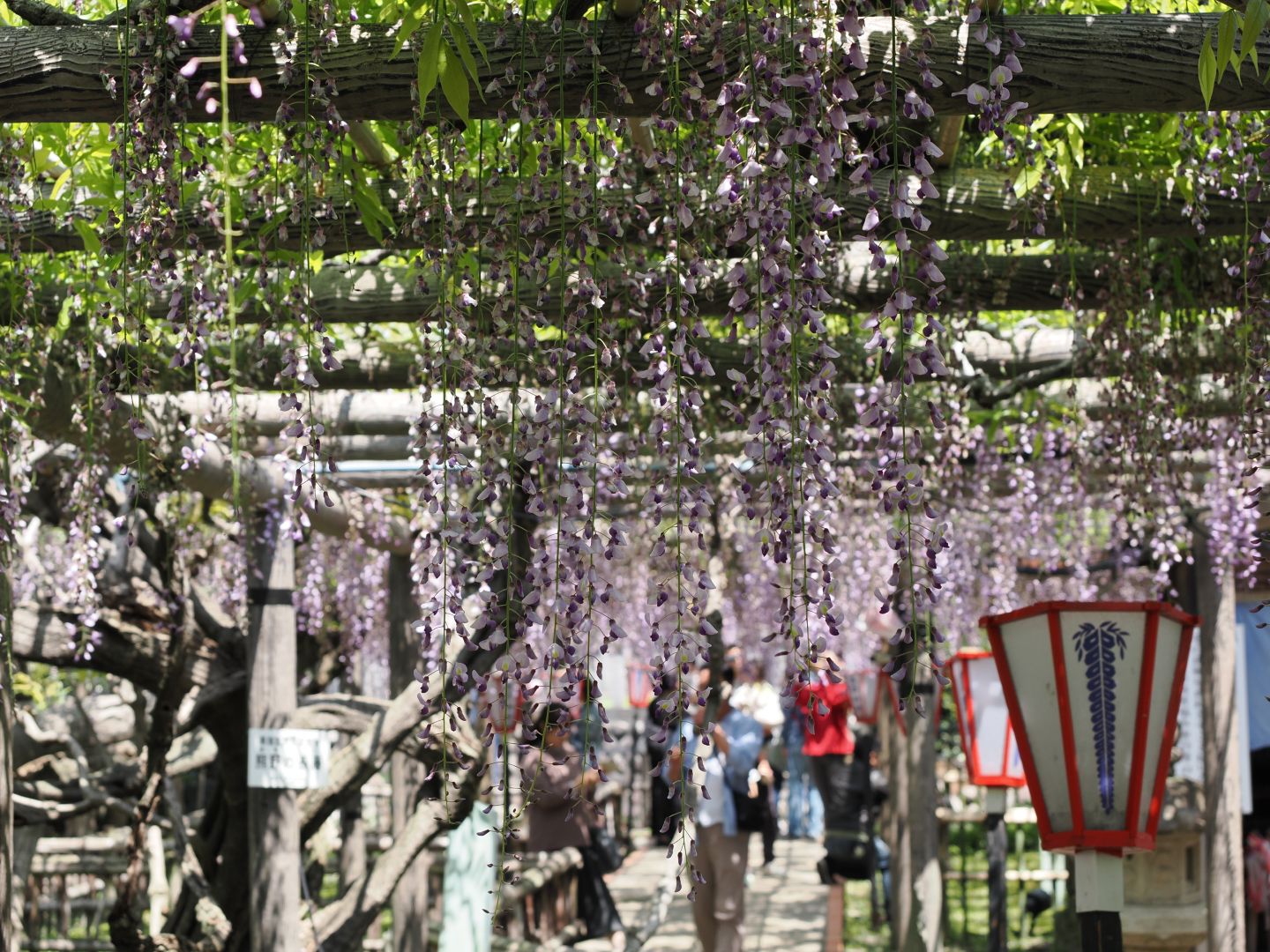
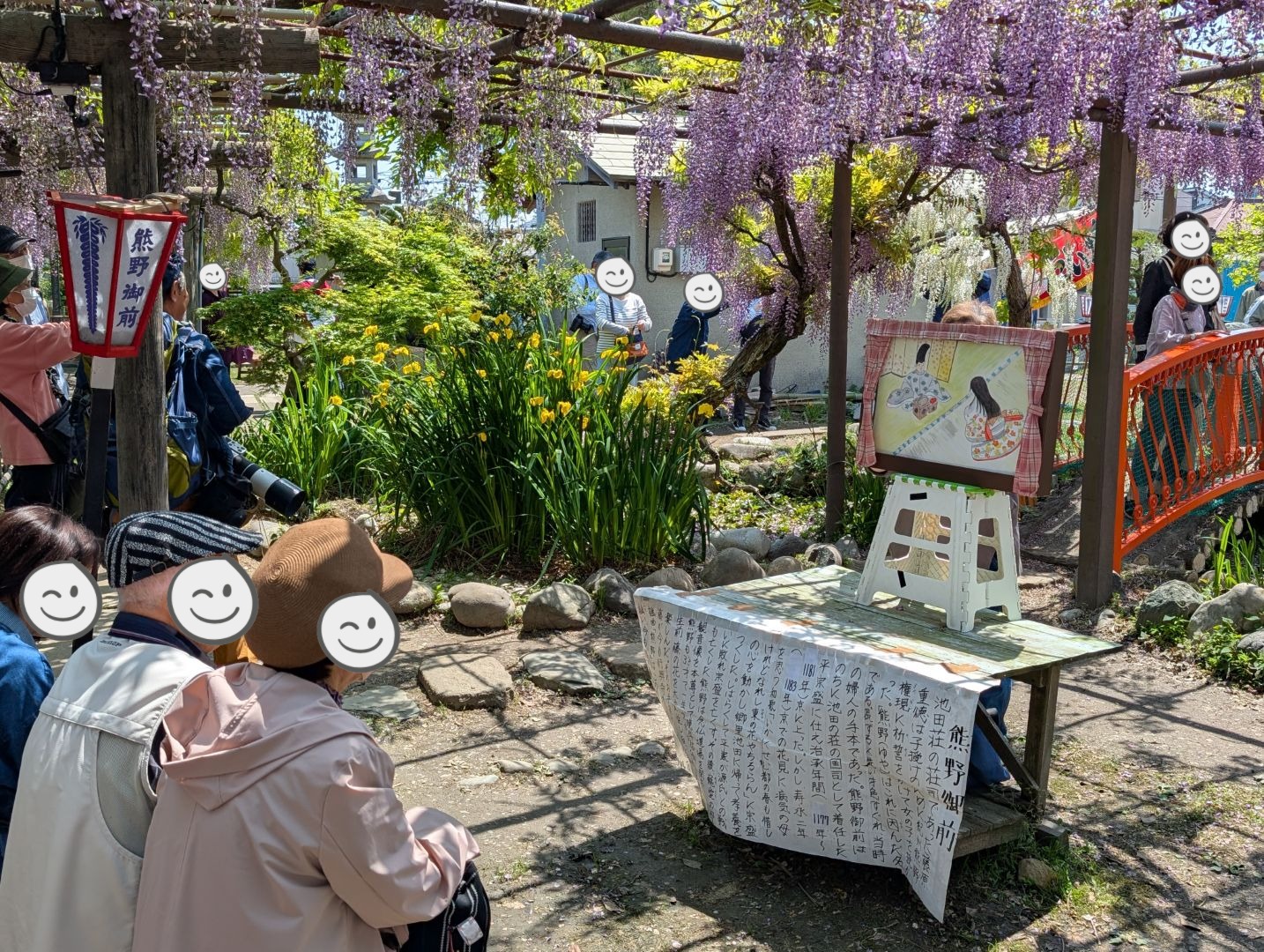
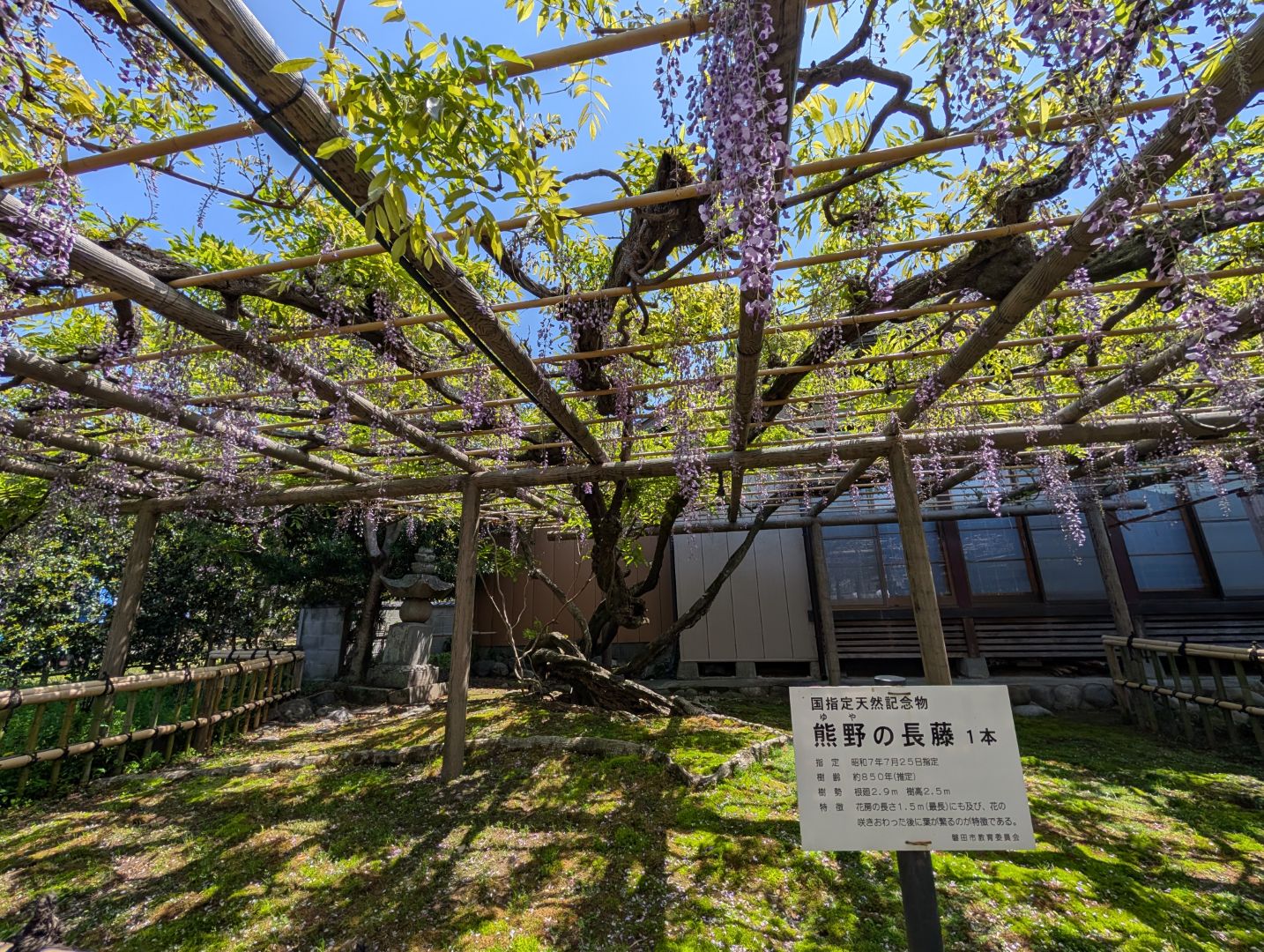
Right next to Saihoji Temple was another temple called Gyokoji, and within its grounds was the Kumano no Nagafuji. It was here that I first learned that “Kumano” in this context is read “Yuya,” not “Kumano.” The grounds contained one wisteria tree designated as a national natural monument and five designated as prefectural natural monuments. The signs explained that while their exact age is unknown, they are considerably old trees. They are called “Nagafuji” (Long Wisteria) because their flower clusters grow over a meter long. Furthermore, they are known as “Yuya no Nagafuji” because they were planted by Yuya Gozen, a woman born in what is now Iwata City (then Ikeda-sho in Totomi Province). Yuya Gozen is famous for being beloved by Taira no Munemori (the third son of Taira no Kiyomori), and her story is depicted in “The Tale of the Heike” and the Noh play “Kumano.” So, it turns out it has no connection whatsoever with the Kumano region of Kii! There was even a picture-story show about Yuya Gozen being performed on the temple grounds.
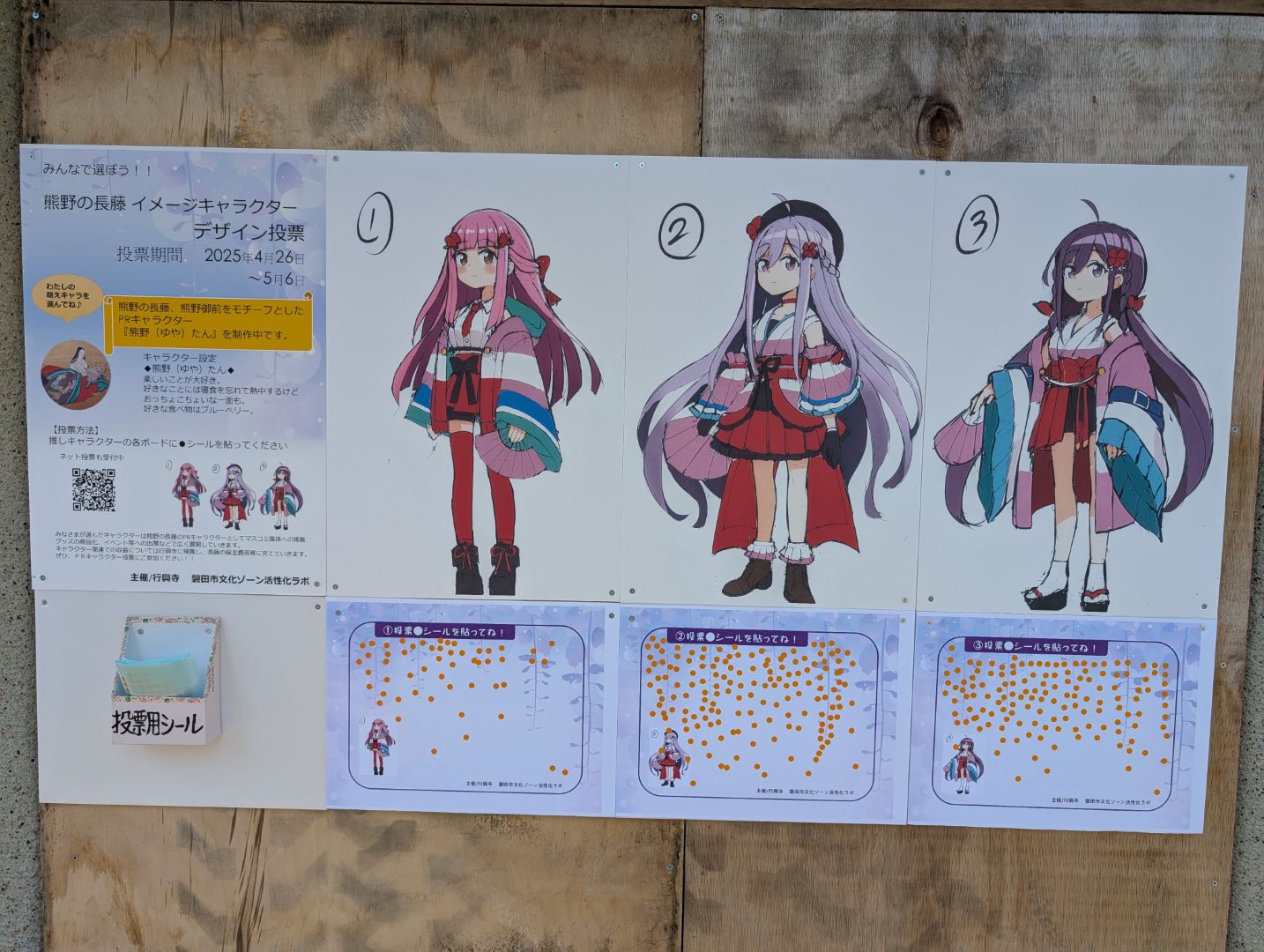
A vote was being held for a mascot character inspired by Yuya Gozen. Perhaps the character chosen here will be used for next year’s “Nagafuji Festival.”

コメント