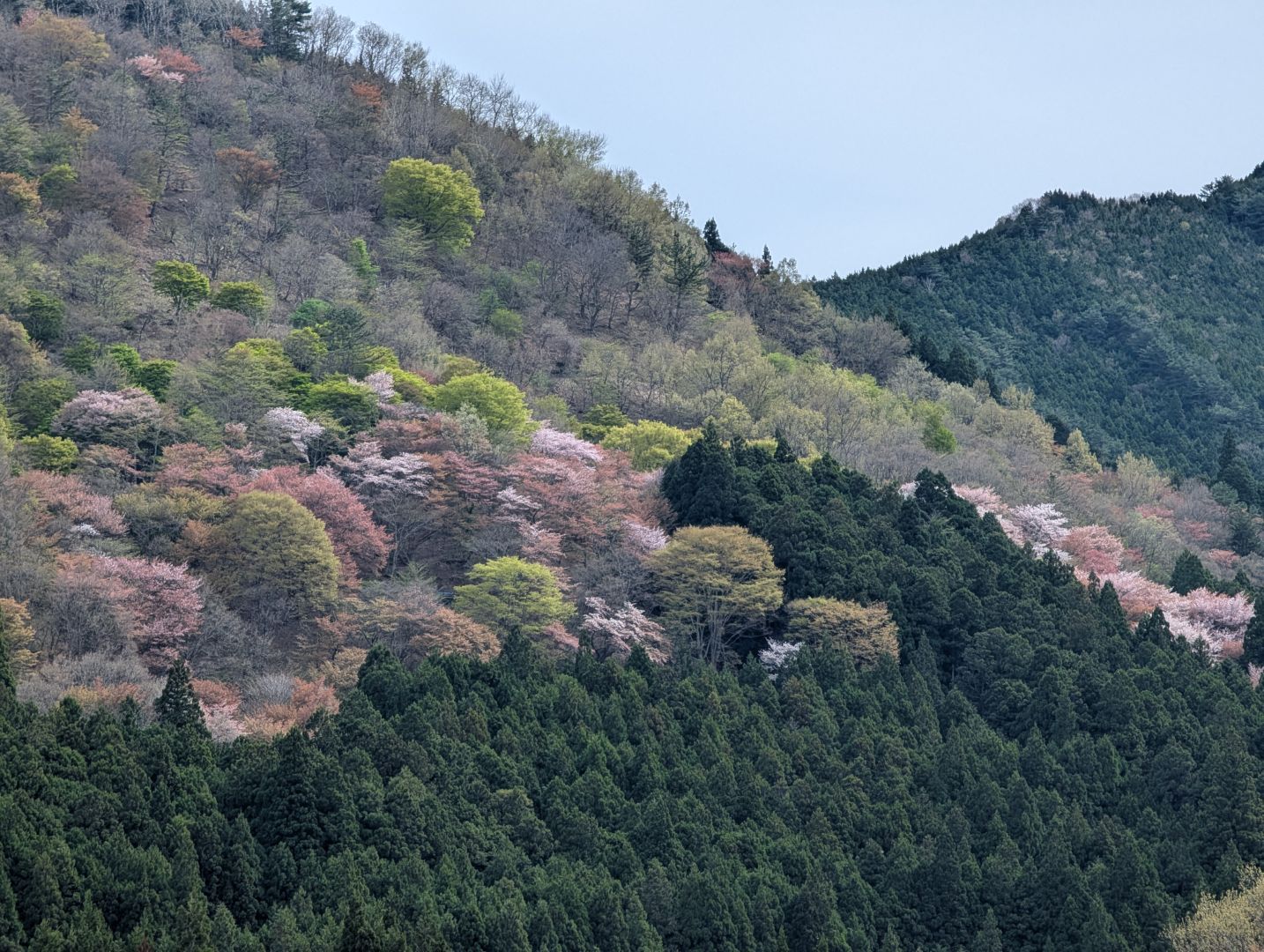
It takes nearly six hours to drive from Hamamatsu to the trailhead. Considering the hike to Mt. Hakkyogatake on top of that, I realized a day trip would be impossible, so I booked an inn in Tenkawa Village. I thought it would be close to the trailhead, but due to road closures from landslides, it ended up being a huge detour… Still, since I was already deep in the Kii Mountains—a place that’s usually quite hard to reach—I decided to spend the day after my hike slowly exploring the area. I had initially thought about heading to Yoshino to see if the cherry blossoms were still in bloom, but the unique atmosphere of Tenkawa won me over.
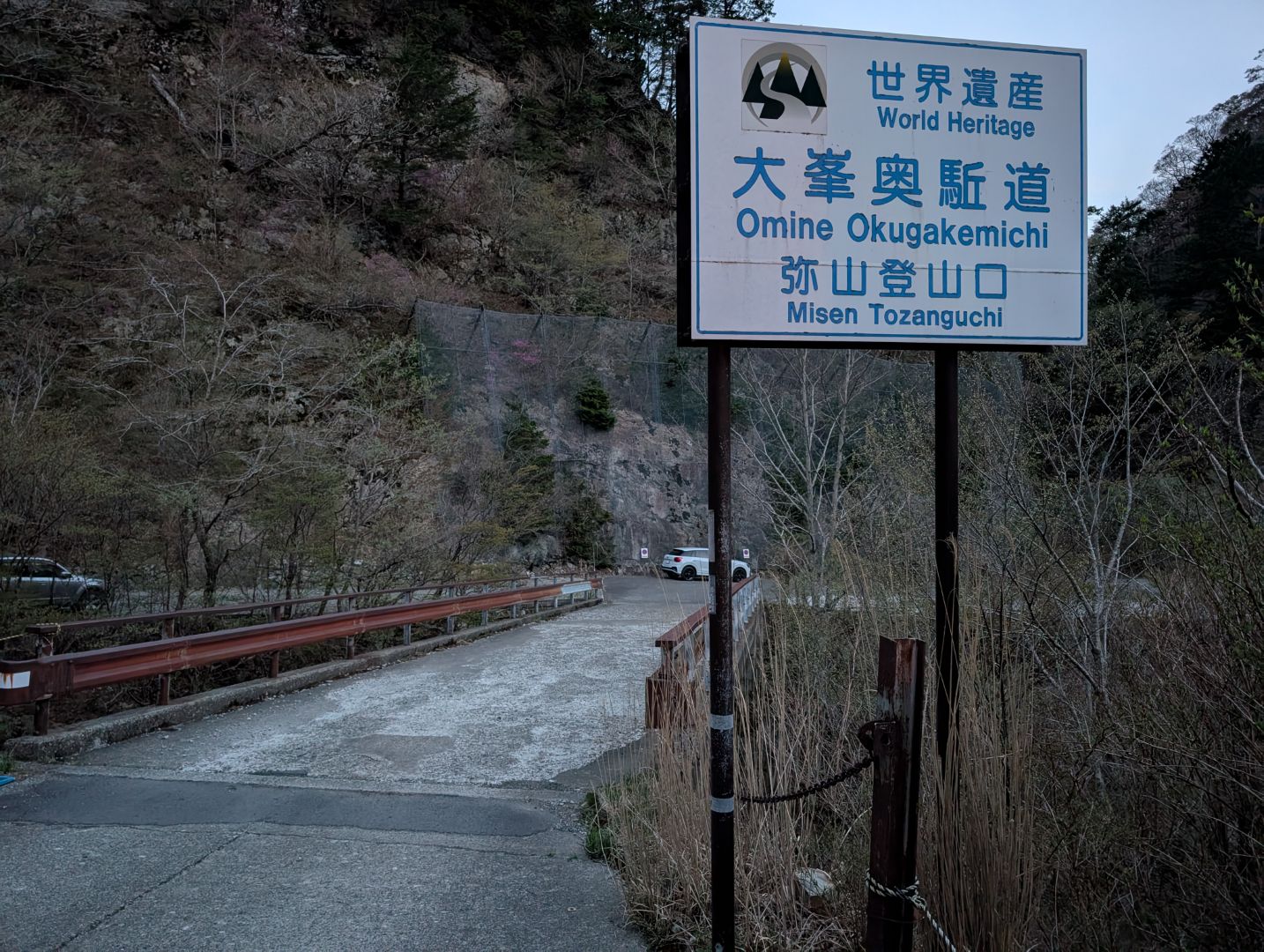

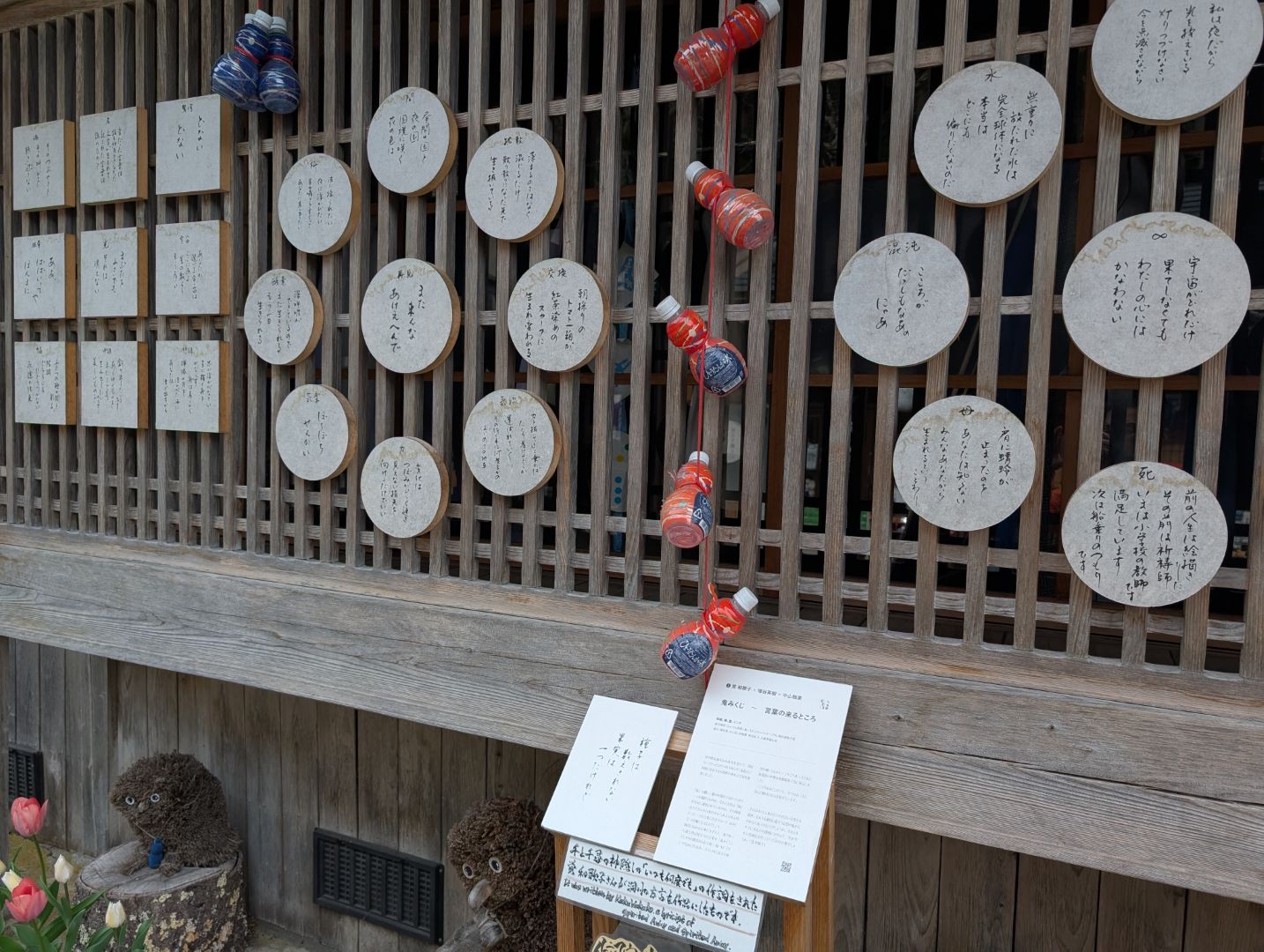
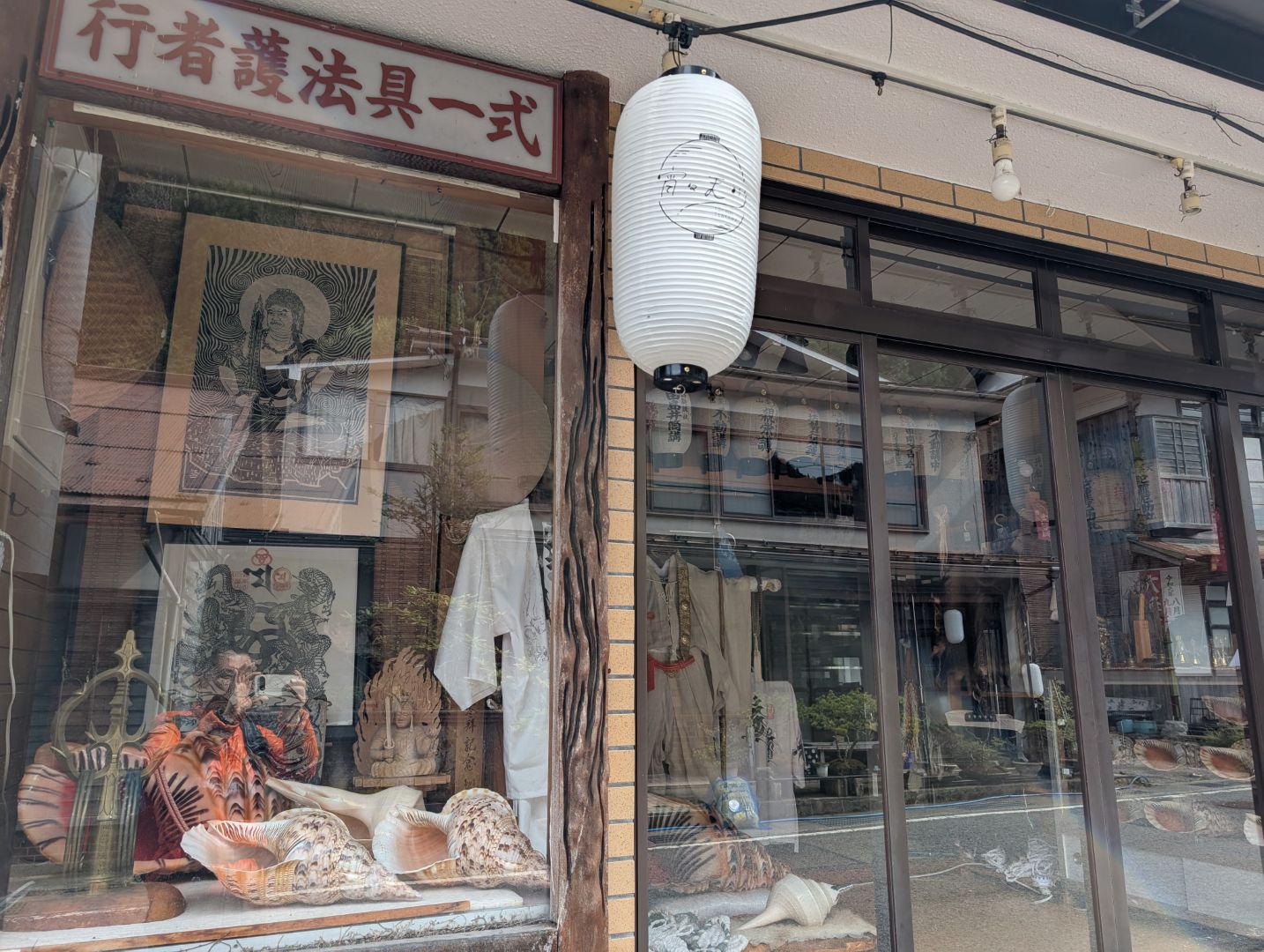
My first stop was Dorogawa Onsen, which is known as the base for climbers heading to Mt. Sanjogatake, a sacred site for Shugendo (mountain asceticism). Located at an elevation of 820 meters, the town is lined with atmospheric inns built of Yoshino cedar along the Sanjo River, along with shops selling gear for practitioners. It has a hot spring town vibe, but with a unique, mystical streetscape that you won’t find anywhere else.


Walking through the village, I kept seeing signs for “Goro-goro Water” and offers for regional shipping. Tenkawa is famous for its high-quality spring water, and the Dorogawa Springs are even selected as one of Japan’s “Top 100 Waters.” Just past the town on the upstream side of the Sanjo River, I found the spring source and a large parking area designed specifically for water collection. They have the spring water piped in with valves so you can fill up large containers and load them right into your car. It was quite a sight! I thought it was only for those filling big jugs, but as I walked by, someone told me, “Go ahead and have a drink!” and pointed to the very end of the pipe. There was a spot specifically for pedestrians to quench their thirst too.
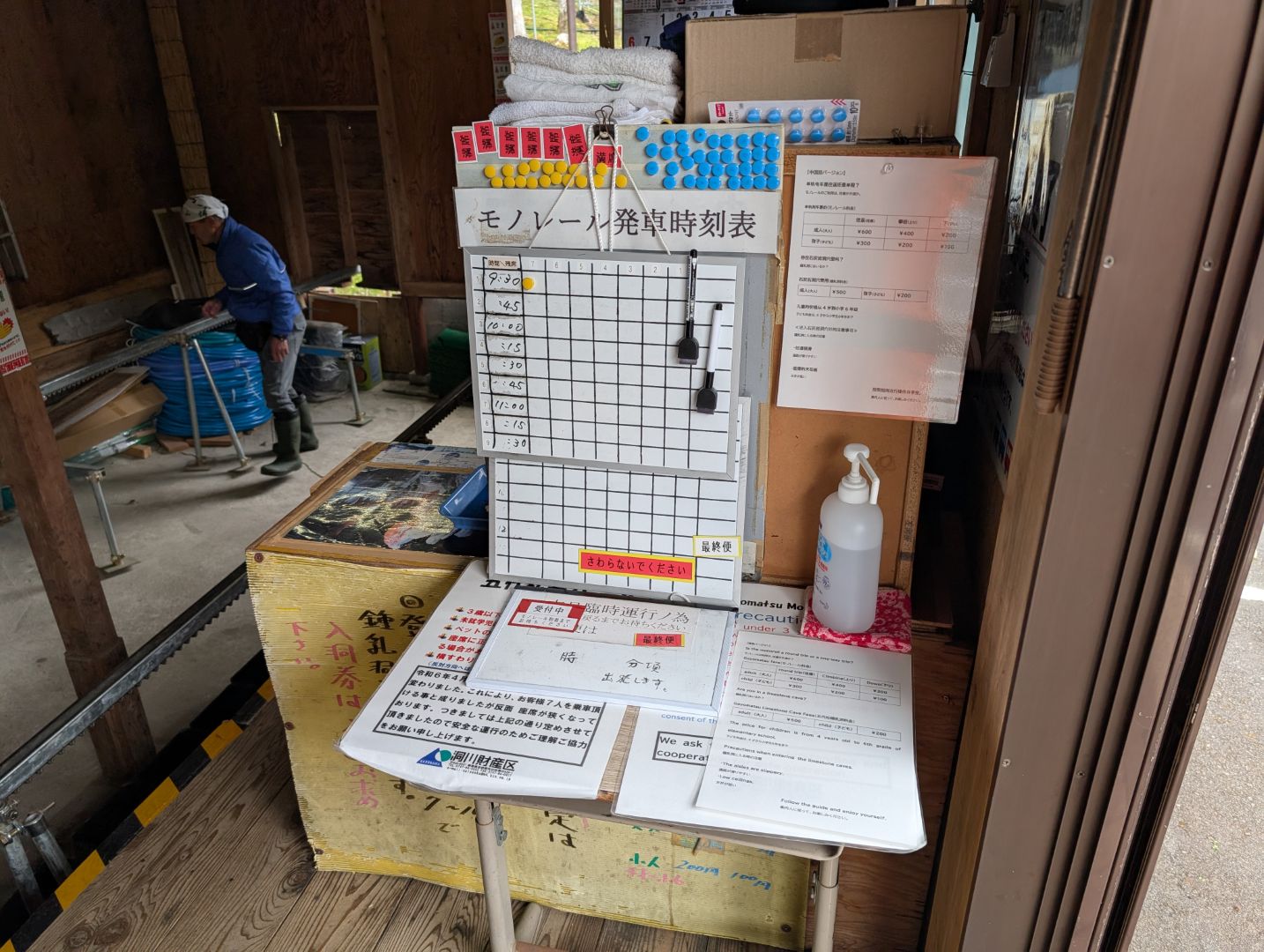
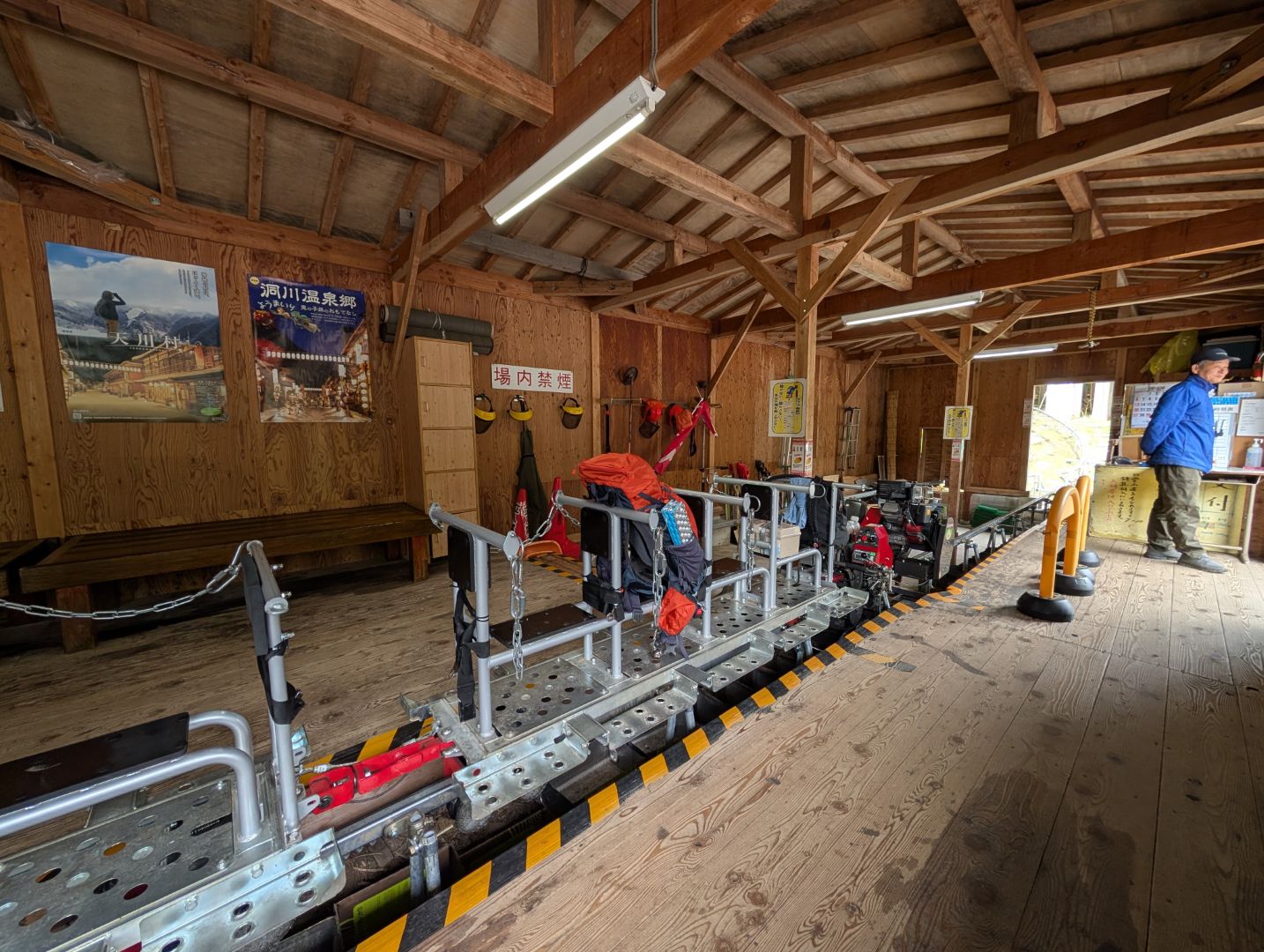
My real destination wasn’t the water station, but the Goyomatsu Stalactite Cave right next to it. When I was researching the area, I saw a photo of tourists riding what looked like an agricultural monorail used for transporting oranges to get to the cave. Honestly, I was more interested in the monorail than the cave itself!
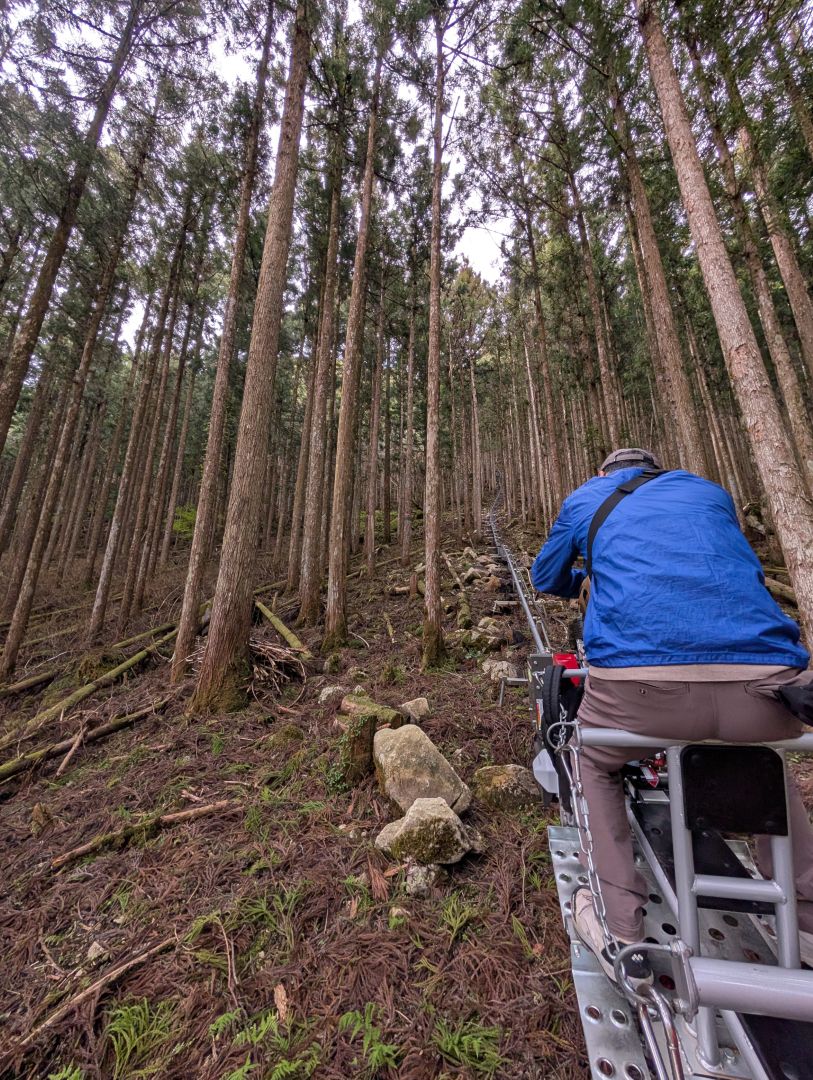
I was the first customer of the day, so I had the whole trolley to myself. The trolley starts climbing a very steep slope almost immediately. I had to brace my core just to keep from being thrown back; the maximum gradient is about 34 degrees. I only planned to use it for the way up and walk back down the trail, and for a moment I thought, “Man, going down this would be terrifying,” but it turns out the trolley descends backward (which makes sense, I guess!).
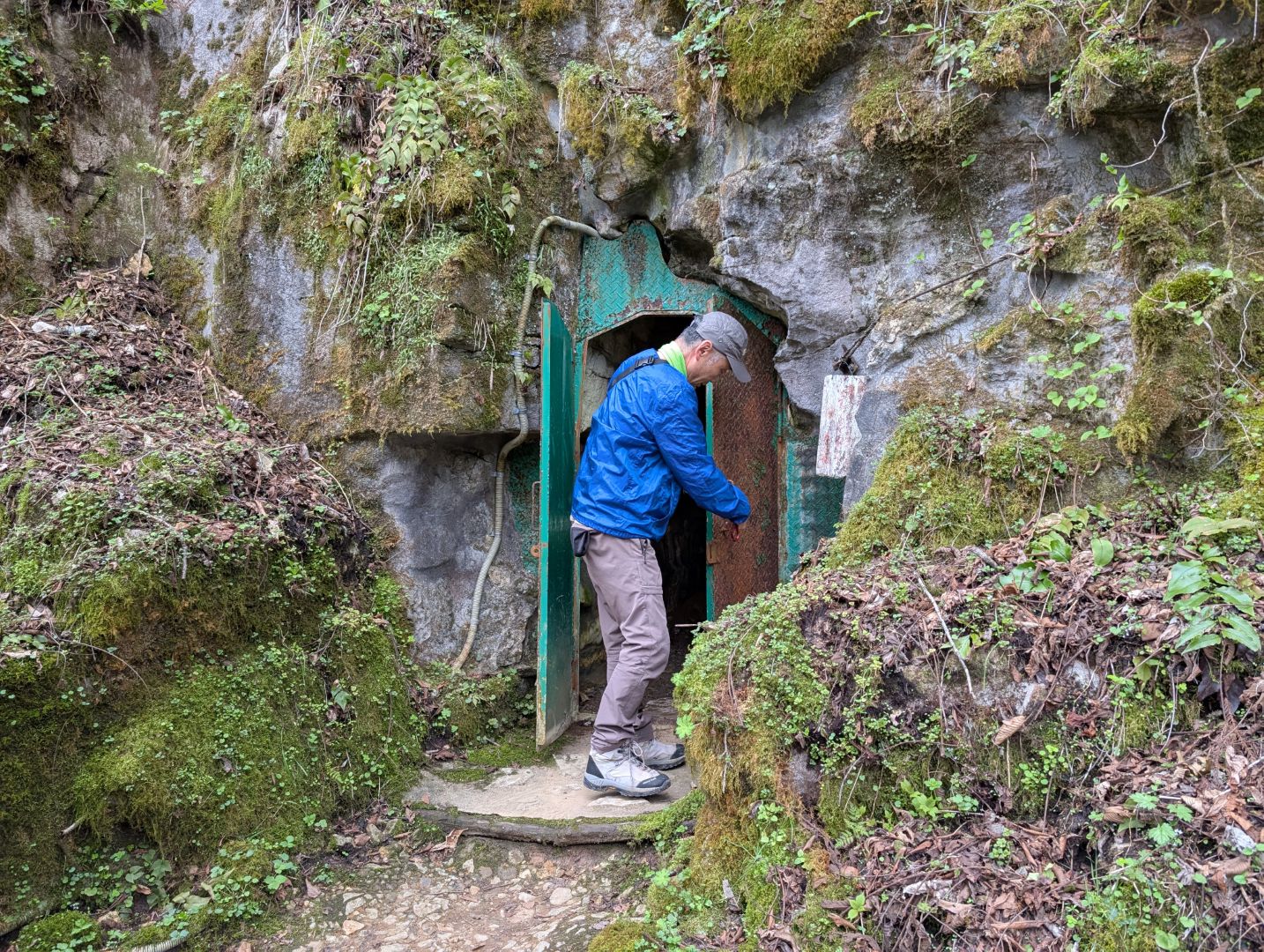
After getting off the trolley, I was handed a helmet, and the man who drove the trolley guided me to the entrance. The gate is kept locked so hikers can’t just wander in on their own. I thought I’d be exploring solo from there, but the driver actually gave me a guided tour! He seemed so proud to show off the village’s prized cave, and his stories were great. Getting a private tour was a lucky break.
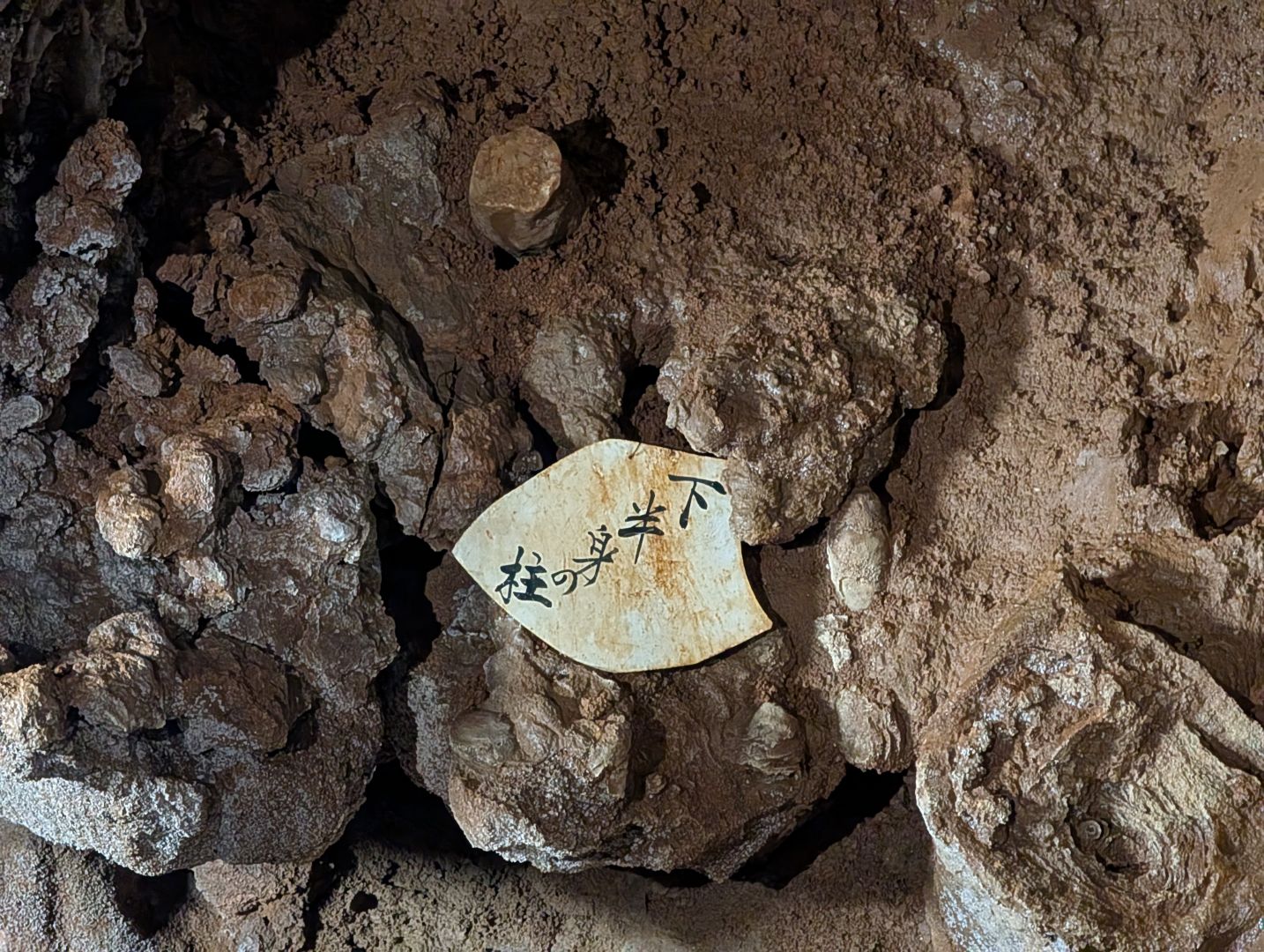
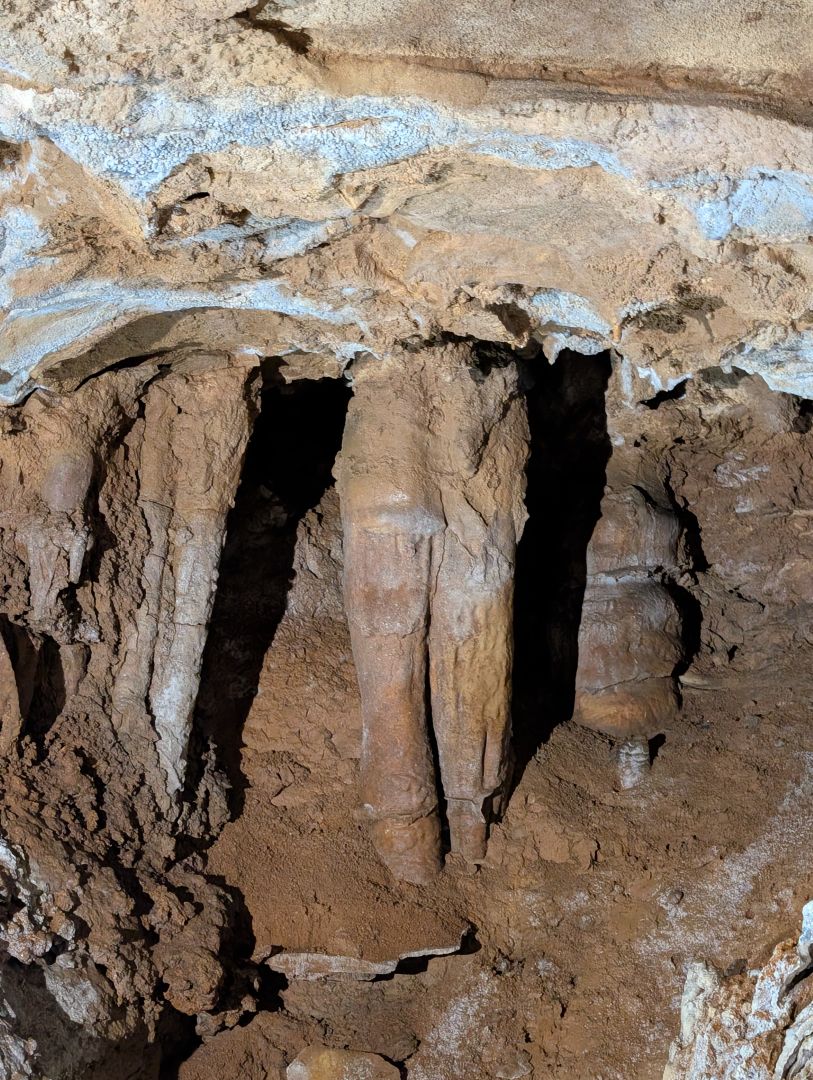
Goyomatsu Stalactite Cave was opened by a man named Goyo Akai, who poured his own personal fortune into it. Although it’s a relatively short cave at under 100 meters, it’s packed with impressive stalactites and columns. What impressed me most were the names given to the formations—starting right off the bat with this one! The guide’s commentary made it all the more entertaining.
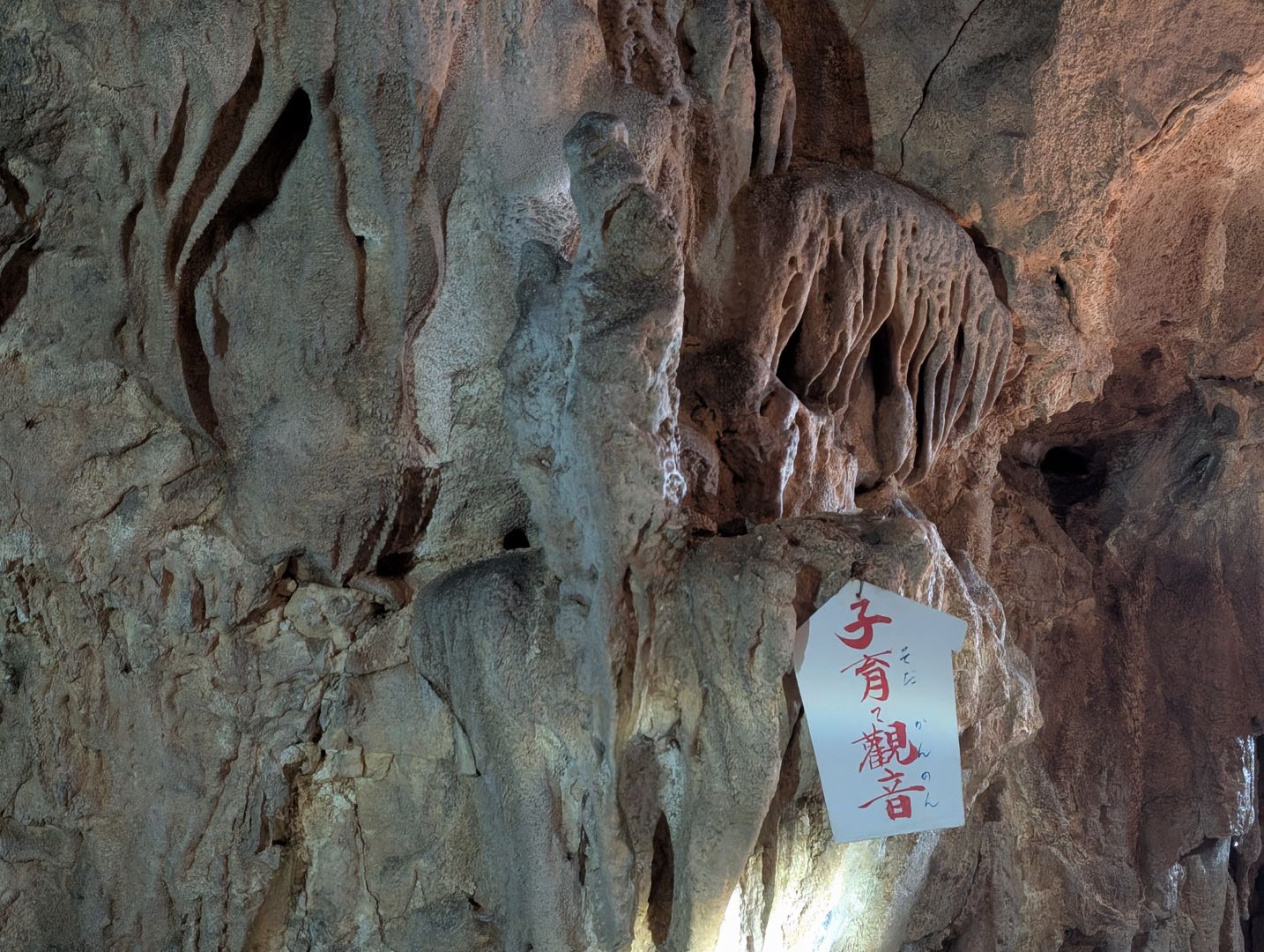
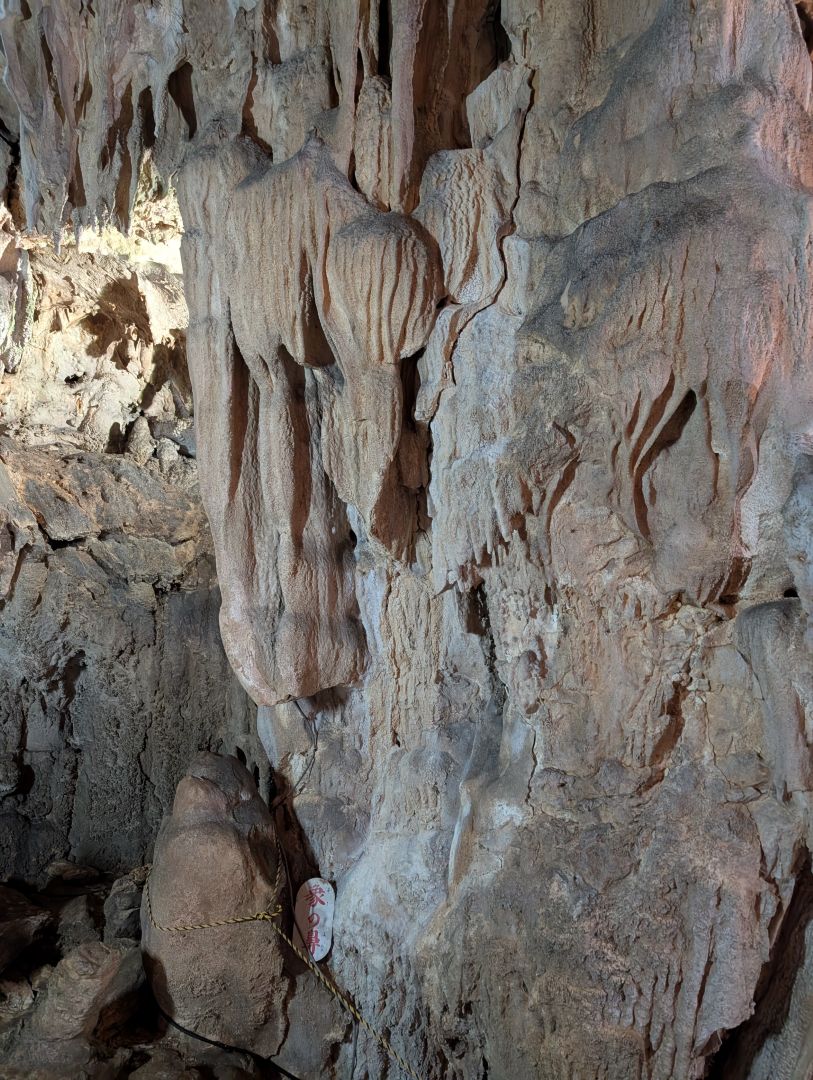
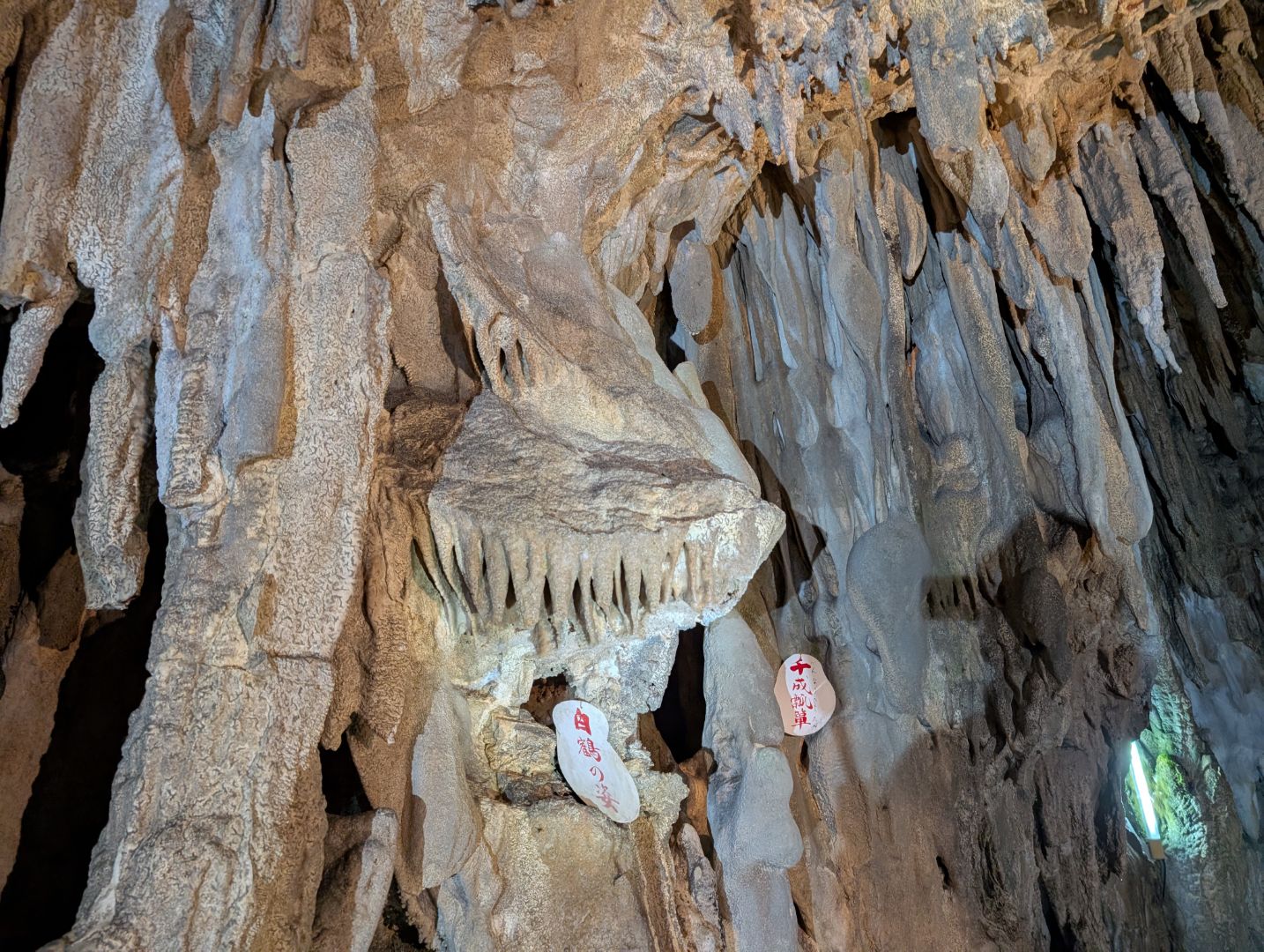
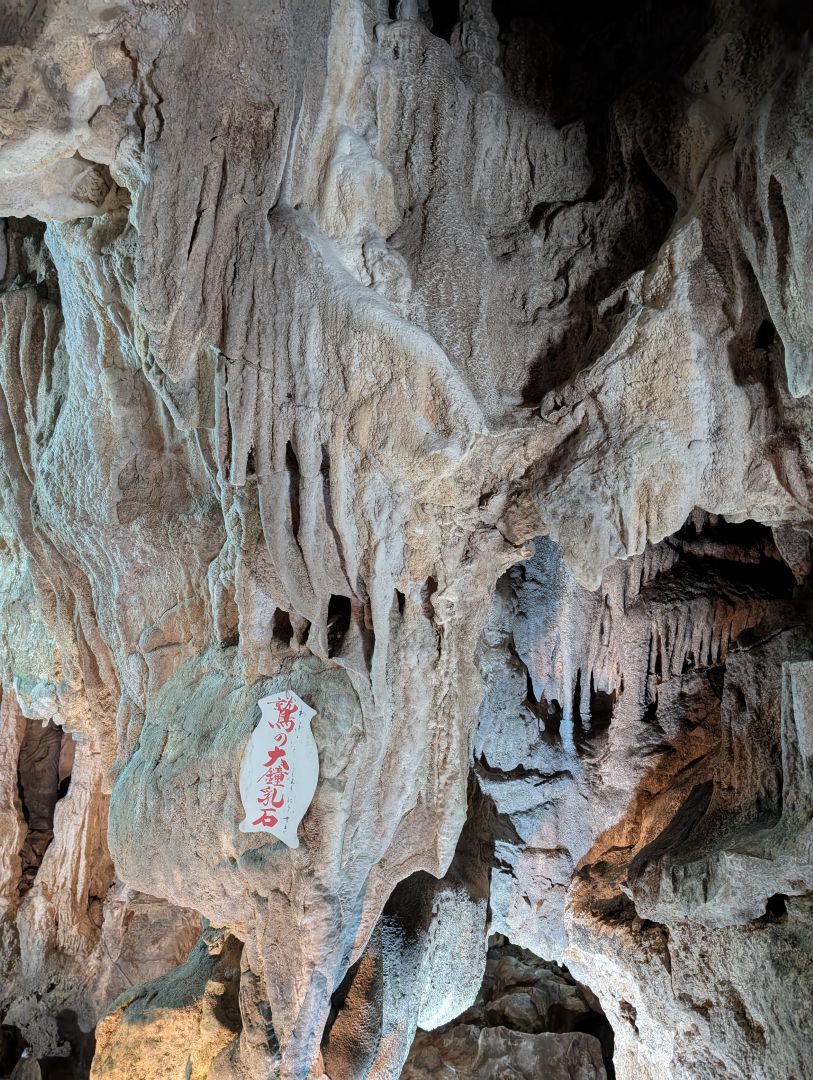
For some of the named formations, I could see it immediately. For others, it took the guide’s explanation for me to go, “Ohhh, I see it now!” The “Great Eagle” near the end was particularly striking—it’s hard to capture in a photo, but it really looked like a massive bird diving down to catch something.
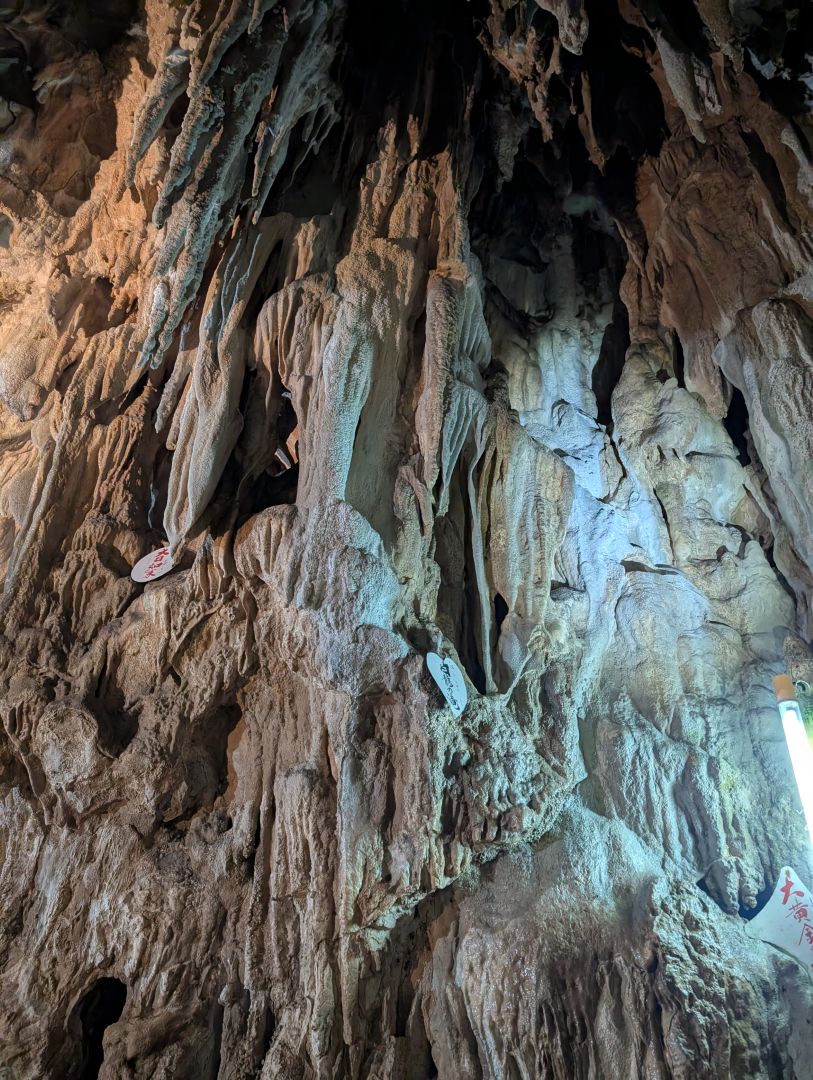

I thoroughly enjoyed Goyomatsu Stalactite Cave, including the trolley ride.
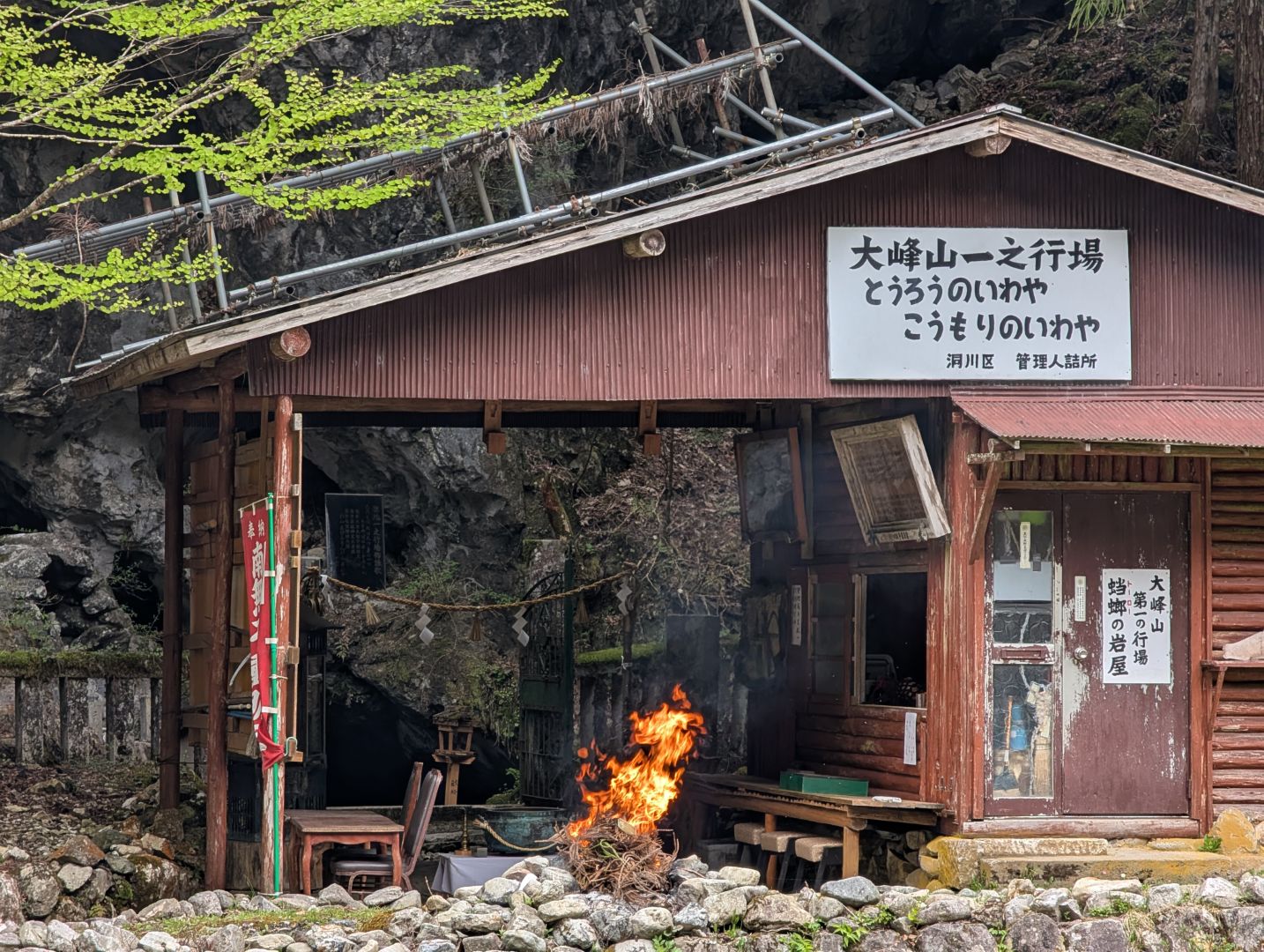
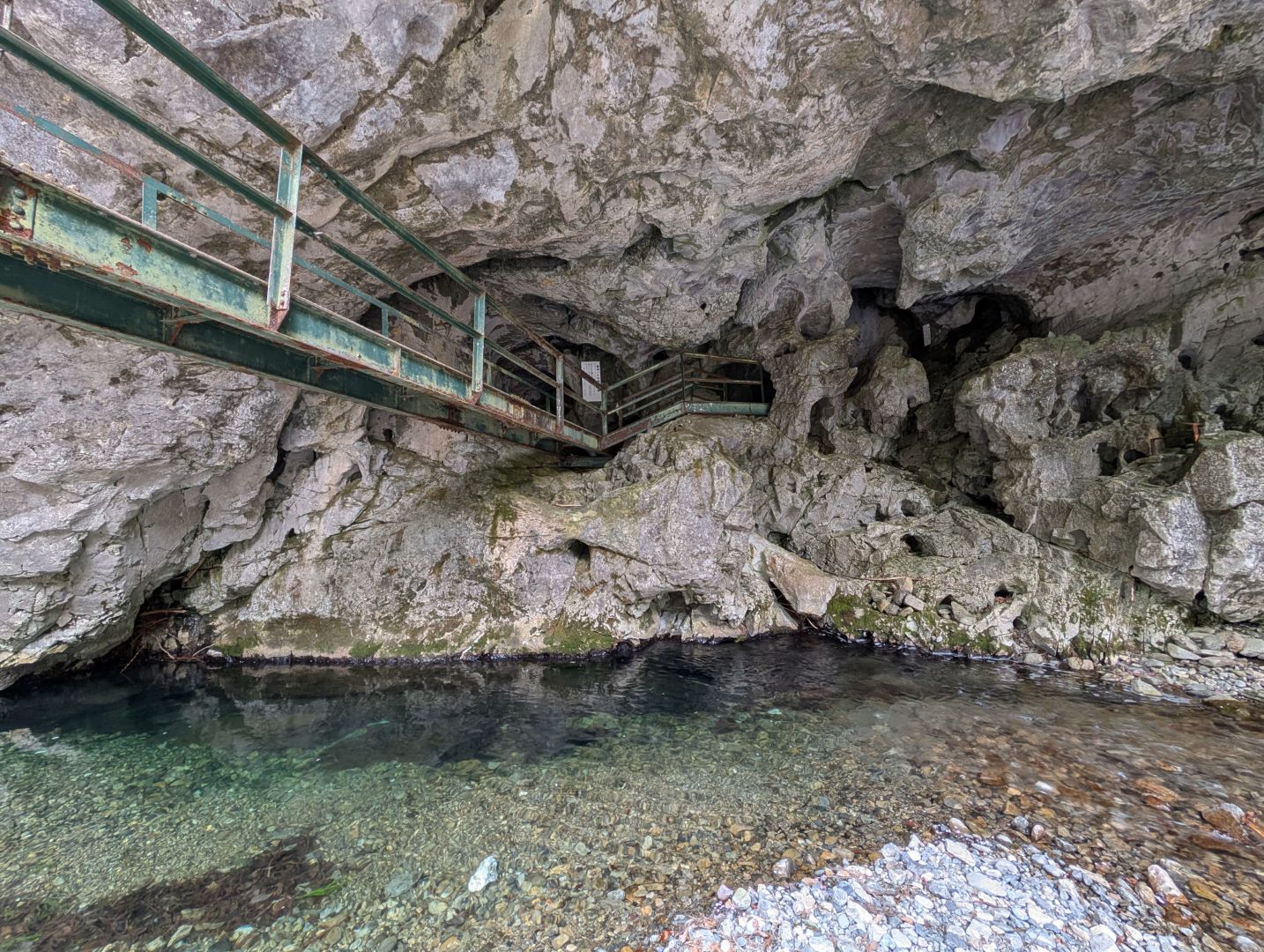
On the way back from the cave, I walked along the opposite side of the Sanjo River from the main inn street. I found a small hut that looked like a reception area with a sign saying “First Training Ground: Toro-no-iwaya and Komori-no-iwaya.” There was a fire burning, giving it a slightly intimidating atmosphere. These caves are said to be where En-no-Gyoja stayed and practiced when he first opened Mt. Omine, and they are still used by ascetic monks today. There were actually bats flying around inside, so it looked like it would take some real courage to enter.
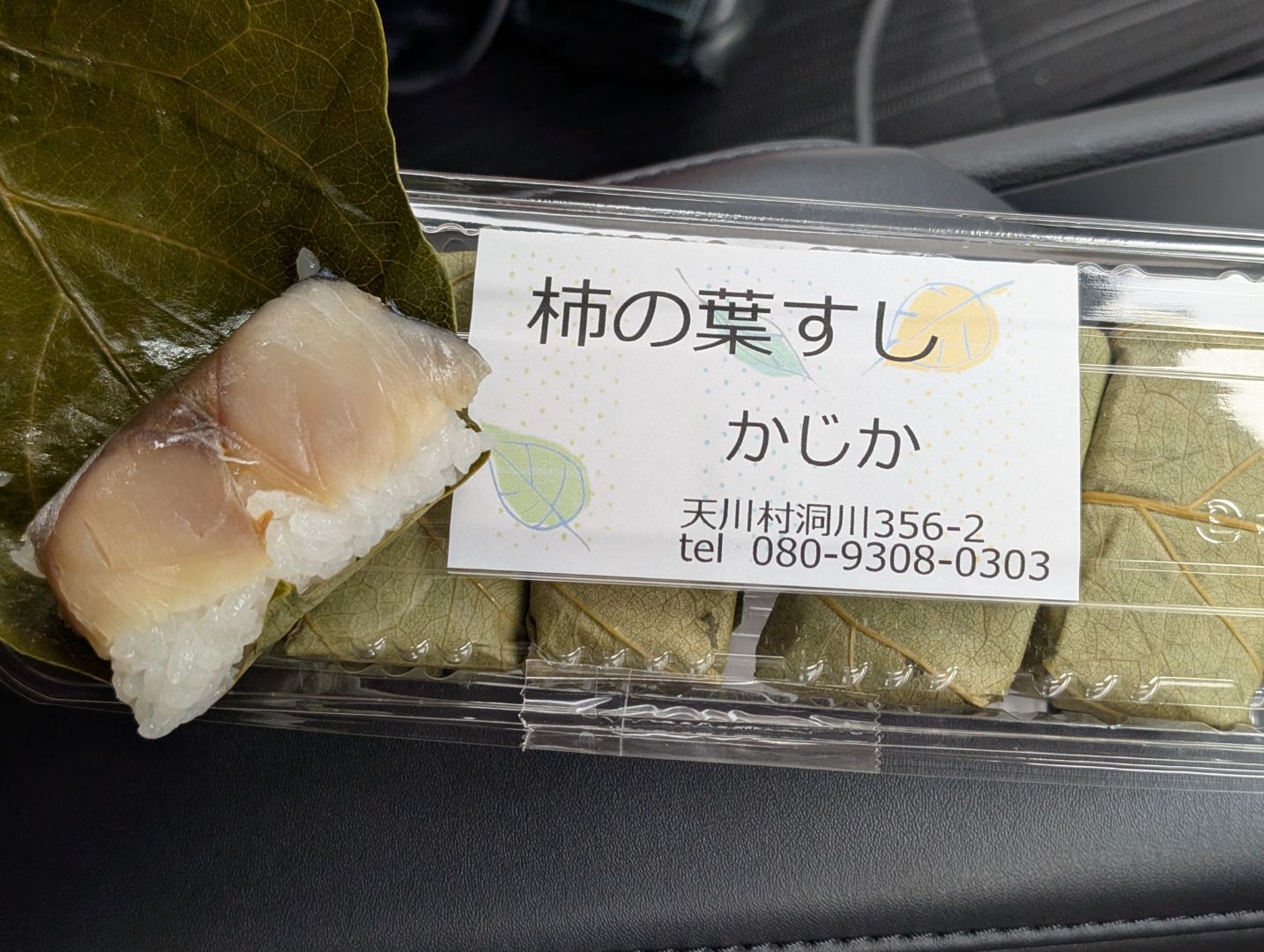
By then, it was well past lunchtime and I was starving. I was looking for somewhere to eat when I spotted a sign for Kakinoha Sushi (sushi wrapped in persimmon leaves). It was late enough that I wasn’t sure if they were still open, but when I asked, they said takeout was fine. They asked how many I wanted, and when I said five, they gave me an extra one and a discount because I was going to eat them right away! The balance of the perfectly cured mackerel with the vinegared rice and the subtle scent of the persimmon leaf was delicious. Local food is always the best.

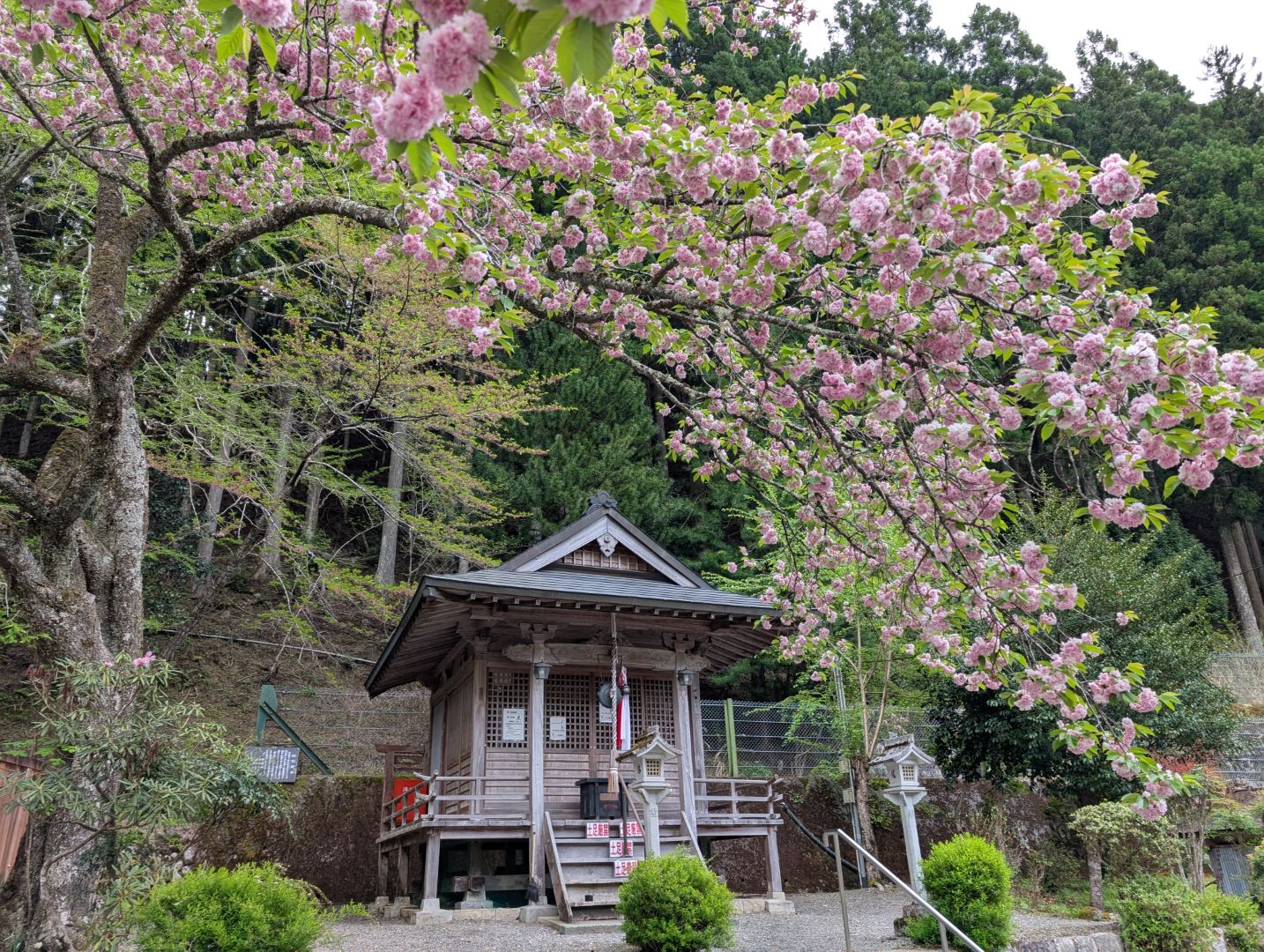
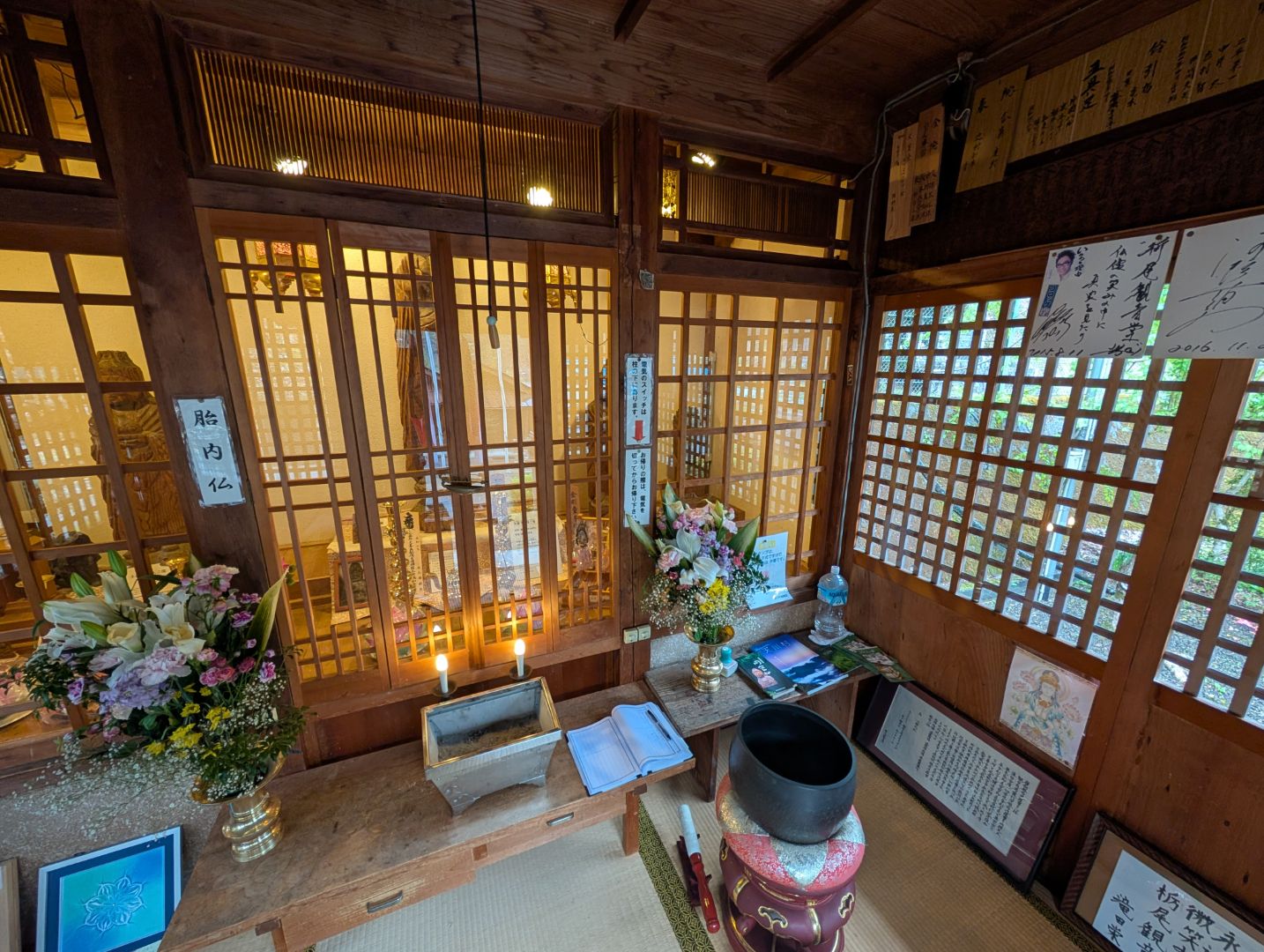
The last place I visited was Tochio Kannon-do, where four Enku-butsu (Buddha statues carved by the monk Enku) are carefully preserved by the local community. These statues have such gentle, serene expressions. Visitors are allowed inside the small hall to see them up close. On this day, some late-blooming double cherry blossoms were still out in front of the hall, creating a lovely scene.
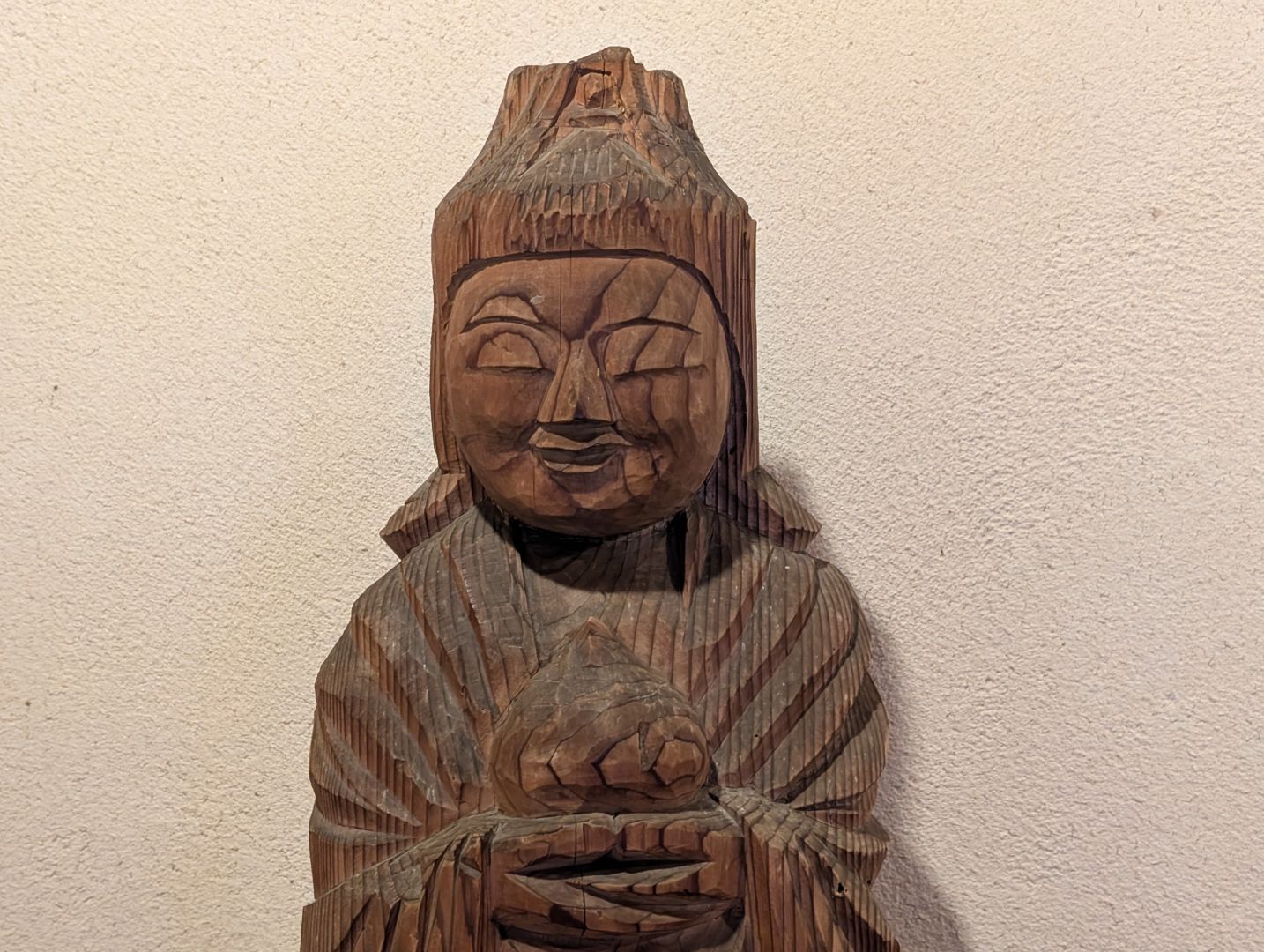

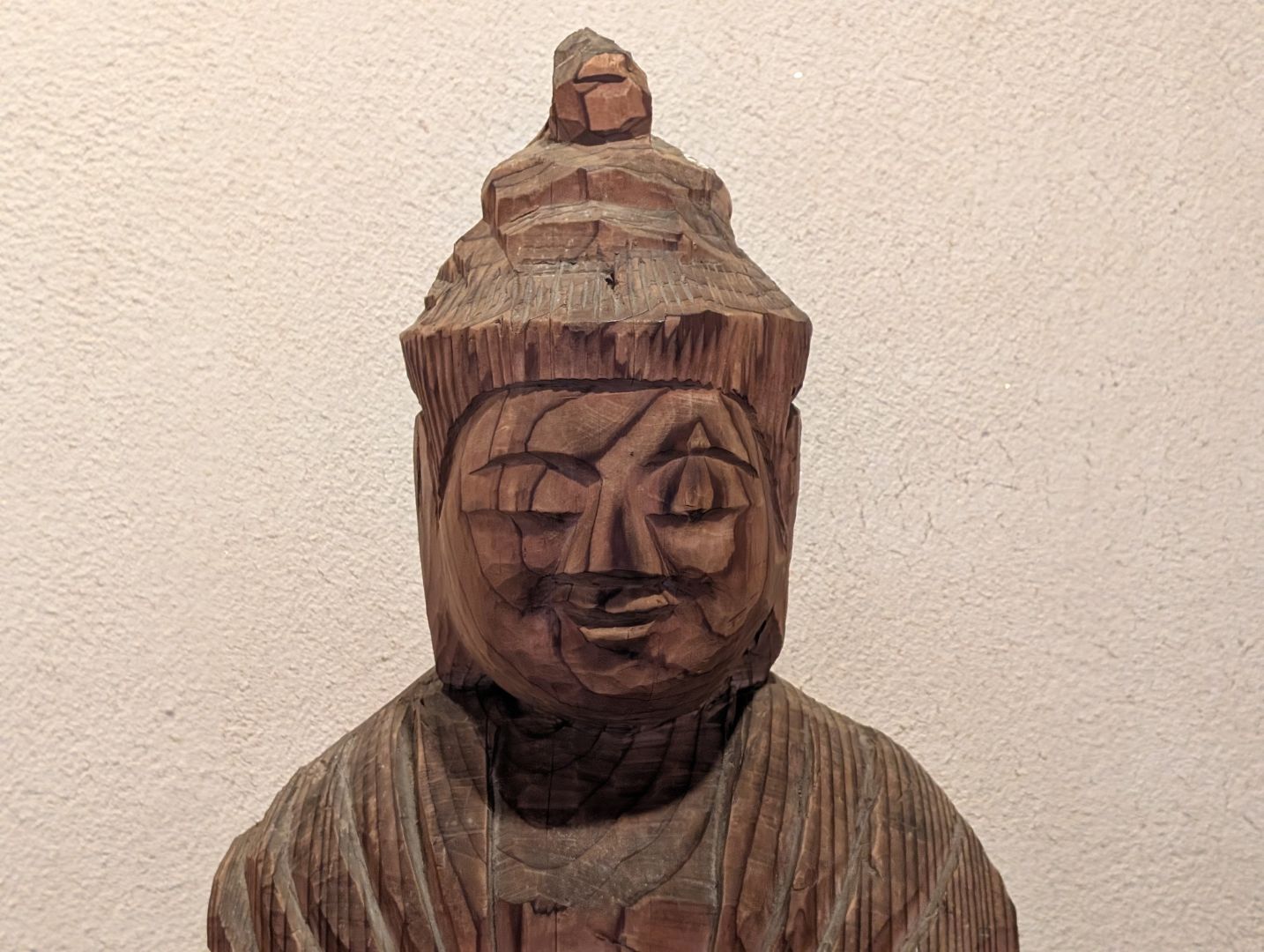
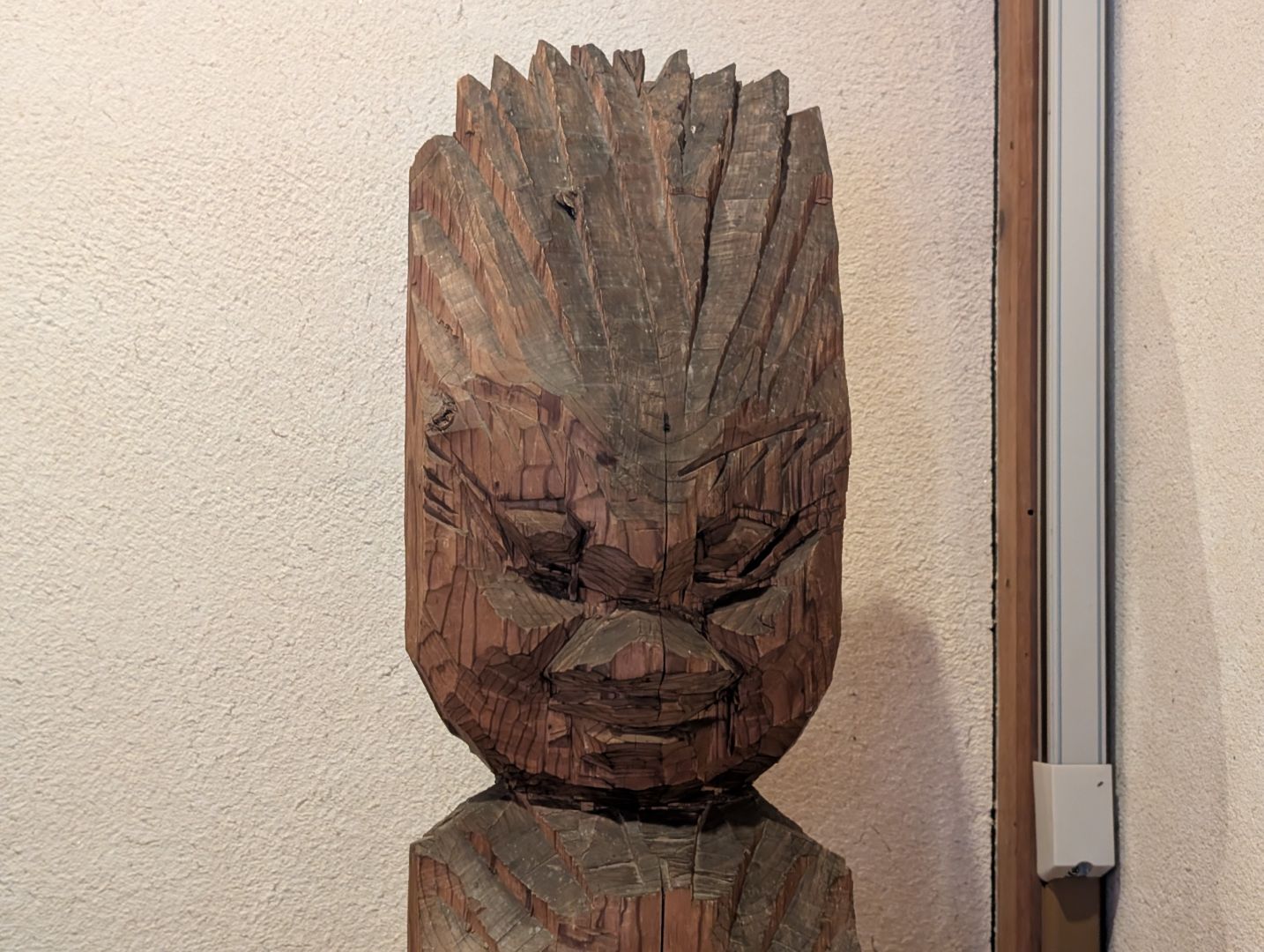
Enku was a monk in the early Edo period who traveled throughout Japan, reportedly carving over 5,000 statues. Tochio Kannon-do is the only place in the Kansai region where multiple Enku statues remain in one location, and it’s a popular spot for locals to pray. Since it was raining, I was the only visitor there, allowing me to sit quietly and admire the gentle faces of the Buddhas. I found myself completely captivated by them. JR Central is currently running an “Enku’s Footsteps” campaign, and it has definitely piqued my interest.


コメント