Have you heard of TJAR? I first discovered this race by chance when I caught a rerun of an NHK documentary following the event. I was blown away by its sheer scale—traversing the Northern, Central, and Southern Alps entirely on foot, from the Sea of Japan to the Pacific. With a total distance of 415 kilometers and a cumulative elevation gain of 27,000 meters to be completed within an 8-day time limit, it is incredibly grueling. I quickly became a huge fan, captivated by the individual battles and the human drama of the 30 unique competitors.
The race is based on the principle of self-responsibility and “not being a nuisance to others.” Because of this, there are no aid stations. Runners must either carry their own supplies or purchase them at mountain huts or shops along the road. There is only one spot at Ichinose, the trailhead of the Southern Alps, where they can receive pre-sent food and gear. Furthermore, sleeping is limited to camping out with a tent or bivouac sack. Eating or sleeping inside mountain huts is strictly forbidden, making the conditions exceptionally harsh.
To finish within eight days, runners have to keep moving for long hours while sacrificing sleep and carefully managing their nutrition and physical care. The race is generally not canceled due to bad weather; it’s up to the runners themselves to decide if they need to retire. Given how extreme it is, the entry requirements are incredibly strict. You need proven results in races or marathons, experience sleeping outdoors at altitudes over 2,000 meters for at least 10 nights, and you must pass a screening process that includes map reading, night bivouacking, and setting up a shelter in simulated bad weather. Just qualifying to stand at the starting line is a massive feat.
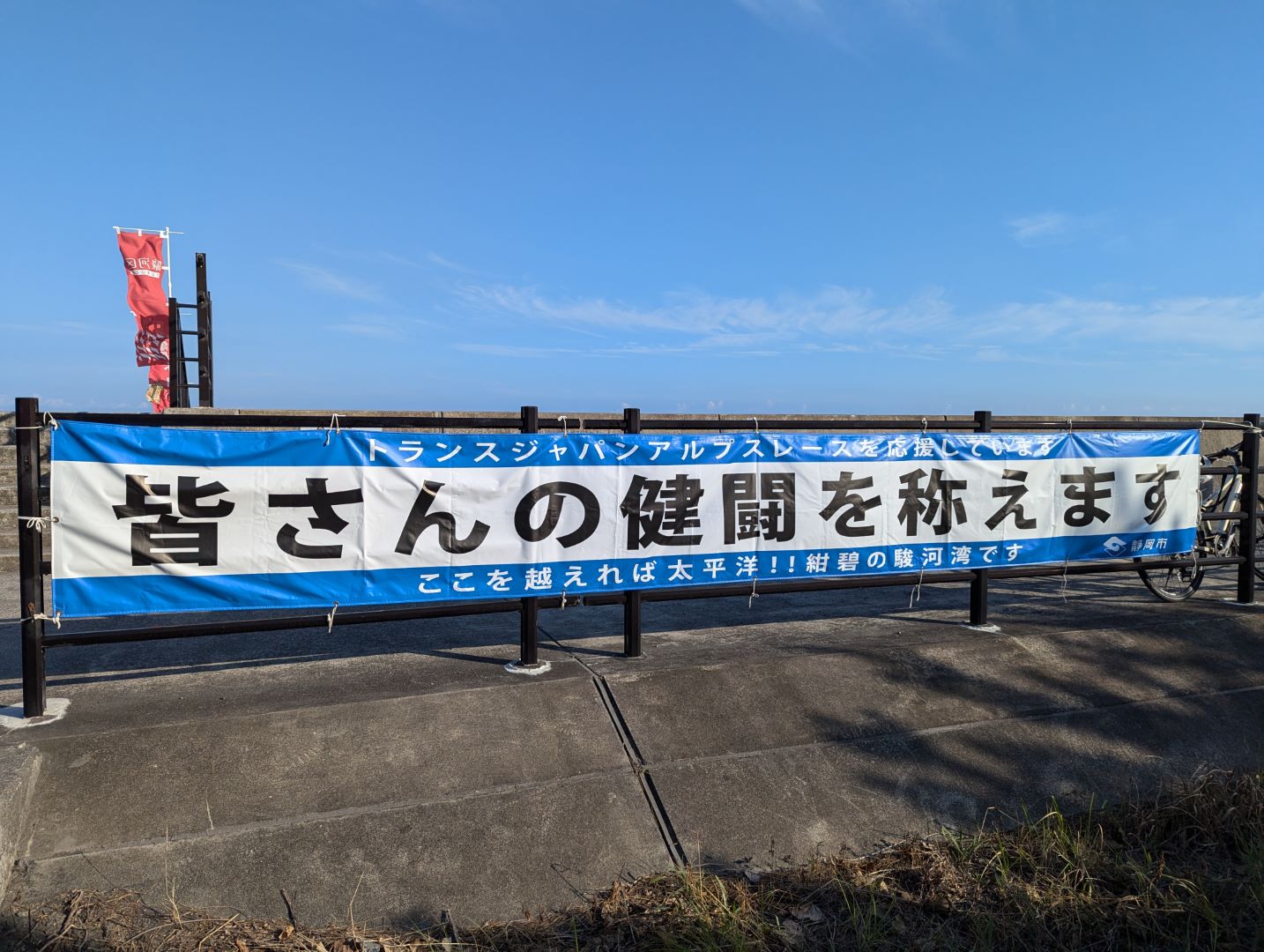
The 2024 race took place from August 11 to August 18. Since the runners’ locations were shared in real-time via IBUKI and the staff posted photos and videos on Instagram, my wife and I—both enthusiastic TJAR fans—spent the whole week glued to our screens, excitedly discussing every development.
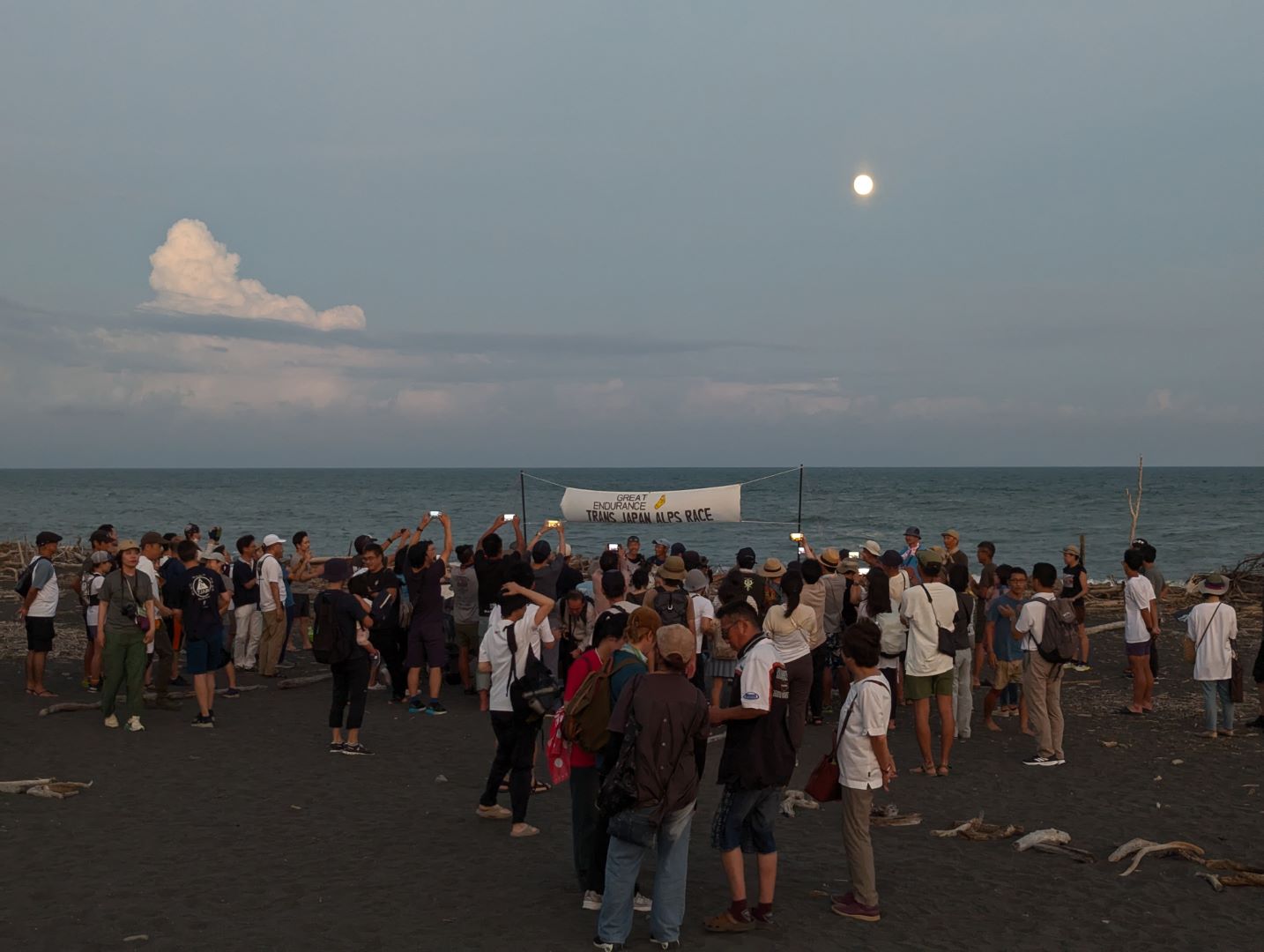
When I learned that the finish line was at Ohama Beach in Shizuoka City, I couldn’t help but feel a sense of fate. I used to play at Ohama Beach all the time when I was a kid. Since the final day of the biennial race fell on a Sunday and I’m currently living in Hamamatsu, it was the perfect chance. When I checked IBUKI and saw that three runners were about to finish almost simultaneously in about three hours, I couldn’t sit still. I quickly rented a car and headed to the finish line at Ohama Beach.
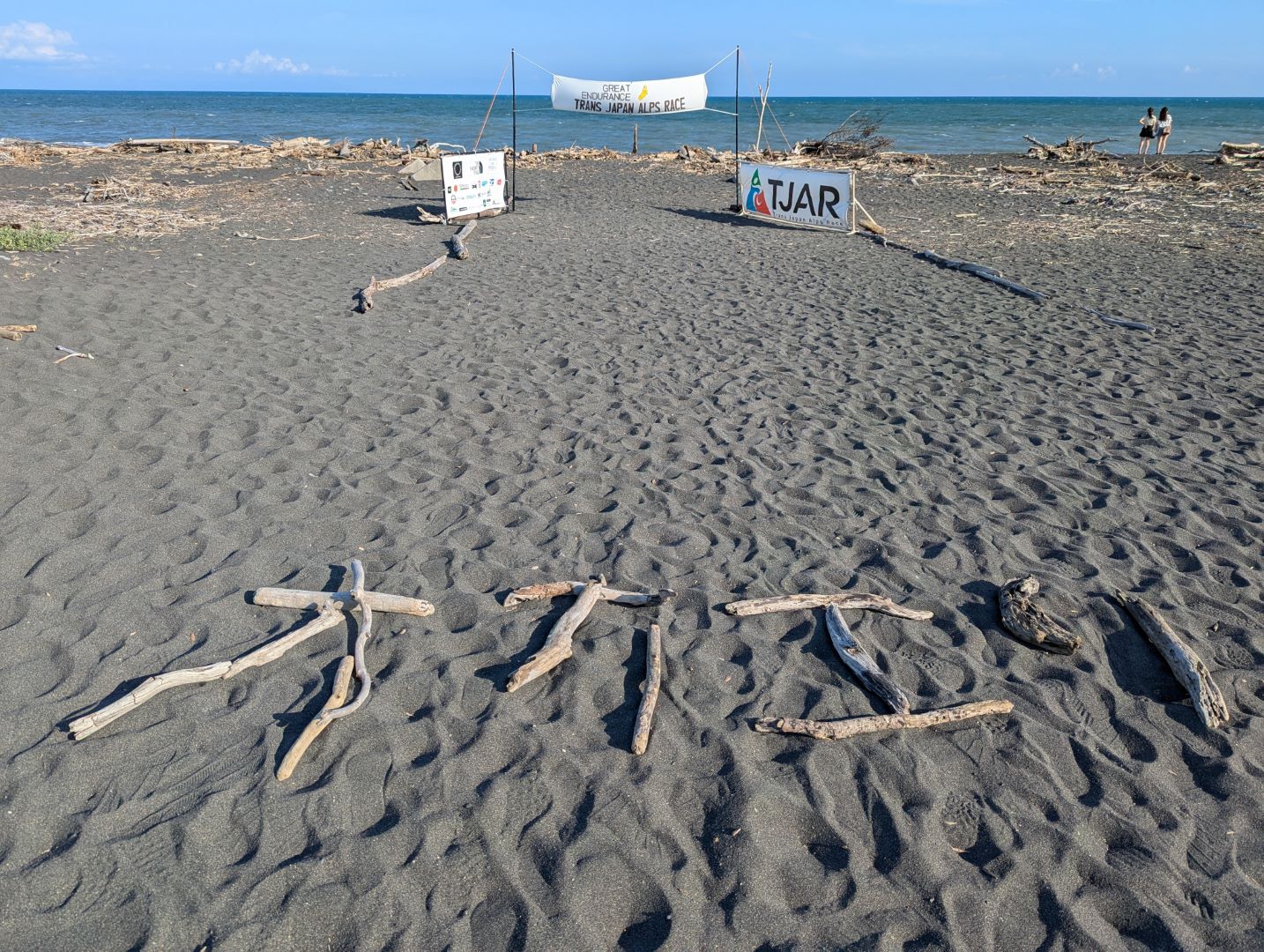
The finish line this year was set up in a slightly different spot than usual at Ohama Beach. Still, the goal set against the backdrop of the Pacific Ocean looked familiar. There were driftwood signs saying things like “Welcome Back” or “Great Job,” along with the numbers of the runners expected next. Perhaps because there was still some time before the next arrival, the finish line was impressively quiet and peaceful.
Watching Kojima-san reach the goal after a journey of 7 days and 18 hours was truly moving. There was a heartfelt hug with Mr. Takeuchi, who completed the race at age 58 back in 2018, and he was welcomed by warm applause from family and friends. Having followed their progress throughout the week, I really felt the weight of that moment.
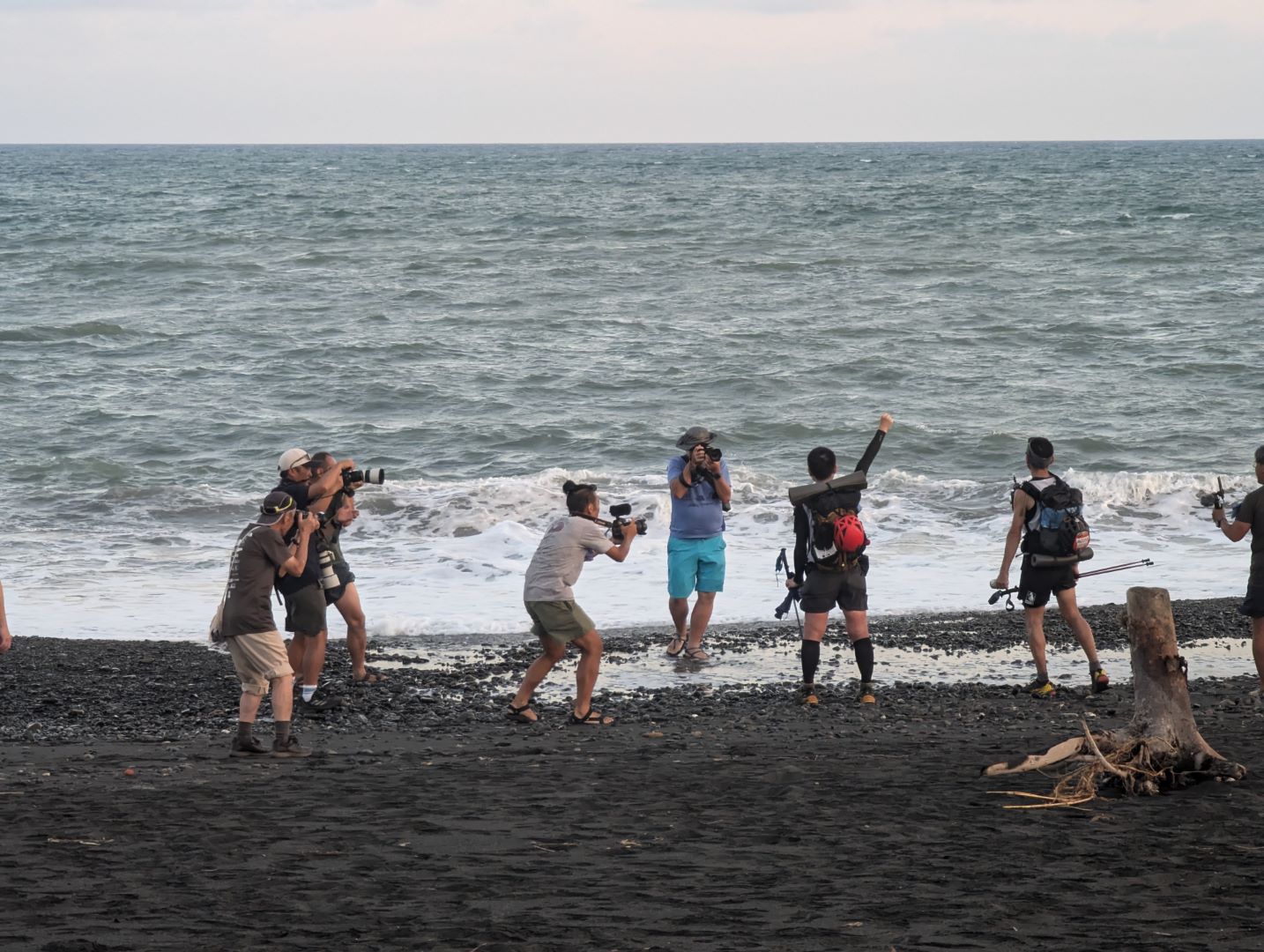
Every runner has their own way of crossing the line, but seeing those faces filled with a mix of accomplishment and relief after such a long and grueling journey was just wonderful.
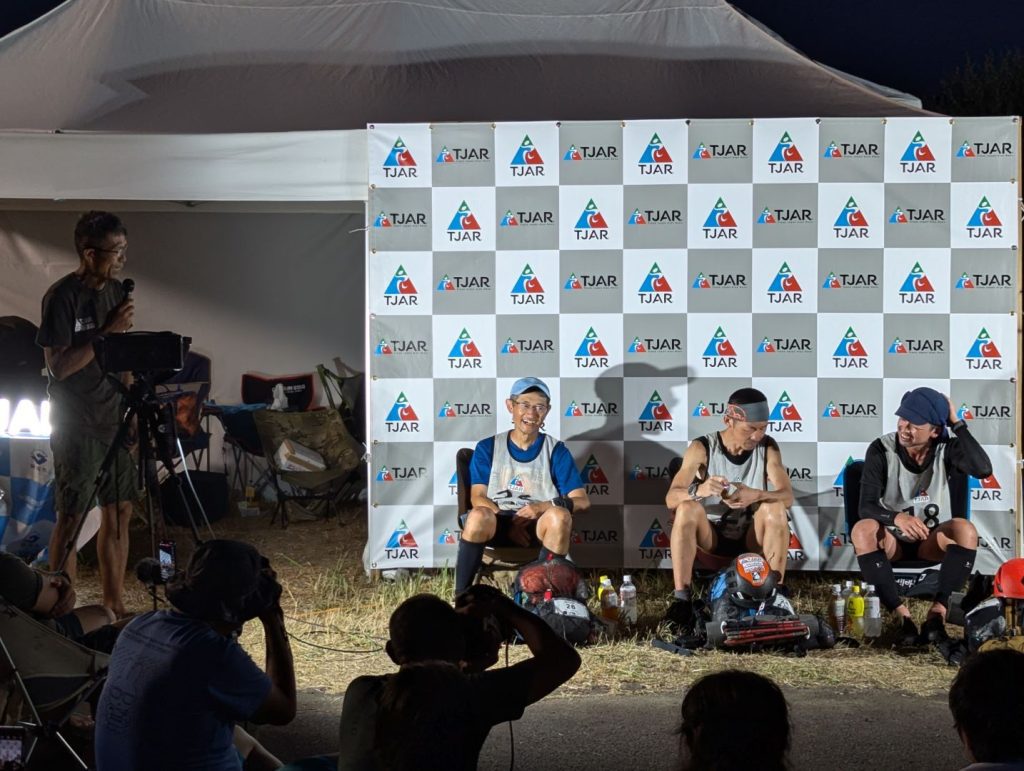
The post-race interviews were also fascinating. Stories about the hallucinations and auditory illusions everyone experiences while moving with almost no sleep are a classic part of the race. Some runners took off their shoes to show the battered state of their soles, while others talked about how their feet swelled up like “elephant legs” the moment they took their shoes off. They all mentioned that the support from others was what gave them the strength to endure such a harsh race. It made me realize that the more extreme the situation, the more those human connections matter.
One day, I’d love to go and cheer them on from somewhere deep in the Alps.

コメント