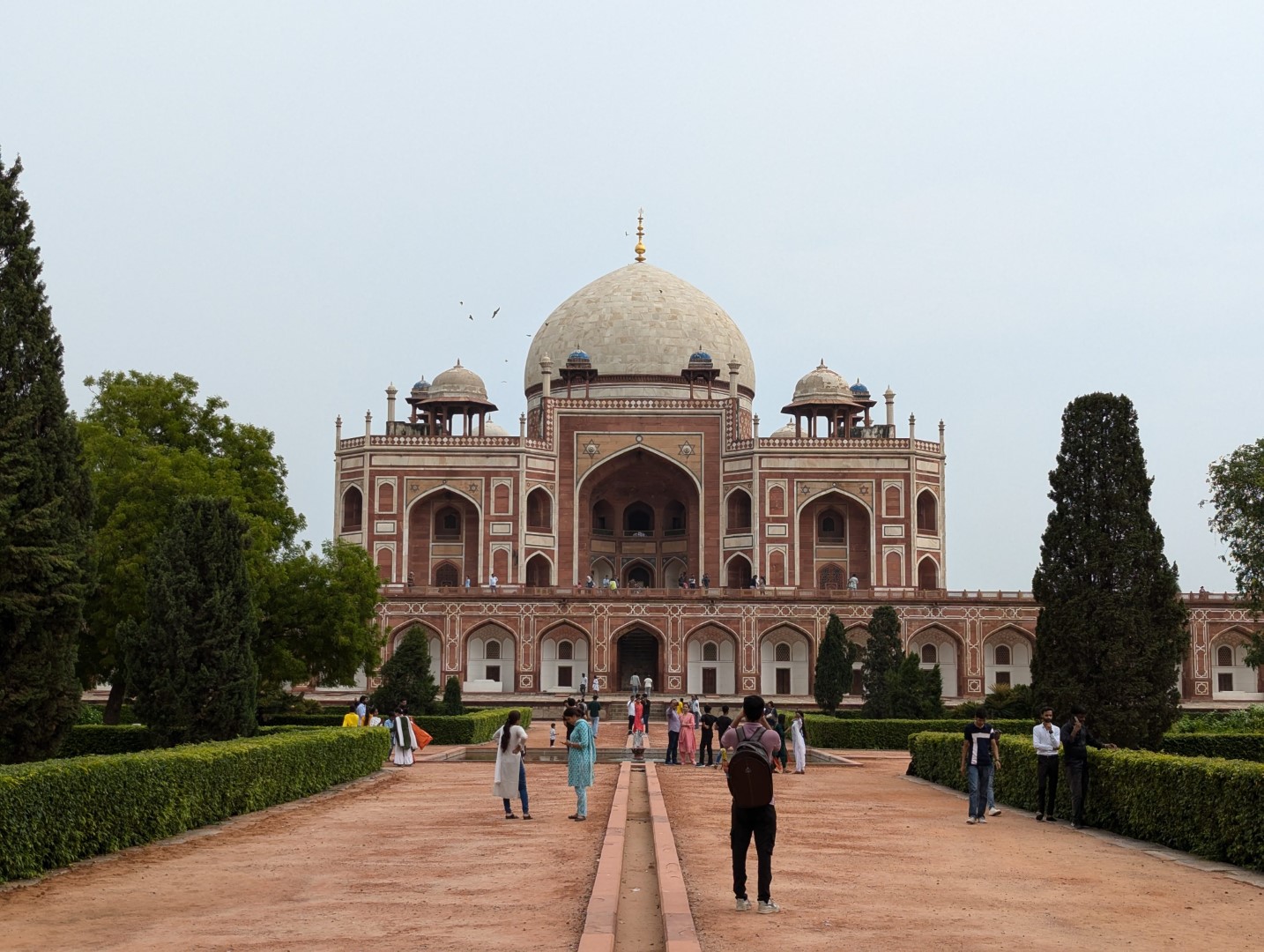
Yep, Delhi has World Heritage Sites too!
So, on Saturday, I was working at the office of a startup CEO I’m really grateful to, just having an open chat until about 3 PM. Afterward, I realized I’d have a bit of free time. My colleague and I initially thought about visiting the nearby Lotus Temple, but then we found out that Humayun’s Tomb, a World Heritage site, was super close, so we decided to check that out instead!

Isa Khan’s Tomb
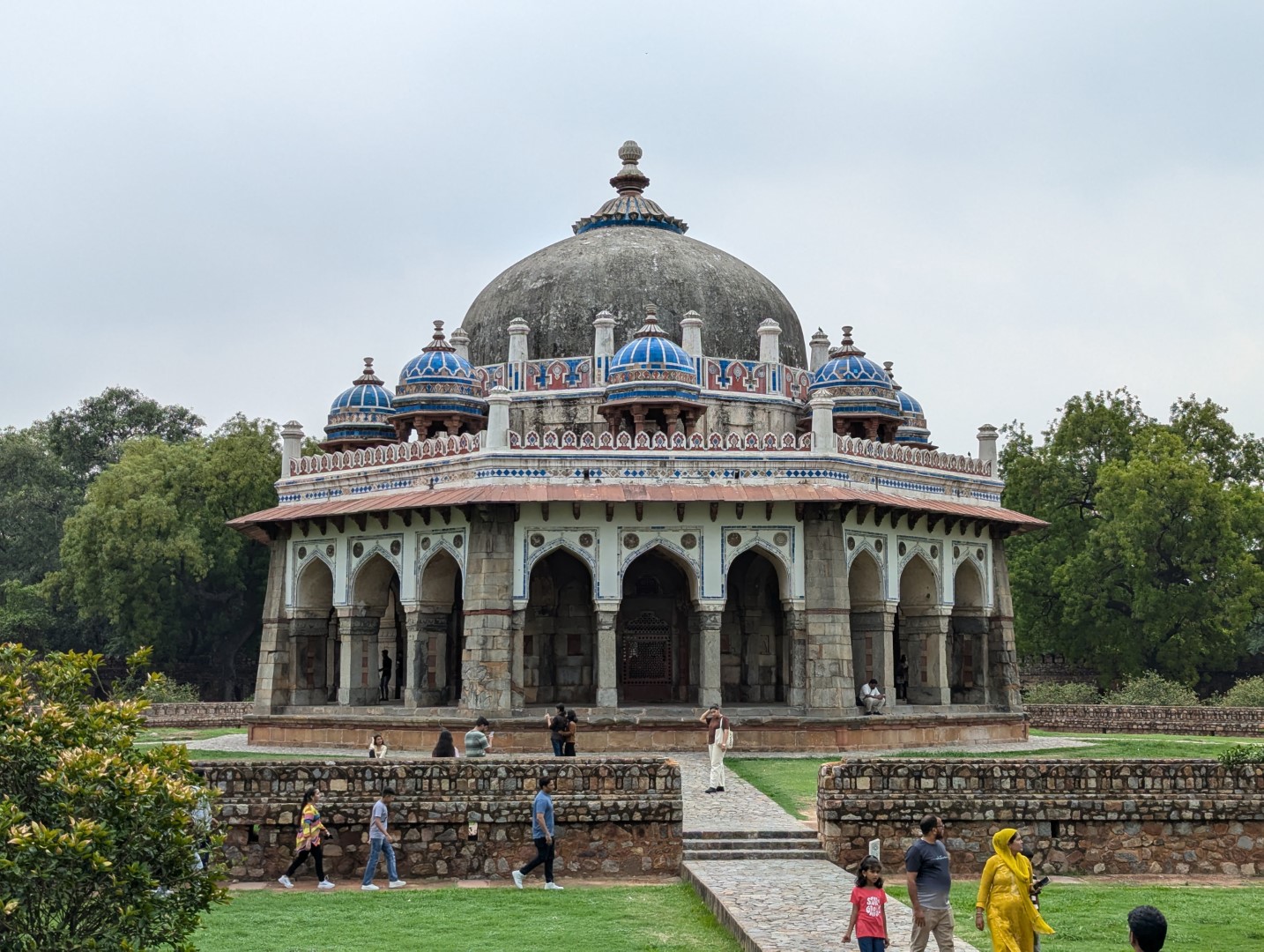
After entering the gate and walking towards Humayun’s Tomb for a bit, you’ll see a relatively small building on your right with a unique round, blue-decorated roof. According to the explanation, this is the tomb and mosque of a man named Isa Khan, built in 1547. It was actually constructed during his lifetime, predating Humayun’s Tomb by 20 years! I really wanted to get closer and take a good look, but dark, ominous clouds were approaching, and I didn’t have an umbrella, so I hurried towards Humayun’s Tomb.
Humayun’s Tomb
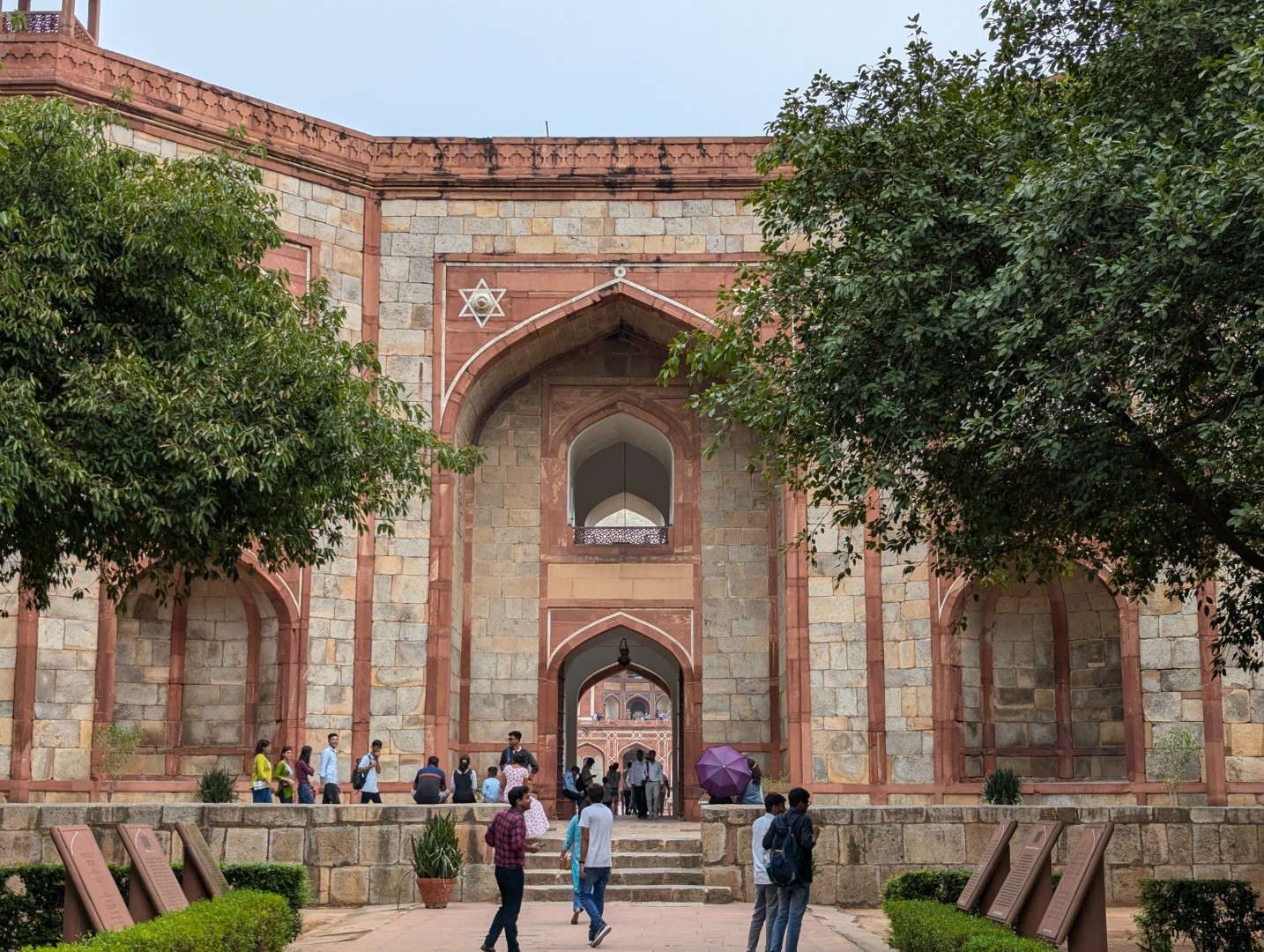
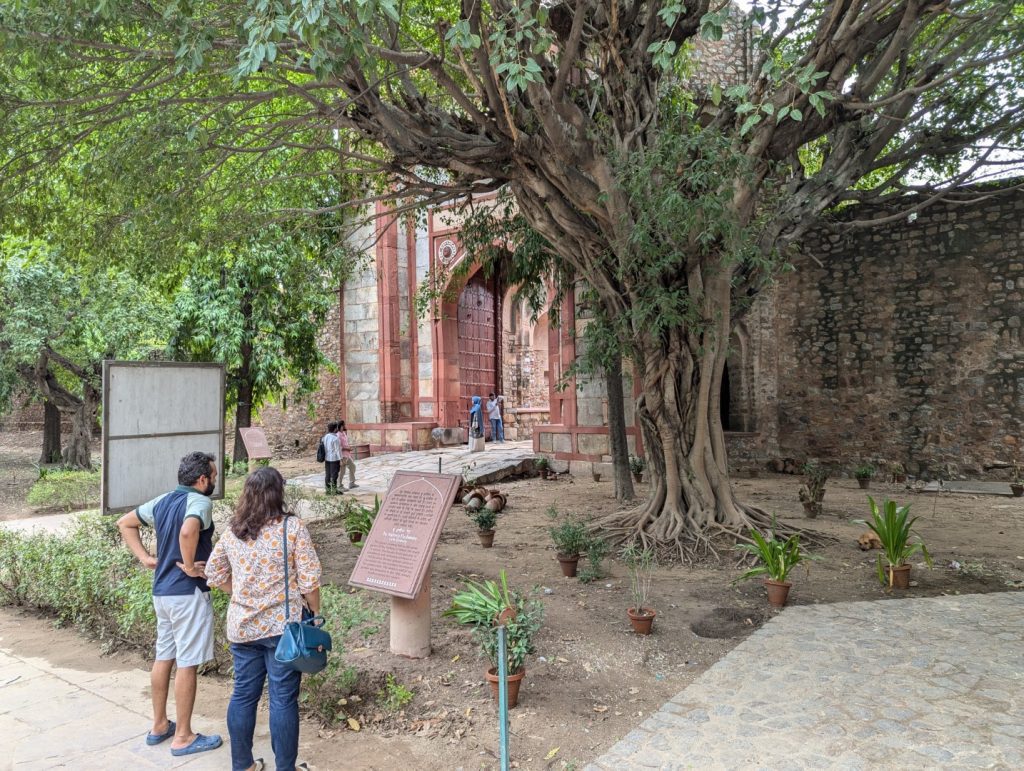
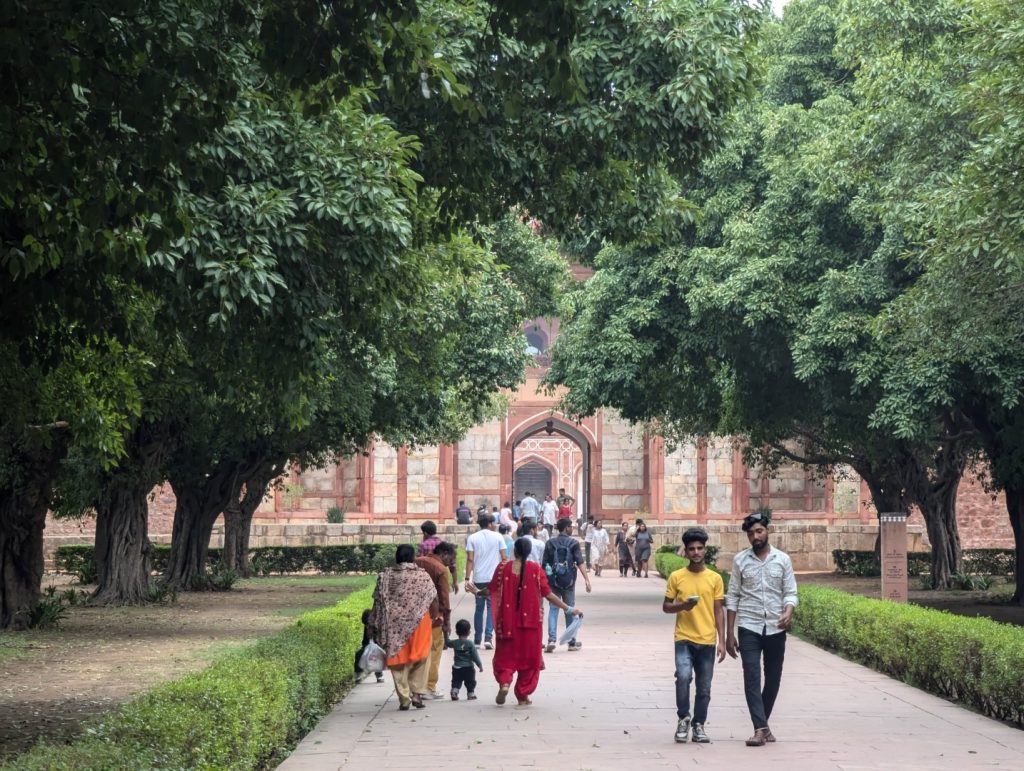
The Western Gate, towering like a wall, strangely features a Star of David, which got me thinking. I’ve read that Hinduism is a religion that developed complexly by incorporating elements from various other religions, so I wonder if there’s a connection there?
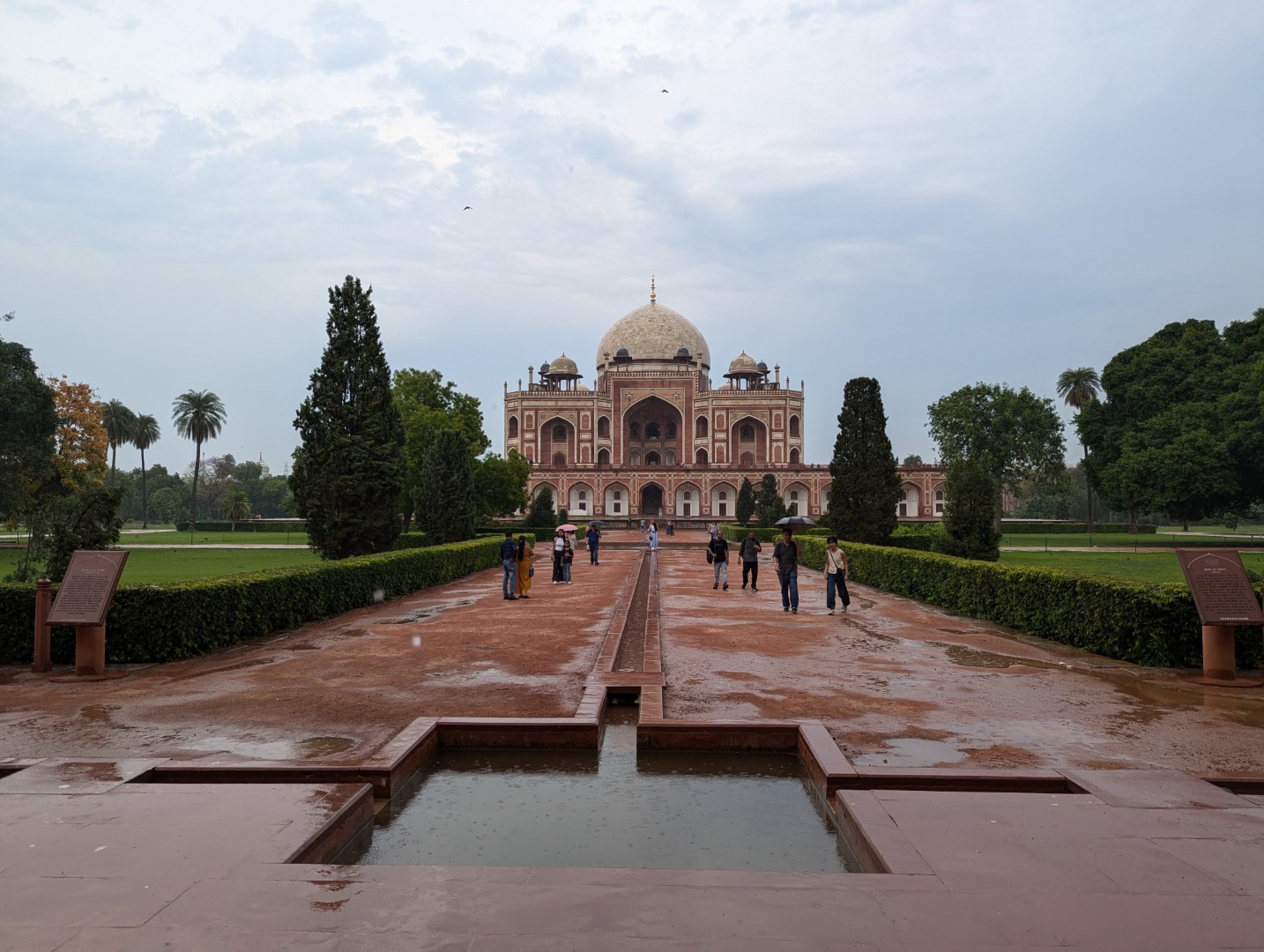
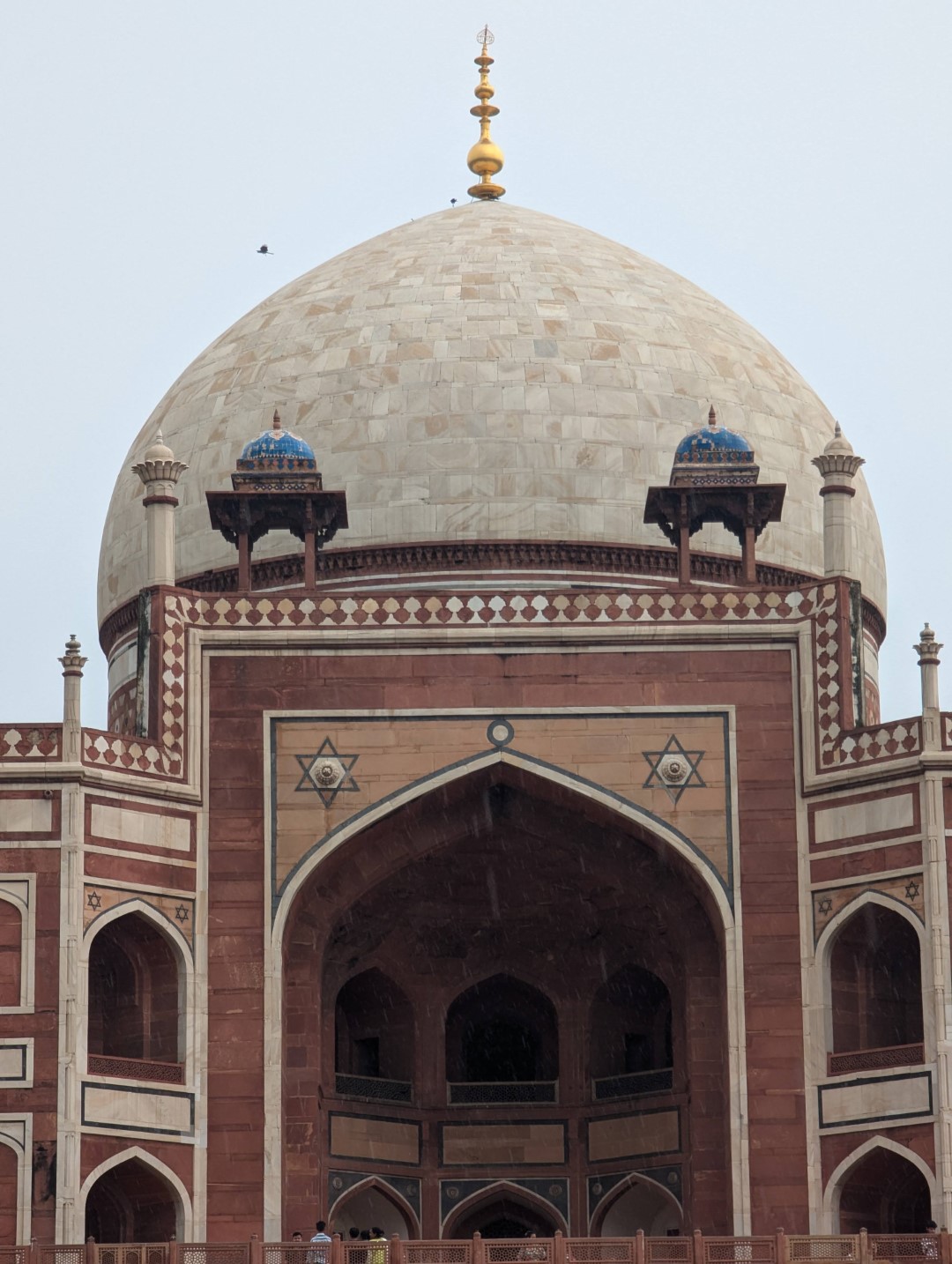
As you pass through the gate, you’re greeted by an incredibly beautiful, symmetrical building with a striking contrast of red sandstone and white marble. This mausoleum was built in 1565 by the wife of Humayun, the second Mughal Emperor. Looking at a map, you can see the tomb perfectly centered within beautifully segmented square grounds, making it a stunningly symmetrical structure from every angle – east, west, north, or south.
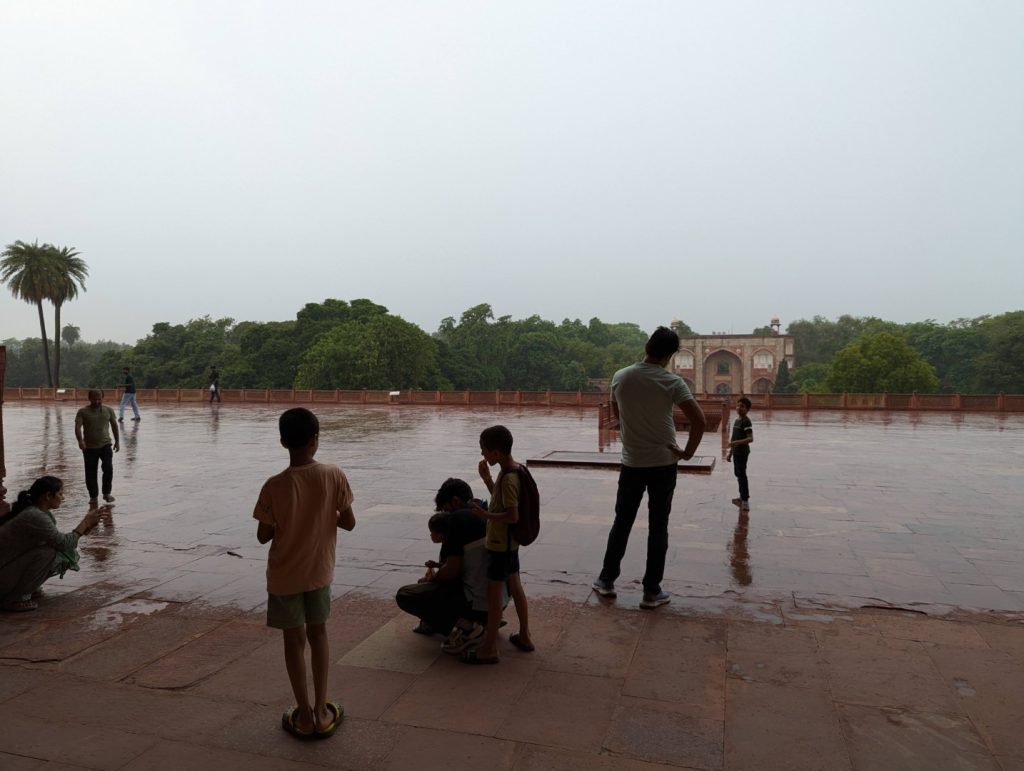

The suspicious clouds I was worried about finally arrived, and sure enough, it was a thunderstorm! Some people were still outside, unfazed, but it was really coming down. So, I quickly headed towards the building… but wait, I couldn’t get inside.
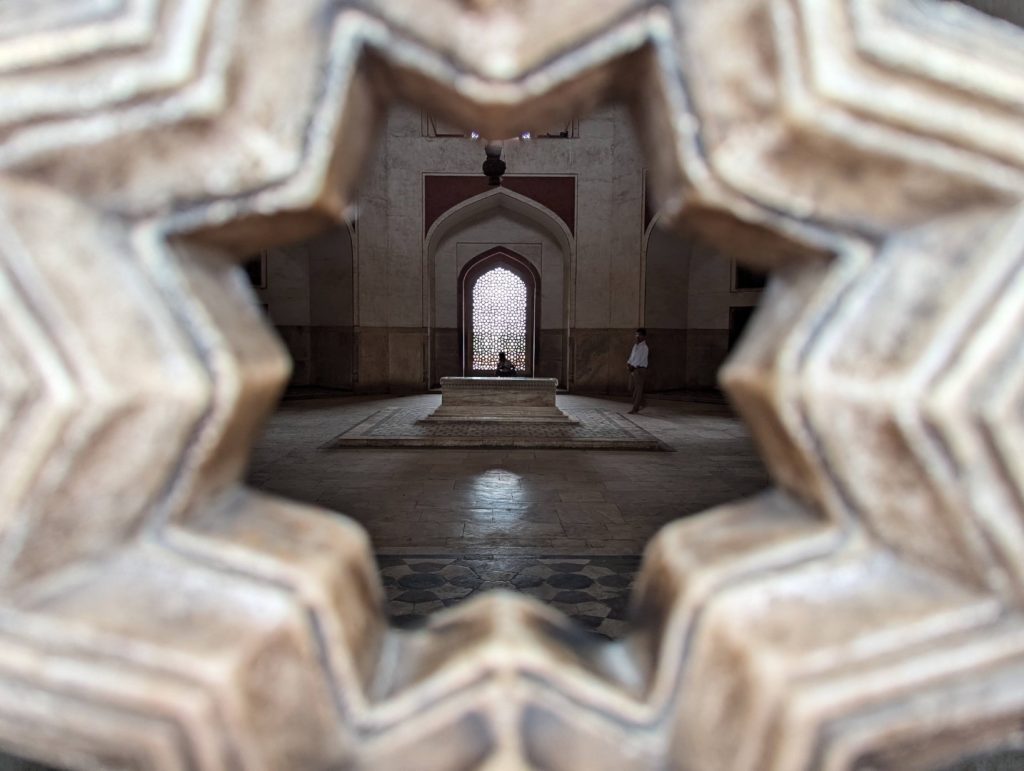
It seems I entered from the west side, but that wasn’t the actual entrance to the building. So, after the rain calmed down a bit, I walked all the way around the building and finally found the main entrance.
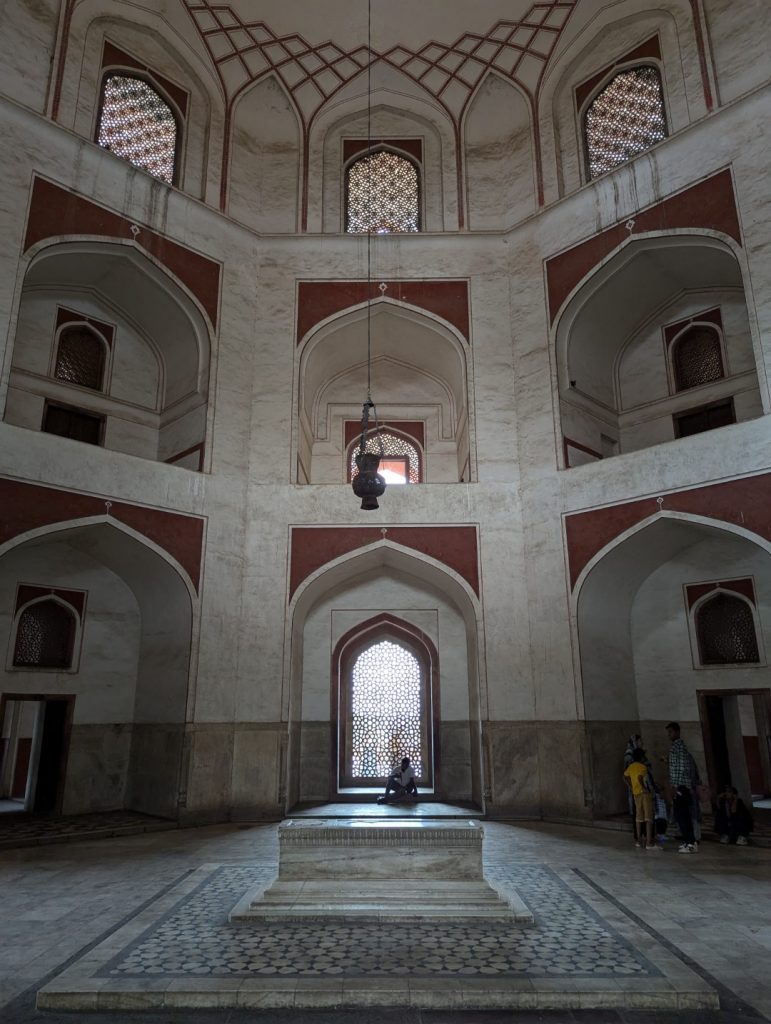
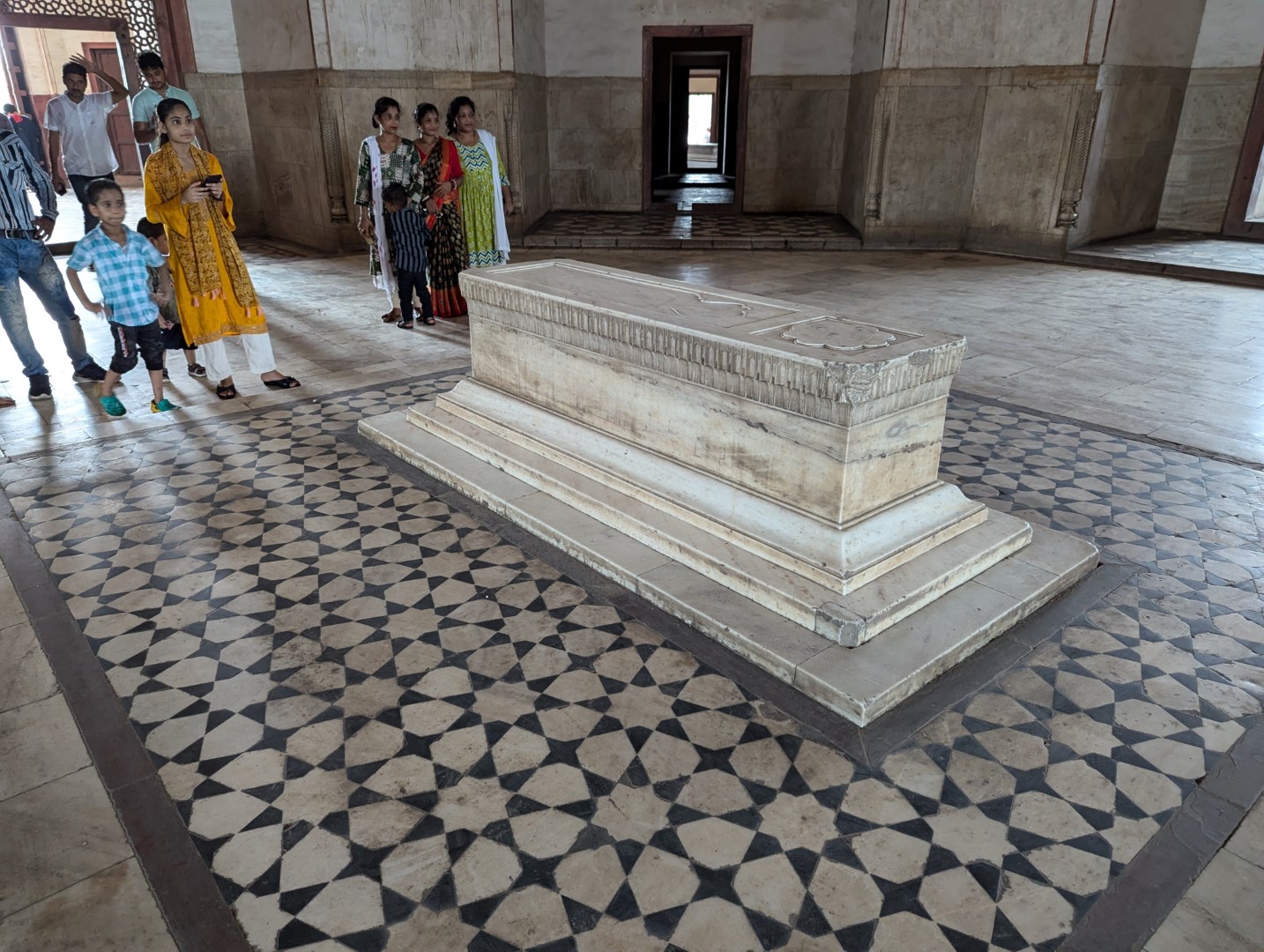
Light streamed in through the beautifully carved windows, creating a unique atmosphere in the center of the building, where an unexpectedly small coffin lay. I thought, “Surely, no one could fit in there!” but it turns out this coffin was just a placeholder; the actual remains were interred directly beneath it.

In each of the four corners of the building, there were three coffins (or so they seemed?), creating a solemn atmosphere with these beautiful windows beyond them.

What’s also a bit mysterious is that the surrounding coffins had more complex and intricate decorations than the central one. Plus, while the building is perfectly symmetrical, the coffins vary in size, and their placement feels a bit unnatural or ‘off’.
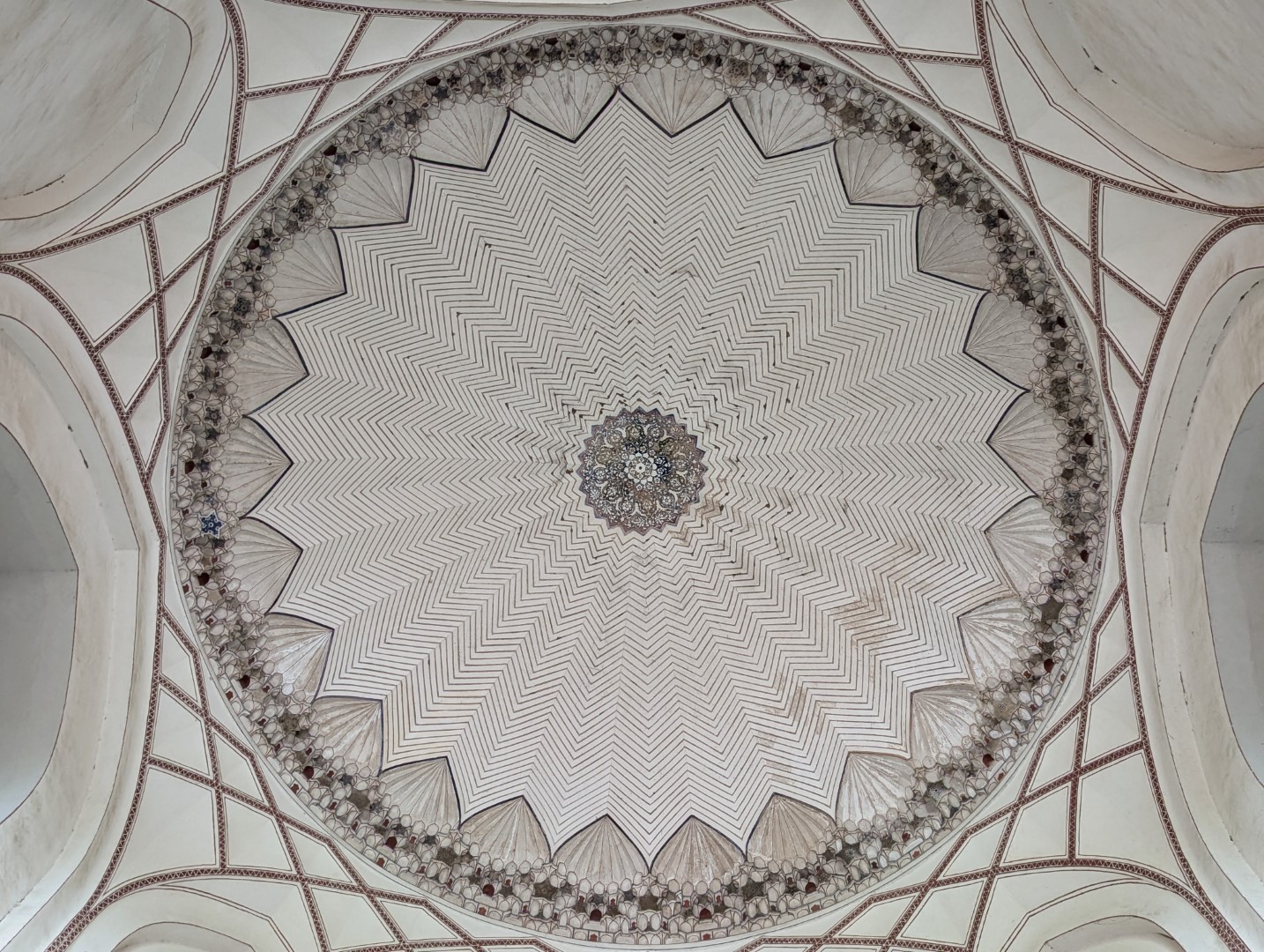
As for the building itself, beyond the external symmetry, the ceiling at the entrance is adorned with such magnificent and intricately symmetrical patterns. It’s truly astonishing.
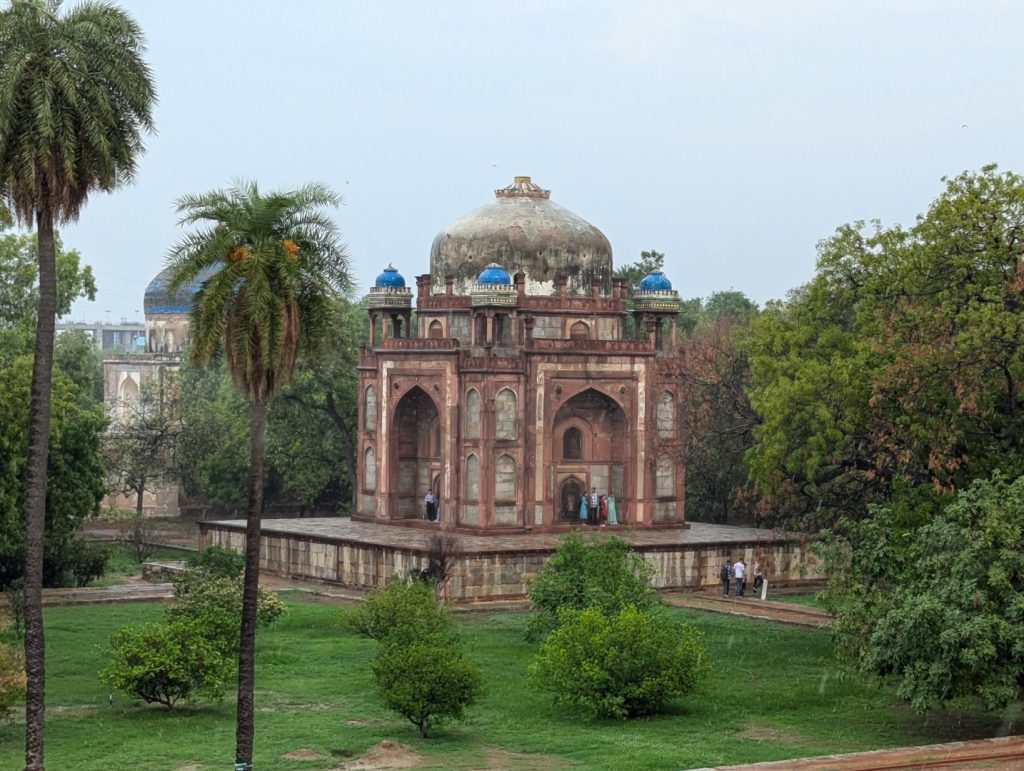
This building, marked as “Babur’s Tomb” on the map, is probably the tomb of Babur, Humayun’s father. Unfortunately, the rain was coming down hard, so I had to give up on getting closer to see it, but it also had quite an atmosphere.
Even though I had to work on Saturday, it was truly wonderful to finally get a little sightseeing done on a business trip that included a weekend after such a long time!


コメント