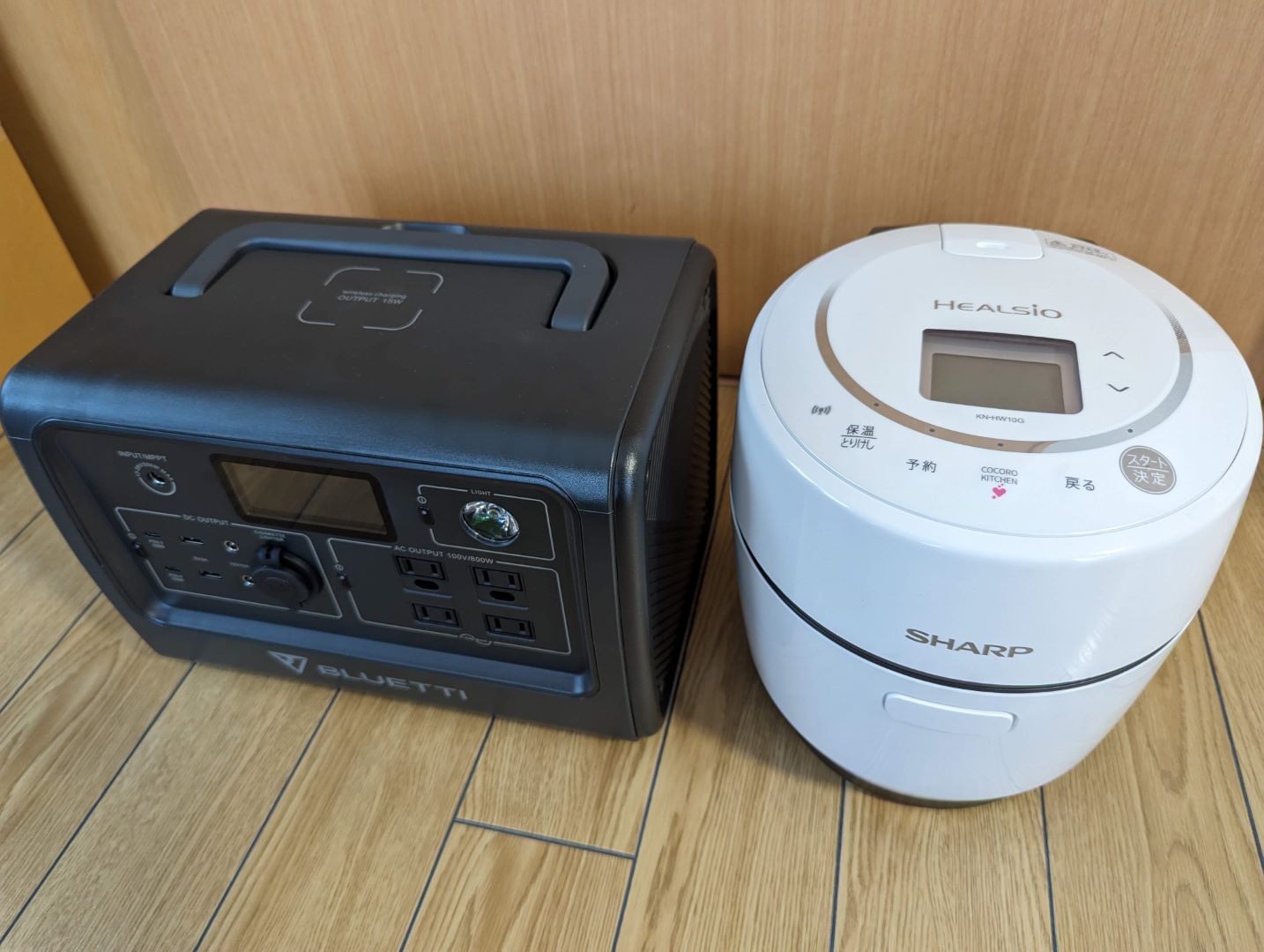
Growing Awareness of Disaster Preparedness
Living in Hamamatsu, I’ve always been conscious of earthquakes and tsunamis. On top of that, seeing nearby rivers overflow from heavy rains multiple times this past year really heightened my sense of urgency. I’d already started small things like “rolling stock” for food, but I got interested in portable power stations for disasters, camping, and even just saving a bit on electricity. Since my place gets great sunlight, I decided to pick up an Owltech 120W Solar Panel (via Rakuten Hometown Tax Donation) and a BLUETTI EB70 Portable Power Station (from Rakuten).
The EB70: A Great Balance of Usability and Cost
I chose the BLUETTI EB70 because it uses Lithium Iron Phosphate (LiFePO4) batteries, which are known for being safe. It has a high cycle life of over 2,500 charges, decent capacity, and a peak output of up to 1,400W. With plenty of output ports and a price tag under 50,000 yen, I felt it was a very well-balanced power station for the cost.
- Capacity: 716Wh
- Rated Output: 800W (Surge 1,400W)
- Battery Type: Lithium Iron Phosphate (LiFePO4)
- Cycle Life: 2,500+ cycles
- Pass-through Charging: Supported
- LED Light
- Size (cm): 32 × 21.6 × 22
- Weight: 9.7kg
Putting the EB70 to the Test
By placing the 120W solar panel on top of the AC outdoor unit on my balcony, I found that during this time of year, it generates anywhere from 30W to 90W from around 7 AM to 4 PM. On a sunny day, I can recharge about 70% of the power station’s capacity in a single day.
With that much charge, I discovered I could manage a 2-go (approx. 2 cups) batch of rice in my LOCABO rice cooker, make a stew for two in the Healsio Hot Cook, and keep my smartphone charged—though it does depend on the recipe. In other words, with a little effort, I could secure enough power for a day’s worth of meals and communication without feeling too restricted. I also tried the washing machine and even the microwave. The washing machine worked perfectly fine, but the microwave wouldn’t run because it apparently needs 2-3 times its rated wattage to start up. Actually trying these things out gave me a very clear picture of what life would be like using a power station during a blackout. It also made me realize that for car camping, bringing a power station and a Hot Cook would make for some pretty amazing meals. It’s been a fun way to prepare for disasters.
Is the Healsio Hot Cook the Absolute Best?
A lot of people rave about the Healsio Hot Cook, but I was on the fence. I worried about the limited number of recipes and whether I’d actually use it. In the end, I bought the small, single-person model. So far, I’ve tried making:
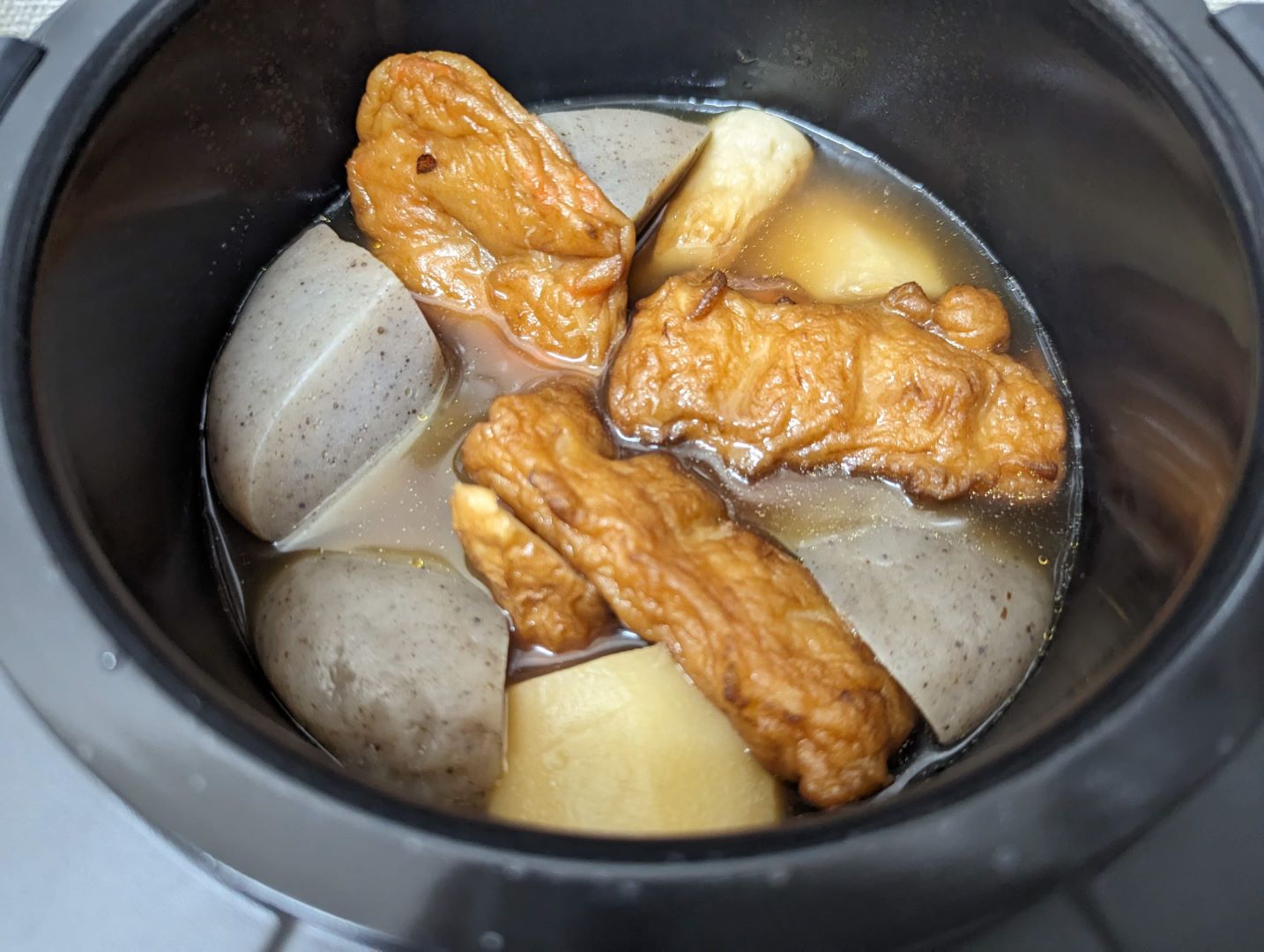
- Chikuzenni (Simmered chicken and vegetables)
- Simmered Taro and Octopus
- Buri-daikon (Simmered yellowtail and daikon radish)
- Simmered Chicken and Daikon
- Slow-cooked Beef Tendon
- Layered Pork and Chinese Cabbage
- Oden
The simmered dishes come out incredibly flavorful and delicious. Now I want to try other things like the popular waterless curry. While the taste is great, the best part—which you don’t fully appreciate until you try it—is that you can just leave it alone once you put the ingredients in. Even with the timer function, once the lid is closed, you don’t have to worry about it at all until it’s done. When cooking with fire, you can’t really look away and you have to keep track of the time. Being freed from those little tasks is much more relaxing than I expected. That might actually be the biggest benefit.
So, between the solar panel, the portable power station, and the Healsio Hot Cook, I feel like I’ve put together a pretty enjoyable disaster preparedness kit.


コメント