
- Tourist Numbers Have Really Dropped…
- The Sand Museum: Mesmerized by Gigantic Artworks
- Uradome Coast: Beautiful Sea Colors and Rugged Rock Formations
- Enjoying Seafood in Kami Town
- Mochigase Nagashi-bina (Floating Dolls)
- Chizu-shuku: Where Almost Every House Has a Sugidama for Some Reason
- To Eat Fresh Live Squid
Tourist Numbers Have Really Dropped…
Tottori is a place I visit every few years, partly because it’s where my grandfather had ties. Similar to other regions, the shopping street in front of the station has turned into a “shutter street,” which makes me feel a bit sad. In fact, if you look at Tottori Prefecture’s tourism survey, tourist numbers last year were only about half of what they were in 2019, before COVID, except for a few specific spots. But there are so many charming places, so I really recommend visiting if you’re even a little bit curious!

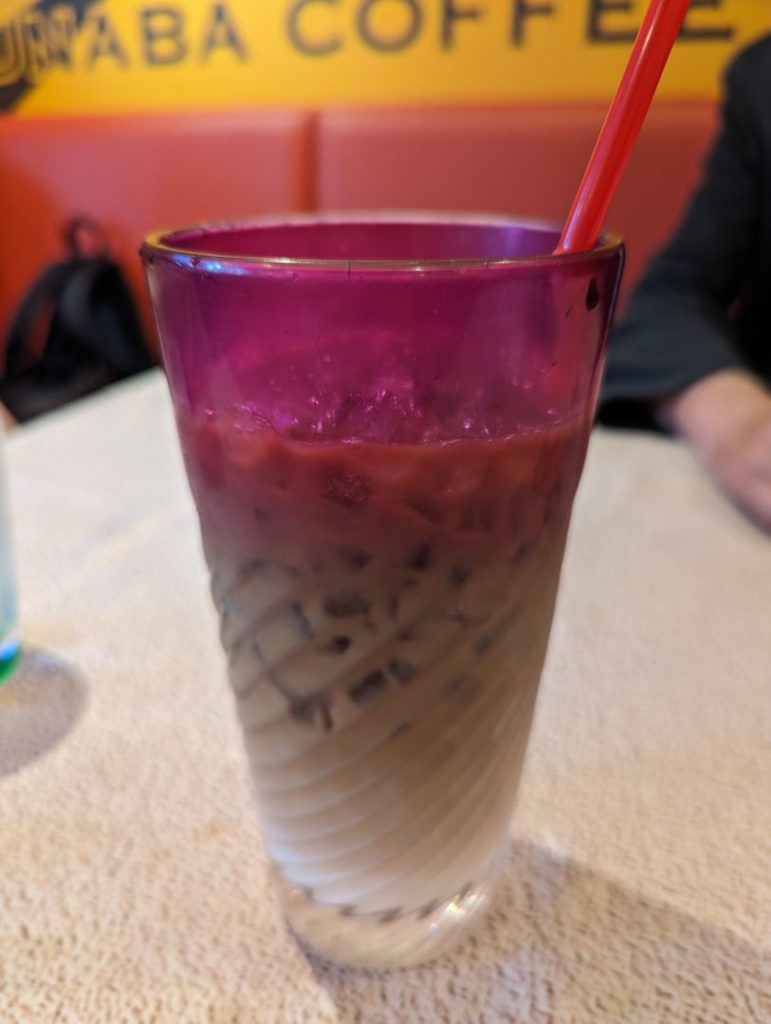
Even though I’ve been to this area quite a few times, this was actually my first time visiting Sunaba Coffee. What surprised me when I ordered a cafe au lait was its size! I wonder if it’s because this is “Sunaba Coffee” in Tottori, home to Japan’s largest sand dunes, that everything comes in an unusually massive size?
The Sand Museum: Mesmerized by Gigantic Artworks
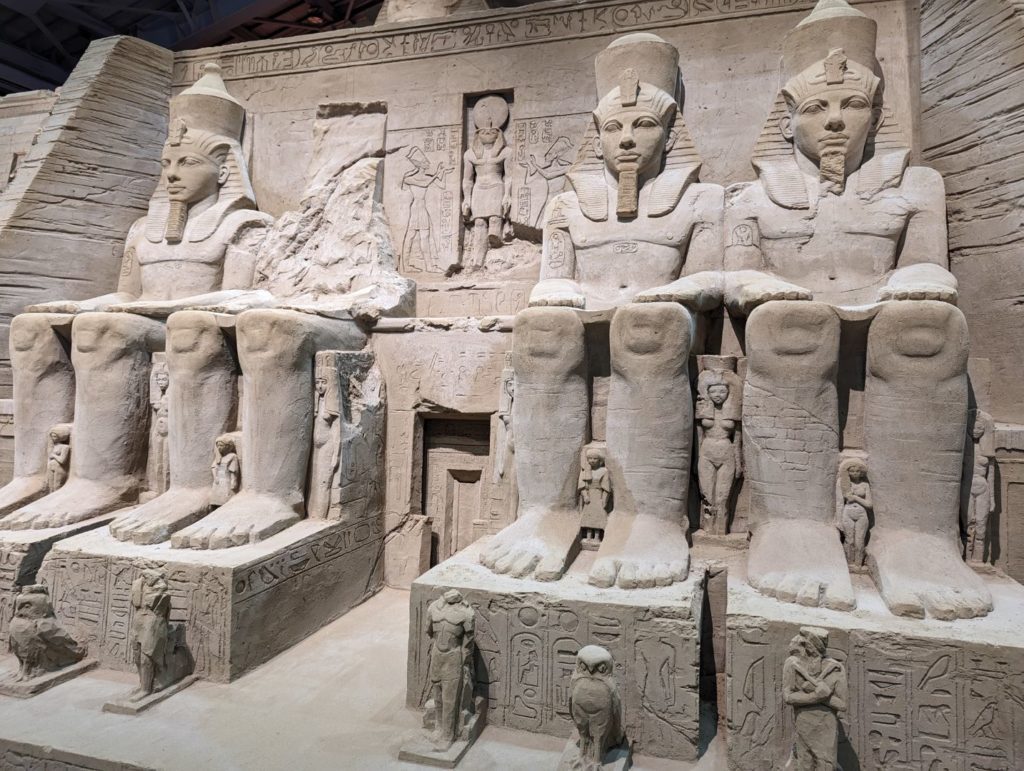
My parents wanted to visit, so we went to the Sand Museum. Honestly, I didn’t have high expectations, but I was pretty surprised by how powerful and impressive it was! It must take a lot of patience to build up blocks of very fine sand and water and then carve them into these shapes…
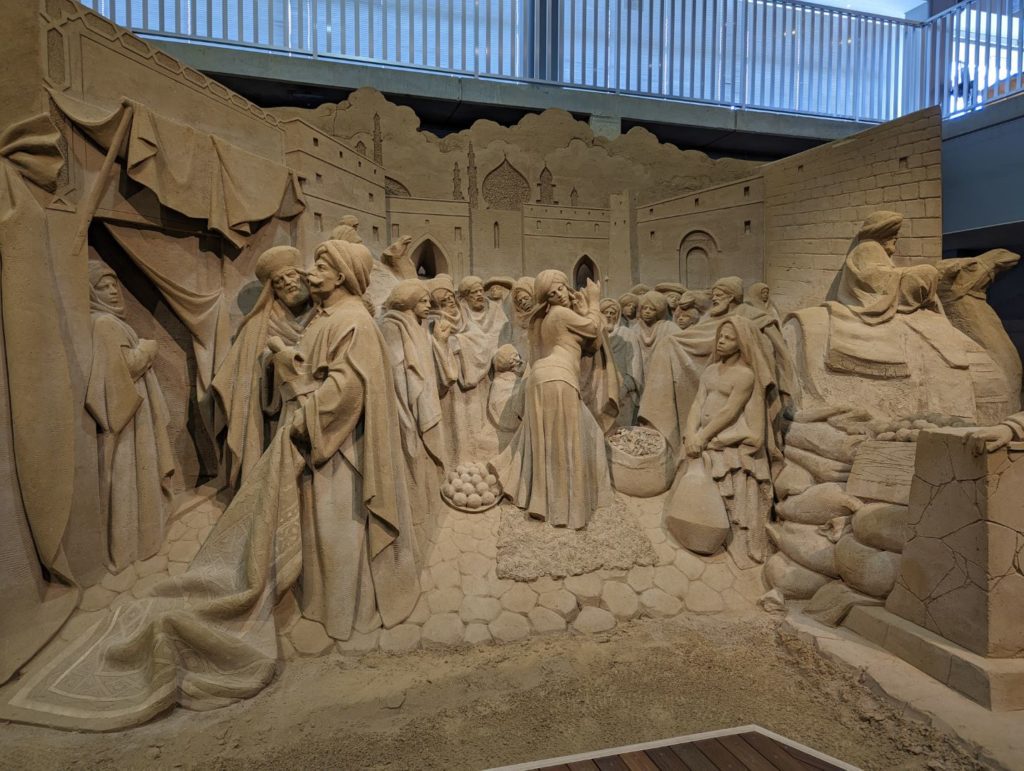
While there are works creating three-dimensional sculptures like these, the ones that depict patterns on a flat surface, like the one below, are also quite nice.

Uradome Coast: Beautiful Sea Colors and Rugged Rock Formations
It’s quite a walk from the parking lot, descending down a hill, but beyond that, you’ll find a beautiful landscape of rugged rock formations and the deep green color of the sea.
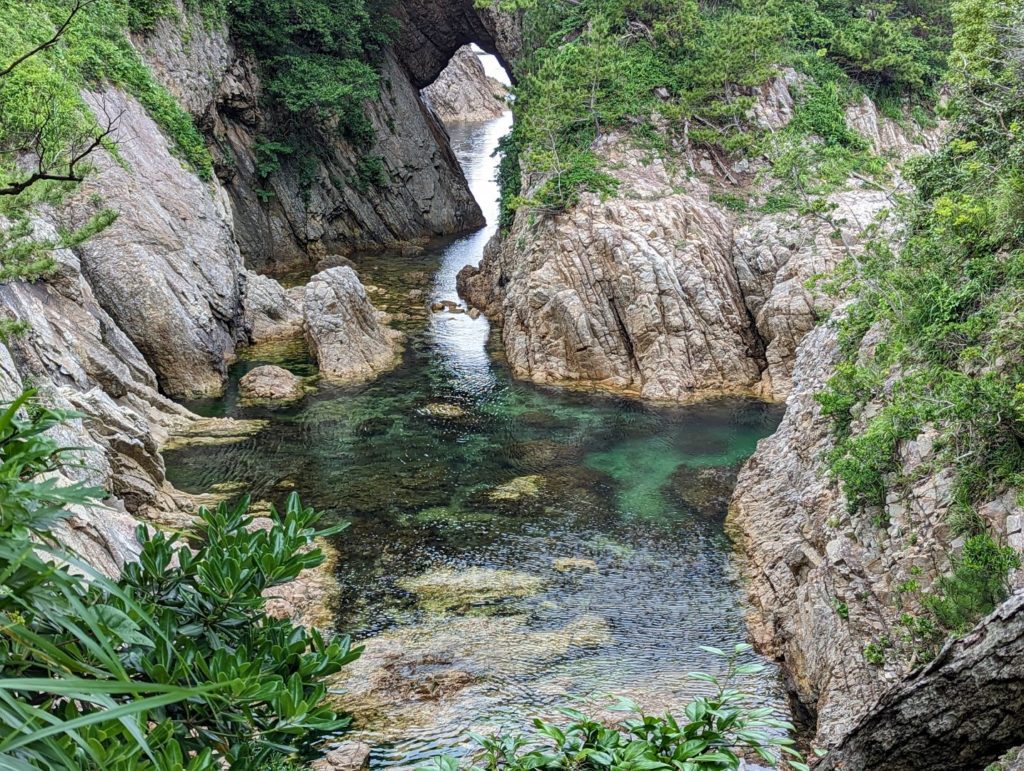

Another characteristic of the Uradome Coast is that there are several spots where you can see through holes in the rocks.
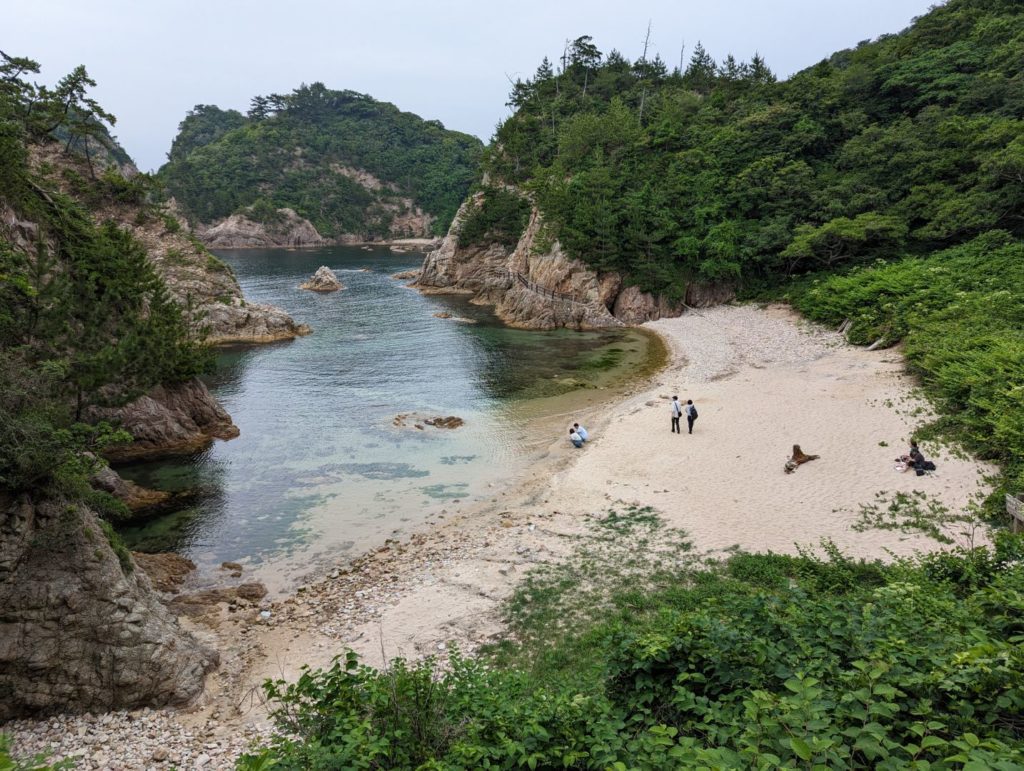
It was cloudy that day, but I’m sure on a clear blue day, the coastline’s contrast between the sea, white sand, and sky would be even more striking. Oh, the weather…
Enjoying Seafood in Kami Town
When you think of Kami Town, you think of Kasumi Crab, so we headed out to eat some crab. But many places were closed that day (lots of shops only do lunch), so we finally found a place and ended up enjoying various seafood instead of crab. We savored fresh sashimi, horse mackerel tataki, and large, sweet shrimp.
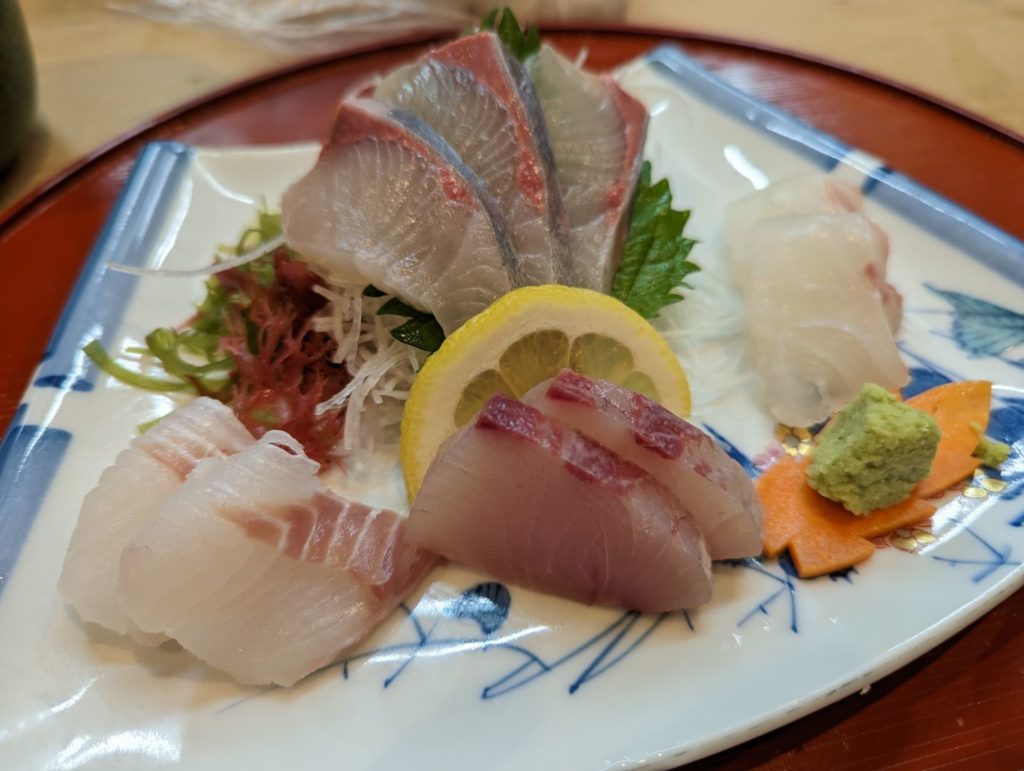
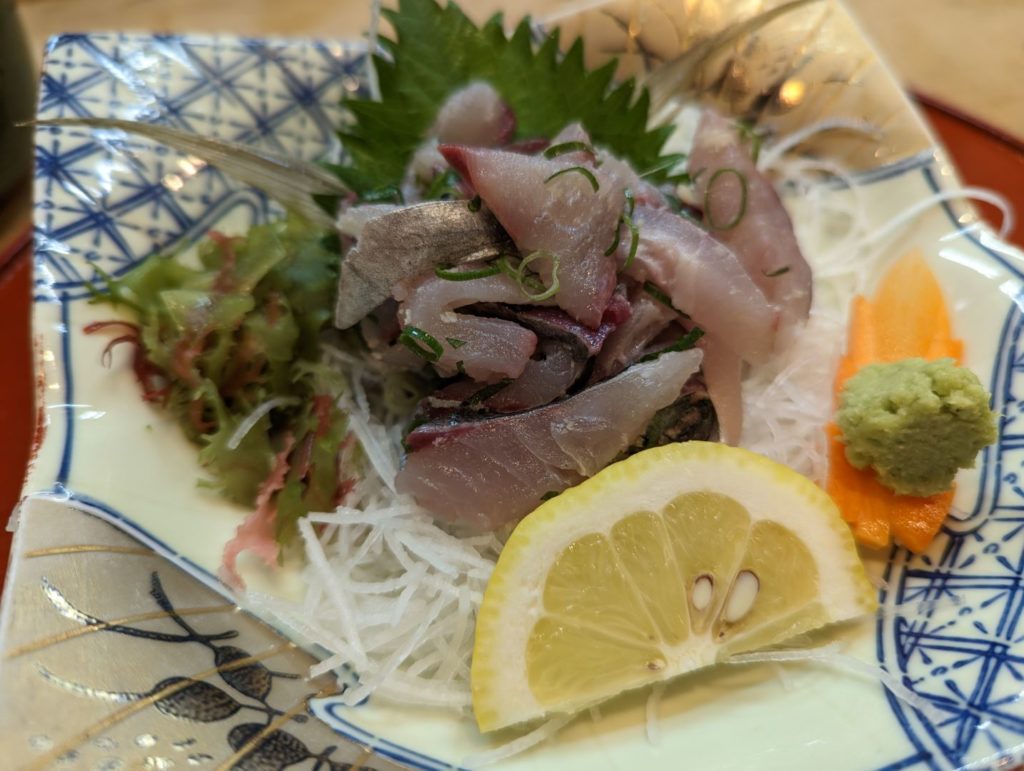
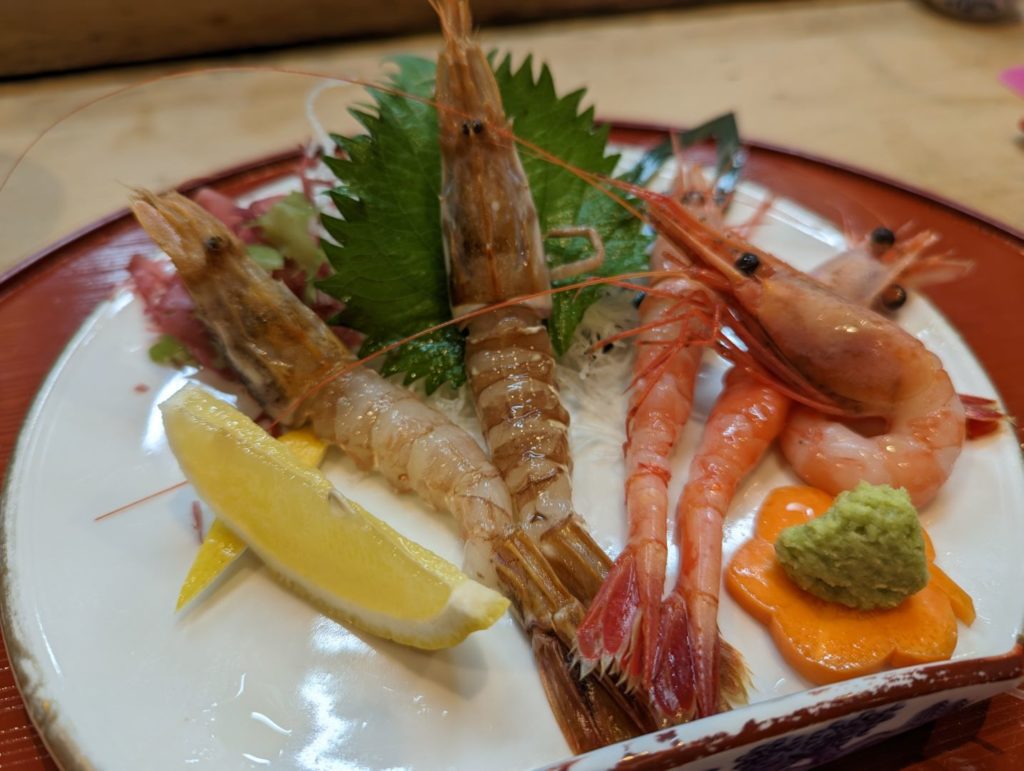
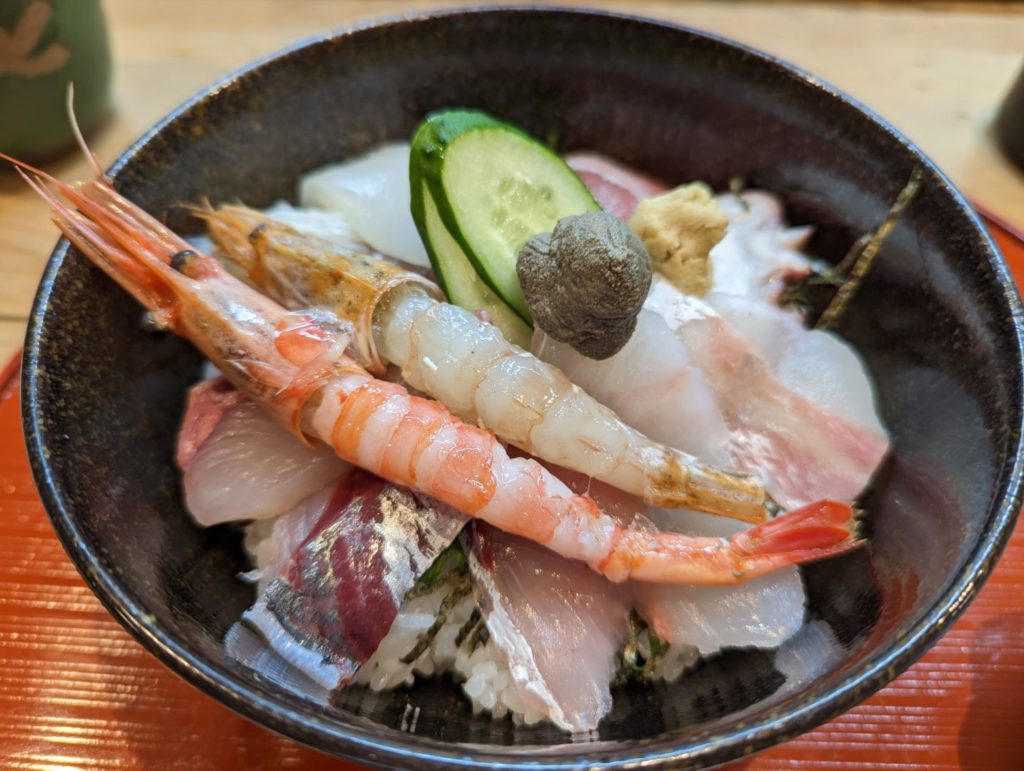
Sanato Sushi, where we ate that day, had been in business for 50 long years, but it seems they’re closing soon, perhaps due to a decrease in customers. A regular customer who was there that day greeted us as we entered, telling us, “The fish here is delicious, so eat well!” It’s really a shame to see such a wonderful place disappear…
Mochigase Nagashi-bina (Floating Dolls)
In the Mochigase area of Tottori, the custom of Nagashi-bina (floating dolls) still remains, reportedly held in mid-April. It’s said that “the third day of the third lunar month, when tides are strong, was a day to cast away misfortunes and impurities far away, which is the origin of Hinamatsuri (Doll’s Festival).”
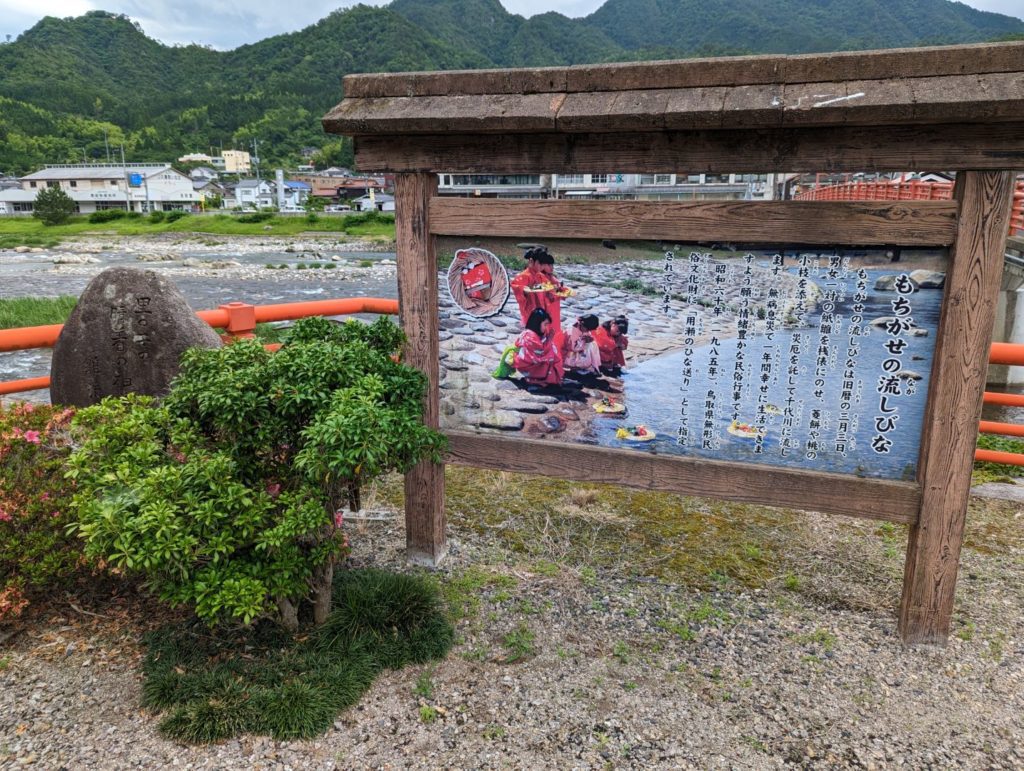
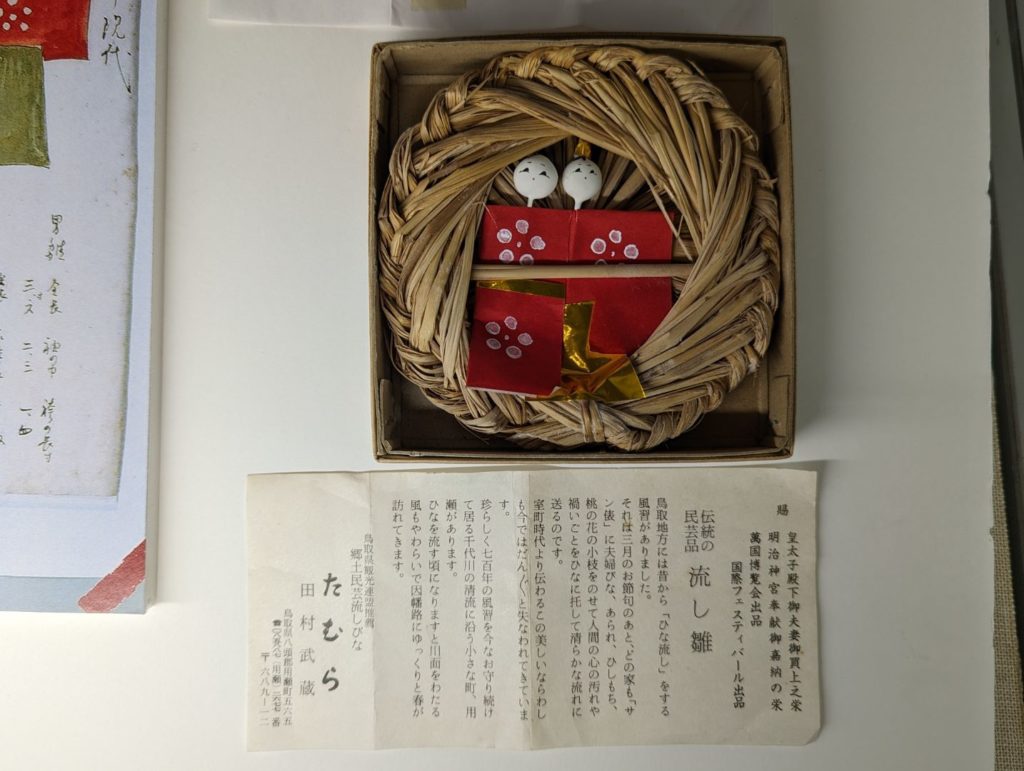
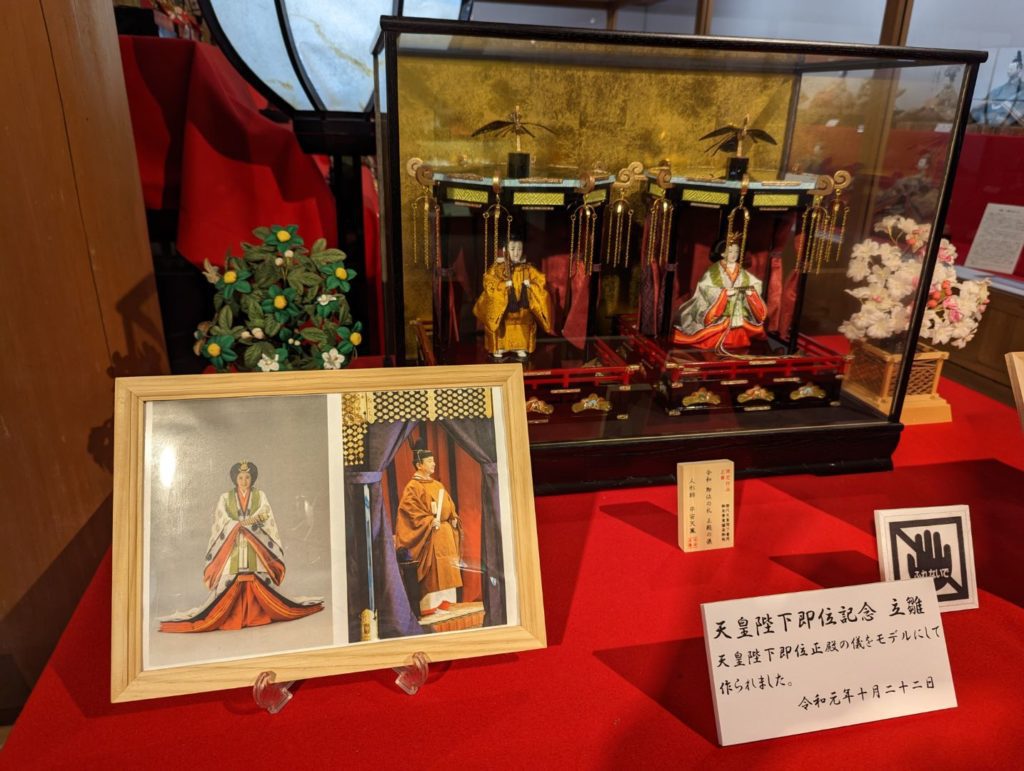
At the nearby Nagashi-bina no Yakata museum, various Hina dolls from the Edo period were on display, which was quite interesting. Among them, what really made me go “wow” was a standing Hina doll modeled after the Sokui no Reitai (Enthronement Ceremony) when the current Emperor was enthroned. The reproduction of Empress Masako’s attire, in particular, was incredibly stunning and truly surprised me.
Chizu-shuku: Where Almost Every House Has a Sugidama for Some Reason
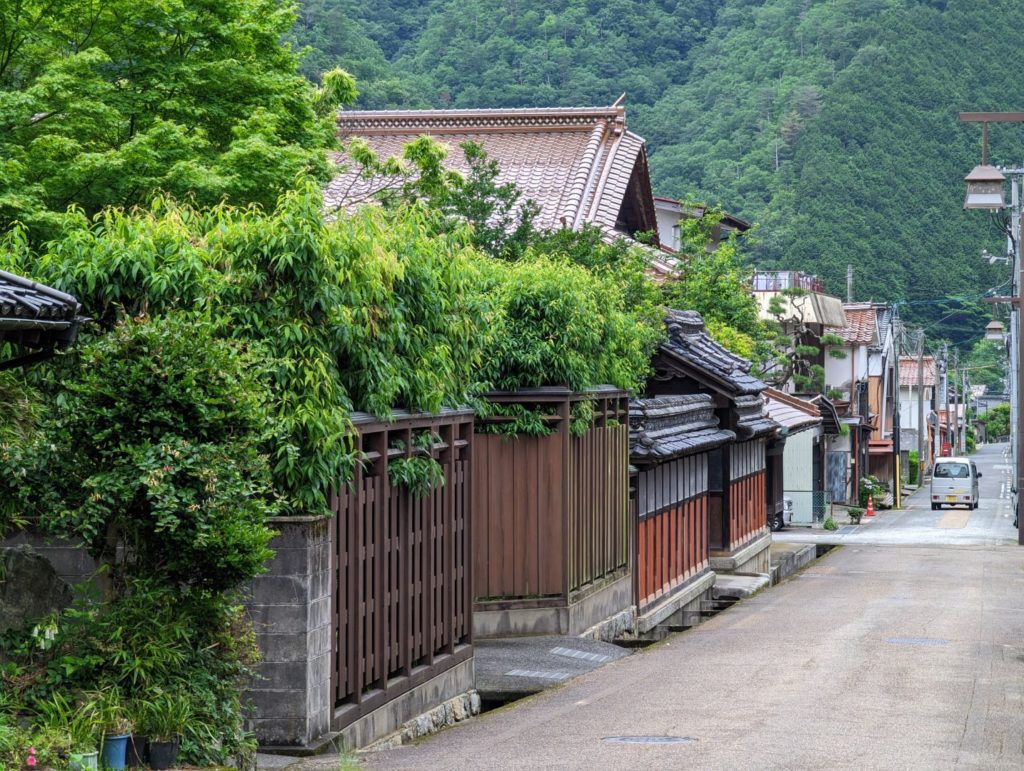
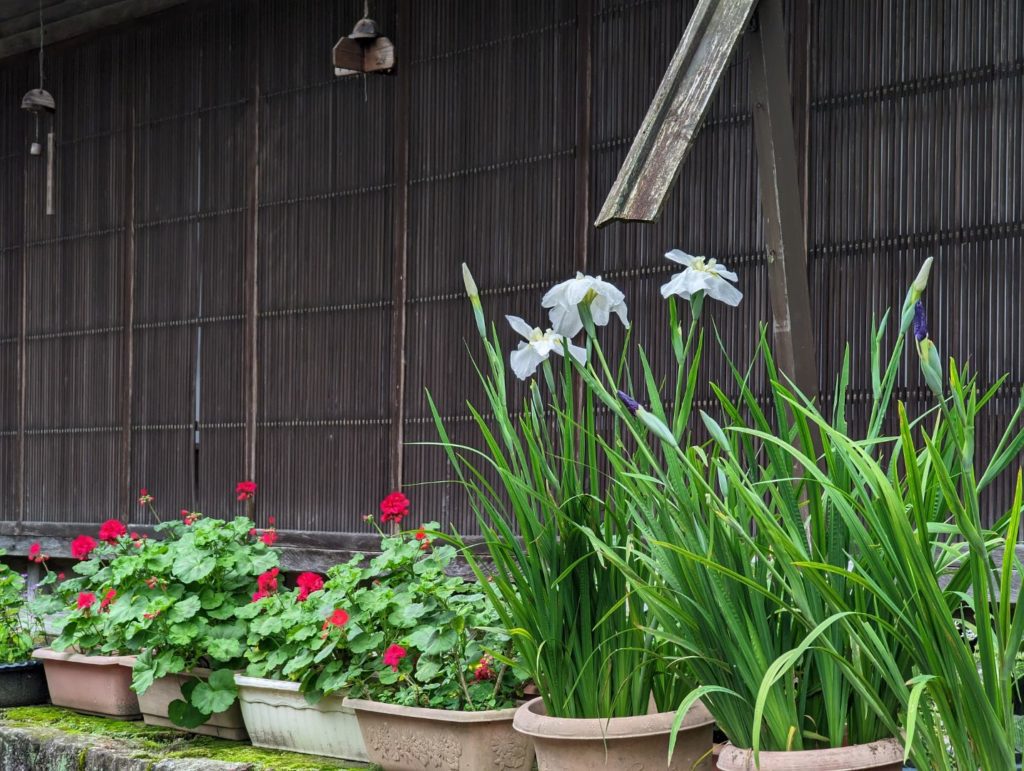
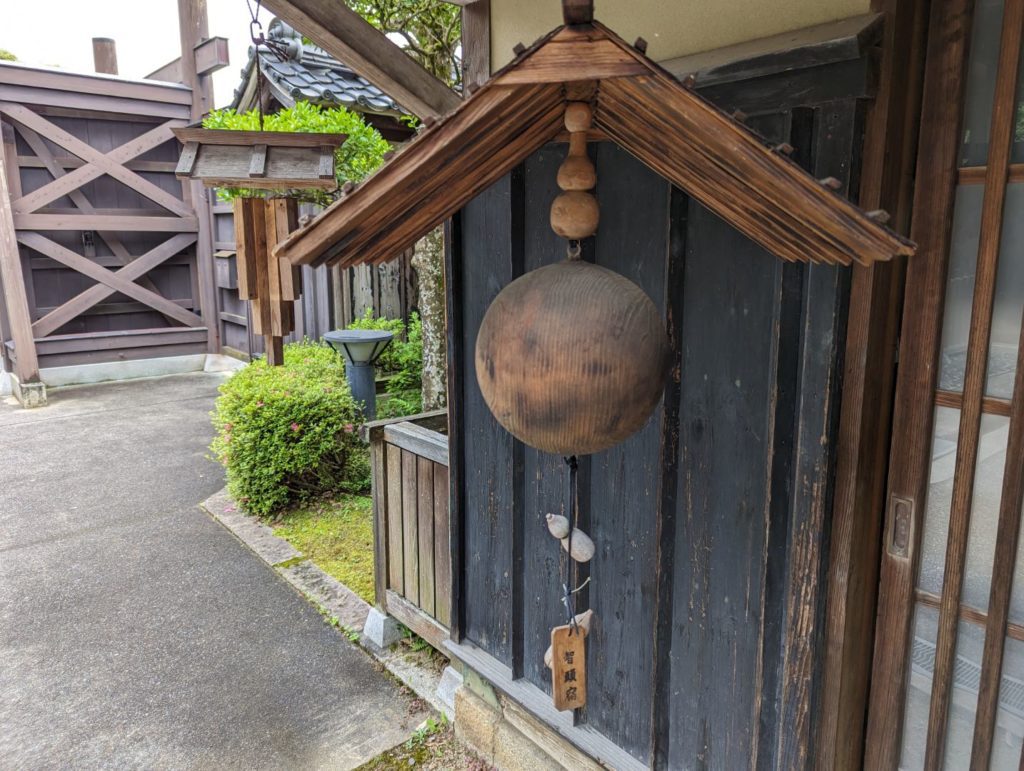
During the Edo period, Chizu-shuku was the first stop for the Tottori Domain’s lords heading to Edo for Sankin-kōtai (alternate attendance), serving as a place for the lord’s lodging and rest, complete with an o-chaya (tea house), bugyōsho (magistrate’s office), and seisatsuba (notice board). There are probably many sake breweries here, but it’s curious how sugidama (cedar balls, usually indicating a sake brewery) are displayed on so many private homes. Even more interestingly, some of these sugidama are quite sparse, like this!
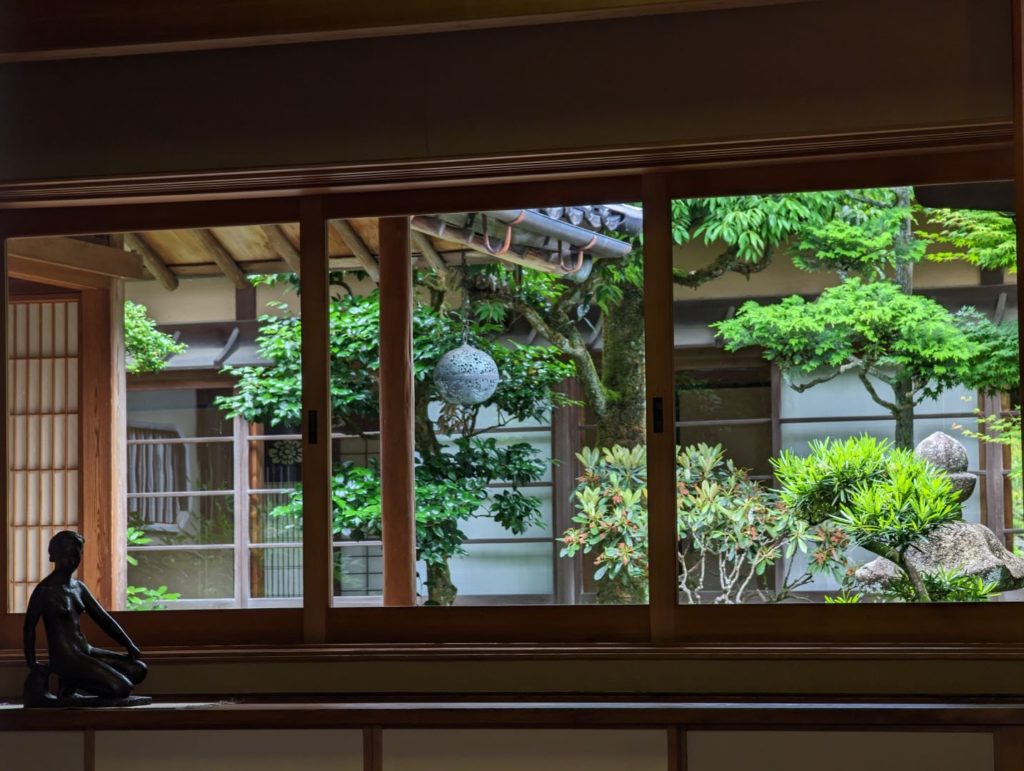
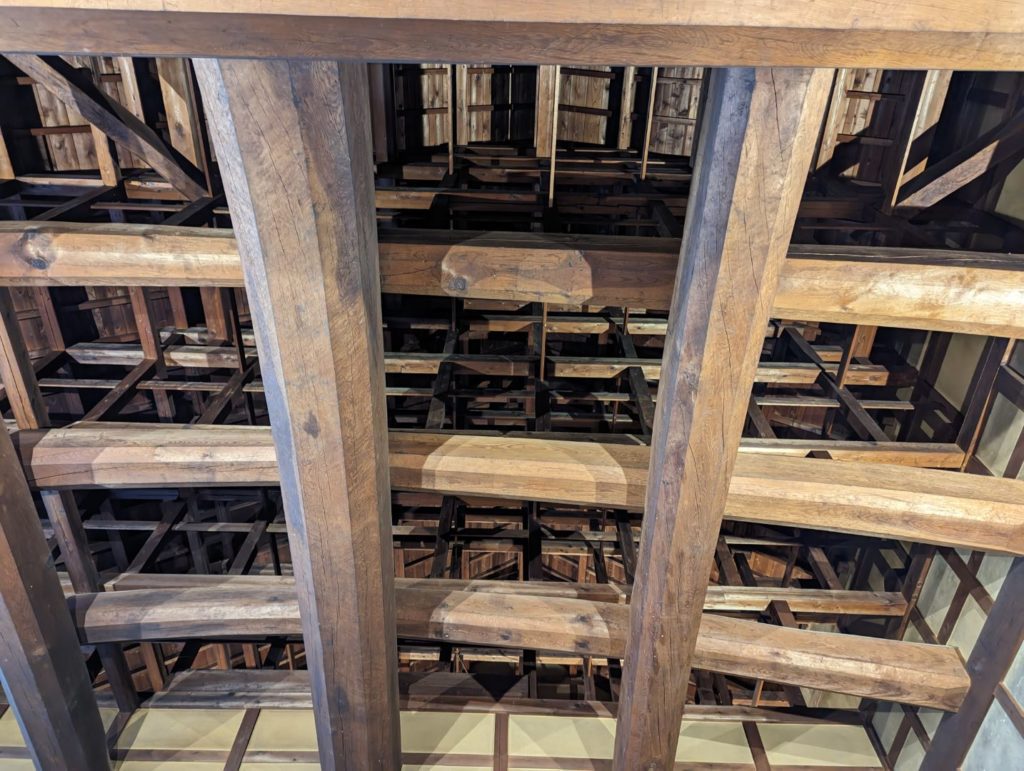
In the center of Chizu-shuku is the Sekigaya Family Residence, a nationally designated Important Cultural Property, which is open for visitors. After passing through the reception, you enter the doma (earthen floor area), and the ceiling there is incredible! Countless beams are assembled all the way up to the high ceiling, creating a space of an impressive scale, nearly 15 meters high.
To Eat Fresh Live Squid
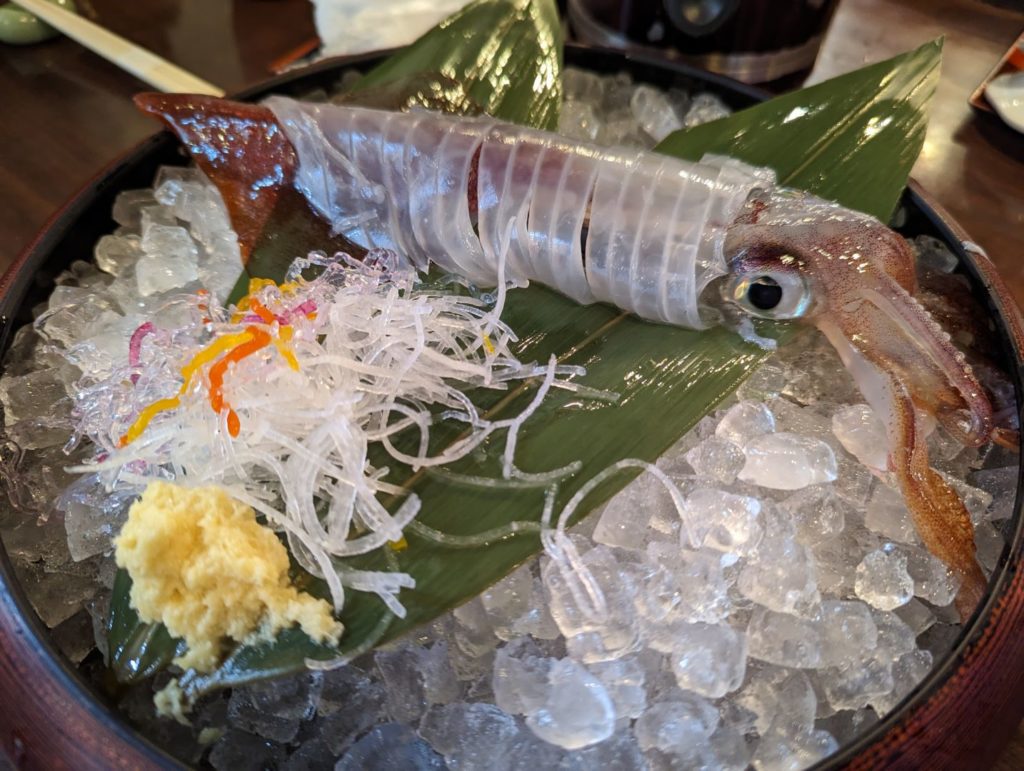
Since we were in Tottori, I really wanted to try some live squid. After enjoying the firm, sweet flesh, we were given the option to have the remaining parts prepared as more sashimi, tempura, or grilled. We chose tempura. Although the squid looked small, the amount of tempura was quite substantial and very satisfying!
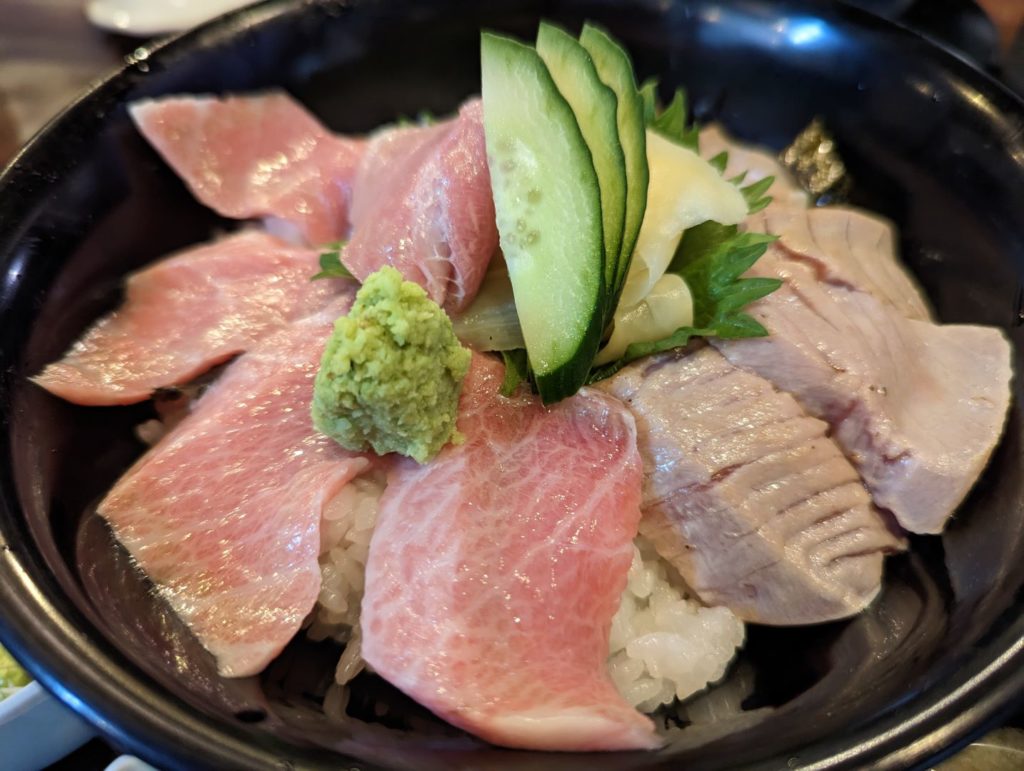
Here, I also had an aburi toro-don (seared fatty tuna bowl), which was almost too much! Both dishes were incredibly delicious… I want to eat them again.
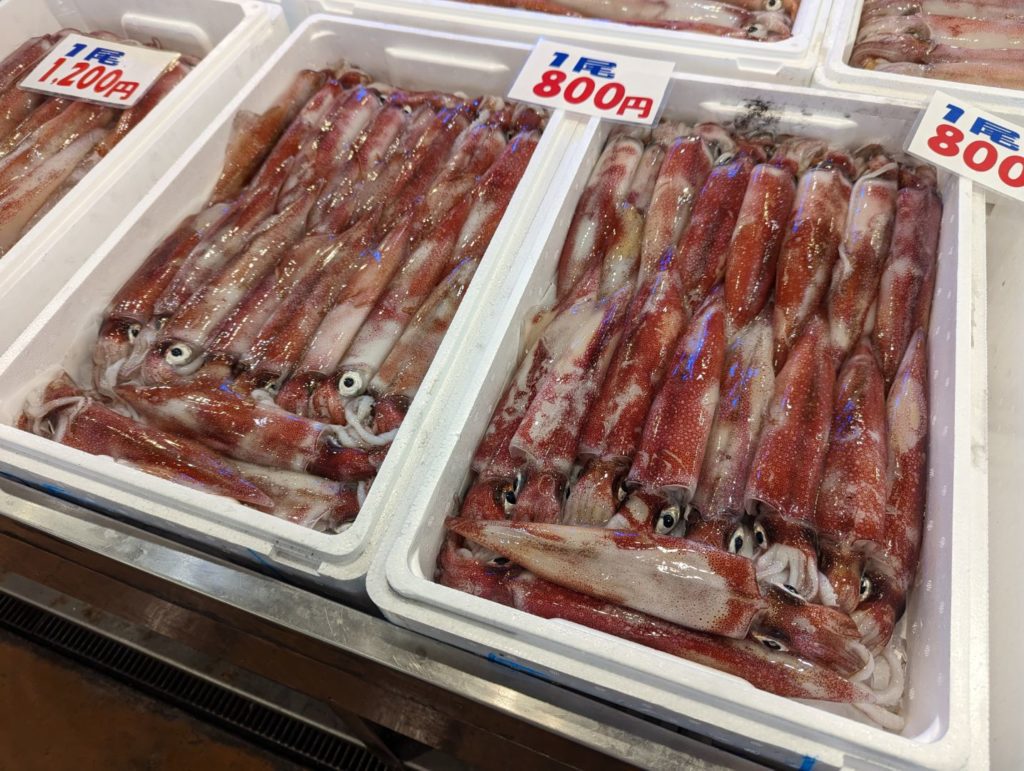
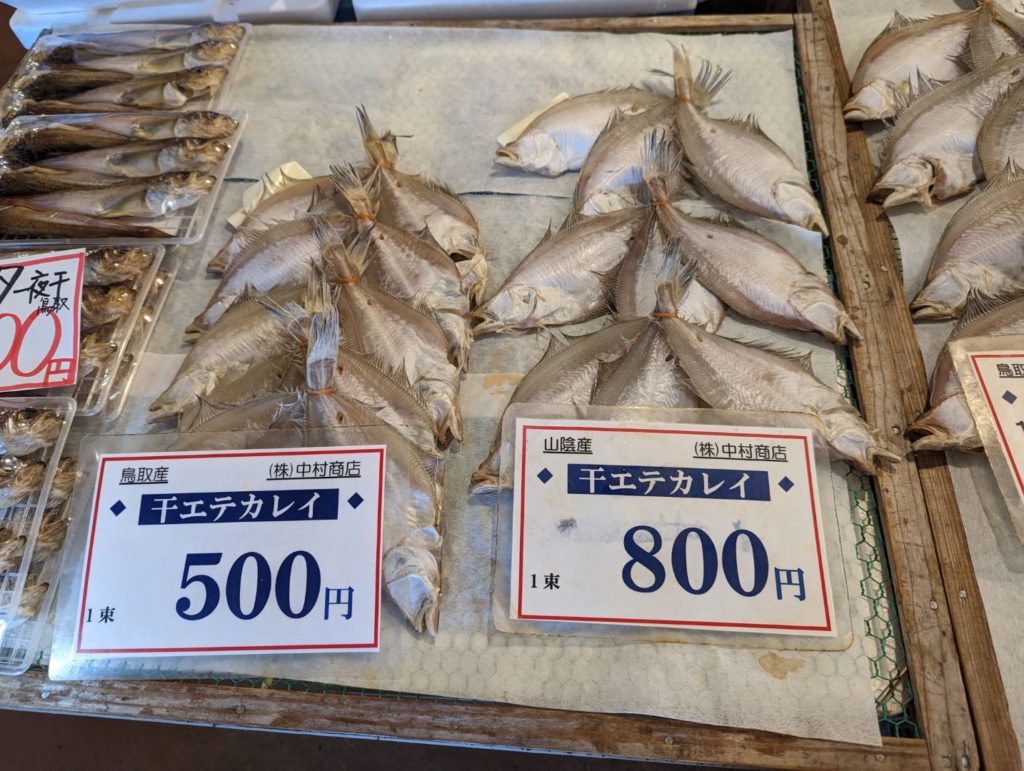
The market had a lot of appealing items, including fresh squid and other seafood, as well as dried flatfish (etegarei), which you don’t really see in the city center. (This was served at our ryokan for breakfast and was so delicious I wanted to buy it, but I couldn’t go back right away, so I had to give up.)

コメント